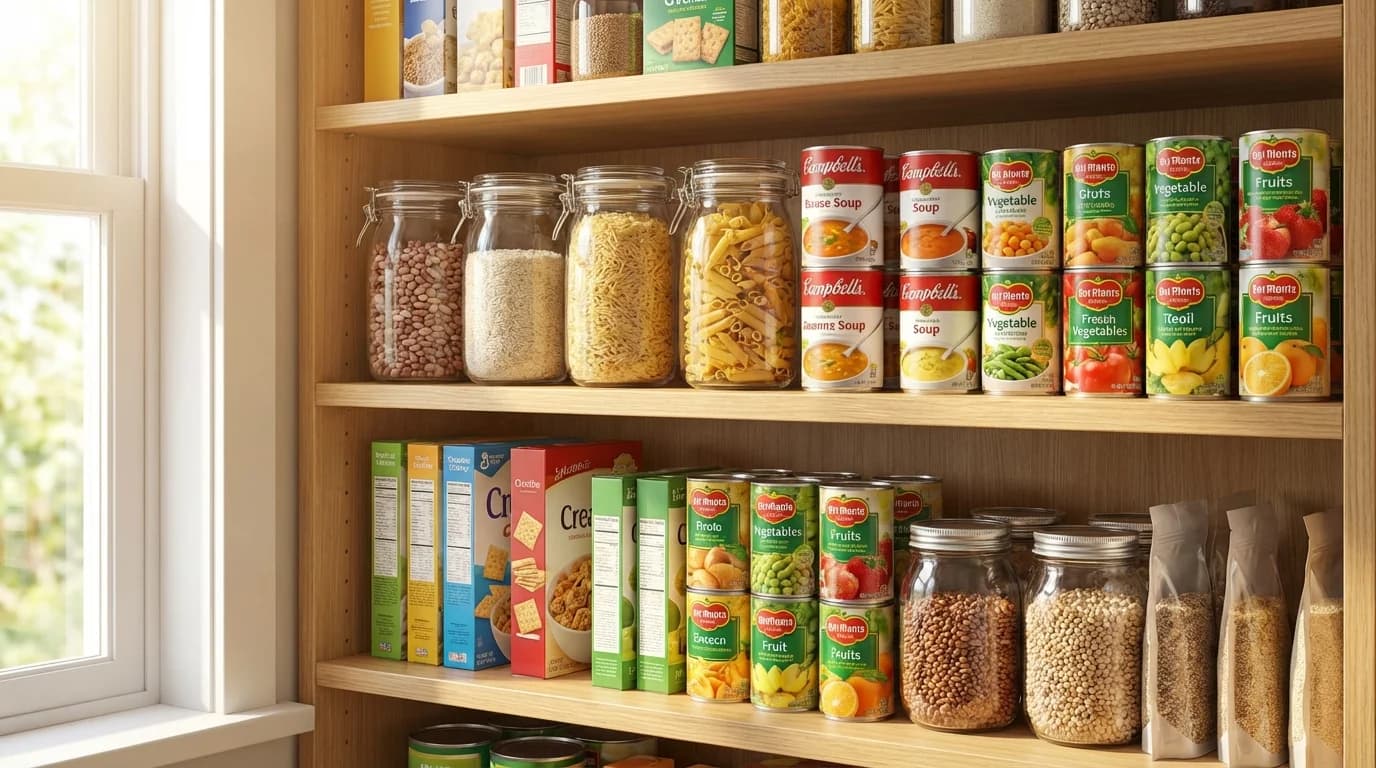
A well-stocked pantry is the foundation of budget-friendly, convenient cooking. Shelf-stable items last months or years, reduce grocery trips, prevent food waste, and provide security during emergencies or tight budget weeks. Whether you're building an emergency food supply, reducing trips to the store, or simply trying to eat at home more often, these pantry essentials will serve you well.
Why Stock Shelf-Stable Pantry Items?
Emergency Preparedness
Natural disasters, pandemics, job loss, and unexpected events happen. A well-stocked pantry provides 2-4 weeks of meals without grocery shopping.
Budget Savings
Buying in bulk when on sale saves 30-50%. Budget grocery shopping tips always include pantry stocking.
Convenience
Last-minute meals without grocery runs. Perfect for quick weeknight dinners when you're too tired to shop.
Reduced Food Waste
Shelf-stable items don't spoil quickly, unlike fresh produce that wilts in days.
Meal Flexibility
Combine pantry staples in countless ways for variety without daily shopping.
Essential Grains and Starches
Rice (White)
Shelf Life: 2-5 years (indefinite if stored properly) Best Types: Long-grain, jasmine, basmati Storage: Airtight container in cool, dry place Uses: Side dishes, fried rice, rice and beans recipes, soups
Why Stock It: Inexpensive, versatile, filling Quantity: 5-10 lbs per person per month
Pasta (Dried)
Shelf Life: 2-3 years Best Types: Spaghetti, penne, rotini, elbow macaroni Storage: Original package or airtight container Uses: Easy pasta recipes, soups, salads, casseroles
Why Stock It: Quick cooking, kid-friendly, endless variations Quantity: 3-5 lbs per person per month
See: Types of pasta guide
Oats (Rolled or Steel-Cut)
Shelf Life: 1-2 years Storage: Airtight container Uses: Breakfast, baking, smoothies, meatloaf binder
Why Stock It: Cheap, nutritious, versatile Quantity: 2-3 lbs per person per month
Quinoa
Shelf Life: 2-3 years Storage: Airtight container in cool place Uses: Salads, side dishes, breakfast bowls, casseroles
Why Stock It: Complete protein, gluten-free, nutrient-dense Quantity: 1-2 lbs per person per month
Dried Beans and Lentils
Shelf Life: 1-2 years (safe indefinitely, but texture declines) Best Types: Black beans, pinto beans, kidney beans, chickpeas, lentils Storage: Airtight containers Uses: Soups, cooking with canned beans style dishes, salads, dips
Why Stock It: Cheap protein sources, fiber-rich, filling Quantity: 3-5 lbs assorted per person per month
Cooking: Requires soaking (overnight) and 1-2 hour cook time
Flour
Shelf Life: 6-12 months (white), 3-6 months (whole grain) Best Types: All-purpose, whole wheat Storage: Airtight container; refrigerate whole grain varieties Uses: Baking, thickening, breading, homemade pasta
Why Stock It: Foundation of baking and many recipes Quantity: 5-10 lbs per person per month (if you bake)
Canned Goods
Canned Tomatoes
Shelf Life: 2-5 years Types: Diced, crushed, sauce, paste, whole Uses: Pasta sauce, soup, stew, chili, pizza sauce
Why Stock It: Flavor base for countless dishes Quantity: 12-24 cans per person per month
Canned Beans
Shelf Life: 2-5 years Types: Black beans, kidney beans, chickpeas, refried beans Uses: Cooking with canned beans, salads, soups, dips
Why Stock It: Pre-cooked convenience, protein-rich Quantity: 12-20 cans per person per month
Canned Vegetables
Shelf Life: 2-5 years Best Types: Corn, green beans, peas, carrots, mixed vegetables Uses: Sides, soups, casseroles, one-pot budget meals
Why Stock It: Vegetables without refrigeration Quantity: 12-18 cans per person per month
Canned Fruit
Shelf Life: 2-5 years Best Types: Peaches, pears, pineapple, fruit cocktail (in juice, not syrup) Uses: Desserts, breakfast, snacks
Why Stock It: Sweet treat without refrigeration Quantity: 6-12 cans per person per month
Canned Tuna and Salmon
Shelf Life: 3-5 years Types: Chunk light tuna, salmon, sardines Uses: Sandwiches, salads, pasta, casseroles
Why Stock It: Shelf-stable protein, omega-3s Quantity: 6-12 cans per person per month
Canned Chicken
Shelf Life: 2-5 years Uses: Salads, sandwiches, soups, casseroles, chicken meal prep style
Why Stock It: Pre-cooked protein, versatile Quantity: 4-8 cans per person per month
Canned Soups and Broths
Shelf Life: 2-5 years Types: Chicken/beef/vegetable broth, condensed soups, ready-to-eat soups Uses: Soups, sauces, braising liquid, cheap soup recipes
Why Stock It: Quick meals, cooking base Quantity: 12-18 cans per person per month
Oils and Condiments
Cooking Oil
Shelf Life: 1-2 years unopened Best Types: Vegetable oil, canola oil, olive oil Storage: Cool, dark place Uses: Cooking, baking, salad dressings
Why Stock It: Essential for most cooking Quantity: 1-2 large bottles per month
Vinegar
Shelf Life: Indefinite Types: White, apple cider, balsamic Uses: Dressings, marinades, pickling, cleaning
Why Stock It: Never spoils, extremely versatile Quantity: 1-2 bottles each type
See: Vinegar types uses cooking
Soy Sauce
Shelf Life: 2-3 years Uses: Stir-fries, marinades, fried rice, Asian dishes
Why Stock It: Umami flavor boost Quantity: 1 large bottle
Hot Sauce
Shelf Life: 3-5 years Uses: Flavor boost for almost anything Why Stock It: Long-lasting, adds excitement to simple foods Quantity: 2-3 bottles various types
Mayonnaise (Shelf-Stable)
Shelf Life: 3-4 months unopened Uses: Sandwiches, salads, dips, baking Note: Refrigerate after opening Quantity: 1-2 jars
Mustard
Shelf Life: 1-2 years Uses: Sandwiches, dressings, marinades Why Stock It: Lasts forever, versatile condiment Quantity: 1-2 jars
Ketchup
Shelf Life: 1 year unopened Uses: Condiment, meatloaf, sauces Quantity: 1-2 bottles
Baking Essentials
Sugar
Shelf Life: Indefinite (if kept dry) Types: White granulated, brown sugar Storage: Airtight container Uses: Baking, beverages, preserving
Why Stock It: Never spoils, essential for baking Quantity: 5-10 lbs
Salt
Shelf Life: Indefinite Types: Table salt, kosher salt Uses: Cooking, baking, preserving
Why Stock It: Essential seasoning, never expires Quantity: 2-3 containers
Baking Soda
Shelf Life: 2-3 years (cooking), indefinite (cleaning) Uses: Baking, cleaning, deodorizing
Why Stock It: Multiple uses, inexpensive Quantity: 2-3 boxes
Baking Powder
Shelf Life: 1-2 years Uses: Baking (leavening agent) Test: Add to hot water—should fizz vigorously Quantity: 1-2 containers
Vanilla Extract
Shelf Life: Indefinite (alcohol-based) Uses: Baking, desserts, beverages Why Stock It: Never spoils, transforms baked goods Quantity: 1-2 bottles
Honey
Shelf Life: Indefinite Uses: Sweetener, baking, sore throat remedy Storage: Room temperature (crystallization is normal and reversible)
Why Stock It: Never spoils, natural sweetener Quantity: 1-2 jars
Spices and Seasonings
Shelf Life: 2-3 years whole spices, 1-2 years ground Storage: Cool, dark, dry place
Essential Spices:
- Garlic powder
- Onion powder
- Black pepper
- Cumin
- Chili powder
- Oregano
- Basil
- Paprika
- Cinnamon
- Italian seasoning
Why Stock Them: Transform simple ingredients into flavorful meals Quantity: 1 container each, replace when aroma fades
See: International spices guide (related content)
Snacks and Comfort Foods
Peanut Butter
Shelf Life: 6-9 months (pantry), 1 year (refrigerated) Uses: Sandwiches, baking, snacks, protein source Why Stock It: Shelf-stable protein, kid-friendly Quantity: 2-3 jars
Crackers
Shelf Life: 6-9 months Uses: Snacks, soups, cheese pairings Why Stock It: Quick snack, long shelf life Quantity: 4-6 boxes
Nuts and Seeds
Shelf Life: 3-6 months (pantry), 1 year (refrigerated/frozen) Types: Almonds, peanuts, sunflower seeds Uses: Snacking, baking, salads, trail mix Why Stock It: Protein, healthy fats, satisfying Quantity: 2-3 lbs assorted
Dried Fruit
Shelf Life: 6-12 months Types: Raisins, cranberries, apricots, dates Uses: Snacking, baking, breakfast, salads Why Stock It: Natural sweetness, concentrated nutrition Quantity: 1-2 lbs assorted
Popcorn Kernels
Shelf Life: 1-2 years Uses: Snacking, budget-friendly entertainment Why Stock It: Cheap, whole grain, fun Quantity: 1-2 lbs
Coffee and Tea
Shelf Life: 6-12 months (best quality) Storage: Airtight container, cool place Why Stock It: Comfort, routine, energy Quantity: Per personal consumption
Shelf-Stable Dairy and Alternatives
Powdered Milk
Shelf Life: 2-10 years (depends on type) Uses: Baking, drinking, cooking when fresh milk unavailable Reconstitution: Mix with water per package instructions Quantity: 2-3 boxes
Evaporated Milk
Shelf Life: 1-2 years Uses: Baking, coffee creamer, soups, sauces Why Stock It: Shelf-stable "cream" Quantity: 6-12 cans
Shelf-Stable Plant Milks
Shelf Life: 6-12 months unopened Types: Almond, soy, oat (aseptic packaging) Note: Refrigerate after opening Quantity: 4-6 cartons
Building Your Pantry on a Budget
Start with Essentials
Week 1: Rice, pasta, canned tomatoes, beans Week 2: Flour, sugar, oil, salt, basic spices Week 3: Canned vegetables, tuna, peanut butter Week 4: Oats, dried beans, crackers, broth
Monthly Addition: $20-30 extra toward pantry staples
Buy on Sale
Stock Up: When staples go on sale, buy 3-6 months' worth Loss Leaders: Grocery stores sell certain items at cost to attract shoppers Coupons: Combine with sales for maximum savings
Buy in Bulk
Warehouse Clubs: Costco, Sam's Club, BJ's Co-ops: Split bulk purchases with friends/family Online: Amazon Subscribe & Save, Thrive Market
Store Brands
Quality: Usually identical to name brands Savings: 20-40% less expensive Staples: No difference in rice, beans, pasta, canned goods
Proper Storage for Maximum Shelf Life
Cool, Dark, and Dry
Temperature: 50-70°F ideal Light: Avoid direct sunlight (degrades nutrients and flavor) Moisture: Use airtight containers, avoid humidity
Containers
Best: Glass jars, food-grade plastic containers with tight lids Label: Contents and date purchased Organize: First in, first out (FIFO rotation)
Pest Prevention
Airtight: Prevents insects and rodents Bay Leaves: Natural pest deterrent in grain containers Check Regularly: Inspect for signs of pests or spoilage
Extending Shelf Life
Refrigerate: Whole grain flours, nuts, brown rice Freeze: Extends life of most dry goods indefinitely Oxygen Absorbers: For very long-term storage (5-25 years) Vacuum Sealing: Removes air, prevents oxidation
Pantry Meals from Shelf-Stable Items
Pasta with Marinara
Ingredients: Pasta, canned tomatoes, garlic powder, olive oil, Italian seasoning
Rice and Beans
Ingredients: Rice, canned or dried beans, onion powder, cumin, hot sauce See: Rice and beans recipes
Tuna Pasta Salad
Ingredients: Pasta, canned tuna, mayo, canned vegetables
Bean Soup
Ingredients: Dried beans, canned tomatoes, broth, onion powder, spices See: Cheap soup recipes
Peanut Butter Oatmeal
Ingredients: Oats, peanut butter, honey, dried fruit
Fried Rice
Ingredients: Rice, canned vegetables, soy sauce, oil, garlic powder
Chili
Ingredients: Canned beans, canned tomatoes, chili powder, cumin, onion powder
Chickpea Curry
Ingredients: Canned chickpeas, canned tomatoes, curry powder, coconut milk
More Ideas: Pantry staple meals
Rotating Your Pantry
First In, First Out (FIFO)
Method: Place new items behind old items Why: Ensures oldest items get used first Label: Mark purchase dates
Monthly Check
Inspect: Check expiration dates, signs of spoilage Use Soon: Items approaching expiration go to front Restock: Replace used items
Seasonal Rotation
Spring/Summer: Use canned vegetables, stock up on sale items Fall/Winter: Use items before holiday restocking
The Bottom Line
A well-stocked pantry of shelf-stable items provides security, convenience, and significant budget savings. Start small, build gradually, and focus on items your family actually eats. Within a few months, you'll have 2-4 weeks' worth of ingredients that enable delicious meals without frequent grocery trips.
Start Today: Pick 5-10 items from this list and add them to your next grocery trip. Your future self will thank you when you can create cheap family meals under 10 without leaving the house!
Ready to cook from your pantry? Explore our pantry staple meals, one-pot budget meals, and batch cooking budget for delicious inspiration using shelf-stable ingredients!
About myrecipe
myrecipe helps families save, organize, and share their favorite recipes in one place. Plan meals, create shopping lists, and preserve your culinary traditions.
Start Organizing Recipes