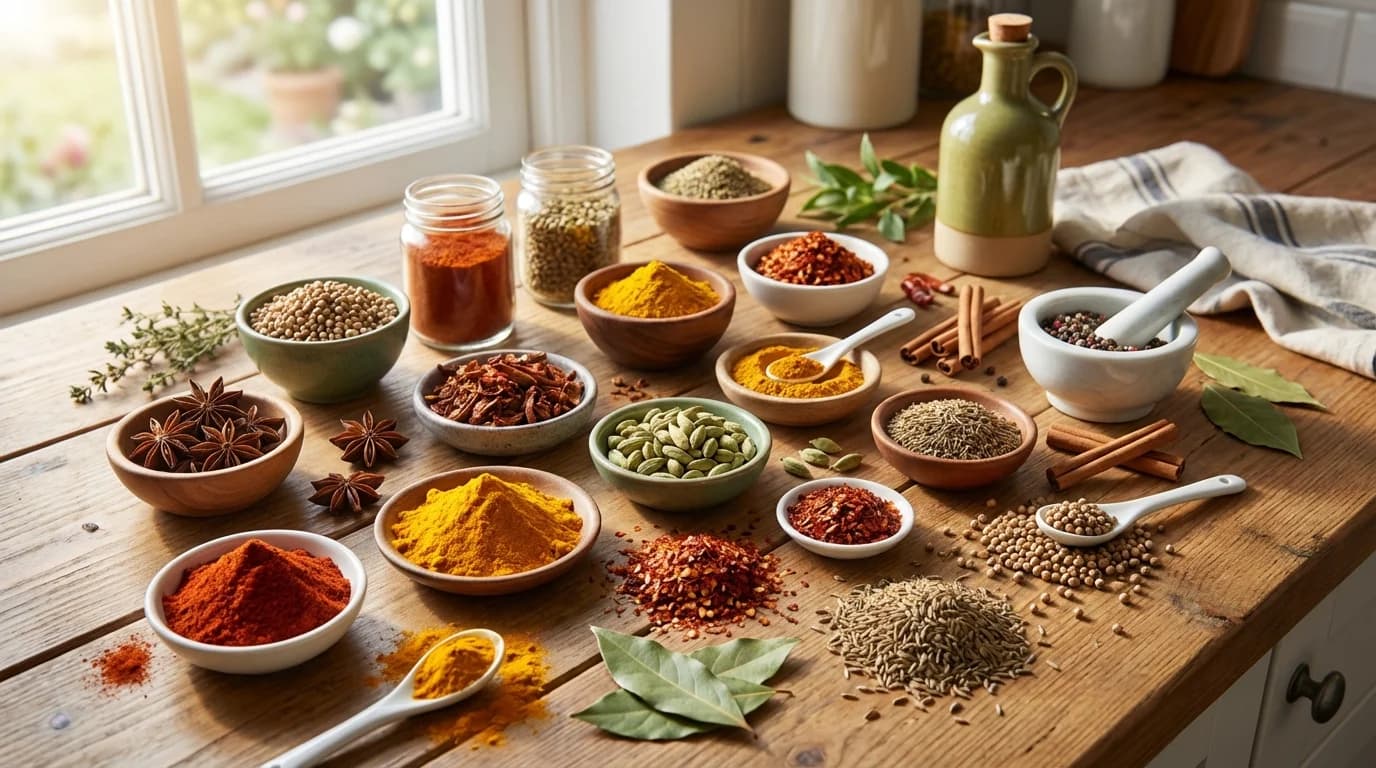
Spices are the passport to world cuisines, transforming simple ingredients into authentic dishes from Mexico, India, Thailand, Morocco, and beyond. While exploring international markets and restaurants is wonderful, you can recreate those same bold flavors at home with the right spices. This comprehensive guide will introduce you to essential spices from cuisines around the world, how to use them, and smart shopping strategies for building your global spice collection.
Understanding Spices vs. Herbs
Spices: Come from seeds, bark, roots, or fruit of plants (cinnamon, cumin, peppercorns) Herbs: Come from leaves of plants (basil, cilantro, parsley)
Shelf Life:
- Whole spices: 2-4 years
- Ground spices: 1-2 years
- Herbs (dried): 1-2 years
Storage: Cool, dark, dry place away from heat and sunlight
Indian and South Asian Spices
Indian cuisine relies on complex spice blends that create layers of flavor from earthy to bright to warming.
Cumin (Jeera)
Forms: Whole seeds or ground Flavor: Earthy, warm, slightly bitter Uses: Curries, rice dishes, dal, roasted vegetables
How to Use:
- Whole: Toast in dry pan until fragrant (30 seconds), add to hot oil at start of cooking
- Ground: Add mid-cooking to avoid burning
Essential in: Nearly all Indian dishes, Mexican cuisine, Middle Eastern food
Try: Easy stir fry recipes with cumin
Turmeric (Haldi)
Form: Ground (fresh root also available) Flavor: Earthy, slightly bitter, mustard-like Color: Bright golden yellow
Uses: Curries, rice, marinades, golden milk
Health: Anti-inflammatory properties, contains curcumin
Staining Warning: Will permanently stain counters, clothes, and light-colored cookware
Amount: A little goes a long way (usually ½-1 teaspoon per recipe)
Garam Masala
What It Is: Spice blend (varies by region) Common Ingredients: Cumin, coriander, cardamom, cinnamon, cloves, black pepper
Flavor: Warm, sweet, complex Uses: Added at end of cooking for aromatic finish
DIY Blend: Toast and grind whole spices for superior flavor
Store-Bought: Varies widely by brand—taste before buying in bulk
Coriander
Forms: Whole seeds or ground Flavor: Citrusy, slightly sweet, floral Note: Comes from cilantro plant (seeds taste completely different from leaves)
Uses: Curries, spice rubs, pickles, baking
Pairing: Works beautifully with cumin (the duo appears in many cuisines)
Cardamom
Forms: Whole pods (green or black) or ground seeds Flavor: Sweet, floral, eucalyptus-like, complex
Uses:
- Green cardamom: Sweet dishes, chai, rice, pastries
- Black cardamom: Savory dishes, biryani, garam masala
Expensive: One of the world's most expensive spices (buy whole pods for best value)
How to Use: Crack pods and use whole, or remove seeds and grind
Fenugreek
Forms: Seeds or ground Flavor: Bitter, maple-like, slightly sweet when cooked Uses: Curries, flatbreads, spice blends
Caution: Very bitter if used excessively—start with small amounts
Mustard Seeds
Types: Yellow, brown, black Flavor: Sharp when raw, nutty when cooked Uses: Pickling, tempering (tadka), curries
Technique: Heat in oil until they pop and crackle
Asafoetida (Hing)
Form: Ground powder Flavor: Pungent raw (like onions/garlic), mellow when cooked Uses: Dal, vegetarian curries, tempering
Important: Use tiny amounts (pinch) and cook in hot oil to mellow
Mexican and Latin American Spices
Mexican cuisine balances heat, earthiness, and bright citrus notes with distinctive spice combinations.
Cumin (Comino)
Same as Indian cumin: Essential in Mexican cooking Uses: Tacos, chili, beans, rice, salsas
Pairing: Often combined with chili powder and oregano
Chili Powder
What It Is: Blend of ground chiles, cumin, garlic powder, oregano Flavor: Mildly spicy, earthy, complex
Note: Different from pure ground chile peppers (cayenne, ancho)
Uses: Chili, tacos, enchiladas, dry rubs
Make Your Own: Better flavor than store-bought
Mexican Oregano
Different from: Mediterranean/Italian oregano Flavor: More citrusy, less minty than Mediterranean Uses: Salsas, beans, meats, soups
Substitute: Regular oregano works but flavor differs
Chipotle Powder
What It Is: Ground smoked jalapeños Flavor: Smoky, moderately spicy, complex Uses: Marinades, BBQ sauce, soups, beans
Alternative: Canned chipotles in adobo (more versatile but requires refrigeration)
Ancho Chile Powder
What It Is: Ground dried poblano peppers Flavor: Mild heat, slightly sweet, fruity Uses: Mole, chili, sauces, rubs
Not Spicy: Great for flavor without excessive heat
Achiote (Annatto)
Form: Seeds or ground paste Flavor: Subtle, earthy, slightly peppery Primary Use: Color (red-orange) and authentic flavor
Uses: Marinades, rice, sauces (especially Yucatan cuisine)
Middle Eastern Spices
Middle Eastern cuisine features warm, aromatic spices with complex, layered flavors.
Za'atar
What It Is: Spice blend Ingredients: Thyme, oregano, marjoram, sumac, sesame seeds, salt
Flavor: Tangy, herby, nutty Uses: Flatbreads, roasted vegetables, olive oil dip, meats
Versatile: Sprinkle on almost anything for Middle Eastern flavor
Sumac
What It Is: Ground dried berries Flavor: Tart, lemony, fruity Color: Deep red-purple
Uses: Salads, meats, rice, hummus, as finishing spice
Purpose: Adds brightness without liquid (like lemon juice does)
Baharat
What It Is: Warm spice blend (varies by region) Common Ingredients: Black pepper, coriander, paprika, cardamom, nutmeg, cumin, cloves
Flavor: Warm, slightly sweet, complex Uses: Meat rubs, rice, stews, vegetables
Ras el Hanout
What It Is: North African spice blend ("top of the shop") Ingredients: 10-30+ spices (varies greatly) Common: Cumin, coriander, cinnamon, turmeric, ginger, cardamom, cloves
Flavor: Complex, warm, sweet-savory Uses: Tagines, couscous, meat marinades, vegetables
Harissa
What It Is: North African chile paste/powder Ingredients: Chiles, garlic, cumin, coriander, caraway
Flavor: Spicy, smoky, complex Uses: Marinades, sauces, stews, rubs
Forms: Paste (refrigerate) or powder (shelf-stable)
Asian Spices Beyond India
Chinese Five-Spice
Ingredients: Star anise, cloves, cinnamon, Sichuan pepper, fennel seeds Flavor: Sweet, warm, licorice-like, complex
Uses: Marinades, roasted meats, stir-fries, braised dishes
Amount: Potent—use sparingly (¼-½ teaspoon per recipe)
Star Anise
Form: Whole star-shaped pods Flavor: Sweet, licorice-like, warming Uses: Braises, pho, Chinese stews, mulled beverages
Note: Very strong—1-2 whole stars sufficient for most recipes
Sichuan Peppercorns
Not Actually Pepper: Dried berries from prickly ash tree Flavor: Citrusy, floral, creates numbing "ma" sensation Uses: Sichuan cuisine, spice blends, stir-fries
Technique: Toast before grinding for best flavor
Gochugaru (Korean Red Pepper Flakes)
Form: Coarse flakes Flavor: Moderately spicy, slightly sweet, smoky Uses: Kimchi, stews, marinades, bibimbap
Different from: Italian red pepper flakes (less spicy, more complex)
Shichimi Togarashi (Japanese Seven-Spice)
Ingredients: Chili pepper, sesame seeds, nori, orange peel, ginger, Sichuan pepper, poppy seeds Flavor: Spicy, citrusy, complex
Uses: Noodles, rice, grilled meats, finishing spice
Sprinkle: On ramen, udon, donburi
European and Mediterranean Spices
Paprika
Types: Sweet (mild), hot (spicy), smoked (pimentón) Origin: Hungary, Spain Flavor: Varies by type
Uses:
- Sweet: Goulash, deviled eggs, garnish
- Hot: When you want heat with sweet pepper flavor
- Smoked: Paella, Spanish dishes, BBQ
Best: Spanish smoked paprika (pimentón) for depth
Herbes de Provence
What It Is: French herb blend Ingredients: Thyme, rosemary, oregano, marjoram, lavender
Flavor: Aromatic, slightly floral, herby Uses: Roasted meats, vegetables, French cuisine
Italian Seasoning
What It Is: Herb blend Ingredients: Basil, oregano, rosemary, thyme, marjoram
Flavor: Aromatic, classic Italian Uses: Pasta sauce, pizza, chicken, vegetables
Fresh is Better: For Italian food, fresh herbs preferred when possible
Saffron
What It Is: Stigmas from crocus flowers World's Most Expensive Spice: $500-$5,000 per pound
Flavor: Floral, honey-like, earthy Color: Golden yellow
Uses: Paella, risotto Milanese, bouillabaisse, Persian rice
How to Use: Steep threads in warm water before adding to dish
Amount: Few threads (10-20) go a long way
Caribbean and African Spices
Allspice
Form: Whole berries or ground Flavor: Combination of cinnamon, nutmeg, cloves (hence the name) Origin: Jamaica
Uses: Jerk seasoning, baking, mulled drinks, pickling
Jerk Seasoning
What It Is: Jamaican spice blend Ingredients: Allspice, Scotch bonnet peppers, thyme, cinnamon, nutmeg, garlic
Flavor: Spicy, sweet, aromatic Uses: Chicken, pork, seafood, vegetables
Berbere
What It Is: Ethiopian spice blend Ingredients: Chiles, fenugreek, coriander, cardamom, black pepper, cinnamon, cumin
Flavor: Complex, spicy, warm Uses: Wat (stews), lentils, meat dishes
Building Your International Spice Collection
Starter Collection (10 Spices)
For maximum versatility across cuisines:
- Cumin (ground and whole)
- Paprika (sweet and smoked)
- Coriander (ground)
- Turmeric (ground)
- Chili powder
- Cinnamon (ground)
- Black pepper (whole peppercorns)
- Garlic powder
- Ginger (ground)
- Red pepper flakes
Cost: $20-30 total Covers: Most basic international cooking
Intermediate Collection (Add 10 More)
- Garam masala
- Chinese five-spice
- Cardamom (pods)
- Star anise
- Sumac
- Za'atar blend
- Whole cumin seeds
- Mustard seeds
- Fenugreek
- Mexican oregano
Cost: Additional $30-40 Covers: More authentic regional dishes
Advanced Collection (Specialty Spices)
- Saffron (small amount)
- Berbere
- Ras el Hanout
- Harissa
- Asafoetida
- Sichuan peppercorns
- Shichimi togarashi
- Achiote
Cost: $50-100+ Purpose: Authentic regional specialties
Smart Spice Shopping Strategies
Buy Whole When Possible
Advantages: Longer shelf life, superior flavor Toast and Grind: Release oils and intensify flavor Tools: Spice grinder or mortar and pestle
Best Whole: Cumin, coriander, peppercorns, cardamom, star anise
Shop Ethnic Markets
Huge Savings: 50-75% less than grocery stores Quality: Often fresher (higher turnover) Variety: Authentic blends and hard-to-find spices
Where: Indian markets, Mexican groceries, Asian supermarkets, Middle Eastern shops
Buy in Bulk (Small Amounts)
Bulk Bins: Buy only what you need Fresh: Faster turnover = fresher spices Cost: Pay for quantity used, not packaging
Where: Natural food stores, co-ops, some grocery stores
Start with Blends
Advantages: Pre-mixed ratios, authentic flavors Examples: Garam masala, Chinese five-spice, za'atar, berbere Cost-Effective: Cheaper than buying each component
Make Your Own Blends
Control: Adjust to taste preferences Freshness: Superior to store-bought Cost: Often cheaper when buying whole spices in bulk
Try: Our cooking oils comparison for toasting spices
Using Spices Effectively
Toasting Whole Spices
Why: Releases essential oils, intensifies flavor Method: Dry pan over medium heat, 30-60 seconds until fragrant Warning: Burns quickly—watch carefully!
Blooming Ground Spices
Why: Wakes up flavor compounds Method: Add to hot oil for 15-30 seconds before other ingredients Works Best: Cumin, coriander, turmeric, curry powder
Layering Flavors
Early: Whole spices, bay leaves Middle: Ground spices (avoid burning) Late: Delicate spices, fresh herbs Finish: Garam masala, fresh herbs, lemon juice
Avoiding Common Mistakes
Mistake #1: Adding spices too early (burn and become bitter) Fix: Most ground spices mid-cooking, delicate ones at end
Mistake #2: Not tasting as you go Fix: Add gradually, taste, adjust
Mistake #3: Using old spices Fix: Smell test—if no aroma, replace
Mistake #4: Too much of potent spices Fix: Start small with asafoetida, cloves, saffron, fenugreek
Spice Pairing Guide
Earthy Spices: Cumin, turmeric, coriander Warm Spices: Cinnamon, cardamom, nutmeg, allspice Bright Spices: Sumac, lemon pepper, citrus zest Hot Spices: Cayenne, chili powder, black pepper, gochugaru
Complementary Pairs:
- Cumin + coriander (universal)
- Cinnamon + cardamom (sweet or savory)
- Turmeric + black pepper (health and flavor)
- Paprika + cumin (Spanish, Mexican, Middle Eastern)
Storage and Organization
Proper Storage
Containers: Glass jars with tight lids Location: Cool, dark cupboard away from stove Labels: Name and purchase date Whole vs. Ground: Store separately
Organizing Your Collection
By Cuisine: Indian section, Mexican section, etc. By Frequency: Most-used in front Alphabetical: Easy to find specific spices Drawer Inserts: Maximize space, see everything at once
When to Replace
Test: Rub small amount between fingers and smell Strong Aroma: Still good Faint or No Smell: Replace General Timeline: Ground spices 1-2 years, whole spices 2-4 years
Cooking with International Spices
Indian Dal
Spices: Cumin seeds, turmeric, coriander, garam masala Method: Toast cumin, add other spices to lentils See: Cheap healthy meals
Mexican Black Beans
Spices: Cumin, chili powder, Mexican oregano Method: Bloom spices in oil before adding beans See: Cooking with canned beans
Middle Eastern Rice
Spices: Cinnamon, cardamom, cumin, allspice Method: Toast whole spices with rice before cooking See: Rice varieties explained
Chinese Stir-Fry
Spices: Five-spice, ginger, garlic, Sichuan pepper Method: Quick, high heat cooking See: Easy stir fry recipes
The Bottom Line
International spices are your ticket to authentic flavors from cuisines around the world. Start with a basic collection of versatile spices, shop smartly at ethnic markets, and experiment fearlessly. The same simple ingredients—rice, beans, chicken, vegetables—transform completely when seasoned with spices from different culinary traditions.
Start Today: Pick one cuisine that interests you, buy 3-4 essential spices for that region, and try one new recipe this week. Your taste buds will thank you!
Ready to explore global flavors? Use your new spice knowledge with our 5-ingredient recipes, cheap healthy meals, and quick weeknight dinners for delicious international-inspired cooking!
About myrecipe
myrecipe helps families save, organize, and share their favorite recipes in one place. Plan meals, create shopping lists, and preserve your culinary traditions.
Start Organizing Recipes