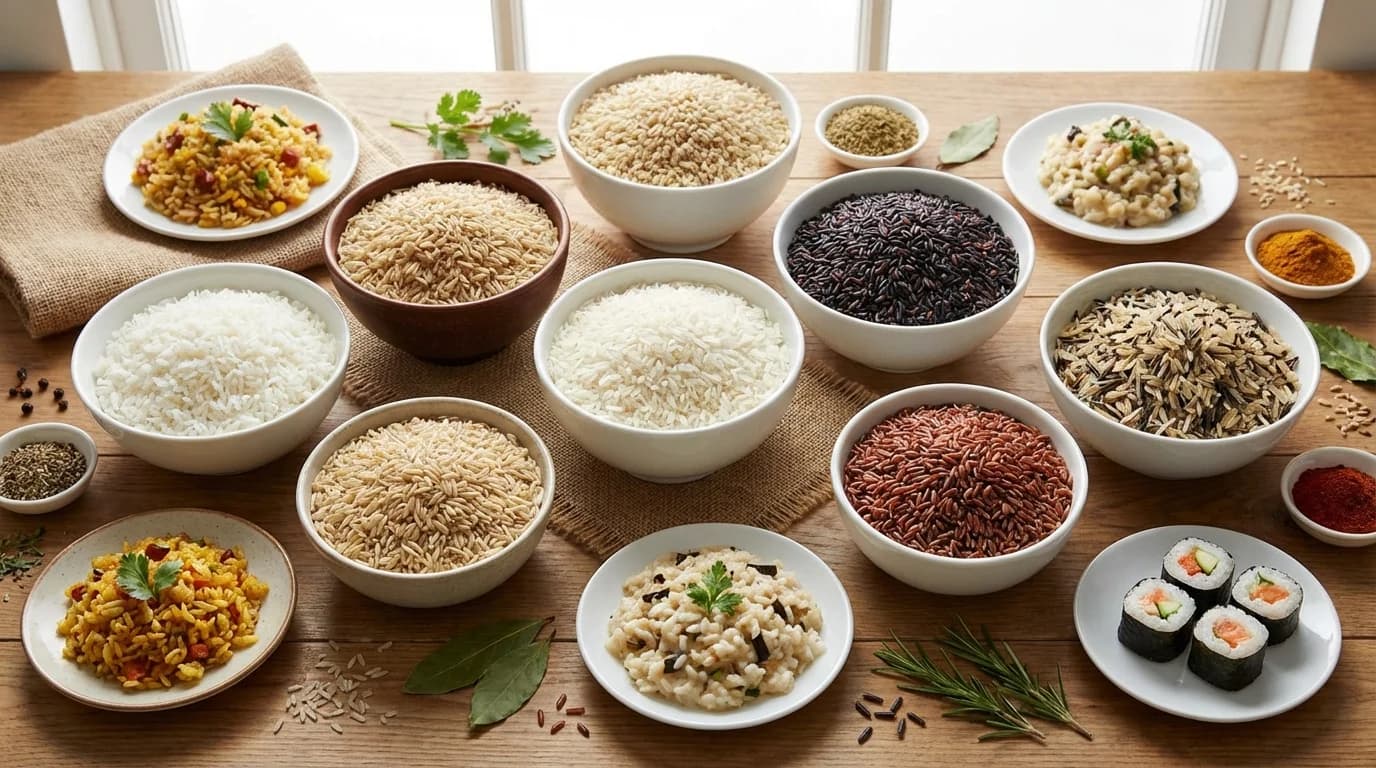
Rice feeds more than half the world's population, yet many home cooks stick to just one or two varieties without realizing how the right rice can transform a dish. Using jasmine rice for risotto or arborio for fried rice will lead to disappointing results. Understanding rice varieties and their best applications is essential for creating authentic, delicious dishes while making the most of this affordable, versatile shelf stable pantry item.
Understanding Rice Categories
Rice varieties fall into three main categories based on grain length, which affects texture and cooking properties:
Long-Grain Rice
Characteristics: 4-5 times longer than wide, separates when cooked, fluffy texture Starch Content: Lower amylose (less sticky) Common Uses: Pilafs, fried rice, side dishes, Mexican and Indian cuisine Examples: Basmati, jasmine, American long-grain
Medium-Grain Rice
Characteristics: 2-3 times longer than wide, slightly sticky when cooked Starch Content: Moderate amylose Common Uses: Risotto, paella, puddings, sushi (some varieties) Examples: Arborio, Valencia, Calrose
Short-Grain Rice
Characteristics: Almost round, very sticky when cooked, clumps together Starch Content: High amylose (very sticky) Common Uses: Sushi, Asian desserts, rice balls Examples: Sushi rice, glutinous rice, mochi rice
Popular Rice Varieties Explained
Basmati Rice: The Aromatic King
Origin: India and Pakistan Type: Long-grain Characteristics:
- Nutty, floral aroma
- Fluffy, separate grains
- Elongates when cooked (nearly doubles in length)
- Delicate flavor
Best For:
- Indian curries and biryani
- Persian rice dishes
- Pilafs
- Side dishes for grilled meats
Cooking Ratio: 1 cup rice : 1.5 cups water Cooking Time: 15-20 minutes Pro Tip: Rinse until water runs clear, then soak 30 minutes for even fluffier results
White vs. Brown Basmati:
- White: Traditional, cooks faster, more delicate
- Brown: Nuttier flavor, more fiber, 40-45 minute cooking time
Cost: $$ (moderate, but a little goes far)
Jasmine Rice: The Thai Favorite
Origin: Thailand Type: Long-grain Characteristics:
- Subtle floral aroma (similar to jasmine flowers)
- Soft, slightly sticky texture
- Tender and moist
- Subtle sweet flavor
Best For:
- Thai and Vietnamese cuisine
- Stir-fries
- Curries
- Coconut rice
- Easy stir fry recipes
Cooking Ratio: 1 cup rice : 1.25 cups water Cooking Time: 15-18 minutes Pro Tip: Don't rinse if you want traditional sticky texture; rinse for separate grains
Why It's Different from Basmati:
- Stickier texture (higher moisture)
- More subtle aroma
- Doesn't elongate as much
- Slightly sweeter
Cost: $ (very affordable and widely available)
Arborio Rice: The Risotto Star
Origin: Italy Type: Medium-grain Characteristics:
- High starch content
- Creamy when cooked slowly
- Firm "al dente" center when done properly
- Absorbs flavors exceptionally well
Best For:
- Risotto (the traditional choice)
- Rice pudding
- Arancini (rice balls)
Cooking Method: Gradual liquid addition with constant stirring (not boiled like other rice) Cooking Time: 18-20 minutes with frequent stirring Pro Tip: Never rinse—you need the starch for creaminess!
Substitutes: Carnaroli or Vialone Nano (other Italian risotto rice)
Cost: $$ (moderate, but worth it for authentic risotto)
Sushi Rice: The Japanese Essential
Origin: Japan Type: Short-grain Characteristics:
- Very sticky when cooked
- Slightly sweet flavor
- Glossy appearance
- Holds together perfectly for sushi
Best For:
- Sushi and sashimi
- Onigiri (rice balls)
- Donburi (rice bowls)
- Japanese rice porridge
Cooking Ratio: 1 cup rice : 1.1 cups water Cooking Time: 15 minutes + 10 minute rest Essential Step: Season with rice vinegar, sugar, and salt mixture while warm
Pro Tip: Rinse 3-5 times until water runs clear for best texture
Different from Regular Short-Grain: Selected specifically for stickiness and flavor
Cost: $ to $$ (affordable, especially at Asian markets)
Brown Rice: The Whole Grain Option
What It Is: Any rice variety with bran layer intact Type: Available in long, medium, and short-grain Characteristics:
- Nutty, earthy flavor
- Chewy texture
- Higher fiber and nutrients
- Longer cooking time
Best For:
- Health-conscious side dishes
- Grain bowls
- Fried rice (use day-old)
- Cheap healthy meals
Cooking Ratio: 1 cup rice : 2.5 cups water Cooking Time: 40-50 minutes Pro Tip: Add 1 tablespoon oil or butter to prevent sticking
Nutrition Advantage: More fiber, vitamins, and minerals than white rice
Shelf Life: Shorter than white rice (6 months) due to oil in bran
Cost: $ to $$ (slightly more than white rice)
Wild Rice: Not Actually Rice!
What It Is: Aquatic grass seed, not true rice Origin: North America Characteristics:
- Dark brown/black color
- Nutty, earthy flavor
- Chewy, firm texture
- Very nutritious
Best For:
- Pilafs and stuffing
- Salads
- Mixed with other rice
- Soups
Cooking Ratio: 1 cup wild rice : 3 cups water Cooking Time: 45-60 minutes Pro Tip: Mix with brown or white rice (1:2 ratio) for better texture and value
Nutrition: Highest in protein and fiber of all "rice" varieties
Cost: $$$ (expensive, but nutrient-dense)
Black Rice (Forbidden Rice): The Antioxidant Powerhouse
Origin: China Type: Medium-grain Characteristics:
- Deep purple-black color
- Nutty, slightly sweet flavor
- Chewy texture
- Turns purple when cooked
Best For:
- Asian-inspired dishes
- Rice pudding
- Salads (beautiful presentation)
- Special occasions
Cooking Ratio: 1 cup rice : 2.25 cups water Cooking Time: 30-35 minutes Nutrition: Extremely high in antioxidants (anthocyanins)
Cost: $$ to $$$ (premium price for premium nutrition)
Red Rice: The Colorful Alternative
Origin: Various (Bhutanese, Thai, Camargue) Type: Long to medium-grain Characteristics:
- Reddish-brown color
- Nutty flavor
- Firm texture
- Partially hulled
Best For:
- Pilafs
- Salads
- Side dishes
- Mixing with other rice
Cooking Ratio: 1 cup rice : 2 cups water Cooking Time: 30-40 minutes Nutrition: High in fiber and minerals
Cost: $$ (moderate)
Glutinous Rice (Sweet Rice, Sticky Rice): The Dessert Specialist
Origin: Southeast Asia Type: Short-grain Characteristics:
- Extremely sticky
- Translucent when cooked
- Slightly sweet
- Chewy texture
Best For:
- Asian desserts (mango sticky rice)
- Dumplings
- Rice cakes
- Dim sum
Cooking Method: Usually steamed, not boiled Pro Tip: Soak 4-8 hours before steaming for best results
Note: "Glutinous" refers to texture, not gluten content (rice is gluten-free!)
Cost: $ to $$ (affordable at Asian markets)
Converted Rice (Parboiled): The Forgiving Option
What It Is: Rice parboiled in husk before milling Type: Usually long-grain Characteristics:
- Firmer texture
- Separate grains
- Nearly impossible to overcook
- Slightly yellow color
Best For:
- Beginners
- Large batch cooking
- Batch cooking budget meal prep
- When you need foolproof results
Cooking Ratio: 1 cup rice : 2.25 cups water Cooking Time: 20-25 minutes Advantage: Retains more nutrients than regular white rice
Brand: Uncle Ben's is most common Cost: $ (affordable)
Instant Rice: The Emergency Option
What It Is: Pre-cooked and dehydrated Cooking Time: 5-10 minutes Characteristics: Convenient but inferior texture and flavor
Best For:
- Emergencies
- Camping
- When time is extremely limited
Downside: Mushy texture, less flavorful, more expensive per serving
Better Alternative: Make extra rice and freeze portions for quick reheating
Quick Reference Guide
| Rice Type | Grain Length | Texture | Best For | Cooking Time |
|---|---|---|---|---|
| Basmati | Long | Fluffy, separate | Indian, Persian, pilafs | 15-20 min |
| Jasmine | Long | Soft, slightly sticky | Thai, stir-fries | 15-18 min |
| Arborio | Medium | Creamy, al dente | Risotto | 18-20 min |
| Sushi Rice | Short | Sticky, glossy | Sushi, rice balls | 15 min + rest |
| Brown Rice | Varies | Chewy, nutty | Health-conscious sides | 40-50 min |
| Wild Rice | Long | Firm, chewy | Pilafs, salads | 45-60 min |
| Black Rice | Medium | Chewy, nutty | Special dishes | 30-35 min |
| Glutinous | Short | Very sticky | Desserts | Steam after soaking |
| Converted | Long | Firm, separate | Large batches | 20-25 min |
Perfect Rice Cooking Tips
The Rinse Question
Always Rinse: Basmati, sushi rice, jasmine (for separate grains) Never Rinse: Arborio, risotto rice (need the starch) Optional: American long-grain, brown rice
How to Rinse: Place in fine-mesh strainer, run cold water while stirring with hand until water runs clear (usually 3-5 rinses)
The Ratio Rule
General Guidelines (adjust based on variety):
- Long-grain white: 1:1.5 to 1:2 (rice:water)
- Medium-grain: 1:1.5
- Short-grain: 1:1.25
- Brown rice: 1:2.5
- Wild rice: 1:3
Altitude Adjustment: Add slightly more water at high altitudes
The Cooking Method
Basic Stovetop:
- Combine rice and water in pot
- Bring to boil
- Reduce to lowest heat, cover
- Cook recommended time without lifting lid
- Remove from heat, let rest 5-10 minutes
- Fluff with fork
Rice Cooker: Follow rice cooker ratios (often slightly different from stovetop)
Instant Pot: 1:1 ratio for white rice, high pressure 3-4 minutes, natural release 10 minutes
Common Rice Mistakes
Mistake #1: Lifting the lid during cooking Fix: Resist temptation—steam needs to stay trapped
Mistake #2: Not letting rice rest Fix: 5-10 minute rest redistributes moisture
Mistake #3: Wrong water ratio Fix: Measure carefully; adjust based on variety
Mistake #4: High heat throughout cooking Fix: Boil first, then lowest possible heat
Mistake #5: Stirring while cooking Fix: Only stir before covering, then leave alone (except risotto)
Budget-Friendly Rice Strategy
Best Value Options
- Jasmine Rice: Versatile, affordable, delicious
- American Long-Grain: Cheapest option, works for most uses
- Brown Rice: Slight upcharge but nutritional benefits
- Basmati: Worth the cost for special dishes
Buy in Bulk: Rice keeps for years; buying 10-20 lb bags saves significantly
Skip Instant: Costs 3-4x more than regular rice for inferior results
Rice for Budget Cooking
Stretches Meals: Combine with cheap protein sources like beans Fills You Up: High satiety factor for low cost Versatile Base: Works for rice and beans recipes, one-pot budget meals, and more
Cost Comparison: Rice costs $0.20-0.40 per serving vs. $2-5 for other starches
Storage and Shelf Life
White Rice: 2+ years in cool, dry place Brown Rice: 6 months (oils in bran can go rancid) Cooked Rice: 4-6 days refrigerated, 6 months frozen
Optimal Storage:
- Airtight container
- Cool, dark, dry location
- Away from strong odors (rice absorbs smells)
Freezing Cooked Rice:
- Cool completely
- Portion into freezer bags
- Flatten for quick thawing
- Freeze up to 6 months
- Microwave from frozen or thaw in fridge
Perfect for: Freezer meal prep and meal prep for beginners
The Bottom Line
Rice is one of the most versatile, affordable, and nutritious ingredients in your pantry. While you can use any rice for any purpose in a pinch, understanding the differences helps you create authentic, delicious dishes and avoid disappointing results.
Start Simple: Keep jasmine or basmati for everyday cooking, then add specialty varieties as you explore new cuisines.
Practice: Perfect rice cooking is a skill that improves with repetition.
Experiment: Try a new variety each month to expand your rice knowledge and recipe repertoire.
Remember: the "best" rice is the one that suits your recipe, budget, and taste preferences. Armed with this guide, you'll always choose wisely!
Ready to put your rice knowledge to use? Check out our rice and beans recipes, cheap soup recipes with rice, and one-pot meals featuring this versatile ingredient!
About myrecipe
myrecipe helps families save, organize, and share their favorite recipes in one place. Plan meals, create shopping lists, and preserve your culinary traditions.
Start Organizing Recipes