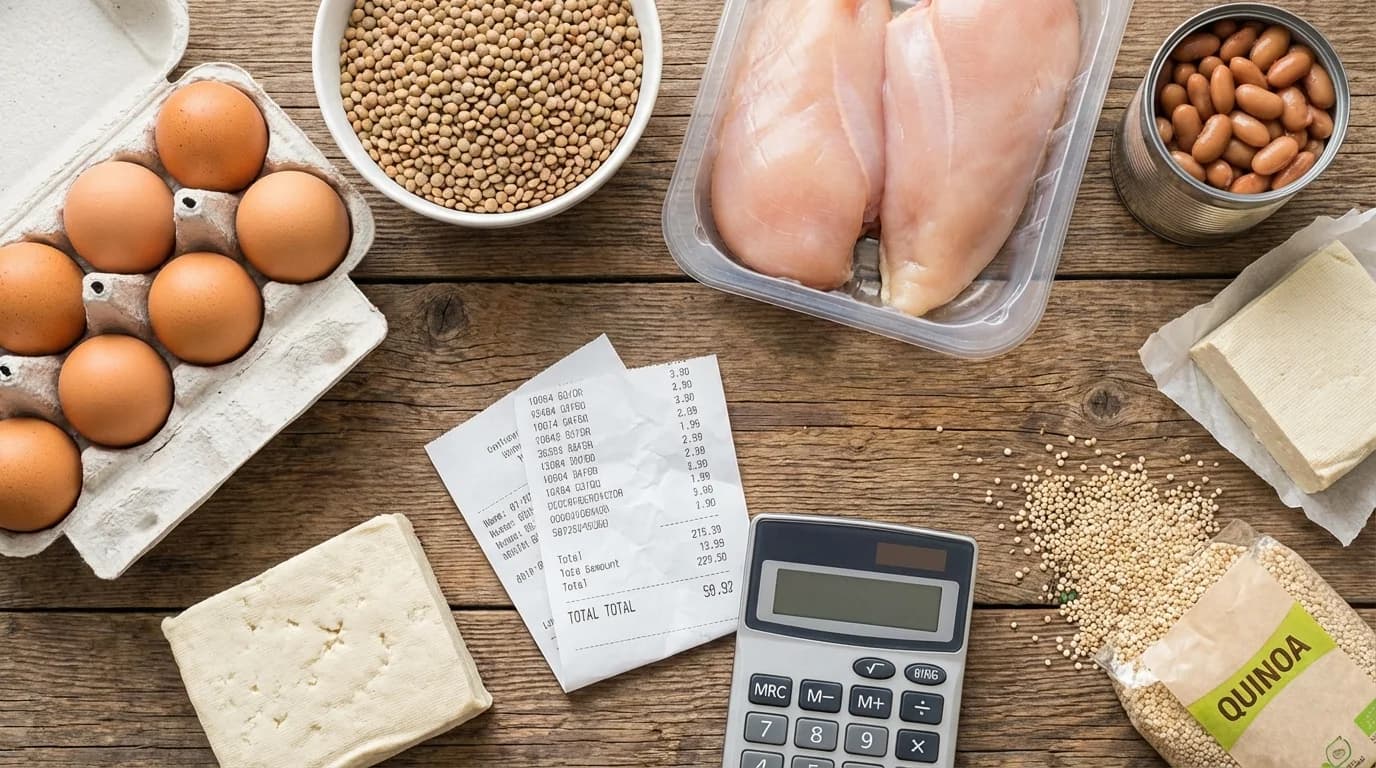
Protein doesn't have to break the bank. Whether you're trying to build muscle, maintain a healthy weight, or just feed your family nutritious meals, finding affordable protein sources is one of the smartest ways to stretch your grocery budget.
Key Takeaways
- Eggs are the #1 budget protein: 6g protein for about $0.25 each
- Dried beans cost $0.03-0.05 per gram of protein vs $0.08-0.12 for chicken
- Chicken thighs offer better value than breasts—same protein, lower price
- Canned tuna and cottage cheese are affordable complete proteins
- Combine grains + legumes for complete amino acid profiles at lowest cost
The truth is, some proteins cost ten times more than others for the same nutritional value. If you're buying chicken breast when you could be eating eggs or lentils, you might be wasting hundreds of dollars a year without realizing it.
Let's break down the cheapest protein sources available at your grocery store, ranked by actual cost per gram of protein. For meal ideas using these proteins, check out our cheap healthy meals guide. These aren't just random guesses - we've done the math so you can make smarter choices at the checkout.
The Real Cost of Protein: How We Ranked Them
To compare protein sources fairly, we calculated the cost per gram of protein using average national grocery prices. This method shows you exactly where your money goes and which foods give you the most bang for your buck.
Here's what we found:
| Protein Source | Cost per Gram | Protein per Serving | Avg. Price | Tier |
|---|---|---|---|---|
| Dried lentils | $0.02 | 18g per cup | $1.50/lb | Budget Champion |
| Dried black beans | $0.02 | 15g per cup | $1.50/lb | Budget Champion |
| Peanut butter | $0.03 | 8g per 2 tbsp | $3.00/jar | Budget Champion |
| Eggs | $0.04 | 6g per egg | $3.00/dozen | Budget Champion |
| Canned tuna | $0.04 | 25g per can | $1.00/can | Budget Champion |
| Whole chicken | $0.05 | 25g per cup | $1.50/lb | Middle Ground |
| Ground turkey | $0.06 | 22g per 4oz | $3.50/lb | Middle Ground |
| Cottage cheese | $0.07 | 24g per cup | $3.50/16oz | Middle Ground |
| Canned chicken | $0.08 | 13g per 2oz | $2.50/can | Middle Ground |
| Greek yogurt | $0.09 | 17g per cup | $4.50/32oz | Middle Ground |
| Chicken breast | $0.12 | 31g per 4oz | $3.50/lb | Pricier Option |
| Ground beef (80/20) | $0.13 | 22g per 4oz | $5.00/lb | Pricier Option |
| Protein powder | $0.15-$0.30 | 25g per scoop | $30/tub | Pricier Option |
| Salmon | $0.25 | 25g per 4oz | $10.00/lb | Pricier Option |
| Steak | $0.40+ | 28g per 4oz | $12.00/lb | Pricier Option |
Notice anything surprising? The proteins we see advertised most often - chicken breast, salmon, steak - are actually among the most expensive options. Meanwhile, humble lentils and eggs offer incredible value.
Top 10 Cheapest Protein Sources (With Real Numbers)
Let's dive deeper into the best budget proteins and how to use them.
1. Dried Lentils and Beans ($0.02/gram)
Lentils and beans are the undisputed champions of budget protein. A one-pound bag costs around $1.50 and contains about 75 grams of protein. They're also packed with fiber, which keeps you full longer.
How to use them: Soups, curries, tacos, burger patties, salads, or as a side dish. They cook faster than other beans and don't need pre-soaking.
2. Peanut Butter ($0.03/gram)
Two tablespoons of peanut butter pack 8 grams of protein for about $0.25. It's shelf-stable, kid-friendly, and incredibly versatile.
How to use it: Smoothies, oatmeal, sandwiches, satay sauces, or straight from the jar (we won't judge).
3. Eggs ($0.04/gram)
At roughly $3 for a dozen, eggs deliver about 72 grams of protein total. They're also one of the most complete proteins available, containing all nine essential amino acids.
How to use them: Scrambled, hard-boiled, fried, in omelets, baked goods, or added to fried rice. When you save recipes on myrecipe, you'll find countless ways to use eggs creatively.
4. Canned Tuna ($0.04/gram)
A 5-ounce can costs about $1 and contains 25 grams of protein. Choose light tuna over albacore to save money and reduce mercury exposure.
How to use it: Tuna salad, casseroles, pasta dishes, or mixed into scrambled eggs for extra protein.
5. Whole Chicken ($0.05/gram)
Buying a whole chicken instead of parts saves serious money. You'll pay around $1.50 per pound compared to $3-4 for chicken breast. Plus, you can use the bones for stock.
How to use it: Roast it whole, then use the meat for multiple meals throughout the week. The leftovers work in salads, soups, tacos, and sandwiches.
6. Ground Turkey ($0.06/gram)
Ground turkey typically costs $3-4 per pound and contains about 80 grams of protein. It's leaner than ground beef but costs less.
How to use it: Meatballs, burgers, tacos, chili, pasta sauce, or stuffed peppers.
7. Cottage Cheese ($0.07/gram)
A 16-ounce container runs about $3 and packs 50 grams of protein. It's also high in calcium and works in both sweet and savory dishes.
How to use it: With fruit, blended into smoothies, as a ricotta substitute in lasagna, or mixed into scrambled eggs.
8. Tofu ($0.08/gram)
A 14-ounce block costs around $2.50 and contains 30 grams of protein. It's a complete protein and takes on whatever flavors you cook it with.
How to use it: Stir-fries, scrambles, grilled, baked, or blended into smoothies and desserts.
9. Canned Chicken ($0.08/gram)
Similar to canned tuna but with a milder flavor. A 12.5-ounce can costs about $3 and contains 35 grams of protein.
How to use it: Quick chicken salad, quesadillas, soup, or mixed into pasta.
10. Greek Yogurt ($0.09/gram)
Plain Greek yogurt offers about 17 grams of protein per cup for roughly $1.50. Buy the large tubs instead of single servings to save even more.
How to use it: Breakfast bowls, smoothies, as a sour cream substitute, in marinades, or as a base for dips.
How to Make Cheap Protein Work for You
Knowing which proteins are cheapest is only half the battle. Here's how to actually incorporate them into your meal plan:
Buy in bulk when possible. Dried beans, lentils, and rice store for years. Stock up when they're on sale.
Cook once, eat multiple times. Roast a whole chicken on Sunday and use it in four different meals throughout the week. The same goes for a big batch of beans or lentils.
Mix expensive and cheap proteins. Stretch ground beef by adding lentils or beans. You'll barely notice the difference, but your wallet will.
Learn to season properly. Bland protein is the enemy of budget eating. When you build your collection on myrecipe, you'll discover flavor combinations that make even simple beans taste incredible.
Don't waste leftovers. That last bit of rotisserie chicken? Toss it into fried rice. The remaining eggs? Make egg salad. Every scrap counts.
Common Mistakes People Make with Budget Protein
Even when choosing cheap protein, it's easy to waste money if you're not careful. Here are the biggest mistakes we see:
Buying pre-cooked or pre-cut options. That bag of grilled chicken strips costs twice as much as raw chicken you cook yourself. Pre-shredded rotisserie chicken? Even worse. Do the work yourself and save.
Throwing away protein-rich scraps. Chicken bones make incredible stock. The liquid from canned beans (aquafaba) works as an egg white substitute. Leftover egg yolks can be frozen for later use.
Not comparing unit prices. Just because something is on sale doesn't mean it's the cheapest option. Always check the price per pound or price per ounce on the shelf tag.
Ignoring plant proteins completely. Some people think beans and lentils are "inferior" protein, but they're nutritionally complete when eaten with grains. Plus, they're five times cheaper than meat.
Buying organic when it doesn't matter. For eggs, organic makes sense. For canned beans or frozen chicken? The nutritional difference is minimal. Save your money for things that matter.
Not planning meals around sales. When chicken thighs go on sale for $0.99/lb, that's the week to meal prep chicken. Stock your freezer and save big.
Overlooking frozen options. Frozen chicken, shrimp, and fish are often cheaper than fresh and just as nutritious. They also last longer, reducing waste.
Building a Week of Meals with Cheap Protein
Here's what a budget-friendly, protein-rich week might look like:
| Day | Meal | Total Cost | Servings | Cost per Serving | Main Protein |
|---|---|---|---|---|---|
| Monday | Lentil curry over rice | $2.00 | 4 | $0.50 | Lentils |
| Tuesday | Egg fried rice with vegetables | $3.00 | 4 | $0.75 | Eggs |
| Wednesday | Black bean tacos with slaw | $6.00 | 4 | $1.50 | Black beans |
| Thursday | Whole roasted chicken with veggies | $8.00 | 6 | $1.33 | Whole chicken |
| Friday | Tuna pasta salad with chickpeas | $5.00 | 4 | $1.25 | Canned tuna |
| Saturday | Ground turkey chili with beans | $7.00 | 6 | $1.17 | Ground turkey |
| Sunday | Yogurt parfaits + chicken soup | $4.00 | 4 | $1.00 | Greek yogurt |
| Weekly Total | $35.00 | 32 | $1.09 avg |
That's 32 servings of protein-rich meals for about $35, or roughly $1 per serving. Compare that to restaurant meals at $12-15 each.
Frequently Asked Questions
Q: Is plant protein as good as animal protein? A: Plant proteins contain all the essential amino acids your body needs, though some are lower in specific amino acids. The solution is simple: eat a variety of plant proteins throughout the day. Beans plus rice, peanut butter on whole grain bread, or lentils with quinoa all create complete protein profiles. The myth that you need to combine them in the same meal has been debunked.
Q: How much protein do I actually need per day? A: The general recommendation is 0.36 grams per pound of body weight for sedentary adults. That means a 150-pound person needs about 54 grams daily. Active people and athletes need more, around 0.5-0.8 grams per pound. Most Americans already get enough protein, but we often pay too much for it.
Q: Can I build muscle eating only cheap protein sources? A: Absolutely. Bodybuilders have built impressive physiques on eggs, tuna, chicken thighs, and cottage cheese for decades. The key is getting enough total protein and calories, not where that protein comes from. A can of tuna and a scoop of peanut butter provide the same muscle-building amino acids as an expensive steak.
Q: Are protein powders worth the cost? A: It depends. At $0.15-$0.30 per gram of protein, powder is more expensive than eggs, beans, or canned tuna. However, it's convenient for smoothies and post-workout nutrition. If you're on a tight budget, skip it and spend that money on whole foods instead.
Q: How long can I safely store dried beans and lentils? A: Dried legumes stay good for 2-3 years when stored in a cool, dry place in airtight containers. They may take longer to cook as they age, but they're still safe and nutritious. This makes them perfect for stocking up during sales.
The Bottom Line: Eating More Protein for Less Money
The protein you buy at the grocery store doesn't determine your health, your muscle growth, or your success - how much you eat does. A dollar spent on lentils gives you the same protein-building blocks as a dollar spent on steak, except you get five times more of it.
Start by swapping one or two expensive proteins for budget-friendly alternatives each week. Replace chicken breast with whole chicken or chicken thighs. Try meatless Monday with bean tacos or lentil soup. Hard-boil a dozen eggs for grab-and-go protein throughout the week.
Small changes add up quickly. Switching from chicken breast to eggs for just one meal a day saves over $400 per year. Making that change for a family of four? You're looking at $1,600 in annual savings.
Use myrecipe to organize your favorite budget-friendly protein recipes, plan meals around sales, and discover new ways to prepare inexpensive ingredients. The more variety you add to your cooking, the easier it becomes to stick with cheaper options without feeling deprived.
Remember: expensive protein isn't better protein. It's just more expensive. Your body can't tell the difference between a $20 steak and a $2 can of beans - both get broken down into the same amino acids. Your wallet, however, definitely knows the difference.
Start cooking smarter today, and let those savings stack up.
About myrecipe
myrecipe helps families save, organize, and share their favorite recipes in one place. Plan meals, create shopping lists, and preserve your culinary traditions.
Start Organizing Recipes