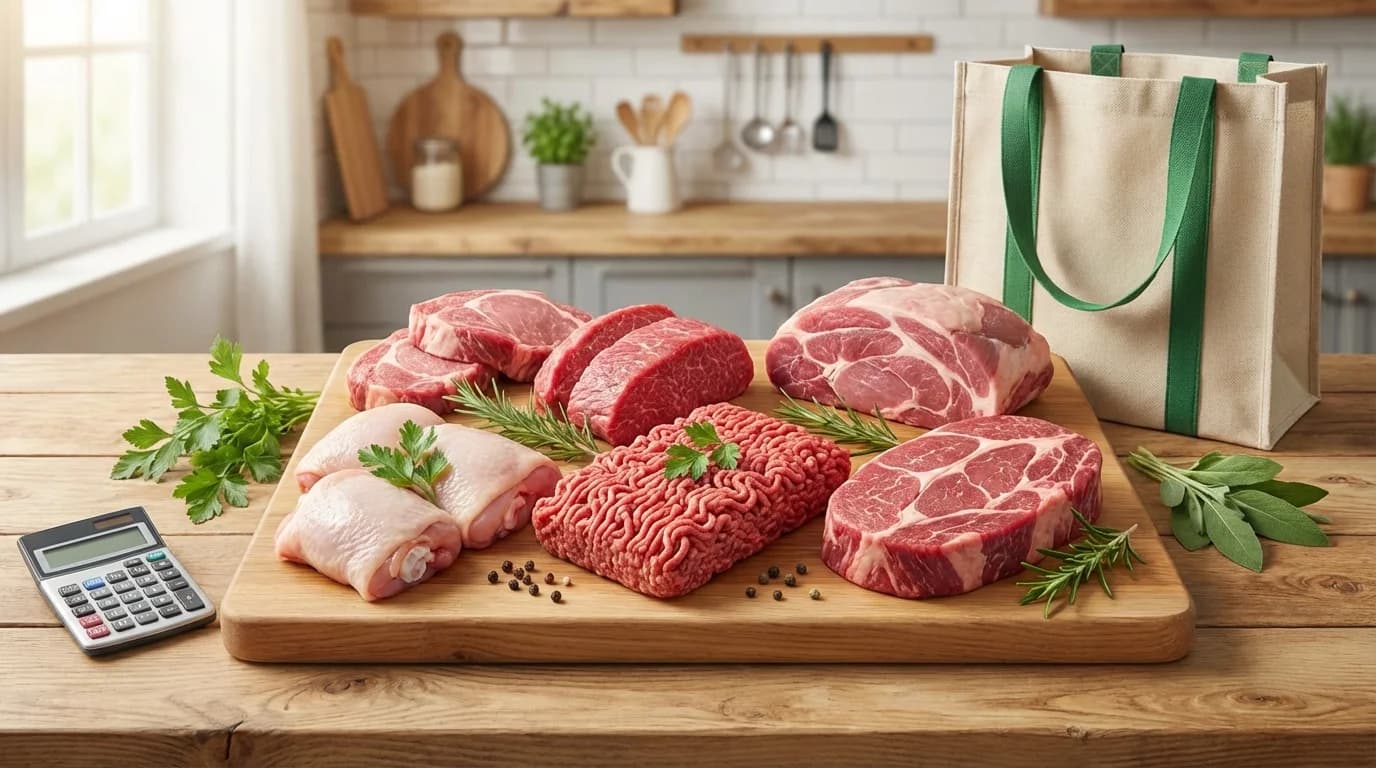
Meat is often the most expensive item on your grocery list, with premium cuts easily costing $15-30 per pound. But eating meat on a budget doesn't mean sacrificing flavor or nutrition—it means shopping smarter, choosing different cuts, and knowing how to cook them properly. With the right strategies, you can feed your family high-quality protein for a fraction of the cost.
Understanding Meat Pricing
Why Some Cuts Cost More:
- Tenderness: More tender cuts (filet mignon, ribeye) command premium prices
- Location: Muscles that do less work are more tender and expensive
- Demand: Popular cuts cost more regardless of quality
- Processing: Boneless and pre-cut meat includes labor costs
- Fat Content: Well-marbled cuts often cost more
The Budget Secret: Tougher cuts from hardworking muscles are cheaper but equally flavorful—they just need different cooking methods.
Best Budget-Friendly Cuts by Meat Type
Chicken: The Budget Champion
Whole Chicken: $1-2 per pound
- Why It's Cheap: Least processing, includes all parts
- How to Use: Roast whole, or break down into parts yourself
- Savings: 50% less than buying parts separately
- Bonus: Use carcass for stock
- Perfect for: Chicken meal prep
Chicken Thighs (Bone-In, Skin-On): $1.50-3 per pound
- Why: Dark meat is less popular in US
- Advantage: More flavorful and forgiving than breasts
- Uses: Roasting, grilling, braising, one-pot meals
Chicken Drumsticks: $1-2 per pound
- Why: Often overlooked for wings and breasts
- Kid-Friendly: Easy to eat with hands
- Uses: Baking, frying, grilling
Avoid: Pre-marinated and boneless-skinless breasts (premium pricing)
Pork: The Versatile Budget Meat
Pork Shoulder (Boston Butt): $2-4 per pound
- Why It's Cheap: Tough cut requiring long cooking
- Perfect For: Pulled pork, carnitas, stews
- Cooking Method: Slow cooker or slow roast
- Serves: 12-16 people from one shoulder
- Cost Per Serving: Often under $1
Pork Chops (Bone-In): $3-5 per pound
- Why: Bone-in is cheaper than boneless
- Quick Cooking: Pan-sear or grill in 10 minutes
- Flavor: Bone adds moisture and flavor
Ground Pork: $3-5 per pound
- Why: Often overlooked for ground beef
- Uses: Meatballs, dumplings, pasta sauce, Asian dishes
- Bonus: Usually fattier (more flavorful) than ground beef
Pork Tenderloin: $5-7 per pound (on sale)
- Why: Frequently on sale at huge discounts
- Stock Up: Freezes beautifully
- Cook: Roast in 20 minutes
Budget Tip: Watch for "buy one get one free" pork tenderloin sales
Beef: Making It Affordable
Ground Beef (80/20 or 85/15): $4-6 per pound
- Why: Most affordable beef option
- Versatile: Tacos, meatballs, pasta sauce, burgers
- Budget Ratio: 80/20 (more fat = more flavor, often cheaper)
- Stretch It: Mix with cooking with canned beans to extend
Chuck Roast: $5-7 per pound
- Why It's Cheap: Requires slow cooking to tenderize
- Perfect For: Pot roast, beef stew, shredded beef
- Method: Slow cooker or Dutch oven, 6-8 hours
- Serves Many: 3-4 lb roast feeds 6-8 people
Brisket (Flat): $5-8 per pound
- Why: Tough cut requiring patience
- Best For: Smoking, braising, slow cooker
- When: Cheaper before summer BBQ season
- Serves: Large quantity for gatherings
Sirloin Steak: $7-10 per pound
- Why: Less marbling than ribeye or strip
- Quality: Still flavorful when cooked properly
- Method: Quick, high-heat cooking to medium-rare
- Budget Tip: Slice thin against grain for tenderness
Flank or Skirt Steak: $8-12 per pound
- Why: Thin, requires proper cooking
- Perfect For: Fajitas, stir-fries, salads
- Method: Hot and fast, sliced thin against grain
- Marinades: Acids help tenderize
Eye of Round Roast: $4-6 per pound
- Why It's Cheap: Very lean and can be tough
- Best For: Roast beef sandwiches, stew meat
- Method: Low-temperature roasting or slow cooking
Ground Meat Comparison
Ground Beef: $4-6/lb (most expensive) Ground Pork: $3-5/lb (middle) Ground Turkey: $3-5/lb (leanest) Ground Chicken: $3-4/lb (cheapest)
Budget Strategy: Mix types or substitute based on sales
Specialty Budget Cuts
Chicken Liver: $1-2 per pound
- Nutritional Powerhouse: Extremely high in iron and vitamins
- Uses: Pâté, sautéed with onions, dirty rice
Chicken Hearts and Gizzards: $1-2 per pound
- Popular Globally: Common in many cuisines
- Uses: Grilling, stir-fries, confit
Beef Liver: $2-3 per pound
- Nutrition: Loaded with iron and B vitamins
- Preparation: Soak in milk, quick sear
Pork Belly (Uncured): $3-5 per pound
- Why: Trendy now but still affordable
- Uses: Homemade bacon, tacos, Asian dishes
Smart Meat Shopping Strategies
Buy Whole and Butcher Yourself
Whole Chicken: Break down into 8 pieces
- Savings: 40-50% vs. buying parts
- Skills: Easy to learn on YouTube
- Time: 5-10 minutes with practice
Pork Shoulder: Cut into roasts, steaks, and stew meat Savings: 30-40% vs. pre-cut
Beef Roasts: Slice into steaks Example: Chuck roast → budget-friendly "steaks"
Buy Bone-In, Skin-On
Why It's Cheaper: Less labor, more waste weight Flavor Bonus: Bones and skin add moisture and flavor Learn to Remove: Simple knife skills save money
Examples:
- Bone-in chicken thighs vs. boneless: 40% savings
- Bone-in pork chops vs. boneless: 30% savings
Buy in Bulk
Family Packs: $1-2 per pound savings Warehouse Clubs: Costco, Sam's Club, BJ's Local Butchers: Often offer bulk discounts Freezing: Portion and freeze what you won't use immediately
Quarter, Half, or Whole Animals:
- Cost: $4-7 per pound for all cuts (including premium)
- Requires: Large freezer
- Best For: Large families or multiple households splitting
Shop Sales and Stock Up
Weekly Ads: Plan meals around meat sales Manager's Specials: Near-expiration meat heavily discounted (use or freeze same day) Seasonal Sales:
- Ham: Easter and Christmas
- Turkey: Thanksgiving and Christmas
- Brisket: Pre-July 4th
- Pork: Summer grilling season
Freeze Immediately: Properly frozen meat lasts 6-12 months
Consider Alternative Protein Sources
Eggs: $2-4 per dozen (about $0.20-0.35 per egg) Canned Tuna/Salmon: $1-3 per can Dried Beans: $0.50-1.50 per pound dried Tofu: $2-3 per pound
Perfect for: Cheap protein sources rotation
Choose Store Brands
Quality: Often identical to name brands (sometimes from same supplier) Savings: 20-30% less expensive Exception: Prime or choice-grade beef—brand matters less
Know Your Prices
Track Regular Prices: Know a good deal when you see it Price Per Pound: Always compare by weight, not package price Apps: Flipp, Basket track sales across stores
Stretching Meat Further
Mix with Other Ingredients
50/50 Ground Meat and Beans: Tacos, chili, pasta sauce Savings: 50% less meat needed Bonus: Added fiber and nutrition
Meat + Vegetables: Stir-fries, fajitas, kebabs Meat + Grains: Rice and beans recipes, fried rice, grain bowls
Slice Thin
Why: Visual portion appears larger Works For: Steak, pork tenderloin, chicken breast Example: 8 oz steak sliced thin over salad feels more generous than whole steak
Use as Flavoring (Not Star)
Small Amounts: ¼-½ lb meat in soup, stir-fry, or pasta Big Impact: Bacon in beans, ham in split pea soup Italian Approach: Soffritto uses small amounts of meat for big flavor
Make Stock from Scraps
Save: Chicken carcasses, beef bones, pork bones Simmer: 4-24 hours with vegetables and herbs Result: Free stock worth $4-6 per quart at store Use In: Cheap soup recipes
Cooking Budget Cuts to Perfection
Slow Cooking (Tough Cuts)
Best For: Chuck roast, pork shoulder, brisket, chicken thighs Method: Low heat (200-300°F) for 4-8 hours Why It Works: Breaks down connective tissue into tender, flavorful meat Tools: Slow cooker, Dutch oven, Instant Pot
Perfect for: Cheap slow cooker meals
Braising
Best For: Chuck roast, short ribs, pork shoulder, chicken thighs Method: Sear, then simmer in liquid (covered) at 300-325°F for 2-4 hours Liquid: Stock, wine, beer, tomatoes Result: Fork-tender meat with rich sauce
Marinating
Best For: Flank steak, skirt steak, chicken thighs, pork chops Ingredients: Acid (vinegar, citrus) + oil + seasonings Time: 30 minutes to 24 hours Why: Tenderizes and adds flavor
Quick, High-Heat Cooking
Best For: Thin cuts (flank, skirt, pork chops) Method: Hot pan or grill, 2-4 minutes per side Rest: 5-10 minutes before slicing Slice Against Grain: Critical for tenderness
Ground Meat Strategies
Season Well: Budget ground meat benefits from bold flavors Don't Overmix: Leads to tough meatballs and burgers Fat Is Flavor: Don't drain all fat from 80/20 beef
Food Safety for Budget Meat Shopping
Manager's Specials
Check Date: Use or freeze same day Smell Test: Should smell fresh, not sour Color: Some browning is normal (oxidation), but avoid gray or slimy meat Safe: As long as before sell-by date and properly stored
Freezing Guidelines
Wrap Well: Prevent freezer burn with plastic wrap + foil or vacuum seal Label: Date and contents Freeze Fresh: Don't wait until last day Thaw Safely: Refrigerator (24 hours per 5 lbs), cold water (change every 30 min), or microwave
Freezer Life:
- Ground meat: 3-4 months
- Chops/steaks: 4-6 months
- Roasts: 6-12 months
- Whole chicken: 12 months
Safe Thawing
Never: On counter at room temperature Refrigerator: Safest, plan ahead (1 day per 5 lbs) Cold Water: Faster (1 hour per pound), change water every 30 minutes Microwave: Use immediately after thawing
Budget Meat Meal Ideas
$20 Feeds 6-8 People
Whole Chicken: $6-8
- Roast whole, serve with budget sides
- Use leftovers for soup, tacos, salad
Pork Shoulder: $8-12
- Slow cook for pulled pork
- Serve on buns, in tacos, over rice
Chuck Roast: $12-15
- Pot roast with vegetables
- Shred for sandwiches, stew
Under $1 Per Serving
Ground Meat + Beans: Chili, tacos, pasta sauce Chicken Thighs: Budget casserole recipes Eggs: Scrambles, frittatas, breakfast for dinner
Meal Prep Champions
Whole Chicken: Rotisserie-style meal prep Ground Meat: Brown in bulk for multiple meals Pork Shoulder: Pulled pork portions frozen Chuck Roast: Shredded beef for bowls, tacos, sandwiches
Where to Buy Budget Meat
Grocery Store Sales
Best: Weekly ads, loss leaders Manager's Specials: 30-50% off near sell-by date Loyalty Programs: Digital coupons
Warehouse Clubs
Best For: Bulk buying, family packs Savings: 20-40% vs. grocery stores Consider: Membership cost ($60/year)
Local Butchers
Advantages: Custom cuts, bulk discounts, relationship pricing Disadvantages: Often more expensive for small quantities Ask: About cheaper cuts, bulk deals, special orders
Ethnic Markets
Often Overlooked: Asian, Mexican, Middle Eastern markets Advantages: Different cuts, whole animals, competitive pricing Specialty Cuts: Offal, unusual cuts at great prices
Direct from Farm
CSA Meat Shares: Seasonal subscription Half/Quarter Animal: Significant savings, requires freezer space Farmers Markets: End-of-day discounts
Discount Grocers
Aldi, Lidl, Save-A-Lot: Competitive meat prices Quality: Comparable to regular grocery stores Selection: Limited but affordable
The Bottom Line
Buying meat on a budget is about smart shopping, choosing the right cuts, and knowing how to cook them. You don't need expensive ribeyes and filet mignon to eat well—slow-cooked pork shoulder or braised chuck roast can be even more delicious at a fraction of the cost.
Key Strategies:
- Buy whole and butcher yourself
- Choose bone-in, skin-on cuts
- Shop sales and stock up
- Learn to cook tough cuts low and slow
- Stretch meat with beans, grains, and vegetables
Start Today: Check your grocery store ads, stock up on sale items, and try one new budget cut this week. Your wallet—and your taste buds—will thank you!
Ready to use that budget meat? Check out our cheap family meals under 10, one-pot budget meals, and batch cooking budget for delicious, affordable recipe inspiration!
About myrecipe
myrecipe helps families save, organize, and share their favorite recipes in one place. Plan meals, create shopping lists, and preserve your culinary traditions.
Start Organizing Recipes