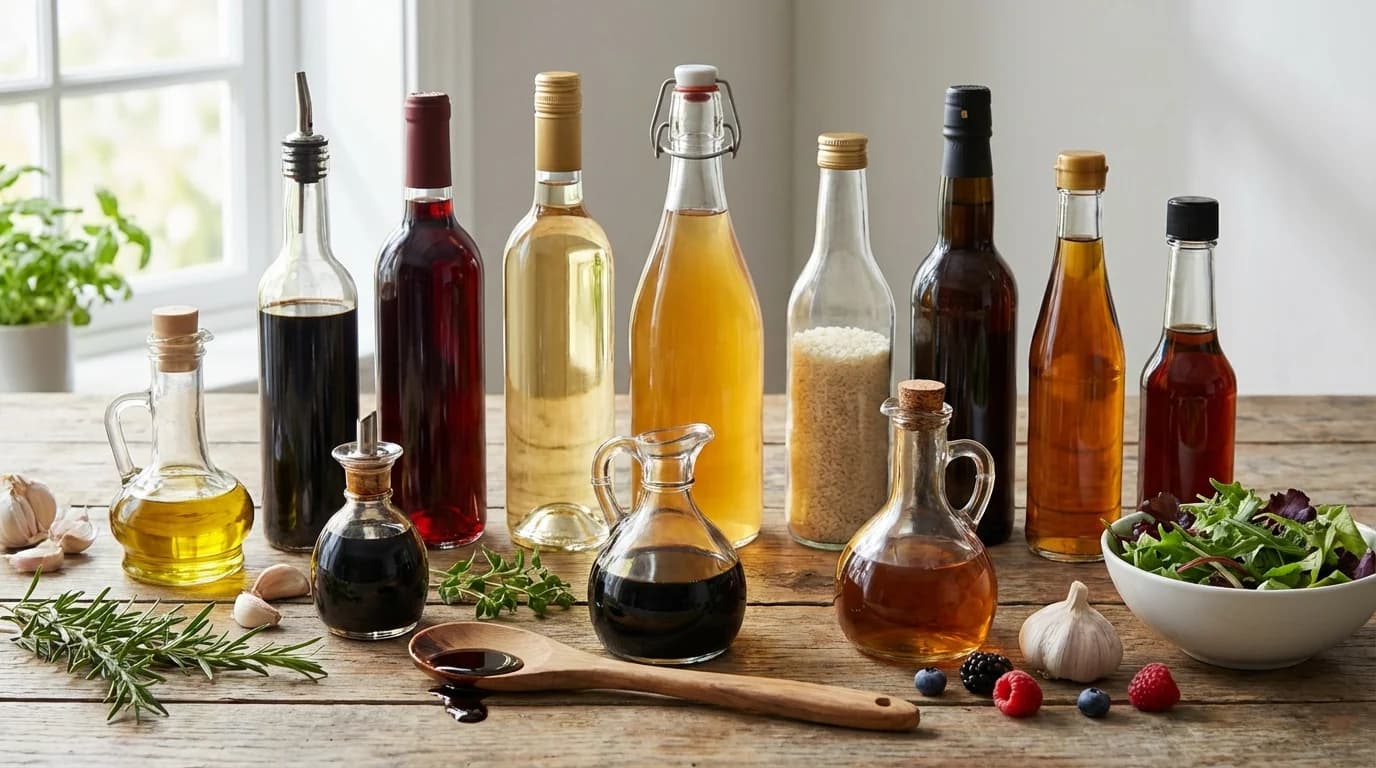
Vinegar is one of the most versatile and underappreciated ingredients in your pantry. It brightens flavors, tenderizes meat, preserves food, and even cleans your kitchen. But with dozens of vinegar types available—from basic white vinegar to aged balsamic costing hundreds of dollars—knowing which to use when can be confusing. This comprehensive guide breaks down every vinegar type, their best uses, and how to substitute when needed.
Understanding Vinegar Basics
What Is Vinegar?: Acetic acid produced by fermenting alcohol with bacteria. The alcohol source determines the vinegar type.
Acidity Levels: Most vinegars range from 4-7% acetic acid
- Standard: 5-6% (most cooking vinegars)
- Mild: 4-5% (rice vinegar)
- Strong: 7%+ (cleaning vinegar, some specialty vinegars)
Why It Matters in Cooking:
- Brightens: Adds acidity to balance rich or sweet flavors
- Tenderizes: Breaks down proteins in marinades
- Preserves: Prevents bacterial growth in pickling
- Emulsifies: Helps oil and water mix in dressings
- Balances: Counters saltiness or sweetness
Essential Cooking Vinegars
White Vinegar (Distilled Vinegar): The All-Purpose Workhorse
Made From: Diluted distilled alcohol (usually grain) Acidity: 5-7% Flavor: Sharp, harsh, no complexity
Best For:
- Pickling and preserving
- Cleaning (kitchen surfaces, coffee makers)
- Baking (reacts with baking soda)
- When you need acidity without flavor
Not Great For:
- Salad dressings (too harsh)
- Delicate dishes
- Drinking or drinking-related uses
Budget Champion: Cheapest vinegar available ($2-3 per gallon)
Uses:
- Homemade pickles
- Buttermilk substitute (milk + vinegar)
- Egg poaching water (helps whites set)
- Shelf stable pantry items preservation
Shelf Life: Indefinite (acidity prevents spoilage)
Apple Cider Vinegar: The Healthy All-Star
Made From: Fermented apple juice Acidity: 5-6% Flavor: Fruity, slightly sweet, mild
Best For:
- Salad dressings
- Marinades
- BBQ sauce
- Drinking tonics (diluted)
- Coleslaw
Health Benefits: Contains beneficial bacteria (if raw/unfiltered), may support digestion
Types:
- Filtered: Clear, lighter flavor
- Unfiltered ("With the Mother"): Cloudy, probiotic-rich, stronger flavor
Uses:
- Vinaigrettes (apple cider vinegar + oil + mustard)
- Pulled pork marinades
- Shrub drinks
- Budget grocery shopping tips—versatile and affordable
Cost: $ (affordable, $3-5 per bottle) Shelf Life: 2-5 years (quality slowly declines)
Balsamic Vinegar: The Gourmet Star
Made From: Reduced grape must (juice, skins, seeds, stems) aged in wooden barrels Origin: Modena or Reggio Emilia, Italy (traditional) Acidity: 6% Flavor: Sweet, complex, syrupy (if aged)
Types:
- Traditional Balsamic (DOP): Aged 12-25+ years, thick and syrupy, very expensive ($100-300+)
- Commercial Balsamic: Aged 2-3 months to several years, moderate price ($5-30)
- Balsamic Glaze: Reduced with sweeteners, syrupy consistency ($5-10)
Best For:
- Drizzling over finished dishes
- Salads (especially with strawberries, tomatoes)
- Roasted vegetables
- Reduction sauces
- Fruit (strawberries, peaches)
How to Use:
- Traditional: Use sparingly as finishing drizzle (too expensive for cooking)
- Commercial: Salad dressings, marinades, glazes
- Glaze: Drizzle on pizza, caprese, grilled meats
Budget Tip: Buy mid-range commercial balsamic ($8-12) for cooking, save traditional for special occasions
Make Your Own Glaze: Simmer commercial balsamic until reduced by half (thick and syrupy)
Cost: $-$$$ (huge range) Shelf Life: 3-5 years (improves with age)
Red Wine Vinegar: The European Classic
Made From: Fermented red wine Acidity: 5-7% Flavor: Bold, tangy, slightly fruity
Best For:
- Vinaigrettes (French and Italian)
- Marinades (beef, lamb)
- Mediterranean dishes
- Braising liquids
- Gazpacho
Pairs Well With: Olive oil, garlic, mustard, herbs
Uses:
- Greek salad dressing
- Red meat marinades
- Pickled red onions
- Pan sauces
Quality Matters: Higher quality = better flavor, worth upgrading from cheapest option
Cost: $ to $$ ($3-10) Shelf Life: 2-3 years
White Wine Vinegar: The Delicate Option
Made From: Fermented white wine Acidity: 5-7% Flavor: Mild, subtle, slightly fruity
Best For:
- Light vinaigrettes
- Hollandaise and béarnaise
- Chicken and fish marinades
- Pickles (when you want mild flavor)
- Cream sauces
More Delicate: Lighter flavor than red wine vinegar, won't overpower delicate ingredients
Uses:
- Champagne vinaigrette (mix with champagne vinegar or use alone)
- Chicken piccata
- Quick pickled vegetables
- Easy pasta recipes with light cream sauces
Cost: $ to $$ ($3-10) Shelf Life: 2-3 years
Rice Vinegar: The Asian Essential
Made From: Fermented rice or rice wine Acidity: 4-5% (milder than other vinegars) Flavor: Mild, slightly sweet, delicate
Types:
- Rice Vinegar: Mild and slightly sweet
- Seasoned Rice Vinegar: Contains added salt and sugar (for sushi rice)
- Black Rice Vinegar: Dark, malty, similar to balsamic
Best For:
- Sushi rice
- Asian salad dressings
- Stir-fry sauces
- Pickled ginger
- Easy stir fry recipes
Why It's Special: Mildest vinegar, won't overpower delicate Asian flavors
Uses:
- Sushi rice seasoning
- Cucumber salad
- Sweet and sour sauce
- Dipping sauces
Note: If recipe calls for rice vinegar and you only have seasoned, reduce or omit added salt and sugar
Cost: $ (affordable, $2-5) Shelf Life: 2 years
Sherry Vinegar: The Spanish Secret
Made From: Sherry wine Origin: Jerez region, Spain Acidity: 6-7% Flavor: Complex, nutty, slightly sweet
Best For:
- Spanish dishes (gazpacho, paella)
- Rich salad dressings
- Pan sauces
- Reduction glazes
Why It's Special: Aged in wooden barrels (similar to balsamic), develops complex flavors
Uses:
- Gazpacho
- Roasted vegetable drizzle
- Vinaigrette for bitter greens
- Finishing touch for soups
Cost: $$ ($8-15) Shelf Life: 3-5 years (improves with age)
Specialty and Flavored Vinegars
Champagne Vinegar
Made From: Champagne or sparkling wine Flavor: Very light, delicate, slightly fruity
Best For: Delicate vinaigrettes, seafood, light sauces
Substitute: White wine vinegar (though slightly less delicate)
Malt Vinegar
Made From: Malted barley Origin: England Flavor: Strong, distinctive, slightly sweet
Best For: Fish and chips, pickling onions, British dishes
Not Versatile: Distinctive flavor limits uses
Fruit Vinegars (Raspberry, Fig, etc.)
Made From: Wine vinegar infused with fruit Flavor: Sweet, fruity, aromatic
Best For: Gourmet salads, fruit salads, cheese pairings, dessert drizzles
Cost: $$ to $$$ (specialty item)
Coconut Vinegar
Made From: Fermented coconut water or sap Origin: Southeast Asia Flavor: Mild, slightly sweet, less acidic
Best For: Filipino cuisine, salad dressings, health tonics
Cleaning Vinegar
Acidity: 6-10% (too strong for cooking!) Use: Cleaning only Warning: DO NOT use for cooking—excessive acidity can be harmful
Vinegar Uses Beyond Cooking
In Baking
Purpose: Reacts with baking soda to create lift Best Choice: White or apple cider vinegar Amount: Usually 1 tablespoon per recipe
Try: Egg substitutes baking with vinegar + baking soda
In Marinades
Purpose: Tenderizes meat, adds flavor Best Choices: Apple cider, red wine, white wine, rice Ratio: 1 part vinegar : 3 parts oil Time: 30 minutes to 24 hours
In Pickling
Purpose: Preserves vegetables, adds tang Best Choices: White vinegar (classic pickles), apple cider (bread and butter pickles), rice vinegar (Asian pickles) Ratio: Usually 1:1 vinegar to water with salt and sugar
In Salad Dressings
Purpose: Adds acidity, helps emulsify Best Choices: Balsamic, red wine, white wine, apple cider, champagne, sherry Ratio: 1 part vinegar : 3 parts oil (adjust to taste) Emulsifier: Add mustard to help oil and vinegar combine
As Buttermilk Substitute
Purpose: Creates acidic "buttermilk" for baking Method: 1 cup milk + 1 tablespoon vinegar (white or apple cider), let sit 5 minutes Uses: Pancakes, biscuits, cakes
As Meat Tenderizer
Purpose: Acidity breaks down tough proteins Best Choices: Apple cider, wine vinegars Warning: Too long in acidic marinade can make meat mushy (limit to 24 hours)
Vinegar Substitution Guide
When You Don't Have the Right Vinegar
Red Wine Vinegar:
- Substitute: White wine vinegar, balsamic (sweeter), or apple cider
White Wine Vinegar:
- Substitute: Red wine vinegar (in non-white dishes), champagne vinegar, rice vinegar + pinch of sugar
Apple Cider Vinegar:
- Substitute: White wine vinegar, red wine vinegar, or white vinegar (harsher)
Rice Vinegar:
- Substitute: White wine vinegar + pinch of sugar, apple cider vinegar diluted with water
Balsamic Vinegar:
- Substitute: Red wine vinegar + pinch of sugar, or reduce any vinegar with sugar
Sherry Vinegar:
- Substitute: Balsamic vinegar, red wine vinegar
Emergency Substitutions (Last Resort)
Fresh Lemon or Lime Juice: Works in most recipes requiring vinegar Ratio: 1:1 (same acidity, different flavor)
Creative Vinegar Applications
Vinegar Reductions
Method: Simmer vinegar until reduced by half Result: Concentrated, syrupy drizzle Best For: Balsamic, sherry, red wine vinegar
Shrubs (Drinking Vinegars)
What: Fruit + vinegar + sugar syrup Use: Mix with sparkling water or cocktails Best Vinegar: Apple cider or white wine
Vinegar Infusions
Method: Steep herbs, fruits, or spices in vinegar for 2-4 weeks Ideas: Tarragon vinegar, raspberry vinegar, garlic vinegar
Deglazing
Method: Add vinegar to hot pan after searing meat Result: Lifts browned bits, creates pan sauce Best Choices: Wine vinegars, balsamic
Budget-Friendly Vinegar Strategy
The Minimalist Approach (2 Vinegars)
#1: White vinegar (pickling, cleaning, baking) #2: Apple cider vinegar (dressings, marinades, drinking) Cost: $5-7 total Covers: 80% of needs
The Cook's Approach (4 Vinegars)
#1: White vinegar (pickling, cleaning) #2: Apple cider vinegar (general cooking) #3: Balsamic vinegar (finishing, salads) #4: Rice vinegar (Asian cooking) Cost: $15-20 total Covers: 95% of needs
Money-Saving Tips
Buy Store Brands: Quality difference is minimal for most vinegars Buy Large Bottles: Vinegar doesn't spoil—buy gallon jugs of white vinegar Make Flavored Vinegars: Infuse cheap white wine vinegar with herbs Skip Specialty Vinegars: Use substitutions instead of buying every variety
Perfect for: Budget meal prep beginners
Storage and Shelf Life
How to Store: Cool, dark place (pantry or cupboard) Containers: Keep in original glass bottles Shelf Life:
- White vinegar: Indefinite
- Wine, cider, rice vinegars: 2-5 years (flavor slowly fades)
- Balsamic: 3-5 years (improves with age)
Signs of Quality Loss:
- Cloudiness (harmless but indicates aging)
- Sediment (harmless, can strain)
- Off smell (very rare—vinegar resists spoilage)
Mother Formation: Cloudy, web-like substance in bottle
- What It Is: Beneficial bacteria culture
- Safe?: Yes! Actually indicates quality
- Action: Strain if desired or leave in bottle
Common Vinegar Mistakes
Mistake #1: Using Cleaning Vinegar for Cooking
Problem: Too acidic, potentially harmful Solution: Only use food-grade vinegar for cooking
Mistake #2: Boiling Vinegar
Problem: Acidity and flavor cook off quickly Solution: Add vinegar toward end of cooking or use as finishing touch
Mistake #3: Using Wrong Vinegar for Pickles
Problem: Insufficient acidity can allow bacterial growth Solution: Use 5%+ acidity vinegar for safe pickling
Mistake #4: Not Tasting Before Using
Problem: Different brands and ages vary in strength Solution: Taste and adjust amounts accordingly
Mistake #5: Storing in Plastic
Problem: Acidity can leach chemicals from plastic Solution: Always store in glass
The Bottom Line
Vinegar is an inexpensive, versatile ingredient that deserves a prominent place in your pantry. While you can accomplish most cooking with just white and apple cider vinegar, exploring wine, balsamic, and rice vinegars opens up culinary possibilities across cuisines.
Start Simple: Stock white and apple cider vinegar, then add others as your cooking expands.
Taste and Experiment: Different vinegars transform the same dish in unique ways.
Don't Fear Substitution: While specific vinegars are ideal, substitutions usually work fine.
Ready to cook with vinegar? Try it in our easy pasta recipes, cheap healthy meals, and cooking with canned beans for bright, balanced flavors!
About myrecipe
myrecipe helps families save, organize, and share their favorite recipes in one place. Plan meals, create shopping lists, and preserve your culinary traditions.
Start Organizing Recipes