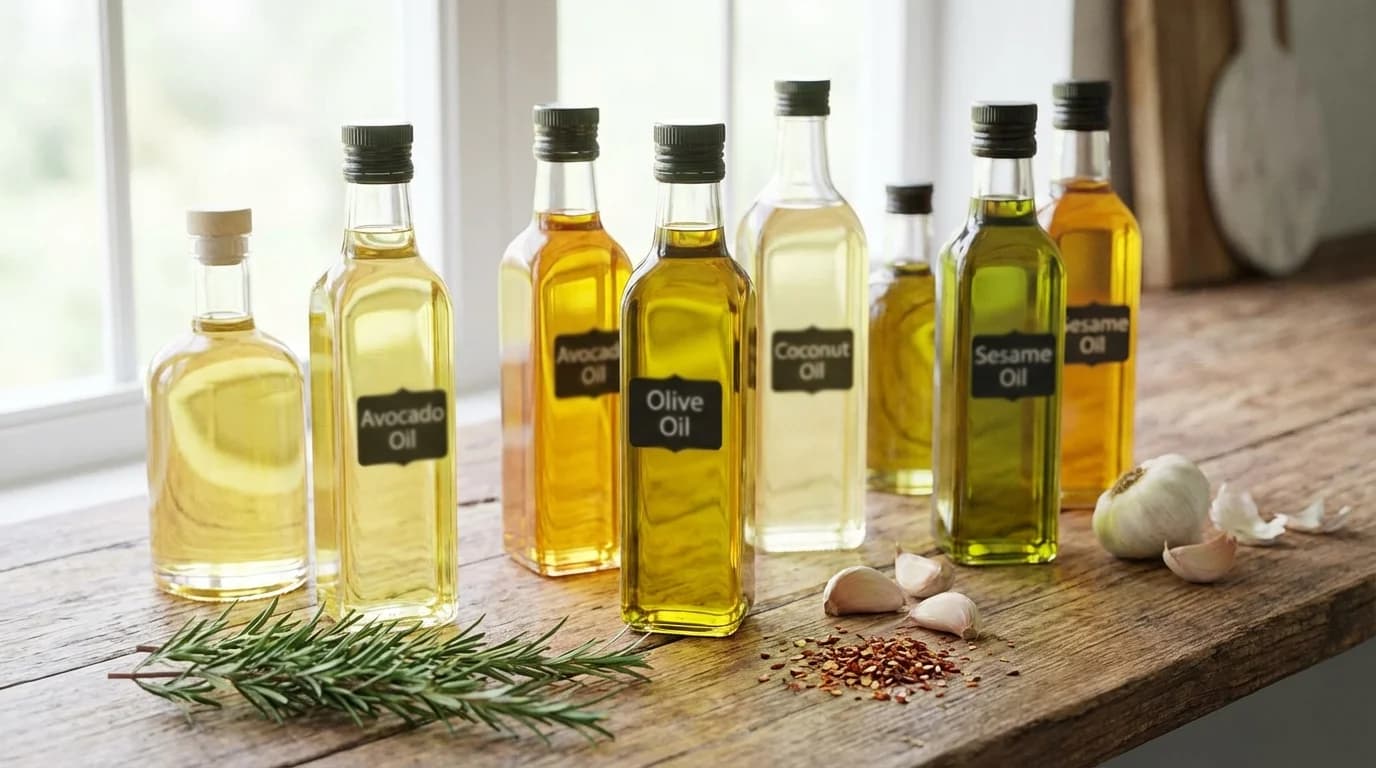
Standing in the cooking oil aisle can feel overwhelming. Dozens of bottles promise different health benefits, flavors, and cooking applications, all at wildly different price points. Using the wrong oil can ruin a dish—nobody wants a salad dressing that tastes like a stir-fry, or worse, oil that smokes and burns before your food is cooked. This comprehensive guide breaks down everything you need to know about cooking oils to make smart choices for your health, recipes, and budget.
Understanding Oil Basics
Smoke Point: The Most Important Number
Smoke Point is the temperature at which oil begins to smoke, break down, and release harmful compounds. Using oil beyond its smoke point creates:
- Unpleasant burnt flavors
- Toxic compounds like aldehydes
- Loss of nutritional value
- Kitchen smoke and lingering odors
Match cooking method to smoke point:
- High Heat (400°F+): Deep frying, searing, stir-frying
- Medium Heat (350-400°F): Sautéing, baking
- Low/No Heat (<350°F): Salad dressings, drizzling, finishing
Fat Composition
Oils contain three types of fats:
Monounsaturated Fats: Heart-healthy, stable at moderate heat Polyunsaturated Fats: Healthy but less heat-stable (includes omega-3 and omega-6) Saturated Fats: Stable at high heat but should be consumed in moderation
Refined vs. Unrefined
Refined: Processed to remove impurities
- Higher smoke point
- Neutral flavor
- Longer shelf life
- Fewer nutrients
Unrefined: Minimally processed
- Lower smoke point
- Distinct flavor
- More nutrients
- Shorter shelf life
Complete Cooking Oils Guide
Olive Oil: The Mediterranean Staple
Varieties: Extra virgin, virgin, pure/light
Extra Virgin Olive Oil (EVOO)
- Smoke Point: 350-410°F (varies by quality)
- Best For: Salad dressings, drizzling, low-heat cooking, bread dipping
- Flavor: Fruity, peppery, grassy (varies by origin)
- Health: High in monounsaturated fats and antioxidants
- Cost: $$-$$$
- Storage: 12-18 months in dark bottle away from heat
Regular Olive Oil (Light/Pure)
- Smoke Point: 465°F
- Best For: Sautéing, roasting, baking
- Flavor: Mild, neutral
- Health: Still healthy, fewer antioxidants than EVOO
- Cost: $-$$
Budget Tip: Use regular olive oil for cooking, save EVOO for finishing and dressings. This strategy works well for budget meal prep beginners.
Vegetable Oil: The All-Purpose Workhorse
Composition: Usually soybean, sometimes blend
- Smoke Point: 400-450°F
- Best For: Frying, baking, sautéing, anything needing neutral flavor
- Flavor: Completely neutral
- Health: High in polyunsaturated fats (including omega-6)
- Cost: $ (very affordable)
- Storage: 12-18 months
Best Uses: Baking cakes, frying, easy stir fry recipes, and general cooking
Downside: High in omega-6 fatty acids (balance with omega-3 sources)
Canola Oil: The Healthy Neutral Option
- Smoke Point: 400°F (unrefined), 470°F (refined)
- Best For: High-heat cooking, baking, frying
- Flavor: Neutral
- Health: Low in saturated fat, good omega-3 to omega-6 ratio
- Cost: $ (very affordable)
- Storage: 12-18 months
Why Choose It: Healthier fat profile than vegetable oil at similar price point
Controversy: Some people avoid due to genetic modification (choose organic if concerned)
Coconut Oil: The Tropical Trendsetter
Varieties: Refined and unrefined (virgin)
Unrefined/Virgin Coconut Oil
- Smoke Point: 350°F
- Best For: Baking, medium-heat sautéing, Asian and tropical dishes
- Flavor: Strong coconut taste and aroma
- Health: High in saturated fat (controversial—some studies show benefits)
- Cost: $$
- Storage: 2-3 years (very stable)
Refined Coconut Oil
- Smoke Point: 400-450°F
- Best For: High-heat cooking without coconut flavor
- Flavor: Neutral (no coconut taste)
- Cost: $-$$
Solid at Room Temperature: Melts at 76°F
Perfect For: Vegan baking, cheese substitutes cooking, and tropical-inspired dishes
Avocado Oil: The High-Heat Champion
- Smoke Point: 520°F (refined), 375°F (unrefined)
- Best For: High-heat searing, grilling, stir-frying, roasting
- Flavor: Mild, slightly grassy (refined is neutral)
- Health: High in monounsaturated fats, vitamin E
- Cost: $$$ (expensive)
- Storage: 12-18 months
When Worth the Cost: When you need very high heat and don't want flavor interference
Budget Alternative: Refined peanut oil at lower cost
Peanut Oil: The Frying Favorite
- Smoke Point: 450°F (refined)
- Best For: Deep frying, stir-frying, high-heat cooking
- Flavor: Mild (refined), nutty (unrefined)
- Health: Monounsaturated fats, stable at high heat
- Cost: $$
- Storage: 12-18 months
Why Restaurants Use It: High smoke point, neutral flavor, reusable for frying
Warning: Allergen for people with peanut allergies
Sesame Oil: The Flavor Bomb
Varieties: Light (refined) and toasted (dark)
Toasted Sesame Oil
- Smoke Point: 350°F
- Best For: Finishing oil, drizzling, dressings (not for high-heat cooking)
- Flavor: Intense, nutty, aromatic
- Usage: A little goes a long way—use for flavor, not as cooking medium
- Cost: $$
- Storage: 6-12 months (refrigerate after opening)
Light Sesame Oil
- Smoke Point: 410°F
- Best For: High-heat cooking, frying
- Flavor: Mild, neutral
- Cost: $$
Grapeseed Oil: The Gentle Giant
- Smoke Point: 420°F
- Best For: High-heat cooking, searing, salad dressings, mayonnaise
- Flavor: Very light, almost neutral
- Health: High in polyunsaturated fats and vitamin E
- Cost: $$
- Storage: 12 months (goes rancid faster than some oils)
Best Feature: Clean flavor that doesn't interfere with delicate ingredients
Sunflower Oil: The European Standard
- Smoke Point: 450°F (refined)
- Best For: Frying, roasting, baking
- Flavor: Mild, slightly nutty
- Health: High in vitamin E
- Cost: $-$$
- Storage: 12-18 months
Common in Europe: Often used where Americans use vegetable oil
Butter and Ghee: The Dairy Options
Butter
- Smoke Point: 350°F
- Best For: Baking, sautéing, flavor
- Flavor: Rich, creamy, irreplaceable
- Health: Saturated fat, some vitamins
- Cost: $$
- Storage: Refrigerate
Ghee (Clarified Butter)
- Smoke Point: 485°F
- Best For: High-heat cooking, Indian cuisine
- Flavor: Nutty, buttery
- Health: Lactose-free, saturated fat
- Cost: $$$
- Storage: Months at room temperature
Specialty Oils (Use Sparingly)
Flaxseed Oil
- Never heat (destroys omega-3s)
- Use in smoothies, dressings
- Refrigerate, use quickly
Walnut Oil
- Low smoke point
- Finishing oil for salads, desserts
- Strong flavor, refrigerate
Truffle Oil
- Finishing only
- Expensive, use drops
- Often synthetic flavoring
Quick Reference Chart
| Oil | Smoke Point | Best For | Flavor | Cost |
|---|---|---|---|---|
| Extra Virgin Olive Oil | 350-410°F | Dressing, drizzling | Fruity, peppery | $$-$$$ |
| Light Olive Oil | 465°F | Sautéing, baking | Neutral | $-$$ |
| Vegetable Oil | 400-450°F | Frying, baking | Neutral | $ |
| Canola Oil | 400-470°F | All-purpose cooking | Neutral | $ |
| Coconut Oil | 350-450°F | Baking, Asian cuisine | Coconut/neutral | $$ |
| Avocado Oil | 375-520°F | High-heat cooking | Mild | $$$ |
| Peanut Oil | 450°F | Deep frying | Mild | $$ |
| Sesame Oil (toasted) | 350°F | Finishing, flavor | Strong nutty | $$ |
| Grapeseed Oil | 420°F | Searing, dressing | Very light | $$ |
Choosing Oil by Cooking Method
Deep Frying (375°F+)
Best Choices: Peanut oil, vegetable oil, canola oil Why: High smoke point, affordable (you need quantity), neutral flavor Budget Pick: Vegetable oil
Stir-Frying (400°F+)
Best Choices: Peanut oil, avocado oil, light sesame oil, refined coconut oil Why: Very high heat required Finish With: Drizzle of toasted sesame oil for authenticity Try: Our easy stir fry recipes
Sautéing (350-400°F)
Best Choices: Olive oil, canola oil, vegetable oil, grapeseed oil Why: Moderate heat, can add flavor or stay neutral Budget Pick: Canola oil
Roasting Vegetables (400-425°F)
Best Choices: Olive oil, avocado oil, canola oil Why: Need high smoke point and can benefit from flavor Perfect For: sheet pan dinners
Baking
Best Choices: Vegetable oil, canola oil, light olive oil, melted coconut oil Why: Neutral flavor doesn't interfere with desserts Substitute: Use same amount of oil as butter when recipe allows
Salad Dressings
Best Choices: Extra virgin olive oil, avocado oil, walnut oil, toasted sesame oil (mixed with neutral) Why: Flavor is the focus, no heat involved Budget Option: Regular olive oil
Finishing Drizzles
Best Choices: Extra virgin olive oil, toasted sesame oil, flavored oils Why: Flavor impact with small quantity Splurge-Worthy: High-quality EVOO for special dishes
Health Considerations
For Heart Health
Best: Olive oil, avocado oil, canola oil Why: High in monounsaturated fats, low in saturated fats Limit: Coconut oil, palm oil (high in saturated fat)
For High-Heat Cooking
Best: Avocado oil, refined coconut oil, peanut oil Why: Stable at high temperatures, don't break down into harmful compounds
For Omega-3 Balance
Best: Canola oil, flaxseed oil (unheated), walnut oil Why: Better omega-3 to omega-6 ratio Note: Most American diets have too much omega-6
For Weight Management
Remember: All oils have ~120 calories per tablespoon Strategy: Use measuring spoons, not free-pouring Tip: Cooking spray can reduce quantity used
Storage Tips
Extend Shelf Life
Store in: Cool, dark place (not above stove!) Avoid: Heat, light, air exposure Best Container: Dark glass or metal Once Opened: Use within recommended time
Signs of Rancidity
Smell: Off, stale, or crayony odor Taste: Bitter or soapy Appearance: Cloudy or darker color Action: Discard—rancid oil is unhealthy
Refrigeration
Refrigerate: Flaxseed, walnut, unrefined nut oils Optional: Sesame oil (extends life) No Need: Olive, vegetable, canola, coconut
Budget-Friendly Oil Strategy
The Minimalist Approach (2 Oils)
Oil #1: Vegetable or canola oil (all-purpose cooking) Oil #2: Extra virgin olive oil (flavor, dressing) Cost: $10-15 total Covers: 90% of cooking needs
The Balanced Approach (4 Oils)
Oil #1: Canola oil (everyday cooking) Oil #2: Extra virgin olive oil (finishing, dressing) Oil #3: Vegetable oil (frying, baking) Oil #4: Toasted sesame oil (Asian dishes) Cost: $20-30 total Covers: All common cooking needs
The Enthusiast Approach (6+ Oils)
Add: Avocado oil, coconut oil, specialty finishing oils Cost: $50-75 Covers: Every possible application
Start Simple: Begin with minimalist approach, add as needs and budget allow
Common Mistakes to Avoid
Mistake #1: Using EVOO for High-Heat Cooking
Problem: Wastes money and creates off flavors Solution: Save EVOO for finishing, use regular olive or canola for cooking
Mistake #2: Storing Oil Above the Stove
Problem: Heat accelerates rancidity Solution: Store in cabinet away from heat sources
Mistake #3: Keeping Oil Too Long
Problem: Rancid oil is unhealthy and tastes bad Solution: Mark opening date, follow storage guidelines
Mistake #4: Using Strongly Flavored Oil for Everything
Problem: Coconut pasta or sesame cake anyone? Solution: Match oil flavor to dish
Mistake #5: Free-Pouring Without Measuring
Problem: Easy way to consume excess calories Solution: Use measuring spoons or pour into hand first
The Bottom Line
You don't need a dozen different oils to cook well, but understanding the differences helps you make smart choices. At minimum, keep a neutral high-heat oil (canola or vegetable) and a flavorful finishing oil (extra virgin olive oil). As your cooking evolves and budget allows, add specialized oils for specific purposes.
Remember these key principles:
- Match smoke point to cooking temperature
- Use neutral oils for high heat, flavorful oils for finishing
- Store properly to prevent rancidity
- Measure to control portions
- Quality matters more for finishing oils than cooking oils
Ready to put your oil knowledge to work? Check out our easy pasta recipes, cheap healthy meals, and quick weeknight dinners for delicious ways to use the right oil for every dish!
About myrecipe
myrecipe helps families save, organize, and share their favorite recipes in one place. Plan meals, create shopping lists, and preserve your culinary traditions.
Start Organizing Recipes