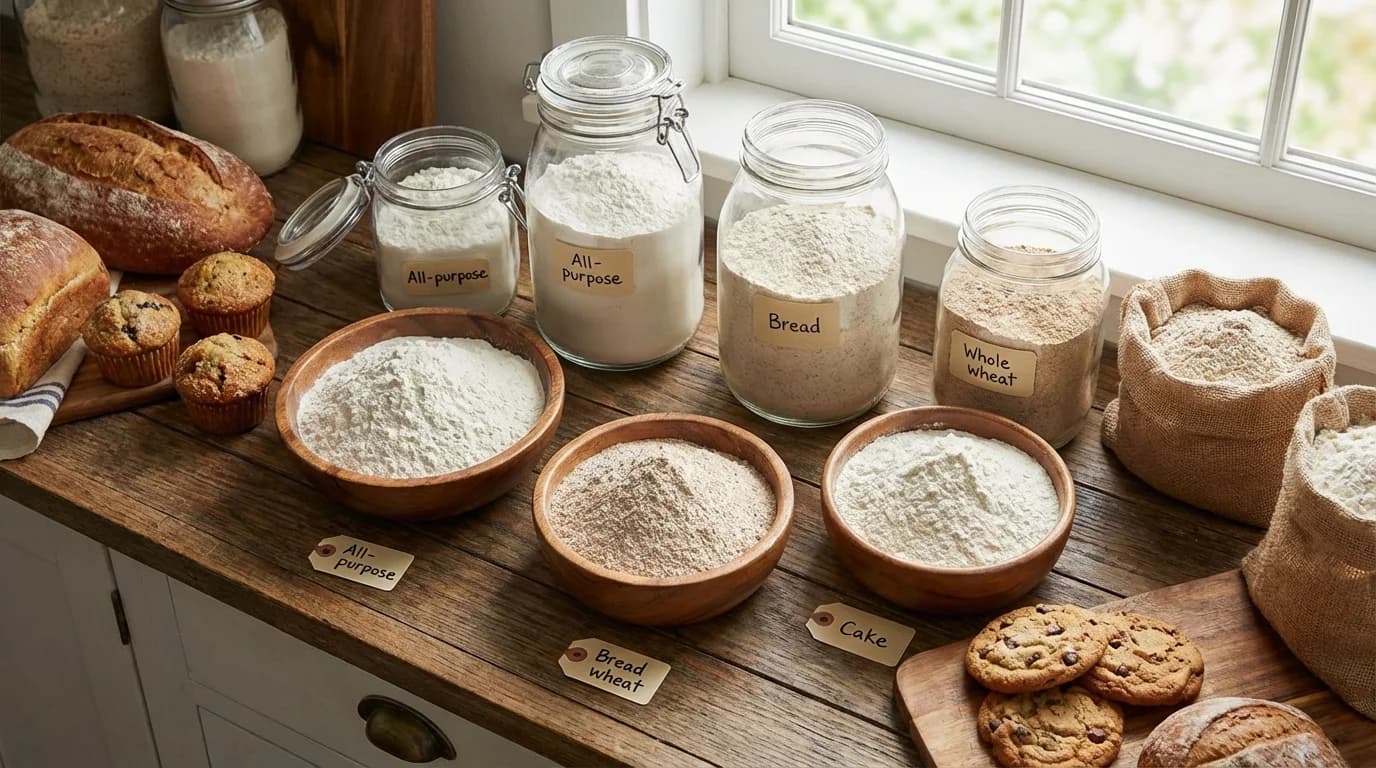
Flour seems simple—it's just ground grain, right? But walk down the baking aisle and you'll face dozens of options: all-purpose, bread, cake, pastry, self-rising, whole wheat, and countless specialty flours. Using the wrong flour can turn a delicate cake into a hockey puck or a chewy bread into a crumbly mess. Understanding flour types and their proper applications is fundamental to baking success.
Understanding Protein Content: The Key to Flour
The most important difference between flours is protein content, which determines how much gluten develops when flour mixes with water. Gluten creates structure, chewiness, and rise in baked goods.
High Protein (12-14%): More gluten = more structure = chewier, stronger Medium Protein (9-11%): Balanced gluten = versatile Low Protein (7-9%): Less gluten = more tender, delicate
Match protein to purpose: Bread needs structure (high protein), cakes need tenderness (low protein).
Common Wheat Flours Explained
All-Purpose Flour: The Kitchen Workhorse
Protein Content: 10-12% (varies by brand and region) Texture: Fine, powdery Color: Off-white
Best For:
- Cookies
- Muffins
- Quick breads
- Pancakes
- General baking
- Thickening sauces
Why It's Called "All-Purpose": Balanced protein content makes it versatile enough for most applications
Regional Differences:
- Southern All-Purpose (White Lily): Lower protein (~9%), better for biscuits and tender baked goods
- Northern All-Purpose: Higher protein (~11%), better for yeast breads
Bleached vs. Unbleached:
- Bleached: Chemically treated for pure white color, slightly more tender results
- Unbleached: Naturally aged, cream color, slightly more structure
Cost: $ (most affordable flour) Shelf Life: 6-8 months pantry, 1 year refrigerated
Budget Tip: Buy in 5-10 lb bags for best value—perfect for budget meal prep beginners
Bread Flour: The Structure Builder
Protein Content: 12-14% Texture: Slightly coarser than all-purpose Color: Off-white to cream
Best For:
- Yeast breads
- Pizza dough
- Bagels
- Pretzels
- Artisan loaves
- Pasta
Why High Protein Matters: Creates strong gluten network that traps gas from yeast, producing tall, chewy bread with good structure
Can You Substitute All-Purpose?: Yes, but bread will be slightly less chewy with less rise
Make Your Own: Add 1 tablespoon vital wheat gluten per cup of all-purpose flour
Cost: $-$$ (slightly more than all-purpose)
Cake Flour: The Tenderness Expert
Protein Content: 7-9% Texture: Extremely fine, silky, powdery Color: Bright white (usually bleached)
Best For:
- Layer cakes
- Cupcakes
- Delicate pastries
- Biscuits
- Scones (tender style)
Why Low Protein Matters: Minimal gluten development creates tender, fine-crumbed, delicate texture
Always Bleached: Bleaching process alters starch, allowing cake to set before structure collapses
Substitute: 1 cup cake flour = 1 cup minus 2 tablespoons all-purpose flour + 2 tablespoons cornstarch (sift together)
Cost: $$ (premium price) When Worth It: Special occasion cakes, competition baking
Pastry Flour: The Middle Ground
Protein Content: 8-10% Texture: Fine, similar to cake flour Color: Off-white
Best For:
- Pie crusts
- Tart shells
- Biscuits
- Scones
- Delicate cookies
- Muffins
The Sweet Spot: More tender than all-purpose, more structure than cake flour
Harder to Find: Not available in all grocery stores (check baking specialty stores)
Substitute: 50/50 mix of all-purpose and cake flour
Cost: $$ (specialty item)
Self-Rising Flour: The Convenience Option
What It Is: All-purpose flour + baking powder + salt Protein Content: Same as all-purpose (~10%) Ratio: 1 cup flour + 1½ teaspoons baking powder + ¼ teaspoon salt
Best For:
- Biscuits
- Quick breads
- Muffins
- Pancakes
- Southern-style baking
Regional Favorite: Very popular in the American South
Advantage: Convenience—pre-measured leavening
Disadvantage:
- Can't control leavening amounts
- Baking powder loses potency over time
- Not versatile for yeasted breads or unleavened goods
Make Your Own: Add 1½ teaspoons baking powder + ¼ teaspoon salt per cup all-purpose flour (use immediately)
Cost: $ (comparable to all-purpose)
Whole Wheat Flour: The Nutritious Choice
Protein Content: 13-14% Texture: Coarser with visible bran particles Color: Brown
Types:
- Regular Whole Wheat: Contains entire wheat kernel (bran, germ, endosperm)
- White Whole Wheat: Made from white wheat variety (lighter color, milder flavor, same nutrition)
Best For:
- Sandwich bread
- Muffins
- Pancakes
- Cookies (when you want hearty texture)
- Cheap healthy meals baking components
Characteristics:
- Denser texture than white flour
- Nutty, slightly bitter flavor
- More nutritious (fiber, vitamins, minerals)
- Absorbs more liquid
Baking Adjustments:
- Add 2 tablespoons extra liquid per cup flour
- Let batter rest 20 minutes before baking (hydrates bran)
- Mix with all-purpose for lighter texture (start with 50/50)
Storage: Refrigerate or freeze (oils in germ can go rancid) Shelf Life: 3 months pantry, 6 months refrigerated, 1 year frozen
Cost: $-$$ (comparable to all-purpose)
Specialty and Alternative Flours
Almond Flour: The Keto Favorite
Made From: Finely ground blanched almonds Protein: High, but no gluten Texture: Fine and slightly moist
Best For:
- Gluten-free baking
- Keto and low-carb baking
- Macarons
- Delicate cookies
- Cake coating
Cannot Replace: Wheat flour 1:1 (no gluten means no structure)
Use In: Recipes specifically designed for almond flour
Cost: $$$ (expensive) Storage: Refrigerate (oils can go rancid)
Coconut Flour: The Super Absorbent
Made From: Dried, ground coconut meat Protein: Moderate, no gluten Texture: Fine and very absorbent
Best For:
- Gluten-free baking
- Low-carb baking
- Pancakes
- Muffins
Highly Absorbent: Requires 4-6 eggs per cup of flour plus extra liquid
Cannot Replace: Wheat flour 1:1 (use recipes designed for coconut flour)
Cost: $$ Storage: Pantry (very stable)
Oat Flour: The Homemade Option
Made From: Ground oats Protein: Moderate, no gluten (use certified GF oats for celiac) Texture: Slightly coarse
Best For:
- Pancakes
- Muffins
- Cookies (chewy)
- Quick breads
Make Your Own: Blend rolled oats in blender or food processor until powdery
Substitution: Replace up to 25% of all-purpose flour with oat flour
Cost: $ (very affordable if making from oats) Advantage: Adds fiber and slightly nutty flavor
Rice Flour: The Asian Staple
Types: White rice flour, brown rice flour, sweet rice flour Protein: Low, no gluten Texture: Fine and gritty
Best For:
- Gluten-free baking (as part of blend)
- Asian desserts
- Tempura batter
- Thickening
Note: Creates crumbly texture when used alone—best in blends
Cost: $ (affordable, especially at Asian markets)
Gluten-Free All-Purpose Flour Blends
Commercial Blends: Bob's Red Mill 1-to-1, King Arthur Measure for Measure, Cup4Cup
Contains: Mix of rice flour, potato starch, tapioca starch, xanthan gum, and other starches
Best For: Replacing all-purpose flour 1:1 in most recipes
Advantage: Specifically formulated to mimic wheat flour behavior
Cost: $$ to $$$ (expensive per pound)
For Gluten-Free Baking: Worth the investment—DIY blends rarely match quality
Quick Reference Chart
| Flour Type | Protein % | Best For | Texture Goal | Can Substitute? |
|---|---|---|---|---|
| All-Purpose | 10-12% | Everything | Versatile | Yes (for most) |
| Bread | 12-14% | Yeast breads | Chewy, structured | AP + vital wheat gluten |
| Cake | 7-9% | Cakes, cupcakes | Tender, delicate | AP minus 2 tbsp + cornstarch |
| Pastry | 8-10% | Pie crusts, pastries | Tender, flaky | 50/50 AP + cake flour |
| Self-Rising | ~10% | Biscuits, quick breads | Tender, leavened | AP + baking powder + salt |
| Whole Wheat | 13-14% | Hearty breads | Dense, nutty | Mix with AP for lighter results |
| Almond | None (no gluten) | GF baking | Moist, tender | No—use specific recipes |
| Coconut | None (no gluten) | GF/low-carb | Variable | No—use specific recipes |
Substitution Guidelines
In a Pinch Substitutions
No Bread Flour?
- Use all-purpose flour + 1 tablespoon vital wheat gluten per cup
No Cake Flour?
- 1 cup all-purpose flour minus 2 tablespoons + 2 tablespoons cornstarch
No Pastry Flour?
- 50% all-purpose + 50% cake flour
No Self-Rising Flour?
- 1 cup all-purpose + 1½ teaspoons baking powder + ¼ teaspoon salt
No All-Purpose Flour?
- Bread flour works (slightly chewier result)
- Pastry flour works for tender baked goods
Cannot Substitute
Gluten-Free Flours: Cannot replace wheat flours 1:1 (different chemistry entirely)
Whole Wheat for All-Purpose: Will dramatically change texture and density—use 50/50 at most
Measuring Flour Correctly
The #1 Baking Mistake: Incorrect flour measurement
Best Method: Weight
Use Kitchen Scale: 1 cup all-purpose flour = 120-125 grams Most Accurate: Eliminates variables of packing and scooping
Second Best: Spoon and Level
- Fluff flour in container with spoon
- Spoon flour into measuring cup (don't scoop or pack)
- Level off with straight edge
Never: Scoop cup directly into flour bag (compacts flour, adds 25% too much)
Storage Tips for Maximum Freshness
All White Flours
Pantry: 6-8 months in airtight container Cool, Dry Place: Away from heat and moisture Freezer: 1+ year in sealed bags (bring to room temp before using)
Whole Grain Flours
Refrigerator: 6 months (oils can go rancid at room temp) Freezer: 1 year Airtight Container: Prevents absorption of refrigerator odors
Signs of Spoilage
Rancid Smell: Sour, paint-like odor (especially whole grain flours) Bugs: Weevils or other insects (discard entire bag) Mold: Visible mold or unusual colors Clumping: Sign of moisture exposure (may affect baking)
Budget-Friendly Flour Strategy
The Minimalist Approach
One Flour: All-purpose flour (covers 90% of needs) Cost: $5-10 for 5 lb bag Works For: Most home baking
The Baker's Approach
Three Flours:
- All-purpose (everyday)
- Bread flour (yeasted breads)
- Cake flour (special cakes)
Cost: $15-20 total Covers: All common baking
Money-Saving Tips
Buy Bulk: 10-25 lb bags save 30-50% per pound Store Brands: Usually identical to name brands for all-purpose Make Substitutions: Use all-purpose + cornstarch instead of cake flour Freeze for Longevity: Prevents waste from spoilage
Perfect for: Budget grocery shopping tips
Common Flour Mistakes
Mistake #1: Using Bread Flour for Cakes
Result: Dense, tough, chewy cake Fix: Use cake flour or all-purpose
Mistake #2: Using Cake Flour for Bread
Result: Flat, crumbly bread with no structure Fix: Use bread flour or all-purpose
Mistake #3: Scooping Flour Directly
Result: Too much flour, dry and dense baked goods Fix: Spoon and level or use scale
Mistake #4: Storing Whole Wheat at Room Temp
Result: Rancid flour with off flavors Fix: Refrigerate or freeze whole grain flours
Mistake #5: Not Sifting When Recipe Calls For It
Result: Lumpy batter, uneven texture Fix: Sift when specified (especially cake flour)
The Bottom Line
Understanding flour types transforms baking from guesswork to science. While you can accomplish most home baking with all-purpose flour alone, knowing when and why to use specialized flours takes your baking to the next level.
Start Simple: Master all-purpose flour first, then add specialty flours as your baking repertoire grows.
Read Labels: Protein content is key—check package labels when choosing
Experiment: Try different flours in your favorite recipes to understand how they affect results
Measure Accurately: Proper measurement matters more than flour type
Ready to put your flour knowledge to work? Try our 5-ingredient recipes and easy pasta recipes to practice your new skills—or explore egg substitutes baking for more baking success tips!
About myrecipe
myrecipe helps families save, organize, and share their favorite recipes in one place. Plan meals, create shopping lists, and preserve your culinary traditions.
Start Organizing Recipes