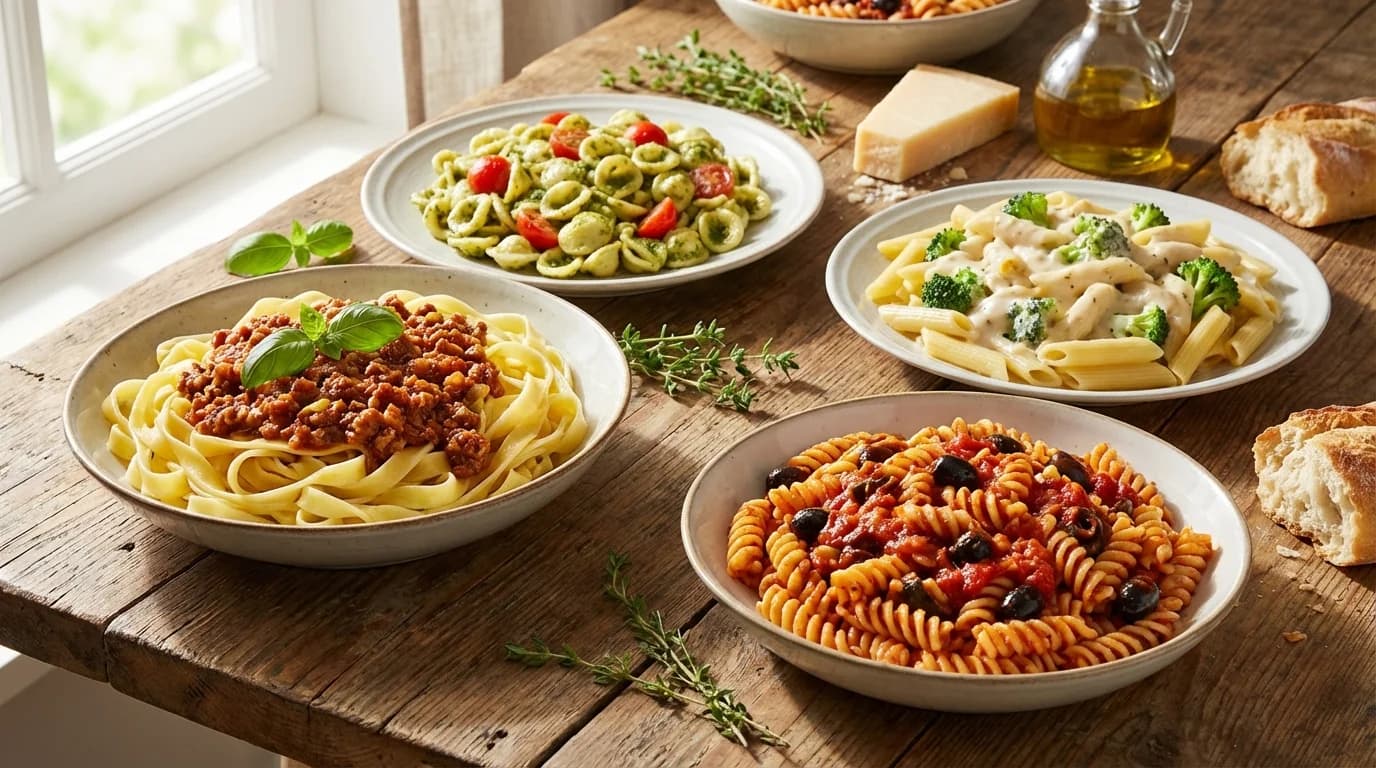
Walk down any pasta aisle and you'll face dozens of shapes, sizes, and varieties. While it might seem like they're all interchangeable, Italian cuisine has spent centuries perfecting which pasta shapes pair best with specific sauces. Understanding these pairings will transform your pasta dishes from good to restaurant-quality, and it all comes down to one simple principle: the sauce should cling to and complement the pasta shape.
Whether you're planning easy pasta recipes for busy weeknights or exploring budget pasta recipes to stretch your grocery dollars, this guide will help you choose the perfect pasta every time.
The Science Behind Pasta Shapes
Pasta shapes aren't just aesthetic—they're functional. Each design serves a specific purpose:
Surface Area: Ridged or textured pasta (like rigatoni) holds chunky sauces better Shape: Tubes trap sauce inside, while flat noodles provide coating surface Size: Smaller pasta works in soups, larger shapes stand up to hearty sauces Thickness: Determines cooking time and sauce compatibility
Long Pasta: The Classics
Spaghetti
Description: Long, thin, round strands Best Sauces: Oil-based, light tomato, seafood Classic Dish: Spaghetti carbonara, aglio e olio Cooking Time: 8-12 minutes Why It Works: The round shape and smooth surface pair perfectly with light sauces that coat each strand
Budget Tip: Spaghetti is often the most affordable pasta shape and extremely versatile.
Linguine
Description: Long, flat, narrow ribbons Best Sauces: Seafood, pesto, light cream sauces Classic Dish: Linguine alle vongole (with clams) Cooking Time: 9-13 minutes Why It Works: The flat surface provides more area for delicate sauces to cling to than round spaghetti
Fettuccine
Description: Long, flat, wide ribbons Best Sauces: Rich cream sauces, butter-based sauces Classic Dish: Fettuccine Alfredo Cooking Time: 10-13 minutes Why It Works: The wide, thick shape stands up to heavy cream sauces without getting overwhelmed
Angel Hair (Capellini)
Description: Very thin, delicate strands Best Sauces: Light oils, thin tomato sauces, broths Classic Dish: Angel hair with fresh tomatoes and basil Cooking Time: 2-4 minutes Why It Works: Delicate enough that it won't overpower light, fresh ingredients
Warning: Overcooks easily—watch carefully!
Bucatini
Description: Thick spaghetti with a hollow center Best Sauces: Tomato-based, amatriciana, carbonara Classic Dish: Bucatini all'amatriciana Cooking Time: 9-12 minutes Why It Works: The hollow center traps sauce inside while the thickness provides satisfying chew
Short Pasta: The Workhorses
Penne
Description: Tube-shaped with angled cuts and ridges Best Sauces: Chunky vegetables, meat sauces, cream sauces Classic Dish: Penne arrabbiata Cooking Time: 10-13 minutes Why It Works: The tube captures sauce inside, while ridges hold it outside—double the flavor in every bite
Smooth Penne (Penne Lisce): Better for lighter sauces Ridged Penne (Penne Rigate): Better for chunky, hearty sauces
Rigatoni
Description: Large, ridged tubes with straight-cut ends Best Sauces: Hearty meat sauces, chunky vegetables Classic Dish: Rigatoni alla Norma Cooking Time: 12-15 minutes Why It Works: Large size stands up to substantial sauces; ridges and tube shape create maximum sauce coverage
Fusilli
Description: Corkscrew or spiral shape Best Sauces: Chunky vegetables, pesto, cream sauces Classic Dish: Fusilli with pesto Cooking Time: 10-13 minutes Why It Works: Spirals trap sauce in every twist, perfect for 5-ingredient recipes where flavor needs to coat thoroughly
Farfalle (Bow Ties)
Description: Butterfly or bow-tie shaped Best Sauces: Cream sauces, light tomato, primavera Classic Dish: Farfalle with salmon and peas Cooking Time: 10-12 minutes Why It Works: The pinched center provides variety in texture, while the ruffled edges catch sauce
Rotini
Description: Tight, short spirals Best Sauces: Any sauce, excellent for pasta salads Classic Dish: Pasta salad Cooking Time: 8-10 minutes Why It Works: Compact spirals hold dressing exceptionally well, making this ideal for cold dishes
Cavatappi
Description: Spiral macaroni with ridges Best Sauces: Mac and cheese, creamy sauces, chunky vegetables Classic Dish: Mac and cheese Cooking Time: 9-10 minutes Why It Works: Double the texture with spirals AND ridges means maximum sauce adhesion
Orecchiette
Description: Small, ear-shaped cups Best Sauces: Chunky vegetables, sausage, broccoli rabe Classic Dish: Orecchiette with broccoli rabe and sausage Cooking Time: 12-14 minutes Why It Works: The cup shape literally holds chunks of ingredients—perfect for one-pan chicken recipes adapted for pasta
Small Pasta: Soups and Sides
Orzo
Description: Rice-shaped pasta Best Uses: Soups, salads, side dishes Classic Dish: Greek orzo salad Cooking Time: 8-10 minutes Why It Works: Small size works in brothy soups without overwhelming them
Ditalini
Description: Small tubes Best Uses: Soups, pasta e fagioli Classic Dish: Minestrone Cooking Time: 8-10 minutes Why It Works: Tiny tubes are spoonable in soup while still catching bits of vegetables
Acini di Pepe
Description: Tiny, peppercorn-sized pearls Best Uses: Soups, desserts Classic Dish: Italian wedding soup Cooking Time: 5-7 minutes Why It Works: Almost disappears into broth, adding body without bulk
Stelline (Stars)
Description: Tiny star shapes Best Uses: Light soups, children's meals Classic Dish: Chicken soup Cooking Time: 4-6 minutes Why It Works: Fun shape encourages kids to eat; size is perfect for delicate broths
Stuffed Pasta: Special Occasion Stars
Ravioli
Description: Square pillows filled with cheese, meat, or vegetables Best Sauces: Simple butter, light tomato, sage brown butter Classic Dish: Butternut squash ravioli with brown butter Cooking Time: 4-6 minutes (fresh), 6-8 (frozen) Why It Works: The filling is the star; sauce should complement, not compete
Tortellini
Description: Small, ring-shaped filled pasta Best Sauces: Cream sauce, broth, light tomato Classic Dish: Tortellini in brodo Cooking Time: 8-10 minutes (dried), 2-3 (fresh) Why It Works: Compact size with flavorful filling needs only simple sauce enhancement
Agnolotti
Description: Small, semi-circular filled pasta with crimped edges Best Sauces: Butter and sage, light cream Classic Dish: Agnolotti del plin Cooking Time: 3-5 minutes (fresh) Why It Works: Delicate pasta showcases high-quality fillings with minimal sauce
Specialty Shapes: Beyond the Basics
Gnocchi
Description: Small potato dumplings (technically not pasta, but close enough!) Best Sauces: Tomato, brown butter, pesto Classic Dish: Gnocchi with gorgonzola sauce Cooking Time: 2-4 minutes (float when done) Why It Works: Pillowy texture absorbs sauce while maintaining structure
Lasagne Sheets
Description: Wide, flat sheets Best Uses: Layered casseroles Classic Dish: Lasagna Bolognese Cooking Time: Varies by recipe (often no-boil) Why It Works: Creates distinct layers for complex flavors to shine individually
Conchiglie (Shells)
Description: Shell-shaped, available in various sizes Best Sauces: Chunky meat, stuffed and baked (large shells) Classic Dish: Stuffed shells Cooking Time: 9-14 minutes depending on size Why It Works: Cups hold sauce or fillings perfectly
Matching Pasta to Sauce: The Golden Rules
Oil-Based Sauces
Best Pasta: Long, thin shapes (spaghetti, linguine, angel hair) Why: Light sauces coat strands without weighing them down
Tomato Sauces
Chunky Tomato: Short tubes (penne, rigatoni) Smooth Tomato: Any long pasta (spaghetti, linguine) Why: Chunks need shapes that can hold them; smooth sauces coat long strands
Cream Sauces
Best Pasta: Wide, flat shapes (fettuccine) or ridged tubes (penne rigate) Why: Rich sauces need substantial pasta that won't get lost; ridges help heavy sauce cling
Meat Sauces
Best Pasta: Tubes and ridged shapes (rigatoni, penne, fusilli) Why: Need to trap and hold chunky ingredients
Pesto
Best Pasta: Spirals and twists (fusilli, trofie) or thin strands (linguine) Why: Crevices in spirals trap thick pesto; thin strands get thorough coating
Seafood Sauces
Best Pasta: Long, flat shapes (linguine, spaghetti) Why: Delicate seafood pairs with elegant, simple shapes
Cooking Perfect Pasta Every Time
The Water Ratio
Use 4-6 quarts of water per pound of pasta. This prevents sticking and ensures even cooking.
Salt Generously
The water should taste like the sea—1-2 tablespoons of salt per pound of pasta. This is your only chance to season the pasta itself.
Don't Add Oil
Contrary to popular belief, oil prevents sauce from adhering to pasta. Skip it!
Stir Immediately
Stir within the first minute to prevent sticking, then occasionally throughout cooking.
Taste Test
Start testing 2 minutes before package time. Perfect pasta is al dente—tender with a slight firmness when bitten.
Save That Pasta Water!
Reserve 1-2 cups before draining. The starchy water helps sauce adhere and can thin thick sauces perfectly.
Never Rinse (Unless It's Salad)
Rinsing removes the starch that helps sauce cling. Only rinse pasta for cold salads.
Budget-Friendly Pasta Tips
Buy Store Brands
Pasta is pasta—store brands work just as well as premium Italian imports for most dishes, perfect for budget meal prep beginners.
Stock Up on Sale
Dried pasta lasts for years. Buy in bulk when on sale for the best per-pound prices.
Use What You Have
While pairing matters, don't stress if you don't have the "perfect" shape. Any pasta is better than no pasta!
Make It Stretch
Mix pasta with vegetables and beans to create filling meals that stretch expensive ingredients—see our pantry staple meals for inspiration.
Common Pasta Mistakes to Avoid
Breaking Long Pasta
It fits the pot! Just push it down as it softens. Breaking reduces surface area for sauce adherence.
Undercooking or Overcooking
Mushy pasta can't be fixed. Set a timer and taste test.
Using Too Little Water
Crowded pasta sticks together and cooks unevenly.
Drowning Pasta in Sauce
The pasta should be lightly coated, not swimming. Italians use much less sauce than Americans typically do.
Letting It Sit
Serve immediately! Pasta continues absorbing sauce and can become gummy.
The Bottom Line
Understanding pasta types transforms this simple ingredient from pantry staple to culinary foundation. While there are hundreds of pasta shapes, mastering the common varieties in this guide will cover 95% of your cooking needs.
Remember: the best pasta shape is the one you have in your pantry when hunger strikes. These guidelines enhance your cooking, but don't let them prevent you from creating delicious easy pasta recipes with whatever you have on hand.
Ready to put your pasta knowledge to work? Explore our collection of budget pasta recipes for delicious inspiration that won't break the bank!
About myrecipe
myrecipe helps families save, organize, and share their favorite recipes in one place. Plan meals, create shopping lists, and preserve your culinary traditions.
Start Organizing Recipes