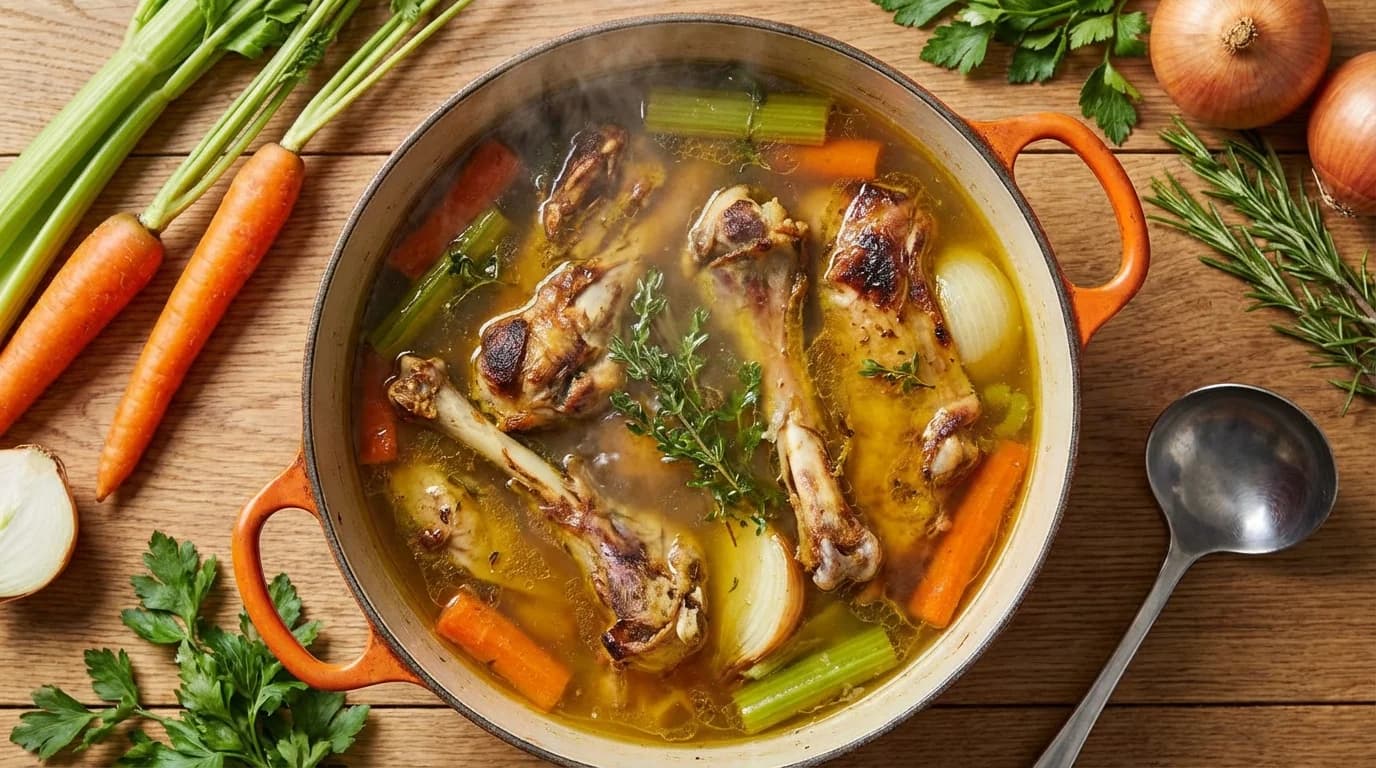
How to Make Homemade Stock: Master Guide for Rich, Flavorful Broth
Homemade stock is liquid gold in the kitchen—the foundation of countless soups, sauces, braises, and risottos. While store-bought versions are convenient, making your own stock transforms simple ingredients (often scraps you'd otherwise throw away) into deeply flavorful, nutrient-rich liquid that elevates everything it touches. This comprehensive guide teaches you how to make chicken, beef, and vegetable stocks from scratch, with techniques that ensure rich, clear, restaurant-quality results.
Stock vs. Broth: Understanding the Difference
The terms are often used interchangeably, but there are technical differences:
Stock:
- Made from bones (with or without meat)
- Simmered longer (4-12 hours typically)
- Rich in gelatin from collagen breakdown
- Has body and silky mouthfeel when cooled (often gels)
- Typically unsalted
- Used as a base for other dishes
Broth:
- Made primarily from meat (with or without bones)
- Simmered shorter (1-3 hours)
- Lighter body, less gelatin
- Stays liquid when cooled
- Often seasoned and salted
- Can be consumed on its own
For maximum flavor and versatility, this guide focuses on making true stock from bones. The gelatin provides body to sauces and richness to soups that broth can't match.
Why Make Homemade Stock?
Superior flavor: Incomparably richer and more complex than store-bought versions
Cost-effective: Made from bones, vegetable scraps, and aromatics—ingredients that cost little or nothing
Control: You control salt levels, quality of ingredients, and flavor profile
Nutrient-dense: Loaded with minerals, collagen, and amino acids extracted from bones
Reduces waste: Uses parts you'd otherwise discard (chicken carcasses, vegetable scraps, herb stems)
Freezes beautifully: Make large batches and store for months
Essential Equipment
Large stockpot: 8-12 quart capacity minimum. Taller and narrower is better than wide and shallow (reduces evaporation).
Fine-mesh strainer or cheesecloth: For straining finished stock
Large bowl or container: To strain stock into
Ladle: For skimming impurities
Storage containers: Quart-sized containers, freezer bags, or ice cube trays for freezing
Optional but helpful:
- Instant-read thermometer
- Fat separator
- Pressure cooker or Instant Pot for faster stock
Basic Stock-Making Principles
Regardless of the type, all stocks follow these fundamental rules:
Cold Start
Always start bones and aromatics in cold water and bring to a simmer slowly. This extracts maximum flavor and creates clearer stock. Adding bones to boiling water seizes the exterior and prevents flavor extraction.
Gentle Simmer
Never boil stock vigorously. Maintain a bare simmer with just a few bubbles breaking the surface. Aggressive boiling makes stock cloudy and can create bitter flavors.
Skim Regularly
As stock heats, impurities rise to the surface as foam and scum. Skim these off regularly, especially in the first hour, for clearer, cleaner-tasting stock.
Don't Salt
Salt concentrates as stock reduces. Leave stock unsalted so you can control seasoning when using it in recipes.
Proper Ratio
General guideline: 3-4 pounds bones to 4 quarts (16 cups) cold water, plus aromatics. Too much water dilutes flavor; too little doesn't extract fully.
How to Make Chicken Stock
The most versatile stock in your repertoire.
Ingredients:
- 3-4 lbs chicken bones (backs, necks, wings, or carcass from roasted chicken)
- 1 large onion, quartered (no need to peel)
- 2 carrots, roughly chopped
- 2 celery stalks, roughly chopped
- 4-5 garlic cloves, smashed
- 2-3 bay leaves
- 6-8 black peppercorns
- 4-5 sprigs fresh thyme (or 1 tsp dried)
- 4-5 sprigs fresh parsley
- 4 quarts (16 cups) cold water
Instructions:
Step 1: Prepare Bones If using raw bones, roasting them first (optional but recommended) adds depth:
- Preheat oven to 400°F
- Spread bones on a baking sheet
- Roast 30-40 minutes until golden brown
- This creates richer, darker stock
For lighter, more delicate stock, skip roasting.
Step 2: Combine Ingredients
- Place bones in stockpot
- Add vegetables, herbs, and aromatics
- Cover with cold water by 1-2 inches
- Water should fully cover bones but pot shouldn't be more than 3/4 full
Step 3: Bring to Simmer
- Place over medium-high heat
- As water heats, foam and scum will rise
- When it reaches a simmer (about 20-30 minutes), reduce heat to low
- Simmer should be gentle—just a few lazy bubbles
Step 4: Skim For the first 30-60 minutes, skim the surface every 15-20 minutes to remove foam and impurities. After the first hour, skimming is rarely necessary.
Step 5: Simmer Maintain a bare simmer for:
- Minimum: 3 hours for decent stock
- Ideal: 6-8 hours for rich, gelatinous stock
- Maximum: 12 hours (diminishing returns beyond this)
The longer it simmers, the more flavor and gelatin extract. Check occasionally and add water if bones become exposed.
Step 6: Strain
- Remove from heat and let cool for 10-15 minutes
- Place a fine-mesh strainer over a large bowl
- Carefully ladle or pour stock through the strainer
- Discard solids (bones and vegetables have given their all)
- For crystal-clear stock, strain again through cheesecloth
Step 7: Cool and Store
- Cool stock quickly by placing the container in an ice bath (large bowl filled with ice water)
- Stir occasionally to speed cooling
- Once cooled to room temperature, refrigerate
- A layer of fat will solidify on top—remove and discard before using
- Use within 5 days or freeze for up to 6 months
Yield: Approximately 3-3.5 quarts
Quality Check:
When refrigerated, good chicken stock should gel due to extracted collagen. The firmer the gel, the richer the stock. If it doesn't gel, it's still usable but means less collagen was extracted (possibly too much water or not enough bones).
How to Make Beef Stock
Richer and more robust than chicken stock, perfect for beef soups, braises, and French onion soup.
Ingredients:
- 4-5 lbs beef bones (preferably a mix of knuckle bones, marrow bones, and meaty bones like short ribs or oxtail)
- 1 large onion, quartered
- 2 carrots, roughly chopped
- 2 celery stalks, roughly chopped
- 6 garlic cloves, smashed
- 2 tablespoons tomato paste
- 2-3 bay leaves
- 8-10 black peppercorns
- 4-5 sprigs fresh thyme
- 4-5 sprigs fresh parsley
- 5 quarts (20 cups) cold water
Instructions:
Step 1: Roast Bones This is essential for beef stock (unlike chicken where it's optional):
- Preheat oven to 425°F
- Arrange bones in a single layer on rimmed baking sheets
- Roast for 30 minutes
- Add onions, carrots, and celery
- Brush vegetables and bones with tomato paste
- Roast another 20-30 minutes until deeply browned
The roasting creates deep, caramelized flavors essential to good beef stock.
Step 2: Deglaze Roasting Pan
- Remove bones and vegetables to stockpot
- Place roasting pan on stovetop over medium heat
- Add 2 cups water and scrape up all browned bits (fond)
- Pour this flavorful liquid into the stockpot
Step 3: Simmer
- Add remaining water, herbs, and aromatics
- Bring to a simmer over medium-high heat
- Reduce to lowest heat to maintain bare simmer
- Skim frequently for the first hour
- Simmer for 8-12 hours (beef bones require longer than chicken)
The extended cooking time is necessary to extract maximum flavor and gelatin from dense beef bones.
Step 4: Strain, Cool, and Store Follow the same process as chicken stock.
Yield: Approximately 4 quarts
Brown vs. White Stock:
Brown stock (recipe above): Bones are roasted, creating deep, dark, rich stock White stock: Bones aren't roasted, creating lighter, more delicate stock (rarely made at home)
How to Make Vegetable Stock
Light, versatile, and perfect for vegetarians or when you want vegetables to shine.
Ingredients:
- 2 large onions, roughly chopped
- 3-4 carrots, roughly chopped
- 3-4 celery stalks, roughly chopped
- 1 leek, cleaned and chopped (optional)
- 8-10 garlic cloves, smashed
- 1 cup mushroom stems (optional but adds umami)
- 2-3 bay leaves
- 8-10 black peppercorns
- 6-8 sprigs fresh parsley
- 4-5 sprigs fresh thyme
- 3 quarts (12 cups) cold water
Instructions:
Step 1: Combine Ingredients Place all vegetables, herbs, and aromatics in stockpot and cover with cold water.
Step 2: Simmer
- Bring to a simmer over medium-high heat
- Reduce heat to low and maintain gentle simmer
- Cook for 45 minutes to 1.5 hours
Important: Don't simmer vegetable stock too long—beyond 2 hours, vegetables can impart bitter flavors.
Step 3: Strain, Cool, and Store Follow the same process as chicken stock.
Yield: Approximately 2.5 quarts
Vegetables to Avoid:
- Cruciferous vegetables (broccoli, cauliflower, cabbage): Become sulfurous and bitter
- Starchy vegetables (potatoes): Make stock cloudy
- Beets: Overpower other flavors and color everything pink
- Bell peppers: Can dominate the flavor profile
Vegetables to Include:
- Onions (including skins for golden color)
- Carrots
- Celery
- Leeks
- Mushrooms (especially for umami depth)
- Parsnips
- Fennel
- Tomatoes (in moderation)
Saving Scraps for Stock
One of the best parts of stock-making is using ingredients you'd otherwise discard:
Keep a "Stock Bag" in the Freezer:
For chicken stock:
- Chicken carcasses after roasting
- Wing tips
- Backs and necks
- Bones from any chicken meal
For vegetable stock:
- Onion skins and ends
- Carrot peels and tops
- Celery leaves and ends
- Mushroom stems
- Herb stems (parsley, thyme)
- Leek tops
Don't add:
- Anything moldy or spoiled
- Vegetables you'd avoid in stock (see list above)
- Citrus peels (too bitter)
- Excessive amounts of one ingredient
When your bag is full (usually 3-4 pounds), it's time to make stock. This approach means essentially free stock made from "garbage."
Pressure Cooker/Instant Pot Stock
For faster results (though slightly less complex flavor):
Chicken Stock:
- Add bones, aromatics, and water to Instant Pot (don't exceed max fill line)
- Pressure cook on high for 2 hours
- Natural release for 20 minutes
- Strain as usual
Beef Stock:
- Same process but pressure cook for 3 hours
- Natural release for 20 minutes
Result: Good stock in a fraction of the time, though it won't have quite the depth of slow-simmered stock.
How to Store Stock
Refrigeration:
- Store in airtight containers for up to 5 days
- Remove fat layer before using (or leave it—it provides flavor and protection)
Freezing:
Method 1: Containers
- Freeze in 2-cup or 4-cup portions in freezer-safe containers
- Leave 1 inch headspace for expansion
- Lasts 6 months
Method 2: Ice Cube Trays
- Freeze stock in ice cube trays (each cube ≈ 2 tablespoons)
- Once frozen, transfer cubes to freezer bags
- Perfect for adding small amounts to sauces
- Lasts 6 months
Method 3: Freezer Bags
- Freeze flat in quart-sized freezer bags
- Stack when frozen for space efficiency
- Lasts 6 months
Pro tip: Label everything with type of stock and date.
Reducing Stock for Storage
Stock concentrate (glace de viande for meat stocks) saves freezer space:
- Simmer stock uncovered over medium heat
- Reduce by 75-90% (watch carefully at the end—it can burn)
- Cool and freeze in ice cube trays
- One cube reconstituted with water makes 1/2 to 1 cup stock
Extremely concentrated stocks have a syrup-like consistency and intense flavor. Use sparingly.
Using Homemade Stock
Replace store-bought stock 1:1 in recipes:
Soups: The most obvious use. See our guide on how to make soup from scratch.
Sauces: Reduces beautifully for pan sauces and gravies. Learn how to thicken sauces with stock.
Braises: Essential for braising meat and creating rich, complex braises.
Grains: Cook rice, quinoa, or farro in stock instead of water for added flavor.
Vegetables: Adds richness when roasting vegetables or making purées.
Deglazing: Use to deglaze pans after searing meat for instant pan sauces.
Troubleshooting Common Problems
Stock is cloudy:
- Boiled too vigorously (always maintain gentle simmer)
- Didn't skim impurities
- Stirred too much while cooking
- Solution: Strain through cheesecloth or accept cloudiness (doesn't affect flavor)
Stock doesn't gel:
- Not enough bones or collagen-rich bones
- Too much water
- Didn't simmer long enough
- Solution: It's still good stock, just less rich
Stock tastes weak:
- Too much water relative to bones
- Didn't simmer long enough
- Bones were too clean (some meat adds flavor)
- Solution: Reduce by simmering uncovered to concentrate
Stock tastes bitter:
- Vegetables simmered too long (especially for vegetable stock)
- Burnt aromatics when roasting
- Solution: Simmer shorter next time; be careful with roasting temperature
Stock is too salty:
- Added salt during cooking (don't do this)
- Used salted pre-made products
- Solution: Dilute with water or use in smaller quantities in recipes
Conclusion
Making homemade stock is one of the most rewarding kitchen skills you can develop. It transforms scraps into treasure, costs almost nothing, and creates a foundation ingredient that elevates countless dishes. The process is simple—combine bones, aromatics, and water; simmer for hours; strain—but the results are extraordinary.
Start with chicken stock, as it's the most forgiving and versatile. Once you've tasted the difference homemade stock makes in your soups, sauces, and one-pot meals, you'll never want to go back to store-bought. Keep a stock bag in your freezer, dedicate a Sunday afternoon to simmering a big batch, and enjoy the fruits of your labor for months to come.
The beauty of stock-making is that it's nearly impossible to ruin. Even imperfect stock is leagues better than boxed versions. With practice, you'll develop instincts for the right ratios, timing, and techniques, making you a more confident, capable cook across all aspects of your cooking.
About myrecipe
myrecipe helps families save, organize, and share their favorite recipes in one place. Plan meals, create shopping lists, and preserve your culinary traditions.
Start Organizing Recipes