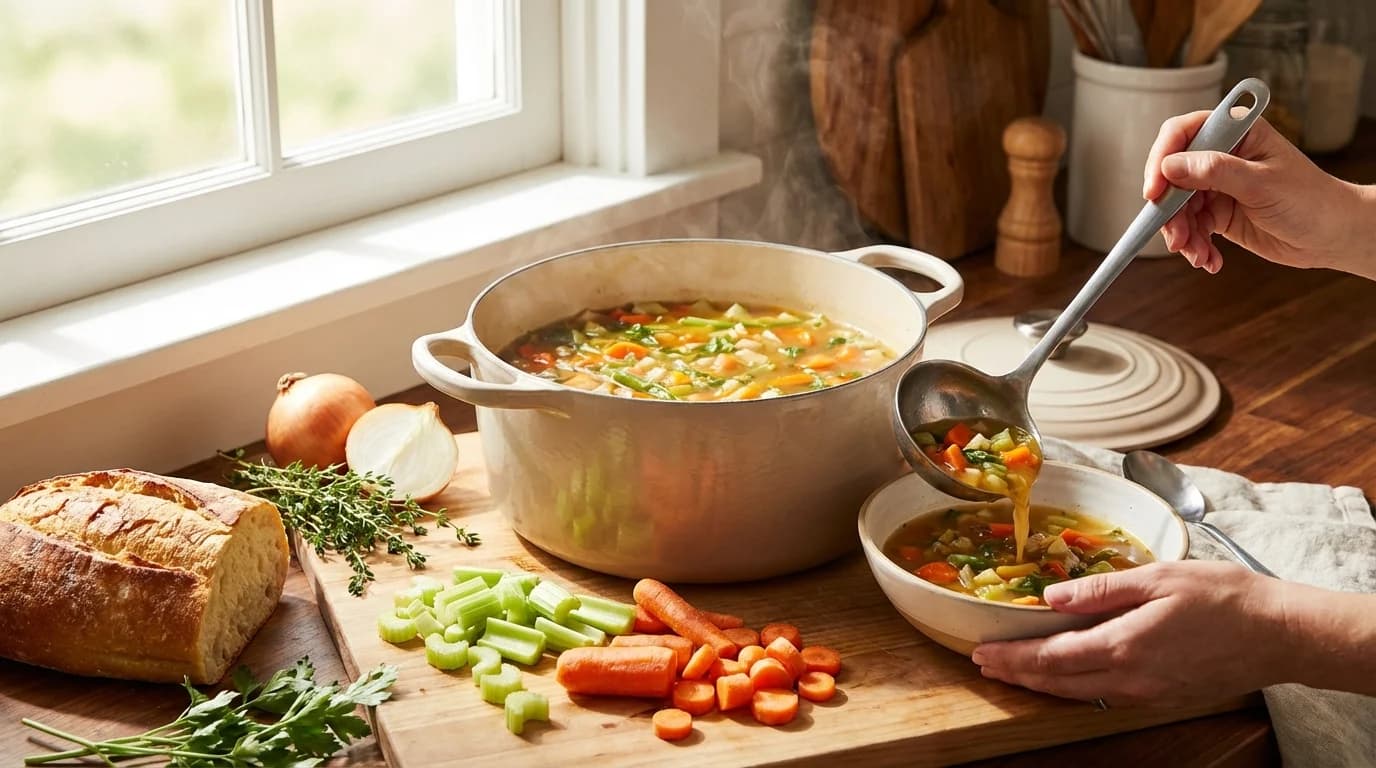
How to Make Soup from Scratch: Master Guide for Beginners
Few things are as comforting and satisfying as a bowl of homemade soup. Whether you're making a quick vegetable soup on a weeknight or simmering a rich bone broth all day, understanding the fundamental techniques of soup-making transforms simple ingredients into nourishing meals. This comprehensive guide will teach you the building blocks of soup, from creating flavorful bases to balancing seasonings, ensuring your homemade soups are consistently delicious.
The Anatomy of Soup: Understanding the Basics
Every soup, from simple broths to complex stews, follows a basic structure:
Base/Aromatics: The flavor foundation (onions, garlic, celery, carrots) Liquid: Stock, broth, water, or a combination Body: The main ingredients (vegetables, proteins, grains, legumes) Seasonings: Herbs, spices, salt, acid Finish: Final touches that brighten and complete the soup
Understanding this structure allows you to create any soup, follow recipes more effectively, and even improvise with what you have on hand.
Stock vs. Broth vs. Water
The liquid you choose significantly impacts flavor:
Stock: Made by simmering bones with vegetables and aromatics. Rich in gelatin, creating body and silky texture. Best for hearty soups and sauces.
Broth: Made by simmering meat (with or without bones) plus vegetables. Lighter than stock but more flavorful than water. Versatile for most soups.
Water: Acceptable when your soup has plenty of flavorful ingredients. Works well for vegetable-forward soups and when you build flavor through other techniques.
Store-bought vs. homemade: Store-bought is convenient and acceptable. Look for low-sodium varieties so you can control salt levels. Homemade stock elevates soup significantly—learn how to make your own homemade stock for the best results.
The Flavor-Building Foundation: Aromatics
Nearly every great soup starts with sautéing aromatics—vegetables that build the flavor base:
The Classic Mirepoix (French)
- 2 parts onion
- 1 part celery
- 1 part carrot
Dice small (1/4-inch) and sauté in fat until softened and lightly golden, about 8-10 minutes.
The Holy Trinity (Cajun/Creole)
- Onion
- Celery
- Bell pepper
Used in gumbo, jambalaya, and Creole soups. Sauté until tender and fragrant.
Sofrito (Spanish/Latin)
- Onion
- Garlic
- Tomatoes
- Bell peppers
Cooked down until sweet and concentrated.
Asian Aromatics
- Ginger
- Garlic
- Scallions
- Lemongrass
Often stir-fried briefly or added to simmering liquid.
The key is cooking these aromatics in fat (oil, butter, or rendered fat from meat) until they soften and sweeten, typically 8-12 minutes over medium heat. This critical step develops complex flavors that permeate the entire soup.
The Basic Soup-Making Method
This universal method works for most soup styles:
Step 1: Prepare Your Ingredients
Practice mise en place—have everything chopped and ready:
- Dice aromatics small (they cook faster and distribute flavor better)
- Cut main vegetables into uniform pieces for even cooking
- Prep proteins as needed
- Measure liquids and seasonings
Step 2: Sauté Aromatics
- Heat 2-3 tablespoons fat in a large pot or Dutch oven over medium heat
- Add onions first, cook 3-4 minutes until softened
- Add celery and carrots, cook another 5-7 minutes
- Add garlic and spices in the last 1-2 minutes (they burn quickly)
- Stir frequently to prevent sticking
You're looking for softened, fragrant vegetables with no browning (unless making a darker soup). This is called "sweating" the vegetables.
Step 3: Build Layers of Flavor
This is where soup-making becomes an art:
Deglaze: If you've browned meat, add a splash of wine, beer, or stock and scrape up the browned bits (fond) from the bottom of the pot. This adds incredible depth.
Bloom spices: If using ground spices, cook them with the aromatics for 1-2 minutes to release their aromatic oils.
Add tomato paste: If using, cook it with the aromatics for 2-3 minutes to caramelize the sugars and deepen flavor.
Step 4: Add Liquids and Main Ingredients
- Pour in stock or broth, stirring to incorporate
- Add any long-cooking ingredients (dried beans, tough cuts of meat, root vegetables)
- Bring to a boil, then reduce to a gentle simmer
- Skim off any foam or impurities that rise to the surface
Step 5: Simmer
Patience is key. A proper simmer is:
- Small bubbles breaking the surface occasionally
- Not a rolling boil (too aggressive, makes soup cloudy)
- Not barely steaming (too low, takes forever)
Simmer times:
- Quick vegetable soups: 15-20 minutes
- Chicken soup: 30-45 minutes
- Bean soups: 1-2 hours
- Beef or bone broths: 2-8 hours
Step 6: Add Quick-Cooking Ingredients
Delicate vegetables, leafy greens, and fresh herbs go in during the last 5-15 minutes:
- Spinach, kale: 5 minutes
- Pasta, rice: according to package directions
- Fresh herbs: last 5 minutes
- Cooked proteins (to reheat): last 5-10 minutes
Step 7: Season and Balance
Taste your soup 5 minutes before you think it's done:
Not flavorful enough? Add salt, a bit at a time Too salty? Add acid (lemon juice, vinegar) or a peeled potato to absorb salt Flat tasting? Add acid (lemon, vinegar) or fresh herbs Too thin? Simmer uncovered to reduce, or add a thickener Too thick? Add more stock or water
Step 8: Finish and Serve
Remove from heat and add finishing touches:
- Fresh herbs
- A drizzle of good olive oil
- A squeeze of lemon
- Cream or yogurt for richness
- Grated cheese
Let soup rest for 10-15 minutes before serving. Flavors meld and intensify as it sits. Soup actually tastes better the next day for this reason.
How to Thicken Soup
Different soups require different thickening methods:
Puree Method
Blend a portion (or all) of the soup until smooth. This works brilliantly for:
- Potato soup
- Butternut squash soup
- Bean soups
Use an immersion blender for convenience or transfer portions to a regular blender (never fill more than halfway, and vent the lid to prevent explosions).
Roux Method
Equal parts fat and flour cooked together, then whisked into soup:
- Melt 2 tablespoons butter
- Whisk in 2 tablespoons flour
- Cook 2-3 minutes, whisking constantly
- Slowly whisk in hot soup liquid
- Return to the pot and simmer 10 minutes
Creates a velvety, classic texture perfect for chowders and cream soups.
Slurry Method
Mix 2 tablespoons cornstarch with 2 tablespoons cold water. Stir into simmering soup and cook 2-3 minutes until thickened. Quick but can taste starchy if overused.
Reduction Method
Simply simmer uncovered, allowing water to evaporate and flavors to concentrate. The most natural method, requiring only time and patience.
Starch Method
Add potatoes, rice, or pasta. As they cook, they release starch that naturally thickens the soup.
Learn more about all these techniques in our guide on how to thicken sauces.
Soup Categories and Techniques
Clear Soups
Examples: Chicken noodle, miso, pho
Technique: Keep the simmer gentle to maintain clarity. Don't boil vigorously. Skim impurities regularly.
Key: High-quality stock is essential since there's nothing to hide behind.
Cream Soups
Examples: Broccoli cheddar, potato leek, mushroom bisque
Technique: Sauté aromatics, add vegetables, add liquid, simmer until tender, puree partially or fully, finish with cream.
Key: Add cream at the very end and don't boil after adding (it can curdle). For lighter versions, use milk or half-and-half.
Pureed Soups
Examples: Butternut squash, tomato, roasted red pepper
Technique: Roast or sauté vegetables for depth, simmer in liquid until very tender, puree completely until silky smooth.
Key: Straining through a fine-mesh sieve after blending creates restaurant-quality velvety texture.
Chunky Soups/Stews
Examples: Minestrone, beef stew, chicken and rice
Technique: Brown proteins first, sauté aromatics in the fat, build layers, simmer long and slow.
Key: Cut all ingredients uniformly for even cooking. Don't rush the browning step—it adds crucial flavor.
Bean and Legume Soups
Examples: Split pea, lentil, black bean
Technique: Sauté aromatics, add dried legumes and liquid, simmer until tender (1-2 hours for most beans, 30 minutes for lentils).
Key: Don't add salt until beans are almost tender (salt can toughen them). Add acid (tomatoes, vinegar) at the end for the same reason.
Common Soup-Making Mistakes
Mistake 1: Not Sautéing Aromatics Long Enough
Aromatics need 8-12 minutes to soften and develop sweetness. Rushing this step produces harsh, underdeveloped flavors.
Mistake 2: Boiling Instead of Simmering
A rolling boil makes soup cloudy, causes vegetables to disintegrate, and can make meat tough. Always simmer gently.
Mistake 3: Under-Seasoning
Soup needs more salt than you think. Season in layers (early, middle, end) and taste frequently. Finish with acid to brighten flavors.
Mistake 4: Adding Everything at Once
Different ingredients need different cooking times. Add them in stages so everything finishes perfectly tender at the same time.
Mistake 5: Not Tasting as You Go
Taste soup multiple times during cooking. This allows you to adjust seasoning gradually and catch problems before it's too late.
Mistake 6: Making the Pot Too Full
Leave room for stirring and simmering. Fill your pot only 2/3 full maximum.
Soup Storage and Food Safety
Understanding proper storage ensures your soup stays safe and delicious:
Cooling: Cool soup quickly before refrigerating. Pour into shallow containers (no more than 2-3 inches deep) and place in an ice bath or refrigerate uncovered until cooled, then cover.
Refrigerator: Store properly cooled soup in airtight containers for 3-4 days. Some soups (bean, tomato-based) keep for up to 5 days.
Freezer: Most soups freeze beautifully for 2-3 months. Exceptions:
- Cream soups (cream separates when frozen—add it fresh after reheating)
- Potato soups (potatoes get grainy)
- Pasta in soup (gets mushy—add fresh when reheating)
Reheating: Reheat soup to 165°F. Stovetop works best—heat gently, stirring occasionally. Add a splash of stock or water if it's thickened too much.
Food safety note: Never let soup sit at room temperature for more than 2 hours. Follow our food safety basics guide for detailed information.
Building Your Soup Repertoire
Start with these classic soups to build skills:
Beginner: Vegetable soup, chicken noodle, tomato soup Intermediate: Minestrone, French onion, butternut squash bisque Advanced: Pho, ramen, borscht
Each soup teaches different techniques. Cheap soup recipes are perfect for practicing without pressure.
Converting Recipes to Slow Cooker or Instant Pot
Slow Cooker Adaptation:
- Sauté aromatics on the stovetop first (the slow cooker can't brown)
- Reduce liquid by 25-30% (less evaporation in slow cookers)
- Cook on low 6-8 hours or high 3-4 hours
- Add dairy, fresh herbs, and tender vegetables in the last 30 minutes
Instant Pot Adaptation:
- Sauté aromatics using the sauté function
- Add ingredients and liquid (at least 1 cup liquid required)
- Pressure cook on high: 5-10 minutes for vegetable soups, 15-25 for meat-based
- Natural release for 10 minutes, then quick release
Learn more slow cooking tips for perfectly adapted recipes.
Conclusion
Making soup from scratch is one of the most forgiving and rewarding cooking skills you can develop. The techniques are straightforward—sauté aromatics, add liquid, simmer, season—but the variations are endless. Once you understand the fundamental structure and timing, you can create soups from whatever ingredients you have on hand, making it perfect for budget cooking and reducing food waste.
Start with simple recipes that use familiar ingredients. Pay attention to how flavors develop during cooking. Taste frequently and adjust boldly. With each pot of soup, you'll develop better instincts for seasoning, timing, and flavor balancing.
Whether you're making a quick 15-minute meal or a complex soup that simmers all afternoon, these fundamentals will guide you to delicious, soul-warming results every time. And remember: soup is forgiving. Even if it doesn't turn out perfect, it's usually still delicious and nourishing—which is the whole point.
About myrecipe
myrecipe helps families save, organize, and share their favorite recipes in one place. Plan meals, create shopping lists, and preserve your culinary traditions.
Start Organizing Recipes