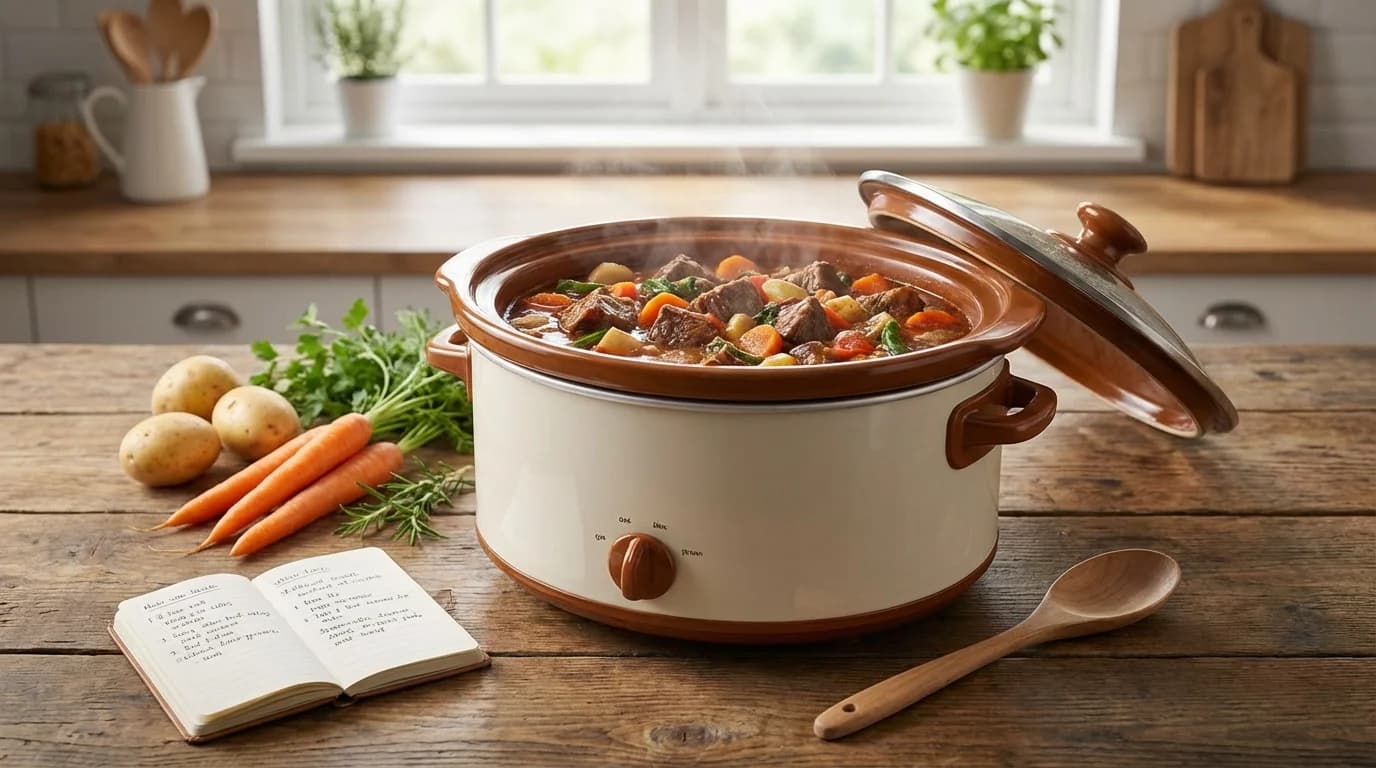
Slow Cooking Tips for Beginners: Master Your Slow Cooker
Slow cookers (also called Crockpots) are the ultimate set-it-and-forget-it kitchen appliance. They transform tough cuts of meat into fall-apart tenderness, develop deep flavors through hours of gentle simmering, and free you from the kitchen while dinner cooks itself. Yet many beginners end up with watery, bland, or overcooked results. This comprehensive guide teaches you everything you need to know to master slow cooking, from proper layering to timing to flavor development.
How Slow Cookers Work
Slow cookers use low, consistent heat over extended periods to:
Break down collagen in tough cuts of meat, creating tender results Meld flavors through extended contact and gentle simmering Retain moisture through the tight-fitting lid that traps steam Cook without supervision maintaining safe temperatures (above 140°F) for hours
Unlike stovetop or oven cooking, slow cookers heat from the sides and bottom, with heat radiating evenly throughout the ceramic insert. The temperature is carefully controlled to stay below boiling (which would toughen meat and evaporate too much liquid).
Temperature ranges:
- Low setting: 190-200°F (ideal for tough cuts, all-day cooking)
- High setting: 280-300°F (faster cooking, still gentle)
- Warm setting: 165°F (for holding food after cooking)
Essential Slow Cooking Principles
1. Low and Slow is the Goal
Slow cookers work best with:
- Long cooking times (4-10 hours)
- Tough, inexpensive cuts of meat (chuck, shoulder, shanks)
- Dishes that benefit from flavor melding (stews, chilis, braises)
Don't use slow cookers for quick-cooking items—the whole point is long, gentle cooking.
2. Liquid is Essential
Slow cookers need moisture to create steam and prevent burning:
- Always include at least 1/2 to 1 cup of liquid
- Liquid can be broth, wine, tomatoes, sauces
- More liquid than stovetop recipes (evaporation is minimal)
3. Don't Overfill
Fill level:
- Minimum: 1/2 full (below this, heating is uneven)
- Ideal: 2/3 full
- Maximum: 3/4 full (above this, food may not cook properly and could overflow)
4. Keep the Lid On
Every time you lift the lid:
- Temperature drops 10-15°F
- Adds 15-20 minutes to cooking time
- Disrupts the steam environment
Only lift the lid to check doneness near the end, or to add ingredients that cook quickly.
Best Ingredients for Slow Cooking
Meats That Excel:
Tough cuts with connective tissue:
- Beef: Chuck roast, brisket, short ribs, beef shanks
- Pork: Shoulder (Boston butt), ribs, shanks
- Chicken: Thighs (bone-in and boneless), drumsticks, whole chicken
- Lamb: Shanks, shoulder
These cuts have collagen that breaks down during long cooking, creating tender, flavorful results.
Meats to Avoid:
Lean, quick-cooking cuts:
- Chicken breasts (become dry and stringy)
- Pork tenderloin (overcooks easily)
- Beef tenderloin
- Fish (unless added in final 30 minutes)
Vegetables:
Hardy vegetables (add at the beginning):
- Potatoes, carrots, parsnips, turnips
- Onions, celery, bell peppers
- Winter squash
- Dried beans (after soaking)
Delicate vegetables (add in last 30-60 minutes):
- Zucchini, summer squash
- Peas, corn
- Leafy greens (spinach, kale)
- Fresh tomatoes
Starches:
Add at the beginning:
- Dried beans (soaked overnight first)
- Whole grains (farro, barley)
- Root vegetables
Add in last 30-45 minutes:
- Pasta (will get mushy if added too early)
- Rice (white rice cooks in 30 minutes on high)
Proper Layering Technique
The order you layer ingredients affects cooking:
Bottom layer (closest to heat):
- Hardy vegetables (onions, carrots, potatoes)
- These take longest to cook and benefit from direct heat
Middle layer:
- Meat (sits on vegetable bed, won't burn)
- Surrounded by liquid
Top layer:
- Liquids, sauces, seasonings
- Poured over everything
Why this order? Vegetables at the bottom cook directly from the heat source, while meat stays moist in the middle, preventing overcooking. Liquid on top distributes flavors.
Cooking Time Guidelines
Converting Recipes:
Stovetop to slow cooker:
- 15-30 minutes stovetop = 1.5-2 hours on high, 4-6 hours on low
- 30-60 minutes stovetop = 2-3 hours on high, 5-7 hours on low
- 1-3 hours stovetop = 4-6 hours on high, 8-10 hours on low
High vs. Low:
- 1 hour on high ≈ 2 hours on low
- Low is gentler and preferred for tough meat
- High works for shorter cooking times when needed
General Guidelines:
Beef/pork roasts:
- Low: 8-10 hours
- High: 4-6 hours
Chicken (bone-in thighs/drumsticks):
- Low: 6-7 hours
- High: 3-4 hours
Dried beans:
- Low: 8-10 hours (after overnight soak)
- High: 4-5 hours
Soups and stews:
- Low: 8-10 hours
- High: 4-6 hours
Vegetables only:
- Low: 4-6 hours
- High: 2-3 hours
Use these as starting points and adjust based on your specific slow cooker—they vary.
Browning: To Do or Not to Do?
Professional opinion: Browning meat before slow cooking adds significant flavor.
Benefits of browning:
- Creates Maillard reaction (complex flavors, appealing color)
- Renders some fat from meat
- Adds fond (browned bits) to the sauce
- Makes final dish more restaurant-like
How to brown:
- Pat meat dry
- Season with salt and pepper
- Heat oil in a skillet over medium-high heat
- Sear meat 3-4 minutes per side until golden
- Transfer to slow cooker
- Deglaze skillet with wine or broth and add to slow cooker
When to skip: When you're truly pressed for time, browning is optional. The dish will still be good, just less complex in flavor.
Building Flavor in Slow Cooking
Slow cookers develop flavors differently than other methods:
Layer flavors:
Start with aromatics:
- Onions, garlic, ginger, celery, carrots
- Sauté these first (if browning meat) or layer at bottom
Add spices early:
- Dried herbs, spices, and seasonings go in at the beginning
- Long cooking allows flavors to meld
Use enough salt:
- Slow cooking dilutes flavors
- Season more generously than you think
- Taste and adjust at the end
Add acid at the end:
- Vinegar, lemon juice, lime juice
- These brighten flavors dulled by long cooking
- Add in final 15-30 minutes
Finish with fresh herbs:
- Parsley, cilantro, basil lose flavor during long cooking
- Stir in just before serving
Umami boosters:
Add depth with:
- Tomato paste (sauté with aromatics first)
- Soy sauce or Worcestershire sauce
- Miso paste
- Dried mushrooms
- Parmesan rinds
Learn more about flavor building in our cooking with herbs guide.
Common Slow Cooking Mistakes
Mistake 1: Adding Too Much Liquid
Problem: Watery, diluted final dish
Cause: Slow cookers don't evaporate liquid like stovetop cooking—the lid traps everything
Fix:
- Use 25-50% less liquid than stovetop recipes
- If too watery at the end, thicken with cornstarch slurry or reduce on the stovetop
Mistake 2: Not Accounting for Vegetable Moisture
Problem: Even more watery results
Cause: Vegetables release water as they cook
Fix:
- Reduce added liquid when using lots of vegetables
- Don't thaw frozen vegetables before adding (ice adds extra water)
Mistake 3: Lifting the Lid Too Often
Problem: Food takes forever to cook or doesn't cook through
Cause: Each peek drops temperature significantly
Fix:
- Resist the urge to check
- Only lift lid to add late ingredients or check final doneness
Mistake 4: Overfilling or Underfilling
Problem: Uneven cooking, overflow, or burning
Cause: Improper fill level affects heat distribution
Fix:
- Stay between 1/2 and 3/4 full
- Use appropriate slow cooker size for your recipe
Mistake 5: Adding Dairy Too Early
Problem: Curdled, separated cream or milk
Cause: Long exposure to heat breaks down dairy
Fix:
- Add cream, milk, sour cream, or cheese in final 30 minutes
- Or stir in after cooking is complete
Mistake 6: Using Quick-Cooking Cuts
Problem: Dry, stringy, overcooked meat
Cause: Lean cuts don't benefit from slow cooking
Fix:
- Choose tough, fatty cuts (chuck, shoulder, thighs)
- Save lean cuts for quick-cooking methods like pan-searing
Mistake 7: Not Adjusting Seasonings at the End
Problem: Bland final dish despite adding seasoning
Cause: Long cooking dilutes and mellows flavors
Fix:
- Always taste before serving
- Add more salt, acid, or fresh herbs as needed
Adapting Regular Recipes for Slow Cooker
Follow these guidelines:
1. Reduce liquid by 25-50%
- Slow cookers retain moisture
2. Cut aromatics larger
- They'll cook for hours, small pieces disintegrate
3. Adjust cooking time
- Use guidelines above for conversion
4. Layer correctly
- Hardy vegetables on bottom, meat in middle, liquid on top
5. Add delicate ingredients later
- Pasta, rice, dairy, fresh herbs in final 30-60 minutes
6. Account for no browning
- If not browning meat first, add tomato paste, soy sauce, or other umami ingredients for depth
Slow Cooker Safety
Food safety basics:
- Always start with thawed meat (frozen meat stays in the "danger zone" too long)
- Don't use slow cooker to reheat food (heats too slowly)
- Refrigerate leftovers within 2 hours
- Reheat leftovers on stovetop or in microwave, not in slow cooker
For more details, see our food safety basics guide.
Easy Slow Cooker Recipes for Beginners
Start with these forgiving dishes:
1. Pot Roast
- Chuck roast, potatoes, carrots, onions, beef broth
- 8 hours on low
- Foolproof and delicious
2. Pulled Pork
- Pork shoulder, BBQ sauce or seasonings
- 8-10 hours on low
- Shred and serve on buns
3. Chicken Tacos
- Chicken thighs, salsa, taco seasoning
- 6-7 hours on low
- Shred and use for tacos
4. Chili
- Ground beef, beans, tomatoes, spices
- 6-8 hours on low
- Great for budget meals
5. Beef Stew
- Beef chuck, potatoes, carrots, broth
- 8 hours on low
- Classic comfort food
See our easy crockpot recipes and dump-and-go slow cooker recipes for more inspiration.
Slow Cooker Sizes
Choose the right size for your needs:
2-3 quarts: 1-2 people, dips, small sides 4-5 quarts: 2-3 people, most versatile size 6-7 quarts: 4+ people, large roasts, batch cooking 8+ quarts: Large families, meal prep, entertaining
Most households do well with a 6-quart slow cooker—large enough for roasts and batches, not so large it can't handle smaller meals.
Slow Cooker vs. Instant Pot
Slow cooker advantages:
- Gentler cooking
- True set-it-and-forget-it (can leave house)
- Better for tough cuts that benefit from long cooking
- More forgiving timing
Instant Pot advantages:
- Much faster (pressure cooking)
- More versatile (sauté, pressure cook, slow cook, etc.)
- Better for weeknight cooking
- Smaller footprint
Both have their place. For true low and slow, stick with a traditional slow cooker.
Cleaning and Care
After each use:
- Unplug and let cool
- Remove ceramic insert
- Wash insert in warm soapy water (most are dishwasher safe)
- Wipe heating element clean with damp cloth
- Dry thoroughly
Never:
- Immerse the heating base in water
- Use abrasive scrubbers on the ceramic
- Place cold ceramic insert directly in hot base (thermal shock can crack it)
Conclusion
Slow cooking is one of the most beginner-friendly cooking methods once you understand a few key principles: use tough cuts of meat, include enough liquid (but not too much), layer ingredients properly, and resist the urge to peek. The hands-off nature makes it perfect for busy schedules, meal prep, and budget-friendly cooking.
Start with simple, forgiving recipes like pot roast or pulled pork. As you gain experience, you'll develop intuition for timing, liquid amounts, and flavor adjustments. Soon, you'll be creating cheap, delicious meals that taste like you spent hours in the kitchen—even though you just spent 10 minutes on prep.
Whether you're making one-pot budget meals for the week or dump-and-go recipes for ultimate convenience, mastering slow cooking opens up a world of tender, flavorful, effortless meals that fit into even the busiest lifestyle.
About myrecipe
myrecipe helps families save, organize, and share their favorite recipes in one place. Plan meals, create shopping lists, and preserve your culinary traditions.
Start Organizing Recipes