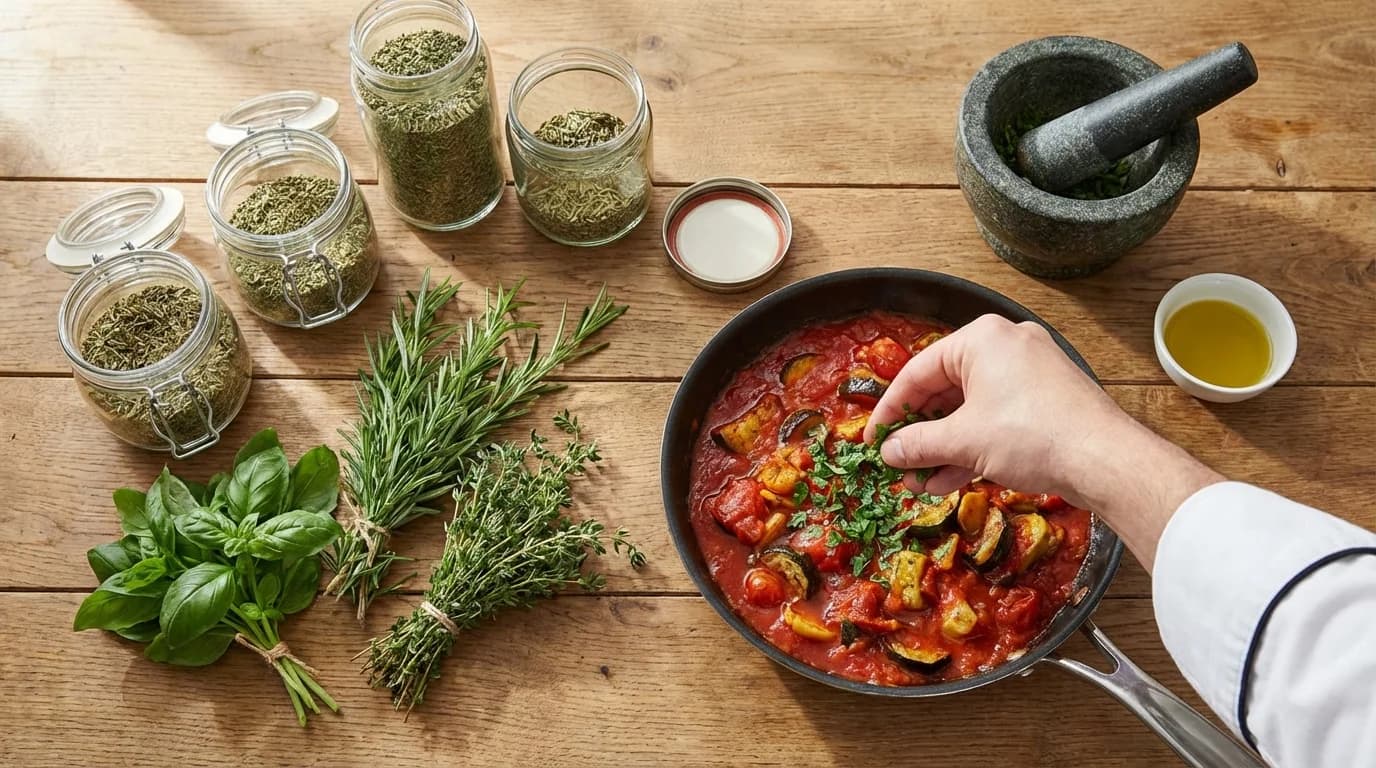
Cooking with Herbs Guide: Fresh vs Dried, Timing & Pairing Tips
Herbs are the secret weapon that transforms ordinary dishes into extraordinary meals. A handful of fresh basil turns simple tomato sauce into something restaurant-worthy. A sprinkle of thyme elevates roasted vegetables from side dish to standout. Yet many home cooks misuse herbs—adding them at the wrong time, using improper ratios, or choosing the wrong variety for their dish. This comprehensive guide teaches you everything you need to know about cooking with herbs, from fresh vs. dried conversions to timing techniques and classic flavor pairings.
Fresh vs. Dried Herbs: Understanding the Differences
Fresh Herbs
Characteristics:
- Bright, vibrant flavor
- Delicate, can't withstand long cooking
- Higher water content
- Shorter shelf life (days to 1 week)
- More expensive but more impactful
Best for:
- Finishing dishes
- Raw applications (salads, garnishes)
- Quick-cooking dishes
- Delicate sauces
- Showcasing herb flavor
Common fresh herbs: Basil, cilantro, parsley, mint, dill, chives, tarragon
Dried Herbs
Characteristics:
- Concentrated, earthy flavor
- Can withstand long cooking
- No water content
- Long shelf life (1-3 years if stored properly)
- More economical
- More potent than fresh
Best for:
- Long-simmering dishes (soups, stews, braises)
- Dry rubs and marinades
- Dishes where fresh herbs would wilt or burn
- When fresh isn't available
Common dried herbs: Oregano, thyme, rosemary, bay leaves, sage, marjoram
The Conversion Rule: Fresh to Dried
When substituting, use this ratio:
1 tablespoon fresh herbs = 1 teaspoon dried herbs
Or stated differently: Use 1/3 the amount when converting from fresh to dried.
Why? Drying concentrates flavors and removes water, making dried herbs about three times more potent than fresh.
Example:
- Recipe calls for 3 tablespoons fresh basil
- You only have dried
- Use 1 tablespoon dried basil
Reverse conversion:
- Recipe calls for 1 teaspoon dried thyme
- You have fresh
- Use 3 teaspoons (1 tablespoon) fresh thyme
Exceptions to the Rule:
Herbs that don't dry well: Basil, cilantro, parsley, chives, dill
- These lose significant flavor when dried
- Fresh is always preferred
- If using dried, expect muted results
Herbs that excel dried: Oregano, thyme, rosemary, bay leaves
- Often more convenient dried
- Concentrated flavor works well
- Many cooks prefer dried versions for certain applications
When to Add Herbs During Cooking
Timing dramatically impacts the final flavor:
Add at the Beginning (Hardy/Dried Herbs)
Herbs: Dried oregano, thyme, rosemary, bay leaves, sage
Dishes: Soups, stews, braises, tomato sauces, stocks
Why: These can withstand long cooking times. Extended simmering allows their flavors to infuse throughout the dish and mellow slightly.
Technique: Add during the sautéing aromatics stage or early in simmering for maximum flavor integration.
Add in the Middle (Moderately Hardy Fresh Herbs)
Herbs: Fresh rosemary, fresh thyme, fresh sage, fresh oregano
Dishes: Roasted meats, roasted vegetables, pasta sauces
Why: These can handle moderate cooking but maintain better flavor if not cooked for hours.
Technique: Add in the last 30-45 minutes of cooking for balanced flavor.
Add at the End (Delicate Fresh Herbs)
Herbs: Fresh basil, cilantro, parsley, dill, mint, chives, tarragon
Dishes: Finishing soups, sauces, stir-fries, salads
Why: These lose flavor and wilt with prolonged heat. Adding at the end preserves their bright, fresh taste.
Technique: Stir in during the last 2-5 minutes of cooking, or sprinkle on just before serving.
The Double Addition Technique
For maximum flavor depth:
- Add dried or hardy herbs early in cooking (builds base flavor)
- Add fresh delicate herbs at the end (adds brightness)
Example: Add dried thyme when sautéing onions for soup, then stir in fresh parsley just before serving.
Essential Herbs and How to Use Them
Basil
Flavor: Sweet, slightly peppery, with hints of anise and clove
Best with: Tomatoes, mozzarella, pasta, chicken, fish
Cooking tips:
- Almost always use fresh (dried basil is disappointing)
- Add at the very end—heat destroys its flavor
- Tear by hand rather than chopping (cutting bruises and darkens it)
Classic uses: Caprese salad, pesto, margherita pizza, tomato sauce (added at the end)
Cilantro (Coriander Leaves)
Flavor: Bright, citrusy, slightly soapy (genetic—some people love it, others hate it)
Best with: Mexican, Thai, Vietnamese, Indian cuisines; lime, avocado, tomatoes
Cooking tips:
- Always use fresh
- Stems have as much flavor as leaves—use them
- Add at the end; cooking dulls flavor
- Toss whole leaves into dishes for maximum impact
Classic uses: Salsa, guacamole, tacos, Thai curries, pho, chutneys
Parsley
Varieties: Flat-leaf (Italian) is more flavorful; curly is milder and more decorative
Flavor: Fresh, slightly peppery, clean
Best with: Nearly everything—most versatile herb
Cooking tips:
- Use flat-leaf for cooking, curly for garnish
- Stems have concentrated flavor—use in stocks and sauces
- Add fresh at the end for brightness
- Can handle moderate cooking better than basil or cilantro
Classic uses: Tabbouleh, chimichurri, gremolata, garnishes, stocks
Thyme
Flavor: Earthy, slightly minty, woodsy
Best with: Chicken, beef, tomatoes, mushrooms, root vegetables
Cooking tips:
- Works excellently both fresh and dried
- Strip leaves from stems (stems are woody)
- Add early in cooking—can handle long simmering
- Pairs beautifully with rosemary and sage
Classic uses: Roasted chicken, beef stew, mushroom dishes, herbes de Provence
Rosemary
Flavor: Piney, woodsy, assertive, almost medicinal if overused
Best with: Lamb, pork, potatoes, beans, bread
Cooking tips:
- Highly potent—a little goes a long way
- Fresh is preferable but dried works
- Remove whole sprigs before serving (leaves are tough)
- Mince very finely if leaving in dish
- Add early—can handle long cooking
Classic uses: Roasted lamb, focaccia, roasted potatoes, white bean soup
Oregano
Flavor: Robust, slightly bitter, pungent
Best with: Tomatoes, pizza, pasta, Mediterranean and Mexican cuisines
Cooking tips:
- One of the few herbs that's often better dried
- Add early in cooking—flavors meld and mellow
- Mexican and Mediterranean oregano are different varieties with distinct flavors
- Pairs well with basil, thyme, and garlic
Classic uses: Pizza sauce, pasta sauce, Greek salads, chili, marinades
Dill
Flavor: Fresh, grassy, slightly tangy
Best with: Fish, potatoes, cucumbers, eggs, yogurt
Cooking tips:
- Always use fresh when possible
- Fronds (feathery leaves) are used; discard stems
- Add at the end—heat diminishes flavor
- Pairs beautifully with lemon and fish
Classic uses: Salmon, potato salad, tzatziki, pickles, gravlax
Sage
Flavor: Earthy, slightly peppery, robust
Best with: Pork, poultry, butternut squash, beans, brown butter
Cooking tips:
- Can be used fresh or dried
- Powerful flavor—use sparingly
- Can be fried in butter for crispy, nutty garnish
- Add early or in middle of cooking
Classic uses: Thanksgiving stuffing, brown butter sage sauce, pork chops, butternut squash dishes
Mint
Flavor: Cool, refreshing, sweet
Best with: Lamb, peas, yogurt, chocolate, fruit, teas
Cooking tips:
- Always use fresh
- Many varieties (spearmint is most common)
- Add at the end or use raw
- Pairs unexpectedly well with savory dishes
Classic uses: Mojitos, mint juleps, tabbouleh, lamb dishes, pea soup, desserts
Bay Leaves
Flavor: Subtle, woodsy, slightly floral (flavor is more about aroma than taste)
Best with: Soups, stews, stocks, braises, rice dishes
Cooking tips:
- Always use dried (fresh are too intense and slightly bitter)
- Add whole at the beginning of cooking
- Remove before serving (tough and unpleasant to bite into)
- 1-2 leaves are usually sufficient
Classic uses: Soup, stock, braised dishes, tomato sauce, rice pilaf
Classic Herb Combinations
Certain herbs pair beautifully together:
Herbes de Provence (French):
- Thyme, rosemary, oregano, marjoram, savory, lavender
- Use with roasted meats, vegetables, stews
Italian Seasoning:
- Basil, oregano, thyme, rosemary, sage
- Use with pasta, pizza, tomato sauces
Bouquet Garni (French):
- Parsley, thyme, bay leaf tied together
- Add to soups and stocks; remove before serving
Fines Herbes (French):
- Parsley, chervil, tarragon, chives
- Delicate combination for eggs, fish, chicken
Chimichurri (Argentinian):
- Parsley, oregano, garlic, olive oil, vinegar
- Use as sauce for grilled meats
How to Store Fresh Herbs
Proper storage extends herb life significantly:
Tender Herbs (Basil, Cilantro, Parsley, Mint)
Method 1: Like Flowers
- Trim stem ends
- Place in a glass with 1 inch of water
- Cover loosely with a plastic bag
- Store on counter (basil) or in fridge (others)
- Change water every 2-3 days
- Lasts 1-2 weeks
Method 2: Damp Paper Towel
- Wrap herbs loosely in damp paper towel
- Place in a plastic bag or container
- Refrigerate
- Lasts 5-7 days
Hardy Herbs (Thyme, Rosemary, Sage)
Method:
- Wrap loosely in damp paper towel
- Place in plastic bag
- Refrigerate
- Lasts 1-2 weeks
Freezing Herbs
For long-term storage:
Ice Cube Method:
- Chop herbs finely
- Pack into ice cube trays
- Cover with olive oil or water
- Freeze
- Pop out cubes and store in freezer bags
- Add directly to cooking dishes
- Lasts 6 months
Excellent for: Basil, cilantro, parsley, dill
How to Store Dried Herbs
Proper storage maintains potency:
- Store in airtight containers in a cool, dark place
- Avoid storing above the stove (heat degrades flavor)
- Label with purchase date
- Replace after 1-3 years (they lose potency over time)
- Test by crushing a pinch—if there's no aroma, they're spent
Growing Your Own Herbs
Even a small windowsill can support herb growing:
Easiest herbs for beginners:
- Basil (needs warm, sunny spot)
- Mint (grows aggressively—keep contained)
- Parsley (tolerates partial shade)
- Chives (nearly indestructible)
- Thyme (drought-tolerant once established)
Benefits:
- Always fresh herbs on hand
- Significantly cheaper than buying fresh
- Can harvest exactly what you need
- Satisfying and educational
Basic care:
- Most herbs need 6+ hours of sunlight
- Well-draining soil
- Water when soil is dry 1 inch below surface
- Harvest regularly to encourage growth
Common Herb Mistakes
Mistake 1: Using Old, Flavorless Dried Herbs
Fix: Replace dried herbs yearly. If they don't smell strongly, they won't taste strongly.
Mistake 2: Adding Delicate Herbs Too Early
Fix: Add basil, cilantro, and parsley in the last few minutes to preserve their bright flavor.
Mistake 3: Not Enough Herbs
Fix: Don't be timid. Recipes often underestimate herb quantities. Taste and add more if needed.
Mistake 4: Chopping Herbs Too Far in Advance
Fix: Chop right before using. Once cut, herbs oxidize and lose flavor quickly.
Mistake 5: Using the Wrong Part
Fix: For woody herbs (rosemary, thyme), use only the leaves. For tender herbs (cilantro, parsley), stems are flavorful and usable.
Herb and Food Pairing Guide
Chicken: Tarragon, thyme, rosemary, sage, parsley Beef: Rosemary, thyme, oregano, bay leaf Pork: Sage, rosemary, thyme, fennel Lamb: Rosemary, mint, oregano, thyme Fish: Dill, parsley, tarragon, thyme, basil Eggs: Chives, parsley, tarragon, dill Tomatoes: Basil, oregano, thyme, parsley Potatoes: Rosemary, thyme, parsley, chives, dill Beans: Sage, rosemary, thyme, bay leaf, parsley
Conclusion
Mastering herbs elevates your cooking more than almost any other skill. The difference between properly used herbs and haphazard application is the difference between good food and great food. Start by understanding the fundamental distinction between fresh and dried, learn proper timing for adding herbs during cooking, and familiarize yourself with classic pairings.
Begin with the most versatile herbs—parsley, thyme, and basil—and gradually expand your repertoire as you gain confidence. Pay attention to how recipes use herbs, taste as you cook, and don't be afraid to adjust quantities to suit your preferences.
Whether you're making quick weeknight dinners, elaborate meal prep, or simple soups, proper herb usage transforms ordinary ingredients into extraordinary meals. With practice, using herbs will become second nature, and your cooking will reflect the depth and complexity that only fresh, properly applied herbs can provide.
About myrecipe
myrecipe helps families save, organize, and share their favorite recipes in one place. Plan meals, create shopping lists, and preserve your culinary traditions.
Start Organizing Recipes