How to Thicken Sauces: 10 Proven Methods for Perfect Consistency
A perfectly thickened sauce can make or break a dish. Too thin, and it slides off your food without delivering flavor. Too thick, and it becomes gluey and unpalatable. Whether you're making pan gravy, pasta sauce, or a delicate beurre blanc, knowing how to achieve the right consistency is essential. This comprehensive guide covers ten proven thickening methods, when to use each one, and how to rescue sauces that have gone wrong.
Understanding Sauce Consistency
Before diving into methods, understand what you're trying to achieve:
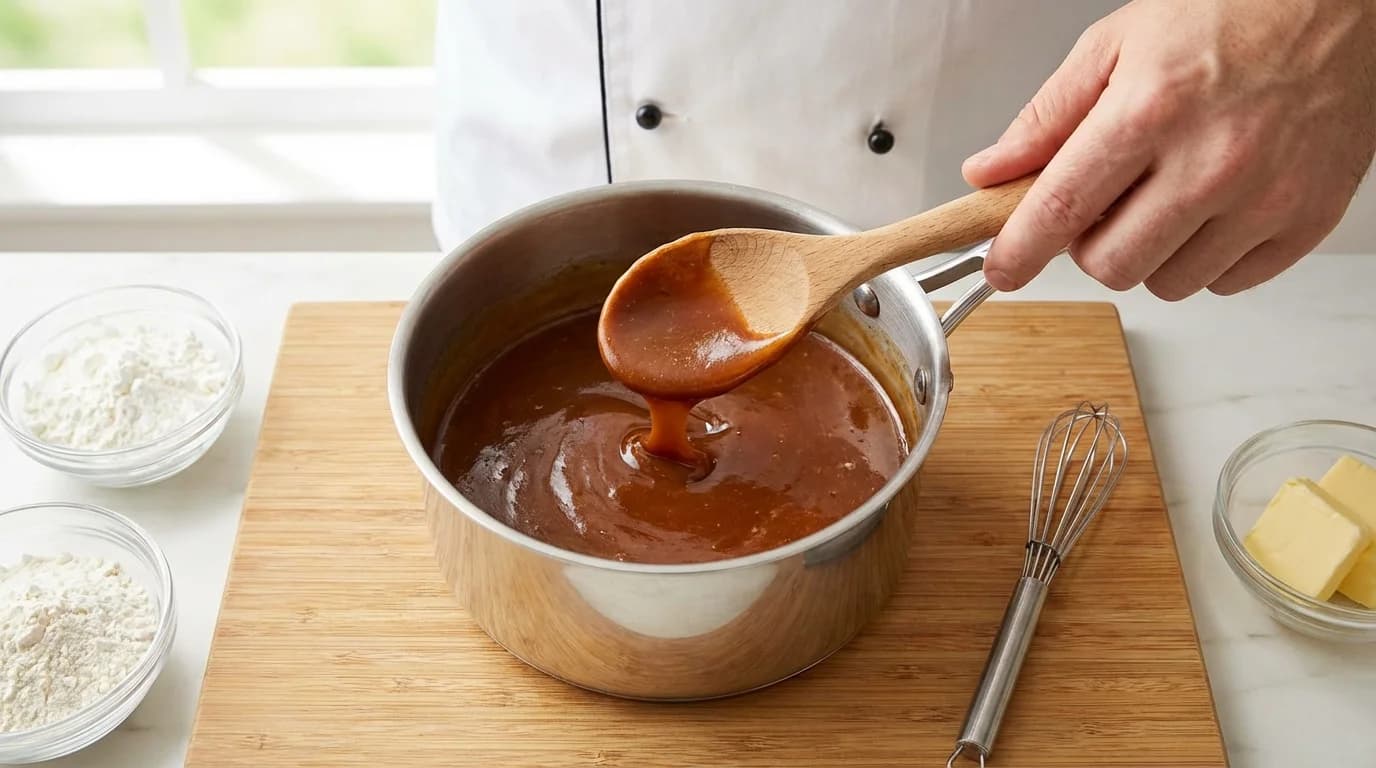
Nappé consistency: The sauce should coat the back of a spoon and stay put when you draw your finger through it. This is the goal for most sauces.
Light coating: Thin enough to flow but thick enough to cling to food (vinaigrettes, light pan sauces).
Heavy coating: Thick, almost pudding-like (cheese sauce, béchamel, country gravy).
Glazing consistency: Very thick, almost syrupy (reduced demi-glace, barbecue sauce).
Different dishes require different consistencies, and each thickening method produces unique results.
Method 1: Reduction (Evaporation)
How it works: Simmering uncovered evaporates water, concentrating flavors and natural thickeners.
When to Use:
- Pan sauces after searing meat
- Wine-based sauces
- Tomato sauces
- Stocks and broths
How to Do It:
- Bring sauce to a gentle simmer
- Leave uncovered (lid traps steam)
- Stir occasionally to prevent sticking
- Reduce by 25-50% depending on desired thickness
- Watch carefully toward the end—it can go from perfect to too thick quickly
Pros:
- No added ingredients
- Intensifies flavors naturally
- Creates silky texture
- Professional technique
Cons:
- Time-consuming (15-30+ minutes)
- Concentrates salt—be careful with seasoning
- Can't be undone if reduced too much
Pro tip: Reduce over medium rather than high heat for better control and to prevent burning.
Method 2: Roux (Flour and Fat)
How it works: Equal parts flour and fat cooked together, then whisked into liquid.
Types of Roux:
White roux (3-5 minutes cooking): Mild flavor, for béchamel, white sauces Blond roux (6-10 minutes): Nutty flavor, for velouté, cream soups Brown roux (15-30 minutes): Deep, nutty flavor, for gumbo, dark gravies
When to Use:
- Classic French sauces (béchamel, velouté)
- Gravies
- Cream soups
- Cheese sauces
How to Do It:
- Melt butter (or use pan drippings) over medium heat
- Add equal amount of flour
- Whisk constantly for desired cooking time
- Remove from heat and gradually whisk in cold or room-temperature liquid
- Return to heat and simmer until desired thickness (5-10 minutes)
Ratio: 2 tablespoons each butter and flour thickens 1 cup liquid to medium consistency
Pros:
- Classic, reliable technique
- Creates smooth, velvety texture
- No lumps if done correctly
- Adds body and richness
Cons:
- Requires planning (can't add at the end)
- Contains gluten
- Requires cooking time to eliminate raw flour taste
Pro tip: Add cold liquid to hot roux or hot liquid to cold roux—temperature contrast prevents lumps.
Method 3: Cornstarch Slurry
How it works: Cornstarch mixed with cold water, then stirred into simmering sauce.
When to Use:
- Asian stir-fry sauces
- Fruit pie fillings
- Quick pan sauces
- Clear sauces (stays translucent)
- Gluten-free cooking
How to Do It:
- Mix 1 tablespoon cornstarch with 2 tablespoons cold water
- Stir until smooth (no lumps)
- Whisk into simmering sauce
- Cook for 2-3 minutes until thickened and glossy
Ratio: 1 tablespoon cornstarch slurry thickens 1 cup liquid to medium consistency
Pros:
- Works quickly
- Gluten-free
- Creates glossy finish
- Stays clearer than flour
Cons:
- Can taste starchy if overused
- Breaks down if simmered too long or reheated multiple times
- Doesn't work well with acidic sauces
- Can create slimy texture if too much is used
Pro tip: Don't boil vigorously after adding—gentle simmer maintains the best texture.
Method 4: Beurre Manié (Kneaded Butter)
How it works: Equal parts softened butter and flour kneaded together, then whisked into sauce in small pieces.
When to Use:
- Last-minute sauce thickening
- Adjusting consistency at the end
- Stews and braises that are too thin
How to Do It:
- Knead together equal parts softened butter and flour until smooth paste forms
- Whisk small pieces into simmering sauce
- Wait 2-3 minutes between additions to gauge thickness
- Continue until desired consistency is reached
Ratio: Same as roux—2 tablespoons each butter and flour per cup of liquid
Pros:
- Can be added at the end (unlike roux)
- Very reliable
- Creates rich, smooth texture
- Easy to control final thickness
Cons:
- Contains gluten
- Adds extra fat
- Requires some planning (need to make the paste)
Pro tip: Make a large batch and freeze in tablespoon portions for instant thickening anytime.
Method 5: Egg Yolk Liaison
How it works: Egg yolks mixed with cream, tempered with hot liquid, then stirred into sauce.
When to Use:
- Enriching cream sauces
- Hollandaise and béarnaise
- Delicate fish sauces
- Carbonara and similar pasta sauces
How to Do It:
- Whisk egg yolks with heavy cream (2 yolks + 1/4 cup cream for 1 cup sauce)
- Temper: Slowly whisk 1/4 cup hot sauce into yolk mixture
- Slowly pour tempered yolk mixture back into sauce, whisking constantly
- Heat gently to 165°F—do NOT boil (eggs will scramble)
Pros:
- Creates luxurious, velvety texture
- Adds richness and depth
- Professional technique
- Gluten-free
Cons:
- Tricky—can easily curdle
- Cannot be reheated aggressively
- Requires careful temperature control
- Not suitable for all sauce types
Pro tip: Use a thermometer to ensure you don't exceed 165°F. Remove from heat just before reaching temperature—residual heat will finish the job.
Method 6: Cream or Dairy
How it works: Adding cream, sour cream, yogurt, or cream cheese thickens and enriches.
When to Use:
- Cream sauces
- Pasta sauces
- Soups
- Pan sauces for chicken or pork
How to Do It:
- Add dairy product to sauce
- Stir to combine
- Heat gently (don't boil, especially yogurt and sour cream)
- Simmer until desired consistency
Thickening power: Heavy cream thickens moderately; sour cream and cream cheese thicken more substantially
Pros:
- Adds richness and flavor
- Creates smooth, creamy texture
- Simple and quick
- No risk of lumps
Cons:
- Adds significant fat and calories
- Can curdle if boiled (especially yogurt and sour cream)
- Changes flavor profile
- Not suitable for all cuisines or dietary needs
Pro tip: Add sour cream or yogurt off heat, or temper first to prevent curdling.
Method 7: Cheese
How it works: Grated cheese melts and thickens while adding rich flavor.
When to Use:
- Cheese sauces (mac and cheese, queso)
- Alfredo sauce
- Finishing pasta sauces
- Creamy soups
How to Do It:
- Remove sauce from direct heat (or use very low heat)
- Add finely grated cheese gradually
- Stir constantly until melted
- Don't overheat or boil after adding cheese
Best cheeses for thickening: Parmesan, cheddar, Gruyère, fontina
Pros:
- Adds incredible flavor
- Creates creamy, luxurious texture
- Naturally gluten-free
Cons:
- Can become grainy or greasy if overheated
- Strong flavor may not suit all dishes
- Can be expensive
- May separate if sauce gets too hot
Pro tip: Toss grated cheese with a tiny bit of cornstarch before adding—prevents clumping and helps it melt smoothly.
Method 8: Vegetable or Fruit Purees
How it works: Pureeing vegetables or fruits naturally thickens while adding flavor and nutrients.
When to Use:
- Tomato sauces
- Soups
- Braising liquids
- Fruit sauces
- Health-conscious cooking
How to Do It:
- Cook vegetables/fruits until very soft
- Blend portion of sauce (or all of it) until smooth
- Return to pot and stir to combine
- Simmer to desired consistency
Good thickeners: Potatoes, cauliflower, white beans, tomatoes, roasted red peppers, applesauce
Pros:
- Adds nutrients and flavor
- Naturally gluten-free and low-fat
- Creates unique textures
- Use ingredients already in the dish
Cons:
- Changes flavor (must complement the dish)
- Not suitable for all sauce types
- Requires blending equipment
- Can't be undone
Pro tip: Pureed white beans or cauliflower add creaminess without dairy—perfect for vegan sauces.
Method 9: Bread Crumbs or Bread
How it works: Bread absorbs liquid and breaks down, naturally thickening.
When to Use:
- Rustic Italian and Spanish sauces
- Gravies
- Stews
- Historical/traditional recipes
How to Do It:
- Add fresh or toasted bread crumbs to sauce
- Stir and simmer until bread breaks down
- Sauce will thicken as bread absorbs liquid
- Blend if you want smooth texture
Variation: Soak fresh bread in sauce, then puree everything together
Pros:
- Uses up stale bread
- Traditional technique
- Adds body without changing flavor much
- Simple and reliable
Cons:
- Contains gluten
- Can make sauce slightly grainy
- Changes texture noticeably
- Not suitable for elegant sauces
Pro tip: Use fresh breadcrumbs for lighter texture, toasted for nuttier flavor.
Method 10: Starches (Potato, Arrowroot, Tapioca)
How it works: Alternative starches thicken similarly to cornstarch but with different properties.
Potato Starch:
- Very powerful thickener
- Stays clear
- Use 1/2 the amount you'd use of cornstarch
- Good for gluten-free cooking
Arrowroot:
- Delicate thickener
- Creates silky texture
- Works at lower temperatures than cornstarch
- Ideal for sauces served with eggs or other delicate proteins
- Doesn't reheat well
Tapioca Starch:
- Creates glossy, clear sauce
- Freezes and reheats well
- Slightly chewy texture
- Popular in Asian cuisine
How to Do It:
- Mix starch with cold water (same as cornstarch slurry method)
- Whisk into simmering sauce
- Cook briefly until thickened
- For arrowroot, remove from heat immediately after thickening
Pros:
- All gluten-free
- Each has unique properties for specific applications
- Reliable and easy to use
Cons:
- Less readily available than flour or cornstarch
- Each has specific quirks to learn
- More expensive than common thickeners
Rescuing Sauce Problems
Sauce Is Too Thin:
Quick fixes:
- Simmer uncovered to reduce
- Add cornstarch slurry
- Whisk in beurre manié in small amounts
Sauce Is Too Thick:
Quick fixes:
- Thin with stock, water, wine, or cream
- Add gradually and stir—easier to thin than to re-thicken
Sauce Is Lumpy:
Causes: Flour wasn't whisked properly, or temperature was wrong
Fixes:
- Strain through fine-mesh sieve
- Use immersion blender
- Whisk vigorously while simmering
- Prevention: Whisk constantly when adding thickeners
Sauce Separated or Looks Grainy:
Causes: Cheese overheated, egg curdled, or emulsion broke
Fixes:
- For cheese: Remove from heat, add a splash of cold milk, whisk vigorously
- For egg: Sometimes irreversible; strain out chunks and start liaison again
- For emulsion: Whisk in cold butter pieces off heat
Sauce Tastes Starchy:
Causes: Didn't cook cornstarch or flour long enough
Fixes:
- Simmer sauce 5-10 more minutes
- For roux, cook flour and butter longer next time before adding liquid
Choosing the Right Method
For rich, classic sauces: Roux For quick fixes: Cornstarch slurry or reduction For gluten-free: Cornstarch, arrowroot, or reduction For elegant, light sauces: Egg yolk liaison or reduction For rustic, hearty dishes: Vegetable puree or bread For last-minute adjustments: Beurre manié For maximum flavor concentration: Reduction
Consider the dish's final flavor profile, dietary restrictions, available time, and desired texture when choosing your method.
Conclusion
Mastering sauce thickening techniques separates competent cooks from confident ones. Each method has its place, and understanding when and how to use them gives you complete control over your sauces' consistency and character. Start with the simpler techniques—reduction, cornstarch slurry, and roux—and gradually expand to more advanced methods as you build confidence.
The key is practice and observation. Pay attention to how sauces behave as you cook, taste and adjust frequently, and don't be afraid to rescue sauces that have gone wrong. With time, you'll develop an intuitive sense for achieving perfect consistency in everything from quick pan sauces to elaborate braised dishes to silky soups.
Whether you're preparing weeknight dinners or special occasion meals, these thickening techniques ensure your sauces complement and enhance your cooking rather than working against it.
About myrecipe
myrecipe helps families save, organize, and share their favorite recipes in one place. Plan meals, create shopping lists, and preserve your culinary traditions.
Start Organizing Recipes