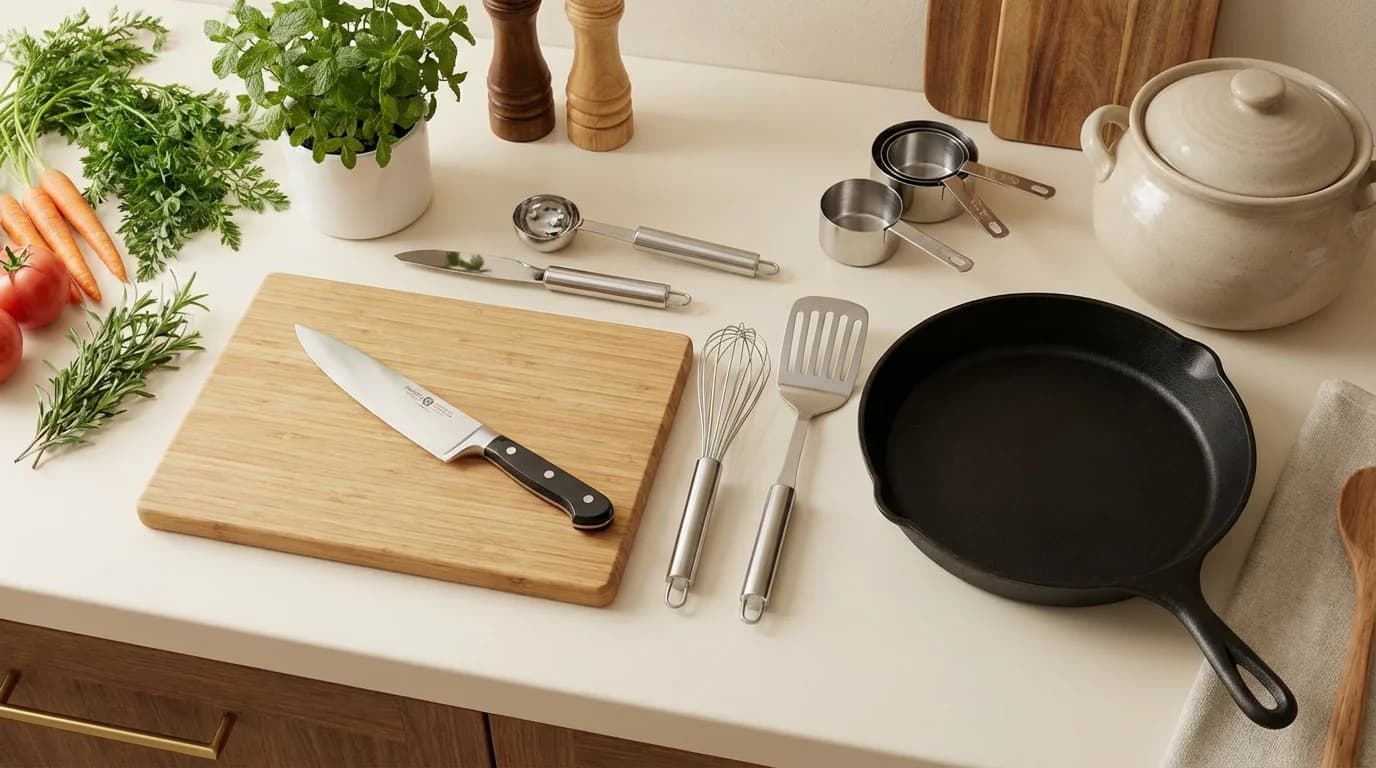
Kitchen Tools Essentials List: What You Actually Need for Home Cooking
Walk into any kitchen store and you'll be bombarded with hundreds of specialized gadgets, each promising to revolutionize your cooking. The reality? You need maybe 20-30 essential tools to cook practically anything.
This guide cuts through the marketing noise to identify the true kitchen essentials—the tools professional chefs and experienced home cooks actually use daily. Whether you're furnishing your first kitchen or upgrading worn-out tools, this comprehensive list ensures you invest in what matters.
The Philosophy of Kitchen Essentials
Quality Over Quantity:
Better: 5 quality tools you use daily Worse: 50 gadgets collecting dust
The Essential Tool Test:
Ask yourself:
- Can I make multiple dishes with this?
- Will I use it weekly (minimum monthly)?
- Does it perform better than a basic alternative?
- Is it durable enough to last years?
- Do I have space to store it?
If "no" to most questions, you don't need it.
Investment Strategy:
- Spend more on: Knives, pans, pots you use constantly
- Save money on: Single-use gadgets, trendy items
- Buy quality once: Instead of replacing cheap tools repeatedly
The Complete Kitchen Essentials List
Category 1: Knives & Cutting Tools
Essential #1: Chef's Knife (8-inch)
Why it's essential: 90% of cutting tasks What to look for:
- 8-inch blade (most versatile size)
- Full tang (blade extends through handle)
- Comfortable grip
- Good weight balance
Budget options: Victorinox Fibrox ($30-40) Mid-range: Wüsthof Classic, Shun ($80-150) Investment: High-end Japanese knives ($200+)
Bottom line: Spend what you can afford, but get quality. This is your most-used tool.
Essential #2: Paring Knife (3-4 inch)
Why it's essential: Small, detailed tasks (peeling, deveining, trimming) What to look for: Comfortable handle, sharp blade Budget: $10-20 Mid-range: $30-50
Essential #3: Serrated Bread Knife (8-10 inch)
Why it's essential: Bread, tomatoes, cakes—anything with tough exterior and soft interior What to look for: Long blade, sharp serrations Budget: $15-25 Good news: Expensive bread knives aren't much better
Optional but Nice: Santoku knife (Asian-style all-purpose), boning knife (if you butcher meat)
Essential #4: Cutting Boards (2-3)
Why multiple: Prevent cross-contamination What to look for:
- Large board (12x18+) for main prep
- Medium board for quick tasks
- Separate for raw meat
Materials:
- Wood/bamboo: Beautiful, knife-friendly, requires care ($20-60)
- Plastic: Dishwasher-safe, affordable ($8-20)
- Composite: Best of both ($15-35)
Pro tip: Get one large wood board for vegetables and bread, one plastic for raw meat.
Essential #5: Kitchen Shears
Why it's essential: Cutting herbs, opening packages, butterflying chicken What to look for: Comes apart for cleaning, comfortable handles Budget: $10-15 Quality: $20-35
Essential #6: Knife Sharpener
Why it's essential: Dull knives are dangerous Options:
- Handheld sharpener: Easy, affordable ($10-20)
- Honing steel: Maintains edge between sharpenings ($15-30)
- Whetstone: Best results, learning curve ($20-50)
- Professional sharpening: Annual service ($5-10 per knife)
Minimum: Honing steel + annual professional sharpening
Budget for category: $80-150 (basic), $200-400 (quality)
Category 2: Pots & Pans
Essential #1: Large Skillet (12-inch)
Why it's essential: Most versatile pan, everyday cooking What to look for:
- 12-inch diameter
- Oven-safe handle
- Heavy bottom (even heating)
- Lid helpful but not critical
Materials:
- Stainless steel: Durable, oven-safe, great searing ($50-150)
- Non-stick: Easy cleanup, eggs ($25-60, replace every 2-3 years)
- Cast iron: Lifetime tool, requires seasoning ($25-50)
Recommendation: Start with non-stick, add stainless or cast iron later
Essential #2: Medium Saucepan (2-3 quart)
Why it's essential: Sauces, grains, vegetables, reheating What to look for:
- 2-3 quart capacity
- Lid included
- Heavy bottom
- Oven-safe helpful
Budget: $30-50 Quality: $80-150
Essential #3: Large Pot (6-8 quart)
Why it's essential: Pasta, soup, stocks, big batches What to look for:
- 6-8 quart minimum
- Lid included
- Sturdy handles
Budget: $40-60 Quality: $100-200
Optional #4: Small Saucepan (1-2 quart)
Why it's nice: Small portions, melting butter, single servings Budget: $20-35
Optional #5: Dutch Oven (5-7 quart)
Why it's nice: Braises, soups, bread, oven-to-table Materials: Enameled cast iron preferred Budget: Lodge ($50-80) Investment: Le Creuset, Staub ($200-400)
Essential #6: Baking Sheets (2-3)
Why multiple: Baking, roasting, multi-tasking What to look for:
- Half-sheet size (13x18)
- Rimmed edges
- Heavy gauge (won't warp)
Budget: $10-15 each Quality: $20-30 each (Nordic Ware)
Budget for category: $150-250 (basic), $400-800 (quality investment)
Category 3: Mixing & Prep Tools
Essential #1: Mixing Bowls (Set of 3-5)
Why it's essential: Prep, mixing, serving, storage What to look for:
- Various sizes (small, medium, large)
- Stackable
- Microwave-safe
Materials:
- Glass: Pyrex, oven-safe, see-through ($20-35 set)
- Stainless steel: Lightweight, durable ($15-30 set)
- Plastic: Cheapest, functional ($10-20 set)
Essential #2: Measuring Cups & Spoons
Why it's essential: Baking, following recipes accurately What to get:
- Dry measuring cups (1/4, 1/3, 1/2, 1 cup)
- Liquid measuring cup (2-cup and 4-cup)
- Measuring spoons (1/4 tsp to 1 tbsp)
Budget: $15-25 for complete set Pro tip: Get multiple sets so you don't constantly wash between ingredients
Essential #3: Wooden Spoons (2-3)
Why it's essential: Stirring, sautéing, won't scratch pans What to look for: Solid wood, comfortable handle Budget: $3-5 each
Essential #4: Silicone Spatula (2-3)
Why it's essential: Scraping bowls, folding, heat-resistant What to look for: Heat-resistant, one-piece construction Budget: $5-8 each
Essential #5: Metal Spatula/Turner
Why it's essential: Flipping, serving, scraping What to look for: Thin, flexible blade Budget: $8-15
Essential #6: Whisk
Why it's essential: Eggs, sauces, dressings, batters What to look for: Medium size, comfortable handle Budget: $8-15
Essential #7: Tongs
Why it's essential: Flipping, serving, salad tossing What to look for: 12-inch length, lockable, silicone-tipped Budget: $10-15
Essential #8: Ladle
Why it's essential: Serving soups, stews, sauces Budget: $8-12
Essential #9: Can Opener
Why it's essential: Opening cans (obviously) What to look for: Manual or electric, comfortable Budget: $10-20 (quality manual), $25-50 (electric)
Essential #10: Vegetable Peeler
Why it's essential: Peeling vegetables, shaving cheese What to look for: Y-peeler or straight peeler (preference) Budget: $5-10
Essential #11: Box Grater
Why it's essential: Cheese, vegetables, zesting What to look for: 4-sided, stable base Budget: $10-20
Essential #12: Colander/Strainer
Why it's essential: Draining pasta, washing vegetables What to look for: Stable base, handles Budget: $10-20
Budget for category: $100-180
Category 4: Baking Essentials
Essential #1: 9x13 Baking Dish
Why it's essential: Casseroles, brownies, sheet cakes Materials: Glass (Pyrex) or ceramic Budget: $15-25
Essential #2: 9-inch Round Cake Pans (2)
Why you need 2: Layer cakes Materials: Aluminum preferred Budget: $15-25 for pair
Essential #3: Muffin Tin
Why it's essential: Muffins, cupcakes, individual portions What to look for: 12-cup, non-stick Budget: $12-20
Essential #4: Loaf Pan
Why it's essential: Bread, meatloaf, pound cakes Materials: Aluminum or glass Budget: $10-15
Essential #5: Cooling Rack
Why it's essential: Cooling baked goods, roasting vegetables What to look for: Fits inside baking sheet Budget: $10-15
Essential #6: Rolling Pin
Why it's essential: Pie crusts, cookies, dough Materials: Wood, marble, or silicone Budget: $12-25
Budget for category: $75-125 (skip if you don't bake)
Category 5: Small Appliances & Gadgets
Essential #1: Microwave
Why it's essential: Reheating, quick cooking, defrosting What to look for: 1000+ watts, appropriate size Budget: $60-150
Essential #2: Toaster or Toaster Oven
Why it's essential: Toast, quick reheating, small batch baking Choose one based on needs:
- Toaster: Cheaper, dedicated ($20-50)
- Toaster oven: More versatile ($40-150)
Essential #3: Blender
Why it's essential: Smoothies, soups, sauces What to look for: Powerful motor (600+ watts), glass or quality plastic jar Budget: $30-60 Investment: Vitamix ($300-500, lasts forever)
Optional #4: Food Processor
Why it's nice: Chopping, shredding, dough-making Alternatives: Knife and grater work for most tasks Budget: $40-80 Investment: Cuisinart ($100-200)
Choose blender OR food processor initially, add the other later if needed
Essential #5: Slow Cooker OR Instant Pot
Why it's essential: Hands-off cooking, easy meals Slow cooker: Simple, affordable ($25-50) Instant Pot: Multi-function, faster ($80-120)
Essential #6: Hand Mixer
Why it's essential: Baking, whipping, mixing Alternatives: Whisk for small jobs, stand mixer for serious baking Budget: $20-40
Optional #7: Stand Mixer
Why it's nice: Serious baking, bread-making Investment: KitchenAid ($250-450) Only if you bake regularly
Essential #8: Kitchen Timer
Why it's essential: Not burning food Options: Dedicated timer ($10-15) or phone timer (free)
Budget for category: $200-350 (essentials only), $500-800 (including nice-to-haves)
Category 6: Food Storage & Organization
Essential #1: Food Storage Containers (10-15)
Why it's essential: Leftovers, meal prep, organization What to look for:
- Mix of sizes (small, medium, large)
- Stackable
- Microwave and dishwasher safe
- Airtight lids
Materials:
- Glass: Best for reheating, doesn't stain ($30-60)
- Plastic: Lightweight, cheaper ($15-30)
Full guide: Food storage containers
Essential #2: Plastic Wrap & Aluminum Foil
Why it's essential: Food storage, covering dishes Budget: $10-15 for both
Essential #3: Freezer Bags (various sizes)
Why it's essential: Freezer storage, marinating What to get: Quart and gallon sizes Budget: $10-15
Essential #4: Kitchen Towels (6-8)
Why it's essential: Drying, cleaning, handling hot items What to look for: Absorbent, washable Budget: $15-25
Essential #5: Pot Holders/Oven Mitts (2-3)
Why it's essential: Not burning yourself What to look for: Heat-resistant, comfortable Budget: $15-25
Budget for category: $75-140
Category 7: Cleaning & Safety
Essential #1: Dish Soap & Sponges
Why it's essential: Cleaning (obviously) Budget: $10-15/month
Essential #2: Dish Towels & Washcloths
Why it's essential: Drying dishes, wiping surfaces What to get: 6-8 dish towels, 4-6 washcloths Budget: $20-30
Essential #3: Trash Can with Lid
Why it's essential: Sanitary waste disposal What to look for: Foot pedal, appropriate size Budget: $30-60
Essential #4: Fire Extinguisher
Why it's essential: Kitchen safety What to look for: ABC-rated, accessible location Budget: $20-40 Critical but often forgotten
Budget for category: $80-145
Total Budget Breakdown
Bare Minimum Starter Kitchen ($600-900):
- Knives & cutting: $100
- Pots & pans: $150
- Mixing & prep: $100
- Small appliances: $200
- Storage & organization: $75
- Cleaning & safety: $80 Total: ~$705
Well-Equipped Kitchen ($1,200-1,800):
- Knives & cutting: $200
- Pots & pans: $400
- Mixing & prep: $150
- Baking: $100
- Small appliances: $350
- Storage & organization: $120
- Cleaning & safety: $120 Total: ~$1,440
Investment-Level Kitchen ($2,500-4,000):
- Quality knives: $400
- Quality cookware: $800
- Complete tools: $250
- Baking essentials: $150
- Premium appliances: $700
- Complete storage: $200
- Safety & cleaning: $150 Total: ~$2,650
What You DON'T Need
Skip These (At Least Initially):
Egg separators: Use your hands or shell Garlic press: Knife works fine Apple corer: Knife Avocado slicer: Spoon and knife Specialty gadgets: Rarely used Matching everything: Function over form Expensive knife sets: Better to buy individually Too many small appliances: Clutter creators
Rule: If it only does one thing and you can do it with a basic tool, skip it.
Building Your Kitchen Over Time
Priority Order:
Month 1: Cook immediately
- Chef's knife
- Cutting board
- Large skillet
- Medium saucepan
- Large pot
- Basic utensils (spoon, spatula, tongs) Cost: ~$250
Month 2: Expand capabilities
- Paring knife
- Bread knife
- Mixing bowls
- Measuring cups/spoons
- Baking sheet Cost: ~$100
Month 3: Add convenience
- Blender or food processor
- Slow cooker or Instant Pot
- More storage containers Cost: ~$150
Months 4-6: Fill gaps
- Baking essentials (if you bake)
- Specialty items for your cooking style
- Upgrade tools as budget allows
Ongoing: Replace and upgrade
- Quality over quantity
- Replace worn items with better versions
- Add specialized tools as skills grow
Care & Maintenance
Making Tools Last:
Knives:
- Hand wash immediately
- Hone regularly
- Professional sharpening annually
- Store safely (block or magnetic strip)
Pans:
- Don't overheat non-stick
- Use appropriate utensils (no metal on non-stick)
- Hand wash when possible
- Dry immediately
Small appliances:
- Clean after each use
- Follow manufacturer care instructions
- Store properly
- Don't overload motors
Storage containers:
- Remove stains promptly
- Replace cracked or warped containers
- Match lids and containers
- Organize systematically
Kitchen Organization
Efficient storage:
- Most-used items most accessible
- Store tools near where you use them (knives near prep area, pots near stove)
- Drawer dividers for utensils
- Declutter regularly
- Use vertical space
- Small kitchen strategies
Conclusion
A well-equipped kitchen doesn't mean having every gadget invented. It means having quality tools you use regularly, stored accessibly, and maintained properly.
Start with the absolute essentials that enable cooking. Build gradually based on what you actually cook. Invest in quality for items you use daily. Skip trendy single-use gadgets unless you'll truly use them weekly.
Your kitchen tools should work for you—making cooking easier, faster, and more enjoyable. Choose thoughtfully, buy quality when it matters, and take care of what you have. The result: a functional kitchen that supports your cooking goals without overwhelming your space or budget.
Ready to outfit your kitchen? Start with the Month 1 essentials this weekend, and build from there. Happy cooking!
For more kitchen setup guidance, check out how to stock a pantry, kitchen organization tips, and essential cooking skills.
About myrecipe
myrecipe helps families save, organize, and share their favorite recipes in one place. Plan meals, create shopping lists, and preserve your culinary traditions.
Start Organizing Recipes