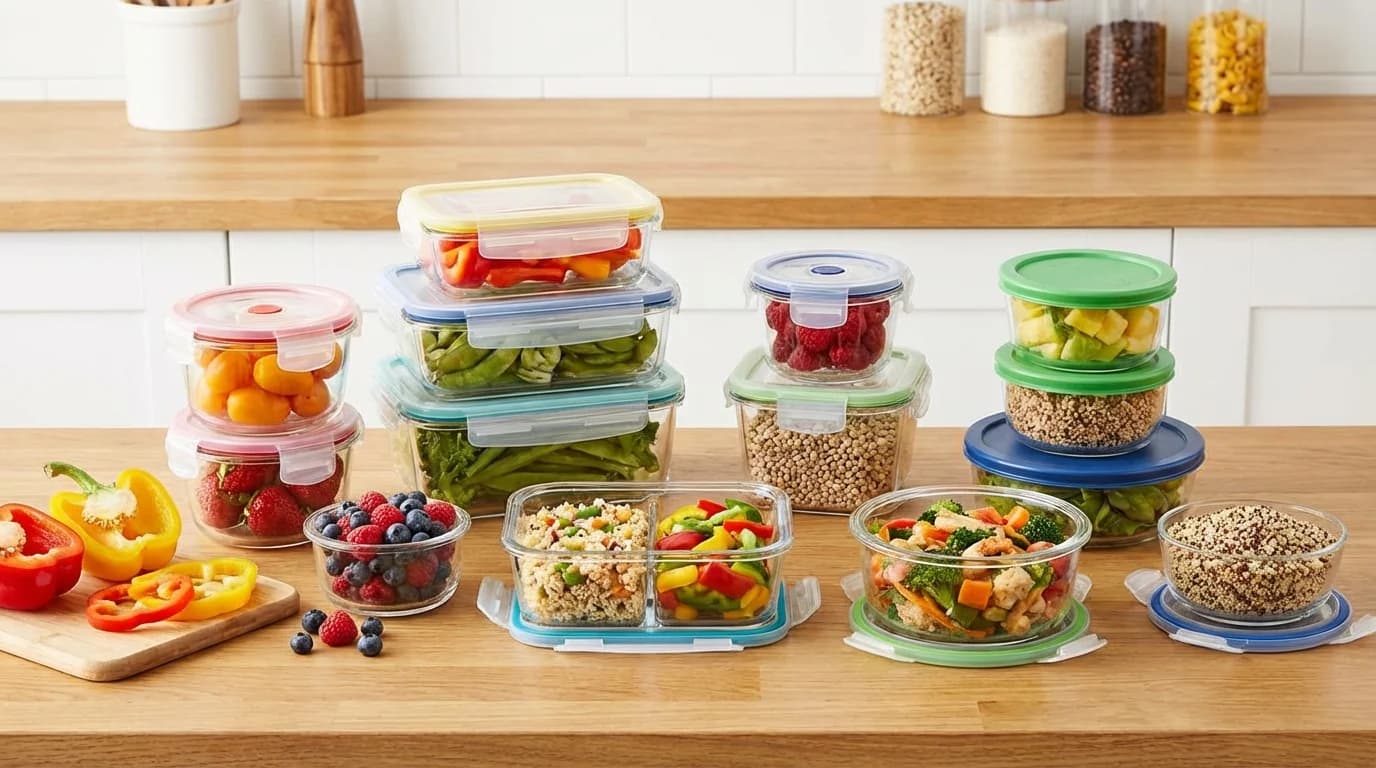
Food Storage Containers Guide: Choose the Best for Your Kitchen
Walk down the storage container aisle at any store and you'll face overwhelming choices: glass, plastic, silicone, various sizes, different lid types, and price points ranging from budget to premium. How do you choose?
The right food storage containers save money by reducing waste, support healthy eating through meal prep, keep food fresh longer, and make your kitchen more organized. The wrong containers end up as expensive drawer clutter.
This comprehensive guide cuts through the confusion, helping you choose the perfect containers for your specific needs.
Why Food Storage Containers Matter
Before investing in containers, understand their impact:
Financial Benefits:
- Reduce food waste: Proper storage extends food life by 2-3x
- Enable meal prep: Save money cooking at home
- Portion control: Pre-portioned meals prevent overeating
- Avoid disposables: Reusable containers vs. constant plastic wrap purchases
Health Benefits:
- BPA-free options: Safer than mystery plastics
- Meal prep success: Healthy meals ready to grab
- Portion awareness: See serving sizes clearly
- Food safety: Airtight seals prevent contamination
Organization Benefits:
- Stackable systems: Maximize fridge/pantry space
- Clear visibility: See contents at a glance
- Uniform look: Tidy, organized feel
- Nest when empty: Save cabinet space
Container Materials: The Complete Breakdown
Glass Containers
Pros:
- Non-toxic, no chemical leaching
- Microwave, oven, and dishwasher safe
- Don't stain or absorb odors
- Last for years (essentially forever)
- See contents clearly
- Better for reheating food
Cons:
- Heavy to carry
- Can break if dropped
- More expensive upfront
- Not ideal for kids' lunchboxes
Best for:
- Leftovers in fridge
- Meal prep reheating
- Acidic foods (tomato sauce, citrus)
- Long-term storage
- Adults' needs
Top recommendations:
- Pyrex: Classic, reliable, affordable ($20-40 for 10-piece set)
- Rubbermaid Brilliance: Glass with plastic lid, leak-proof ($30-50)
- Glasslock: Excellent seal, snap lids ($35-60)
- Anchor Hocking: Budget-friendly option ($15-25)
Investment level: Medium to high ($15-60)
Plastic Containers
Pros:
- Lightweight and portable
- Shatterproof for kids
- Affordable
- Wide variety of sizes
- Freezer safe
Cons:
- Can stain (tomato sauce nightmare)
- May absorb odors
- Degrade over time
- Some leach chemicals when heated
- Less eco-friendly
Best for:
- Kids' lunches
- Freezer storage
- On-the-go meals
- Budget-conscious buyers
- Travel
What to look for:
- BPA-free label
- Microwave-safe symbol (if reheating)
- Dishwasher safe
- #2 HDPE or #5 PP plastics (safer)
Top recommendations:
- Rubbermaid TakeAlongs: Disposable-ish price, reusable quality ($8-12)
- Sistema: Great seals, wide variety ($12-20)
- Snapware: Good quality, stackable ($15-25)
- Glad: Budget option for basic storage ($5-10)
Investment level: Low to medium ($5-25)
Silicone Containers & Bags
Pros:
- Flexible, collapse for storage
- Freezer, microwave, dishwasher safe
- Eco-friendly reusable option
- Don't break
- Heat resistant
Cons:
- More expensive
- Can retain odors
- Floppy (don't stack well when full)
- Limited sizes
Best for:
- Replacing plastic bags
- Storing leftovers
- Freezer storage
- Eco-conscious users
- Travel (collapsible)
Top recommendations:
- Stasher bags: Premium quality, lifetime warranty ($12-20 each)
- Zip Top: Innovative design, stand up ($15-25 each)
- Souper Cubes: Freeze soups in portions ($20-30)
- Silicone stretch lids: Cover bowls ($10-15 set)
Investment level: Medium to high ($10-30 per item)
Stainless Steel Containers
Pros:
- Extremely durable
- Non-toxic
- Lightweight
- Won't break or stain
- Eco-friendly
- Great for lunches
Cons:
- Can't see contents
- Not microwave safe
- More expensive
- Limited availability
- Can dent
Best for:
- School lunches
- Work lunches
- Dry snacks
- Outdoor activities
- Eco-conscious families
Top recommendations:
- LunchBots: Bento-style, various sizes ($15-35 each)
- Onyx: Leak-proof options ($20-40)
- Simple Modern: Good value ($15-25)
Investment level: High ($15-40 per container)
Container Sizes: What You Actually Need
Essential Size Guide:
Small (1-2 cups / 8-16 oz):
- Sauces and dressings
- Dips
- Small snacks
- Baby food portions
- Condiments
Medium (2-4 cups / 16-32 oz):
- Individual meal portions
- Lunch servings
- Side dishes
- Leftovers for 1-2 people
- Salads
Large (4-8 cups / 32-64 oz):
- Family leftover storage
- Batch cooking
- Soups and stews
- Pasta salads
- Large batch meal prep
Extra Large (8+ cups):
- Marinating meats
- Party food storage
- Bulk batch cooking
- Salad prep for week
The Starter Set (Budget: $30-50):
Build functional collection without breaking bank:
Minimum viable container set:
- 4 small containers (snacks, sauces)
- 6 medium containers (individual meals)
- 4 large containers (family leftovers)
- 2 extra large containers (batch cooking)
Total: 16 containers
This handles most household needs.
The Complete Set (Budget: $75-150):
For serious meal preppers:
Comprehensive collection:
- 8 small containers
- 12 medium containers (meal prep for week)
- 6 large containers
- 4 extra large containers
- Various specialty containers (discussed below)
Total: 30+ containers
The Minimalist Set (Budget: $15-25):
Just starting out or limited space:
Absolute essentials:
- 2 small containers
- 4 medium containers
- 2 large containers
Total: 8 containers
Supplement with glass jars and bowls you already own.
Lid Systems: The Make-or-Break Factor
Lids are where container systems succeed or fail.
Snap-On Lids:
Pros:
- Easy to use
- Good seal
- Durable
Cons:
- Can be hard to snap on/off
- May warp in dishwasher
Best for: Fridge and pantry storage
Screw-On Lids:
Pros:
- Excellent seal
- Leak-proof for liquids
- Easy to tighten
Cons:
- Takes longer to open/close
- Can cross-thread
Best for: Mason jars, liquid storage, travel
Latching/Locking Lids:
Pros:
- Superior leak-proof seal
- Great for soups and liquids
- Secure for transport
Cons:
- More expensive
- Latches can break
- Bulkier
Best for: Meal prep, lunches, travel
Vented Lids:
Pros:
- Microwave without removing lid
- Steam release
- Convenient
Cons:
- Not leak-proof
- Vent can clog
Best for: Microwave reheating, leftovers
The Universal Lid Problem:
Issue: Lost lids render containers useless
Solutions:
- Buy sets where lids fit multiple container sizes
- Store lids with containers (don't separate)
- Use lid organizers in cabinet
- Choose systems with replaceable lids
- Brands like Rubbermaid Brilliance have universal lids for different sizes
Specialized Container Types
Meal Prep Containers:
Divided compartments:
- Keep foods separated (no soggy food)
- Portion control built-in
- Perfect for balanced meals
- Bento-box style
Best options:
- Prep Naturals: 3-compartment, glass ($30-40)
- Fitpacker: Multiple compartments, plastic ($20-30)
- Bentgo: Kids and adults versions ($15-25)
Ideal for: Meal preppers, portion control, lunch packers
Produce Storage:
Special features:
- Vented for airflow
- Moisture control
- Extend produce life
Best options:
- Rubbermaid FreshWorks: Vent technology ($15-25 each)
- OXO GreenSaver: Activated carbon filter ($10-20 each)
- Prepworks: Budget produce keeper ($8-12)
Ideal for: Berries, lettuce, herbs, vegetables
Freezer Containers:
Must-haves:
- Freezer-safe material
- Airtight seal
- Stackable
- Leave expansion room for liquids
Best options:
- Souper Cubes: Silicone, perfect portions ($20-30)
- Ziploc: Disposable but freezer-specific ($5-8)
- Pyrex: Glass works for freezer too ($20-40 set)
Ideal for: Freezer meal prep, batch cooking, soup storage
Cereal & Dry Goods Containers:
Features:
- Airtight to maintain freshness
- Large capacity
- Pour spout helpful
- Clear to see contents
Best options:
- OXO Pop Containers: Excellent seal, stackable ($8-30 each)
- Vtopmart: Budget set, good seal ($25-35 for set)
- Rubbermaid Modular: Various sizes ($20-40)
Ideal for: Pantry organization, cereal, flour, sugar, pasta
Mason Jars:
Uses:
- Overnight oats
- Salads
- Smoothie ingredients
- Dry goods
- Sauces and dressings
Best options:
- Ball: Classic, wide variety ($8-15 per dozen)
- Kerr: Similar to Ball ($8-15 per dozen)
- Weck: Beautiful design, pricier ($20-40)
Sizes needed:
- Half-pint (8 oz): Dressings, baby food
- Pint (16 oz): Overnight oats, jams
- Quart (32 oz): Salads, soups, bulk storage
Lunch Containers:
Features:
- Leak-proof
- Durable for daily use
- Easy for kids to open
- Compartmentalized
Best options:
- Bentgo Kids: Kid-friendly, leak-resistant ($20-30)
- PackIt: Insulated, freezable ($15-25)
- Sistema: Budget lunch boxes ($5-12)
Matching Containers to Uses
For Meal Prep:
Best choice: Glass or plastic divided containers Size: Medium (2-4 cup) Quantity: 7-14 (depending on meals prepped) Features: Compartments, microwave-safe, stackable
Recommended: Prep Naturals or Rubbermaid Brilliance
For Leftovers:
Best choice: Glass containers, various sizes Quantity: 8-12 mixed sizes Features: Microwave and dishwasher safe, airtight
Recommended: Pyrex or Glasslock sets
For Kids' Lunches:
Best choice: Plastic or stainless steel Size: Medium with compartments Quantity: 2-3 per child (rotation while washing) Features: Leak-proof, easy to open, fun designs
Recommended: Bentgo, Sistema, LunchBots
For Freezer:
Best choice: Plastic, silicone, or freezer-safe glass Size: Medium to large Quantity: 10-15 Features: Freezer-safe, leave expansion room, stackable
Recommended: Souper Cubes (silicone), Ziploc containers
For Pantry:
Best choice: Clear plastic or glass Size: Large to extra large Quantity: 6-10 for dry goods Features: Airtight, stackable, clear
Recommended: OXO Pop Containers, Vtopmart
For On-the-Go:
Best choice: Lightweight plastic or stainless steel Size: Medium Quantity: 2-4 Features: Leak-proof, lightweight, durable
Recommended: Sistema, LunchBots
Shopping Strategy: Build Your Collection
Step 1: Assess Your Needs
Ask yourself:
- Do you meal prep? (Need lots of medium containers)
- Large family or single? (Determines sizes)
- Kids' lunches? (Need kid-friendly options)
- Batch cooking? (Need large and freezer containers)
- Budget? (Glass vs. plastic decision)
Step 2: Start with Basics
First purchase ($30-50):
- One set of 10-16 mixed-size containers
- Focus on medium sizes (most versatile)
- Choose one material system (all glass or all plastic)
Recommended starter sets:
- Pyrex 18-piece glass set: $35-45
- Rubbermaid 24-piece plastic set: $25-35
- Sistema variety pack: $20-30
Step 3: Add Specialty Items
Second wave purchases (as needed):
- Produce keepers if you buy fresh produce weekly
- Meal prep containers if you start prepping
- Pantry containers for organization
- Kids' lunch boxes
Budget: $20-40 for specialty additions
Step 4: Replace and Upgrade
Over time:
- Replace stained/warped plastic with glass
- Add containers for new uses
- Upgrade to better quality as budget allows
Budget Breakdown:
Minimum budget: $30-50
- Basic container set
- Covers essential needs
Recommended budget: $75-100
- Quality basic set
- Some specialty containers
- Mix of materials
Optimal budget: $150-200
- Glass for most storage
- Specialty containers for all uses
- High-quality, long-lasting investment
Container Care & Maintenance
Removing Stains:
Tomato sauce stains (the enemy):
- Sprinkle with baking soda
- Add dish soap
- Fill with hot water
- Let soak overnight
- Wash normally
Alternative: Set in sun for a day (UV bleaches stains)
Removing Odors:
Method 1: Baking soda and water soak overnight Method 2: Crumpled newspaper inside for 24 hours Method 3: White vinegar rinse
Preventing Staining:
- Spray container with cooking spray before adding tomato-based foods
- Don't microwave plastic with tomato sauce
- Use glass for acidic foods
Lid Organization:
Problem: Lid chaos in cabinets
Solutions:
- Store lids on containers (takes more space but keeps pairs together)
- Use lid organizers/racks
- File lids vertically in magazine holder
- Keep matching sets together
Dishwasher Tips:
- Place plastic on top rack only
- Don't stack too tightly (traps water)
- Remove before heat dry (prevents warping)
- Secure lids so they don't flip
When to Replace:
Replace containers if:
- Stained beyond cleaning (hygiene issue)
- Warped (won't seal)
- Cracked or chipped
- Odors won't leave
- Plastic is cloudy (degrading)
- BPA concerns with old plastic
Glass lasts forever; plastic typically 2-5 years with heavy use
Eco-Friendly Considerations
Environmental Impact:
Plastic containers:
- Made from petroleum
- Eventually become waste
- But reusable is better than disposable
Glass containers:
- Made from sand (abundant resource)
- Fully recyclable
- Last for decades
- Higher carbon footprint in production/shipping (heavy)
Silicone containers:
- Made from silica (sand)
- Very durable
- Difficult to recycle
- Better than plastic
Most Eco-Friendly Approach:
- Use what you have: Don't toss existing plastic
- Replace with glass: As containers wear out
- Avoid disposables: Reusable always better
- Quality over quantity: Buy fewer, better containers
- Proper care: Make containers last longer
Sustainable Alternatives:
- Beeswax wraps: Replace plastic wrap for covering bowls
- Silicone bags: Replace plastic bags
- Glass jars: Reuse jars from store-bought items
- Stainless steel: Durable, recyclable
Common Container Mistakes
Mistake 1: Buying Too Many
Problem: Drawer/cabinet overload Solution: Start small, add as needed
Mistake 2: Mismatched Lids
Problem: Containers without lids are useless Solution: Buy complete sets, keep pairs together
Mistake 3: Wrong Size Choices
Problem: All large or all small containers Solution: Buy variety pack first to learn needs
Mistake 4: Ignoring Stackability
Problem: Wasted fridge/cabinet space Solution: Choose containers designed to stack
Mistake 5: Not Checking Safety
Problem: Harmful chemicals, not microwave-safe Solution: Check labels for BPA-free, microwave-safe symbols
Container Storage Solutions
Cabinet Organization:
- Nest containers: Store smaller inside larger when empty
- Stack by size: Largest on bottom
- Lid organizers: Vertical rack or divider
- Pull-out shelves: Access back of cabinet easily
Drawer Organization:
- Drawer dividers: Separate sizes
- Stack containers: Nest when possible
- Lid storage: File vertically on one side
Your Container Action Plan
Week 1: Assess
- Audit current containers
- Note what you use most
- Identify gaps in collection
- Decide on budget
Week 2: Purge
- Toss stained, warped, or broken containers
- Eliminate containers without lids
- Donate excess
Week 3: Shop
- Buy basic set based on needs
- Start with one material (glass or plastic)
- Focus on most-used size
Week 4: Organize
- Organize cabinet/drawer
- Organize fridge with new containers
- Implement maintenance routine
Conclusion
The right food storage containers are a kitchen game-changer. They reduce waste, support healthy eating, and keep your kitchen organized. The key is choosing containers that match your actual lifestyle—not aspirational Pinterest boards.
Start with a quality basic set in the material that fits your budget and needs. Add specialty containers as specific uses arise. Care for containers properly to maximize their lifespan.
Remember: The best container system is the one you'll actually use. Don't overthink it—start with basics and build from there.
Ready to put your containers to use? Check out our guides on meal prep, leftover storage tips, and pantry organization to make the most of your organized kitchen.
About myrecipe
myrecipe helps families save, organize, and share their favorite recipes in one place. Plan meals, create shopping lists, and preserve your culinary traditions.
Start Organizing Recipes