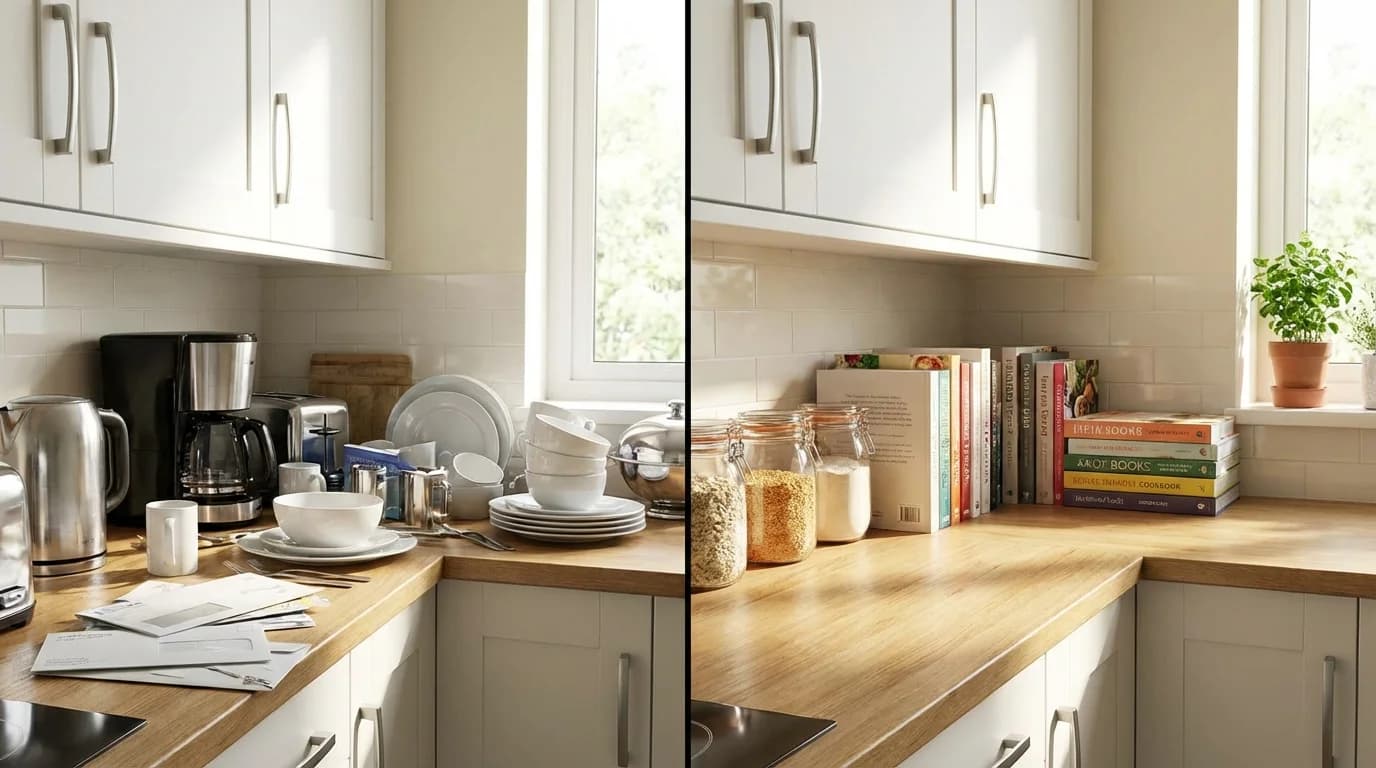
Kitchen Declutter Tips: Transform Your Space in One Weekend
Your kitchen should be a sanctuary for creativity and nourishment, not a source of stress and chaos. Yet for many of us, cluttered counters, overflowing drawers, and packed cabinets make cooking feel overwhelming rather than enjoyable.
The good news? You can transform your kitchen from chaotic to calm in just one weekend. This comprehensive guide provides actionable decluttering strategies that create lasting change—no expensive organizers required.
Why Kitchen Clutter Matters
Before diving into the how-to, understand the real cost of kitchen clutter:
Impact on Daily Life:
- Wasted time: Average person spends 15 minutes daily searching for kitchen items
- Increased stress: Cluttered spaces increase cortisol levels
- Food waste: Can't see what you have, leading to expired items
- Reduced cooking: Clutter makes cooking feel daunting
- Safety hazards: Overcrowded spaces increase accident risk
Financial Impact:
- Duplicate purchases: Buy items you already own but can't find
- Unused appliances: $200-500 worth of gadgets collecting dust
- More takeout: Avoid cooking in cluttered kitchen
- Expired food: Lose $150+ annually to hidden, expired pantry items
Mental Health Benefits of Decluttering:
- Sense of accomplishment
- Increased productivity
- Better focus
- Reduced anxiety
- More enjoyment of cooking
The Kitchen Declutter Framework
Follow this proven three-phase approach:
Phase 1: Preparation (30 minutes)
Phase 2: Purge (4-6 hours)
Phase 3: Reorganize (2-4 hours)
Total time commitment: One weekend (or spread over 2-3 weekends)
Phase 1: Preparation
Set yourself up for success before touching a single item.
Gather Supplies:
- Trash bags: Multiple for garbage
- Donation boxes: For usable items you don't need
- Cleaning supplies: All-purpose cleaner, cloths
- Sticky notes: Label "keep," "donate," "trash," "relocate"
- Timer: Keep sessions focused
- Music or podcast: Make it enjoyable
Mental Preparation:
Set realistic expectations:
- You won't achieve perfection
- It may look worse before better
- Decision fatigue is normal
- Progress over perfection
Choose your declutter day:
- Clear your schedule
- Avoid hunger (have snacks ready)
- Start in morning when energy is high
- Enlist help if possible
The Declutter Mindset:
Ask these questions for every item:
- Do I use this regularly? (Within past 6 months)
- Does it work properly? (No broken items)
- Do I have duplicates? (Keep best, donate rest)
- Does it earn its space? (Worth the cabinet real estate)
- Would I buy it again today? (Honest assessment)
If answer is "no" to most questions, it's time to let go.
Phase 2: The Great Kitchen Purge
Tackle one zone at a time. Don't jump around—finish each area completely.
Zone 1: Countertops (30 minutes)
Goal: Clear, functional workspace
The countertop rule: Only items used daily stay on counters.
Daily-use items typically include:
- Coffee maker
- Knife block
- Cutting board
- Dish soap/sponge
- Fruit bowl (if you eat fruit daily)
Everything else goes into cabinets or storage.
Common counter clutter to relocate:
- Small appliances used weekly or less
- Cookbooks (move to shelf or cabinet)
- Decorative items (minimize in functional space)
- Mail and papers (not kitchen items!)
- Keys and random items (create drop zone elsewhere)
Action steps:
- Remove everything from counters
- Clean surfaces thoroughly
- Return only daily-use items
- Find homes for everything else
Zone 2: Cabinets and Drawers (3-4 hours)
Tackle one cabinet/drawer at a time.
Upper Cabinets (Dishes & Glasses):
Keep:
- Service for 8-12 (unless you regularly host more)
- 8-12 glasses of primary types
- Favorite mugs (4-8, not 30)
- Essential serving dishes
Donate/Discard:
- Chipped or cracked dishes
- Mismatched sets you don't use
- Promotional mugs
- Plastic cups (unless for kids)
- Excess serving platters
Reorganization tip: Place most-used items at eye level, special occasion items higher.
Lower Cabinets (Pots, Pans, Bakeware):
Keep:
- 1 small saucepan
- 1 medium saucepan
- 1 large pot
- 1 small skillet
- 1 large skillet
- 1 cast iron (if you use it)
- 1-2 baking sheets
- 1 9x13 baking dish
- 1 muffin tin (if you bake)
- 1 loaf pan (if you bake)
Donate/Discard:
- Warped pans
- Non-stick with scratched coating
- Specialty pans used once a year
- Duplicate sizes
- Pans without lids (or lids without pans)
Storage solution: Nest pots and pans, store lids vertically in lid organizer.
Utensil Drawer:
Essential utensils:
- 1 wooden spoon
- 1 slotted spoon
- 1 solid spoon
- 1 spatula
- 1 whisk
- 1 ladle
- 1 tongs
- 1 can opener
- 1 vegetable peeler
Ask yourself: Do I need three whisks? Five wooden spoons?
Donate/Discard:
- Broken utensils
- Duplicates beyond 2
- Single-use gadgets never used
- Promotional items
Junk Drawer:
Transform to utility drawer:
Keep:
- Scissors
- Tape
- Pen/notepad
- Batteries (if appliances nearby)
- Matches/lighter (if you have gas stove)
- Takeout menus (or digitize)
Relocate:
- Non-kitchen items
- Excessive pens/markers
- Old receipts
- Random screws and parts
Use drawer organizer to maintain categories.
Zone 3: Pantry (1-2 hours)
If you haven't already organized your pantry, now's the time.
Purge checklist:
- Check all expiration dates
- Toss stale items
- Consolidate open packages
- Remove items no one will eat (be honest)
- Donate unexpired, unopened items
For complete pantry organization, see our detailed pantry organization guide.
Zone 4: Under the Sink (30 minutes)
Keep:
- 2-3 cleaning products (all-purpose, dish soap, sponges)
- Trash bags
- Dishwasher detergent
Donate/Discard:
- Old cleaning products (especially if dried out)
- Excess bottles (consolidate duplicates)
- Ratty sponges and brushes
- Leaking spray bottles
Safety check: Ensure no leak hazards around products.
Zone 5: Refrigerator & Freezer (1 hour)
Refrigerator purge:
- Remove everything (one shelf at a time)
- Toss expired items
- Combine partial containers
- Clean shelves and drawers
- Organize by zones
For detailed fridge organization strategies, check our fridge organization hacks.
Freezer purge:
- Remove everything
- Check freezer burn and dates
- Toss mystery items
- Organize with bins
Full freezer organization guide available here.
Zone 6: Small Appliances (1 hour)
The appliance test: "Have I used this in the past 6 months?"
Essential appliances (for most households):
- Microwave
- Toaster or toaster oven
- Coffee maker
- Blender OR food processor (choose one)
Specialty appliances to keep only if used monthly:
- Stand mixer
- Slow cooker
- Instant Pot
- Air fryer
- Rice cooker
Donate if unused in 6+ months:
- Bread maker
- Juicer
- Waffle maker
- Panini press
- Specialty gadgets
Storage: Appliances not used daily go in cabinets or pantry, not on counters.
Phase 3: Reorganize for Function
Now that you've purged, create systems that stay organized.
The Zone Method
Organize kitchen by function:
Zone 1: Prep Zone
- Cutting boards
- Knives
- Mixing bowls
- Measuring cups
Zone 2: Cooking Zone
- Pots and pans (near stove)
- Cooking utensils
- Oils and seasonings
Zone 3: Baking Zone
- Baking sheets and dishes
- Measuring cups
- Mixing bowls
- Baking ingredients
Zone 4: Cleaning Zone
- Sink area
- Dish soap
- Sponges
- Cleaning supplies
Zone 5: Food Storage Zone
- Containers and lids
- Plastic wrap/foil
- Lunch boxes
Zone 6: Coffee/Beverage Zone
- Coffee maker
- Mugs
- Coffee/tea supplies
Vertical Space Solutions
Most kitchens waste vertical space:
Budget-friendly solutions:
- Shelf risers (see more in cabinet depths)
- Hooks under cabinets (hang mugs)
- Magnetic strips (knife storage)
- Adhesive hooks inside cabinet doors (pot lids, measuring spoons)
- Stackable shelf organizers
Drawer Dividers
Contain drawer chaos with dividers:
- DIY option: Cut cardboard boxes to fit
- Budget option: Dollar store drawer organizers ($1-3 each)
- Investment option: Custom drawer dividers ($15-30)
The "One In, One Out" Rule
Maintain decluttered state:
- Buy new pot? Donate old one
- New mug? Remove one
- New gadget? Eliminate something
This prevents clutter creep.
Decluttering Difficult Categories
Sentimental Kitchen Items
Grandmother's china you never use:
Ask yourself:
- Am I honoring her memory by keeping it boxed up?
- Could someone else enjoy using it?
- Can I keep one piece and let go of the rest?
- Can I photograph it for memories?
Compromise options:
- Display one piece as décor
- Use for special occasions
- Gift to family member who will use it
- Donate with love
Wedding Gifts Never Used
That expensive mixer you've never turned on:
It's okay to let go of gifts. The giver wanted you to be happy—if it's causing stress and taking up space, donate it. Someone else will love it.
"But I Might Need It Someday"
That fondue set from 1987:
If you haven't used it in years, "someday" isn't coming. If you suddenly need fondue, you can:
- Borrow from friend
- Rent from equipment rental
- Buy secondhand if it becomes regular hobby
Your kitchen is prime real estate. Don't let "maybe someday" items take up valuable space.
Multiples of Everything
Why do you have 6 spatulas?
Keep your favorite one or two. Donate the rest. Same with:
- Mugs (keep 1-2 per household member plus a few extras)
- Wine glasses (service for 8-12 max)
- Water bottles (2 per person max)
- Mixing bowls (nested set of 3-4)
Maintaining Your Decluttered Kitchen
Organization fails without maintenance systems.
Daily Habits (5 minutes):
- Clear counters before bed: Reset for tomorrow
- Empty dish drainer: Put away dry dishes
- Wipe down sink: Quick cleanup
- Return items to zones: Everything has a home
Weekly Habits (15 minutes):
- Fridge check: Toss expired items
- Counter audit: Has clutter crept back?
- Quick drawer tidy: Straighten utensils
- Wipe down appliances: Keep countertop items clean
Monthly Habits (30 minutes):
- Pantry check: Rotate stock, check dates
- Deep drawer clean: Remove and wipe out one drawer
- Appliance audit: Still using everything?
- Declutter mail/papers: Don't let accumulate
Quarterly Habits (1 hour):
- Full fridge clean: Remove shelves, deep clean
- Freezer inventory: Use or toss old items
- Cabinet reorganization: Fix what's not working
- Donate unused items: Continuous decluttering
Common Decluttering Mistakes
Mistake 1: Buying Organizers First
Fix: Declutter first, then organize what remains. You need less storage than you think.
Mistake 2: Keeping "Just in Case" Items
Fix: If you haven't used it in 6-12 months, you won't miss it. Be ruthless.
Mistake 3: Decluttering Too Fast
Fix: Take breaks. Decision fatigue is real. Spread over a weekend if needed.
Mistake 4: No Purging, Just Reorganizing
Fix: Rearranging clutter is still clutter. You must eliminate items, not just move them around.
Mistake 5: Not Involving Household Members
Fix: Get family buy-in. Explain benefits. Let them make some decisions about their items.
Mistake 6: Perfection Paralysis
Fix: Done is better than perfect. Your kitchen doesn't need to look like a magazine—it needs to function for your life.
The Minimalist Kitchen: How Much Do You Really Need?
Extreme minimalism isn't for everyone, but it's interesting to see the minimum:
Minimalist kitchen essentials:
- 1 chef's knife
- 1 paring knife
- 1 cutting board
- 1 small pot
- 1 large pot
- 1 skillet
- 1 baking sheet
- Set of 4: plates, bowls, glasses, mugs
- Set of 4: forks, knives, spoons
- 1 wooden spoon
- 1 spatula
- 1 whisk
That's it. Really.
Most people need more, but this demonstrates how much is truly optional.
Room-by-Room Declutter Checklist
Use this checklist for your weekend:
Countertops:
- Remove all items
- Deep clean surfaces
- Return only daily-use items
- Find homes for everything else
Upper Cabinets:
- Purge chipped/cracked dishes
- Keep service for 8-12
- Limit mugs to favorites
- Donate excess
Lower Cabinets:
- Keep 3-5 pots/pans
- Eliminate warped/scratched cookware
- Donate specialty items rarely used
- Organize with nesting/stacking
Drawers:
- Limit utensils to 1-2 of each type
- Add drawer dividers
- Transform junk drawer to utility drawer
- Relocate non-kitchen items
Pantry:
- Check all expiration dates
- Consolidate open packages
- Donate unexpired unwanted items
- Organize by zones
Under Sink:
- Limit cleaning products
- Check for leaks
- Organize with bins
- Remove excess
Refrigerator:
- Toss expired items
- Clean all shelves
- Organize by zones
- Implement maintenance system
Freezer:
- Remove freezer-burned items
- Eliminate mystery bags
- Organize with bins
- Label everything
Appliances:
- Test: used in past 6 months?
- Store non-daily items
- Donate unused gadgets
- Clear counter space
After the Declutter: What to Do with Everything
Donate:
Where to donate kitchen items:
- Goodwill, Salvation Army
- Local shelters
- Buy Nothing groups (Facebook)
- Friends/family
- Freecycle
- College students setting up first apartment
Donation tip: Clean items first. Donate usable items only.
Sell:
Where to sell valuable items:
- Facebook Marketplace
- Craigslist
- OfferUp
- Consignment shops
- Yard sale
Worth selling: High-value appliances in good condition (stand mixers, espresso machines, etc.)
Recycle:
- Electronics recycling for broken appliances
- Metal recycling for old pots/pans
- Glass recycling for jars and bottles
Trash:
- Broken items
- Chipped/cracked dishes (safety hazard)
- Worn out utensils
- Items too damaged to donate
Real Transformations
Lisa's Kitchen:
- Before: Cluttered counters, 42 mugs, 3 broken appliances, couldn't find anything
- Declutter weekend: Donated 8 boxes, trashed 2 bags, cleaned everything
- After: Clear counters, 12 favorite mugs, every item has a home
- Result: Cooks 5x per week (up from 1x), saves $200/month on takeout
Mike's Apartment Kitchen:
- Before: Tiny kitchen, overwhelmed by stuff, ate out constantly
- Minimalist approach: Kept only 30 items total
- After: Everything fits, easy to clean, enjoyable to cook
- Result: Started meal planning, saves time and money
Your Declutter Weekend Action Plan
Friday Evening (1 hour):
- Gather supplies
- Read this guide completely
- Set weekend schedule
- Mentally prepare
Saturday (6 hours with breaks):
- 8 AM: Clear countertops (30 min)
- 9 AM: Upper cabinets (1.5 hours)
- 11 AM: Lower cabinets (1.5 hours)
- 1 PM: Lunch break
- 2 PM: Drawers (1 hour)
- 3 PM: Pantry (1.5 hours)
- 5 PM: Done for day, load donations in car
Sunday (4 hours):
- 9 AM: Under sink (30 min)
- 10 AM: Refrigerator (30 min)
- 11 AM: Freezer (30 min)
- 12 PM: Appliances (1 hour)
- 1 PM: Reorganize and optimize (1.5 hours)
- 3 PM: Final cleanup, drop off donations
- 4 PM: Enjoy your new kitchen!
Conclusion
A decluttered kitchen changes everything. You'll cook more, stress less, save money, and actually enjoy your kitchen. The initial weekend investment pays dividends daily.
Remember: Your kitchen should serve you, not stress you. Keep what you use and love, let go of everything else, and create systems that maintain the organization.
The perfect time to start is now. Not when you have more time, not after the holidays, not when life calms down. Block out one weekend, follow this guide, and transform your kitchen.
Your future self—standing in a calm, organized kitchen, effortlessly preparing dinner—will thank you.
Ready to organize more of your kitchen? Check out our guides on small kitchen storage ideas and our kitchen essentials list to ensure you keep only what you truly need.
About myrecipe
myrecipe helps families save, organize, and share their favorite recipes in one place. Plan meals, create shopping lists, and preserve your culinary traditions.
Start Organizing Recipes