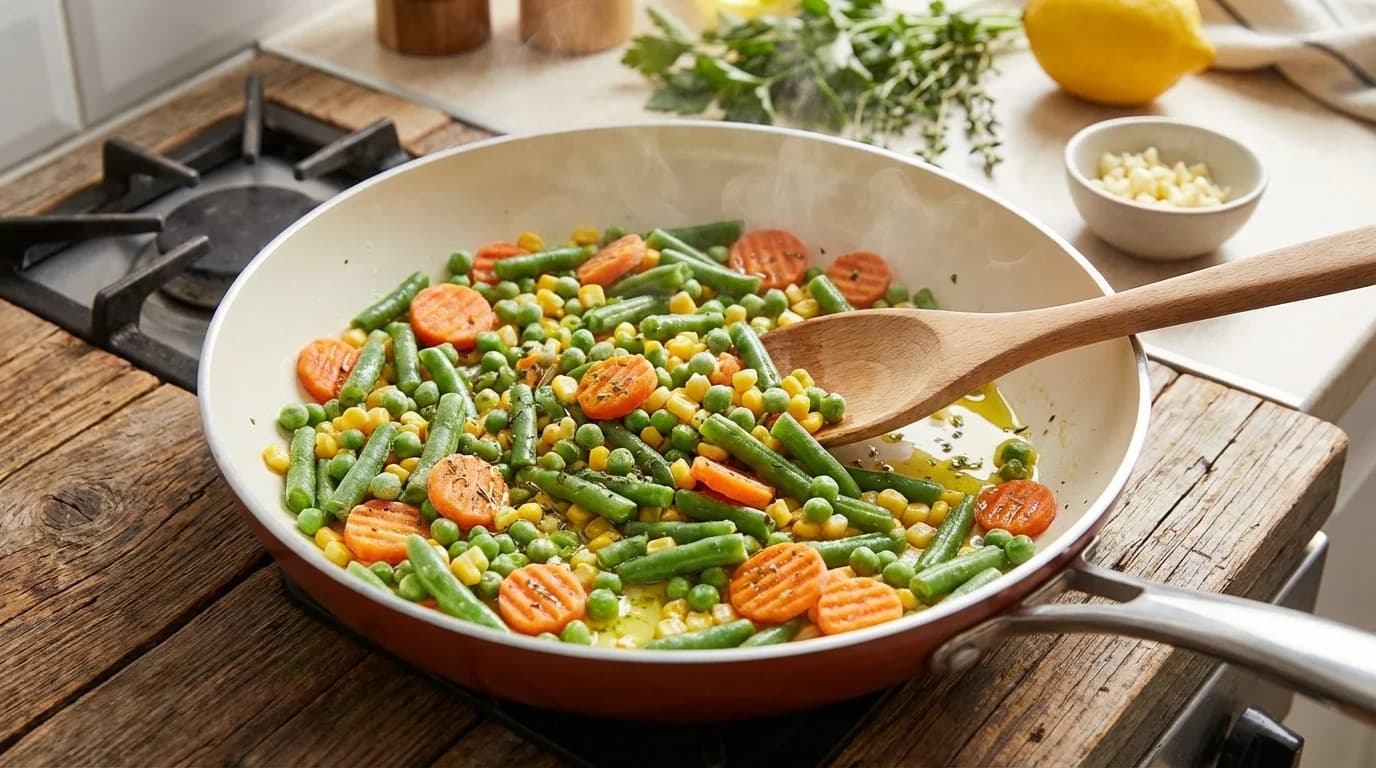
Frozen vegetables get a bad reputation for being mushy, flavorless, and inferior to fresh. But here's the truth: properly cooked frozen vegetables can be just as delicious as fresh—sometimes even more nutritious—while saving you significant time and money. The key is understanding how to work with their unique properties instead of treating them like fresh vegetables.
Why Frozen Vegetables Deserve Your Attention
Nutrition on Par (or Better!)
Vegetables are frozen at peak ripeness within hours of harvest, locking in nutrients. Fresh vegetables can lose vitamins during transport and storage. Studies show frozen vegetables often contain more nutrients than "fresh" produce that's been sitting for days.
Massive Time Savings
Pre-washed, pre-chopped, ready to cook. Frozen vegetables eliminate prep time, making them perfect for quick weeknight dinners and 15-minute meals.
Budget-Friendly
Frozen vegetables cost 30-50% less than fresh equivalents, never spoil before you use them, and eliminate waste. Essential for budget grocery shopping tips and meal prep on a budget.
Year-Round Availability
Enjoy summer vegetables in winter without premium prices. Access produce that's out of season or expensive fresh.
Reduced Food Waste
Use exactly what you need, save the rest. No wilted vegetables forgotten in the crisper drawer.
The Science of Frozen Vegetables
Understanding why frozen vegetables behave differently helps you cook them better:
Blanching: Vegetables are briefly boiled before freezing, partially cooking them Ice Crystals: Freezing creates ice crystals that rupture cell walls Moisture: Frozen veggies release more water when cooked than fresh Texture: Cell wall damage means they won't be as crisp as fresh
The Solution: Don't treat them like fresh vegetables. Use high heat, avoid overcrowding, and embrace different textures.
Golden Rules for Cooking Frozen Vegetables
Rule #1: Don't Thaw First (Usually)
Why: Thawing makes vegetables waterlogged and mushy Exception: Spinach and leafy greens—thaw and squeeze out excess moisture
Rule #2: Use High Heat
Why: Quickly evaporates excess moisture and develops flavor through browning Methods: Roasting, stir-frying, sautéing beat steaming and boiling
Rule #3: Don't Overcrowd the Pan
Why: Crowding traps steam, leading to soggy vegetables Solution: Use larger pan or cook in batches
Rule #4: Skip the Water (When Possible)
Why: Frozen vegetables contain enough moisture; adding more makes them mushy Better: Dry-heat methods like roasting and sautéing
Rule #5: Season Aggressively
Why: Blanching and freezing can mute flavors How: Salt generously, add aromatics (garlic, onion), use bold seasonings
Best Cooking Methods for Frozen Vegetables
Roasting: The Game-Changer
Why It's Best: High heat evaporates moisture and caramelizes for deep flavor
Method:
- Preheat oven to 425-450°F
- Spread frozen vegetables on baking sheet in single layer (don't thaw!)
- Toss with oil, salt, pepper
- Roast 20-30 minutes, stirring halfway
- Vegetables should be browned and slightly crispy
Best For: Broccoli, cauliflower, Brussels sprouts, green beans, mixed vegetables
Pro Tip: Use two baking sheets rather than overcrowding one
Perfect for: Sheet pan dinners budget
Stir-Frying: The Quick Method
Why It Works: Extremely high heat quickly cooks vegetables while maintaining texture
Method:
- Heat wok or large skillet over high heat
- Add oil with high smoke point (peanut, vegetable)
- Add frozen vegetables directly (no thawing)
- Stir constantly for 5-8 minutes
- Add aromatics (garlic, ginger) in last 2 minutes
- Season with soy sauce, sesame oil
Best For: Mixed Asian vegetables, peas, edamame, snap peas
Drain First: If vegetables look excessively icy, rinse under cold water and drain well
Great for: Easy stir fry recipes
Sautéing: The Everyday Method
Why It Works: Direct pan contact creates browning
Method:
- Heat large skillet over medium-high heat
- Add fat (butter, oil, or both)
- Add frozen vegetables in single layer
- Let sit 2-3 minutes without stirring (creates browning)
- Stir and continue cooking 5-7 minutes
- Season and add aromatics toward end
Best For: Green beans, corn, peas, carrots, mixed vegetables
Upgrade: Add minced garlic, shallots, or herbs in last minute
Microwaving: The Convenient Method
When to Use: When speed trumps texture
Method:
- Place vegetables in microwave-safe bowl
- Add 1-2 tablespoons water
- Cover with microwave-safe plate or plastic wrap (vent one corner)
- Microwave on high 3-5 minutes
- Drain excess liquid
- Season generously
Best For: Quick side dishes, when texture isn't critical
Improve Results: Transfer to hot skillet with butter after microwaving for quick sauté
Steaming: The Healthy Method
When to Use: When you want to preserve maximum nutrients
Method:
- Bring 1 inch water to boil in pot with steamer basket
- Add frozen vegetables to basket
- Cover and steam 5-8 minutes
- Check for desired tenderness
- Season immediately after cooking
Best For: Broccoli, cauliflower, carrots, green beans
Warning: Easy to overcook—set timer!
Air Frying: The Modern Method
Why It Works: Circulating hot air crisps vegetables beautifully
Method:
- Preheat air fryer to 400°F
- Toss frozen vegetables with oil and seasonings
- Spread in single layer in basket
- Air fry 10-15 minutes, shaking basket halfway
- Cook until crispy and browned
Best For: Brussels sprouts, broccoli, cauliflower, green beans
Advantage: Crispy results with less oil than traditional frying
Vegetable-Specific Tips
Frozen Broccoli
Best Methods: Roasting, air frying, stir-frying Avoid: Boiling (gets mushy) Tip: Roast at 450°F for crispy, browned florets Season With: Garlic, Parmesan, lemon, red pepper flakes
Frozen Cauliflower
Best Methods: Roasting, mashing, air frying Creative Use: Blend into creamy soup, mash as potato substitute, rice in food processor for cauliflower rice Tip: Roast with curry powder for Indian-inspired side Season With: Curry, turmeric, Parmesan, garlic
Frozen Spinach
Best Methods: Sautéing (after squeezing dry), adding to soups/sauces Critical Step: Thaw completely, squeeze out ALL excess moisture Uses: Dips, pasta sauces, quiches, stuffed chicken Season With: Garlic, nutmeg, lemon
Pro Tip: Much more economical than fresh spinach for cooked dishes
Frozen Peas
Best Methods: Quick sauté, adding to pasta/rice, microwaving Advantage: Already perfectly cooked, just need heating Tip: Add frozen to hot pasta during last minute of cooking—they'll thaw perfectly Season With: Butter, mint, Parmesan, bacon
Budget Star: Peas are cheaper frozen than fresh year-round
Frozen Green Beans
Best Methods: Roasting, stir-frying, sautéing Avoid: Steaming or boiling (too soft) Tip: Roast with almonds and garlic for "fresh" taste Season With: Garlic, almonds, soy sauce, sesame
Frozen Corn
Best Methods: Sautéing, adding to soups/salsas, microwaving Tip: Sauté in butter until slightly charred for grilled flavor Uses: Soups, salsas, succotash, cornbread Season With: Butter, lime, chili powder, cilantro
Frozen Brussels Sprouts
Best Methods: Roasting, air frying Tip: Halve larger sprouts before roasting for better browning Crispy Technique: Roast at 450°F with oil until edges are dark and crispy Season With: Balsamic vinegar, bacon, Parmesan, maple syrup
Frozen Mixed Vegetables
Best Methods: Stir-frying, adding to soups, roasting Uses: Fried rice, pot pies, soups, one-pot budget meals Tip: Separate and cook different vegetables if some are larger Season With: Soy sauce, curry powder, Italian herbs
Frozen Butternut Squash
Best Methods: Roasting, blending into soup, microwaving Advantage: No peeling or chopping required! Uses: Soups, pasta sauce, side dish, seasonal produce guide extender Season With: Cinnamon, nutmeg, brown butter, sage
Boosting Flavor in Frozen Vegetables
Fat Is Your Friend
Butter: Classic, adds richness Olive Oil: Healthy, good for roasting Bacon Fat: Intense flavor, perfect for green beans and Brussels sprouts Sesame Oil: Finishing oil for Asian vegetables
Aromatics Make Everything Better
Garlic: Mince and add in last 2 minutes of cooking Ginger: Perfect for Asian-style vegetables Shallots: Sweeter, more delicate than onions Onions: Sauté before adding vegetables
Acids Brighten Flavors
Lemon Juice: Brightens everything, especially greens Vinegar: Balsamic for Brussels sprouts, rice vinegar for Asian vegetables Lime: Perfect for corn, peppers, and Mexican-inspired dishes
Finishing Touches
Fresh Herbs: Add after cooking (parsley, cilantro, basil) Cheese: Parmesan, feta, or goat cheese Nuts: Toasted almonds, pecans, or pine nuts add crunch Dried Herbs: Italian seasoning, herbs de Provence, or curry powder
When Frozen Beats Fresh
Definitely Choose Frozen
Spinach for Cooking: Fraction of the cost, no waste Peas: Frozen peas are sweeter than "fresh" (which are actually aged) Pearl Onions: Nobody wants to peel dozens of tiny onions Butternut Squash: Pre-cubed saves 15 minutes of dangerous knife work Edamame: Rarely available fresh, frozen is standard
Frozen Works Great
Broccoli and Cauliflower: For soups, casseroles, and roasting Green Beans: For cooked dishes and casseroles Corn: Off-season or for cooking (not fresh eating) Mixed Vegetables: For convenience dishes
Fresh Is Better
Salads: Can't replicate crisp, fresh texture Raw Eating: Texture of frozen doesn't work raw Special Occasions: When presentation matters Grilling: Fresh holds up better to high direct heat
Common Frozen Vegetable Mistakes
Mistake #1: Thawing Before Cooking
Problem: Creates waterlogged, mushy vegetables Solution: Cook from frozen (except spinach and leafy greens)
Mistake #2: Boiling or Steaming Everything
Problem: Adds even more moisture to already-blanched vegetables Solution: Use dry-heat methods (roasting, sautéing, stir-frying)
Mistake #3: Undercooking
Problem: Cold center, unpleasant texture Solution: Cook thoroughly until hot all the way through
Mistake #4: Overcrowding the Pan
Problem: Creates steam instead of browning Solution: Single layer, use larger pan or cook in batches
Mistake #5: Under-Seasoning
Problem: Bland, cafeteria-style vegetables Solution: Season more aggressively than you would fresh
Mistake #6: Not Draining Excess Liquid
Problem: Watery final dish Solution: If liquid pools in pan, drain before finishing
Budget-Friendly Frozen Vegetable Strategy
Stock These Essentials
- Mixed Vegetables: Versatile, affordable
- Broccoli: Nutrition powerhouse, multiple uses
- Spinach: Cheapest leafy green for cooking
- Peas: Sweet, fast-cooking, kid-friendly
- Green Beans: Classic side dish
- Corn: Adds sweetness to many dishes
Total Cost: $10-15 for week's worth of vegetables
Money-Saving Tips
Buy Store Brands: Quality is usually identical to name brands Stock Up on Sales: Frozen vegetables keep for 8-12 months Use in Place of Fresh: Save $3-5 per recipe Eliminate Waste: Use only what you need, save the rest
Perfect for: Cheap healthy meals and feeding family 50 dollars week
Storage and Food Safety
Freezer Life: 8-12 months for best quality Safe Indefinitely: Won't cause foodborne illness, but quality declines Refreezing: Safe if still contains ice crystals or is refrigerator-cold (below 40°F) Thawed: Use within 3-5 days if thawed in refrigerator
Signs of Quality Loss:
- Excessive ice crystals (freezer burn)
- Discoloration
- Off odors when opened
- Clumping (bag was partially thawed)
The Bottom Line
Frozen vegetables are an affordable, nutritious, convenient ingredient that deserves a place in every kitchen. The key to delicious frozen vegetables is high heat, minimal added moisture, and generous seasoning. Stop steaming and start roasting or stir-frying, and you'll discover that frozen vegetables can be just as satisfying as fresh.
Whether you're cooking quick weeknight dinners, preparing meal prep for beginners, or simply trying to eat more vegetables without breaking the bank, frozen vegetables are your secret weapon.
Ready to transform your frozen vegetable game? Try roasting your next bag at 450°F with oil and seasonings—you'll never look at frozen vegetables the same way again!
About myrecipe
myrecipe helps families save, organize, and share their favorite recipes in one place. Plan meals, create shopping lists, and preserve your culinary traditions.
Start Organizing Recipes