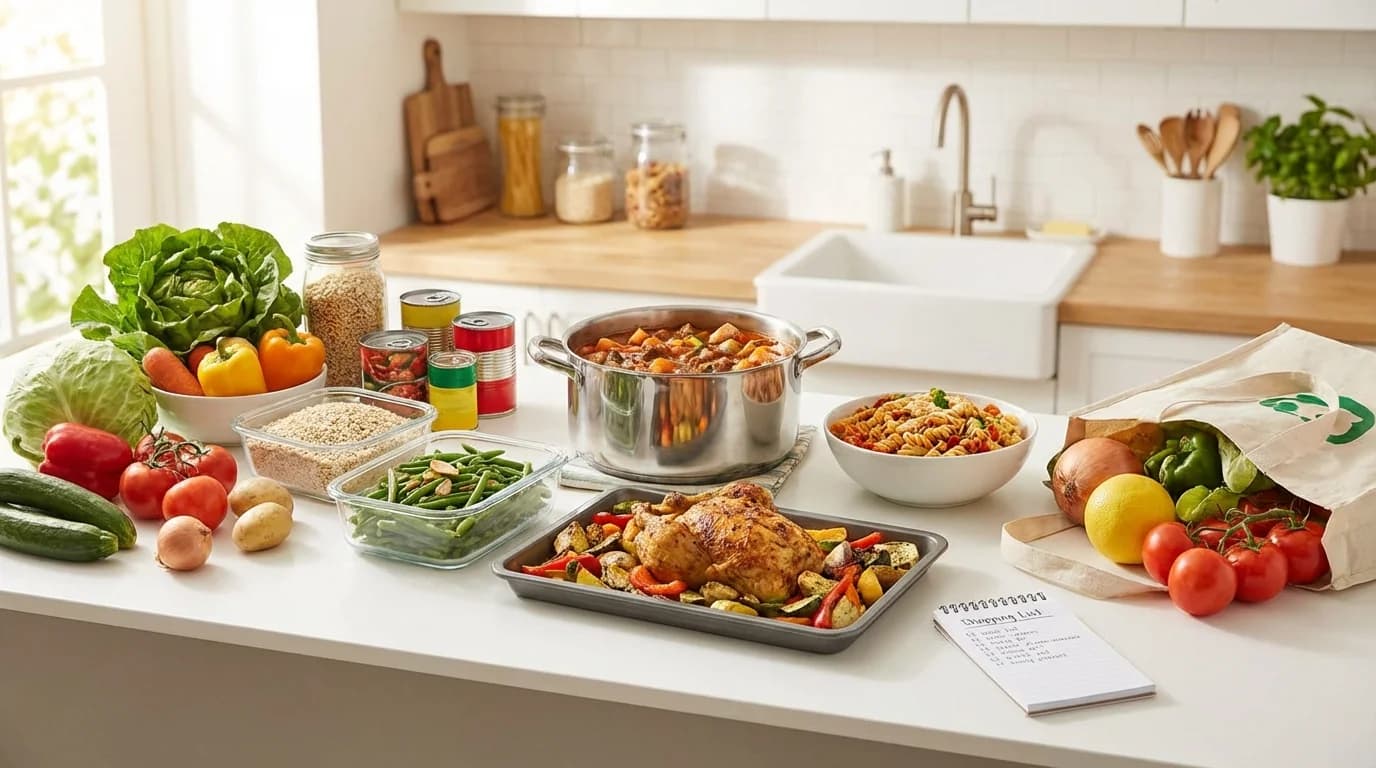
Let's be real: feeding a family of four on just $50 a week sounds impossible. But here's the truth - it's absolutely doable with the right plan, smart shopping, and a few kitchen tricks.
Key Takeaways
- $50/week for family of 4 = $1.79 per person per day—challenging but doable
- Build meals around eggs, beans, rice, pasta, and in-season vegetables
- Cook from scratch—convenience foods eat up budget fast
- Plan meals that share ingredients to eliminate waste
- Buy loss leaders (sale items) and stock up on non-perishables
I'm not going to sugarcoat it. This meal plan requires flexibility, planning, and willingness to cook from scratch. But if you're reading this, you're probably already motivated to slash your grocery bill. Let's make it happen.
The Strategy Behind the $50 Budget
Before we dive into the meal plan, let's talk strategy. This isn't about eating ramen every night or starving your family. It's about maximizing nutrition while minimizing cost.
Here's what makes this work:
Buy whole ingredients, not processed foods. A bag of rice costs less than rice-a-roni and gives you way more meals. Same goes for dried beans versus canned, and whole chickens versus chicken breasts.
Plan every meal around what's on sale. The meal plan below uses staples that are consistently cheap year-round. When you can adapt this strategy, always check your local ads first.
Cook once, eat twice. Several meals in this plan intentionally create leftovers that transform into tomorrow's lunch or dinner.
Embrace meatless meals. Beans, eggs, and legumes provide protein at a fraction of the cost of meat. See our cheap vegetarian meals guide for more meatless options. You'll notice we use meat strategically, not as the star of every meal.
Your Complete Shopping List ($50 Budget)
Here's exactly what you'll buy. Prices are approximate and based on national averages, but you might find even better deals at discount grocers like Aldi or Save-A-Lot.
| Category | Items | Cost |
|---|---|---|
| Proteins | 1 whole chicken (4-5 lbs), 2 lbs ground beef, 1 dozen eggs | $12.50 |
| Grains & Starches | 5 lbs rice, 2 lbs dried pinto beans, 1 lb pasta, 5 lbs potatoes | $8.00 |
| Produce | 3 lbs onions, 2 lbs carrots, 1 head cabbage, 5 lbs bananas, 3 lbs apples | $10.00 |
| Canned & Pantry | 2 cans tomatoes, tomato paste, 2 cans black beans, peanut butter, bread, oatmeal | $8.50 |
| Dairy | 1 gallon milk, 8 oz shredded cheese | $6.00 |
| Seasonings & Oil | Cooking oil, salt, pepper, garlic powder, chili powder | $5.00 |
| TOTAL | $50.00 |
Detailed Item Breakdown
| Item | Quantity | Price | Meals It Makes |
|---|---|---|---|
| Whole chicken | 4-5 lbs | $5.00 | Sunday roast, Mon sandwiches, Tues fried rice, stock |
| Ground beef | 2 lbs | $6.00 | Wed spaghetti, Sat stir-fry |
| Eggs | 1 dozen | $1.50 | Breakfast scrambles, fried rice |
| Rice | 5 lbs | $3.00 | Multiple meals all week |
| Dried pinto beans | 2 lbs | $2.00 | Tues bean bowls, quesadillas |
| Pasta | 1 lb | $1.00 | Wed spaghetti |
| Potatoes | 5 lbs | $2.00 | Sunday roast, Thurs soup |
| Onions | 3 lbs | $2.00 | Flavor base for most meals |
| Carrots | 2 lbs | $1.50 | Sunday roast, chicken soup |
| Cabbage | 1 head | $1.50 | Sat stir-fry (stretches meals) |
| Bananas | 5 lbs | $2.00 | Breakfast with oatmeal |
| Apples | 3 lbs | $3.00 | Snacks, breakfast |
| Canned tomatoes | 2 (28 oz) | $2.00 | Spaghetti sauce, bean bowls |
| Black beans | 2 cans | $1.50 | Bean bowls, quesadillas |
| Peanut butter | 1 jar | $2.50 | Lunches, breakfast |
| Bread | 1 loaf | $1.00 | Sandwiches, toast |
| Oatmeal | 18 oz | $0.75 | Breakfast 3+ days |
| Milk | 1 gallon | $3.50 | Drinking, cooking |
| Cheese | 8 oz | $2.50 | Bean bowls, quesadillas |
Seasonings are one-time purchases that last multiple weeks
Your 7-Day Family Meal Plan
This plan feeds breakfast, lunch, and dinner for a family of four. Portion sizes are generous and filling.
Day 1: Sunday
Breakfast: Scrambled eggs with toast (4 eggs, 4 slices bread)
Lunch: Peanut butter sandwiches with apple slices
Dinner: Whole roasted chicken with roasted carrots and potatoes. Save all bones and scraps for stock.
Prep for tomorrow: Shred leftover chicken and start bean soaking for Day 3.
Day 2: Monday
Breakfast: Oatmeal with sliced bananas and peanut butter drizzle
Lunch: Chicken sandwiches using leftover chicken, with carrot sticks
Dinner: Chicken fried rice using leftover chicken, rice, scrambled eggs, diced onions, and carrots
Prep for tomorrow: Make chicken stock from yesterday's bones (simmer overnight in slow cooker or for 3-4 hours on stovetop).
Day 3: Tuesday
Breakfast: Scrambled eggs with toast
Lunch: Leftover fried rice
Dinner: Refried beans and rice bowls with shredded cheese, diced onions, and tomatoes (use canned diced tomatoes). Serve with tortillas if within budget or just as bowls.
Prep for tomorrow: Strain and store chicken stock.
Day 4: Wednesday
Breakfast: Oatmeal with sliced apples
Lunch: Bean and cheese quesadillas (if you have tortillas) or bean toast
Dinner: Spaghetti with meat sauce (ground beef, canned tomatoes, onions, garlic powder) served over pasta. Make a double batch of sauce.
Prep for tomorrow: Save half the meat sauce for Day 6.
Day 5: Thursday
Breakfast: Scrambled eggs with leftover potatoes
Lunch: Leftover spaghetti
Dinner: Chicken soup using homemade stock, shredded carrots, diced potatoes, onions, and rice. Use remaining chicken if any is left.
Day 6: Friday
Breakfast: Oatmeal with bananas
Lunch: Leftover chicken soup
Dinner: Beefy rice bowls using leftover meat sauce over rice, topped with shredded cheese
Day 7: Saturday
Breakfast: Eggs and toast
Lunch: Peanut butter sandwiches with carrot sticks
Dinner: Cabbage and ground beef stir-fry with rice (sauté chopped cabbage, remaining ground beef, onions, and carrots with soy sauce if you have it, or just salt and garlic powder)
Making It Work: Practical Tips
Batch cook your beans. Cook the entire 2-lb bag at once. They'll keep in the fridge for a week or can be frozen in portions.
Use every part. That chicken carcass makes incredible stock. Carrot tops can flavor soups. Stale bread becomes croutons.
Breakfast doesn't have to be fancy. Oatmeal and eggs are nutritious, filling, and dirt cheap. Save the creative cooking for dinner.
Keep it simple. You'll notice this meal plan doesn't have complicated recipes. That's intentional. Simple food is cheaper and faster.
Organize your recipes. Tools like myrecipe make it easy to save budget-friendly recipes, scale them for your family size, and plan your weekly meals. Having a collection of go-to cheap meals means you're never scrambling at dinner time.
Common Mistakes That Blow Your Budget
Buying pre-cut vegetables. Those baby carrots cost twice as much as whole carrots. Cut them yourself.
Shopping without a list. Every item not on your list is money wasted. Stick to the plan.
Ignoring the bulk bins. Dried beans, rice, and oats from bulk bins are almost always cheaper than packaged versions.
Throwing away leftovers. Every scrap of leftover food represents dollars down the drain. This meal plan specifically incorporates leftovers into the next day's meals.
Buying name brands. Generic store brands are typically 20-30% cheaper and virtually identical in quality for staples like rice, beans, and pasta.
Shopping at the wrong stores. If you have access to Aldi, Walmart, or discount grocery stores, shop there. Premium grocers charge premium prices.
Not checking unit prices. Bigger isn't always cheaper. Always check the price per ounce or pound to find the real deal.
Adjusting the Plan for Your Family
Vegetarian family? Swap the chicken for an extra bag of beans and the ground beef for lentils. You'll actually save a few more dollars.
Kids hate eggs? Substitute oatmeal for all breakfasts and use the eggs exclusively in cooking.
Need more calories? Teenage boys or very active families might need bigger portions. Add an extra pound of rice and beans to the shopping list for about $2.50 more.
Gluten-free? Skip the pasta and bread. Use rice and potatoes exclusively for carbs. Replace pasta night with a rice-based dish.
Beyond the First Week
Once you've mastered this basic plan, you can start getting creative. Here's how to evolve:
Build a rotating menu. Create 3-4 different weekly meal plans and rotate them monthly. This prevents boredom while maintaining the budget.
Stock up on loss leaders. When chicken drops to $0.79/lb, buy several and freeze them. When rice is on sale, buy a 20-lb bag. Strategic stockpiling during sales gives you more flexibility.
Start a price book. Track the regular prices of your staples. This helps you recognize real deals versus fake sales.
Grow simple herbs. A pot of parsley or basil on your windowsill adds flavor for pennies. Not required, but nice to have.
Save your bonuses. When you save money one week, stash it for the next. This creates a buffer for when prices spike or you need variety.
Is It Nutritionally Complete?
This meal plan provides adequate protein, carbohydrates, fiber, and essential nutrients for most families. However, it's light on variety and certain vitamins.
If you're following this plan long-term, consider:
- Taking a daily multivitamin (generic brands cost $5-7 for a month's supply)
- Adding frozen vegetables when they're on sale (often cheaper than fresh)
- Incorporating seasonal produce when prices drop
- Using community resources like food pantries to supplement
This isn't meant to be a permanent lifestyle - it's a survival strategy for tough times. But it proves you can eat real, homemade food even on an extreme budget.
Frequently Asked Questions
Can I really feed a family of 4 for $50 a week?
Yes, but it requires commitment to cooking from scratch, eliminating convenience foods, and sticking to the cheapest staples. This meal plan proves it's possible, though it does require time and planning.
What if I can't find these exact prices in my area?
Prices vary by region and store. Focus on the strategy: buy whole ingredients, choose cheap proteins like beans and eggs, and build meals around sale items. Adjust the specific ingredients based on what's cheapest where you live.
How much time does this take to cook?
Expect to spend 30-45 minutes cooking dinner most nights, plus 15 minutes for breakfast prep. Sunday's roast chicken takes longer but provides multiple meals. Meal prep on weekends can reduce daily cooking time.
What about snacks for kids?
This budget is tight, but apples, bananas, and peanut butter toast make good snacks. If you can squeeze an extra $5-10 into the budget, add popcorn kernels (cheap in bulk) and ingredients for homemade muffins.
Can I still eat healthy on this budget?
This plan includes lean protein, whole grains, fruits, vegetables, and legumes - all components of a healthy diet. The limitation is variety, not nutrition. You're getting the essentials, just not a lot of diversity.
Final Thoughts
Feeding a family of four on $50 a week is challenging, but it's doable. This isn't about gourmet meals or Instagram-worthy food photos. It's about keeping your family fed with real, nutritious food when money is tight.
Remember: this is a tool for tough times, not a lifestyle. Use it when you need it, and don't feel guilty about the simplicity. Keeping food on the table is something to be proud of, regardless of the budget.
Save this meal plan, bookmark the shopping list, and know that you've got a plan when you need it. And when things get easier financially, you'll have learned valuable skills about meal planning, reducing waste, and cooking from scratch that will serve you forever.
Want to stay organized with your budget meal planning? Check out myrecipe to save money-saving recipes, create shopping lists, and build your own collection of family-friendly meals that work for your budget. Because feeding your family well doesn't have to break the bank.
About myrecipe
myrecipe helps families save, organize, and share their favorite recipes in one place. Plan meals, create shopping lists, and preserve your culinary traditions.
Start Organizing Recipes