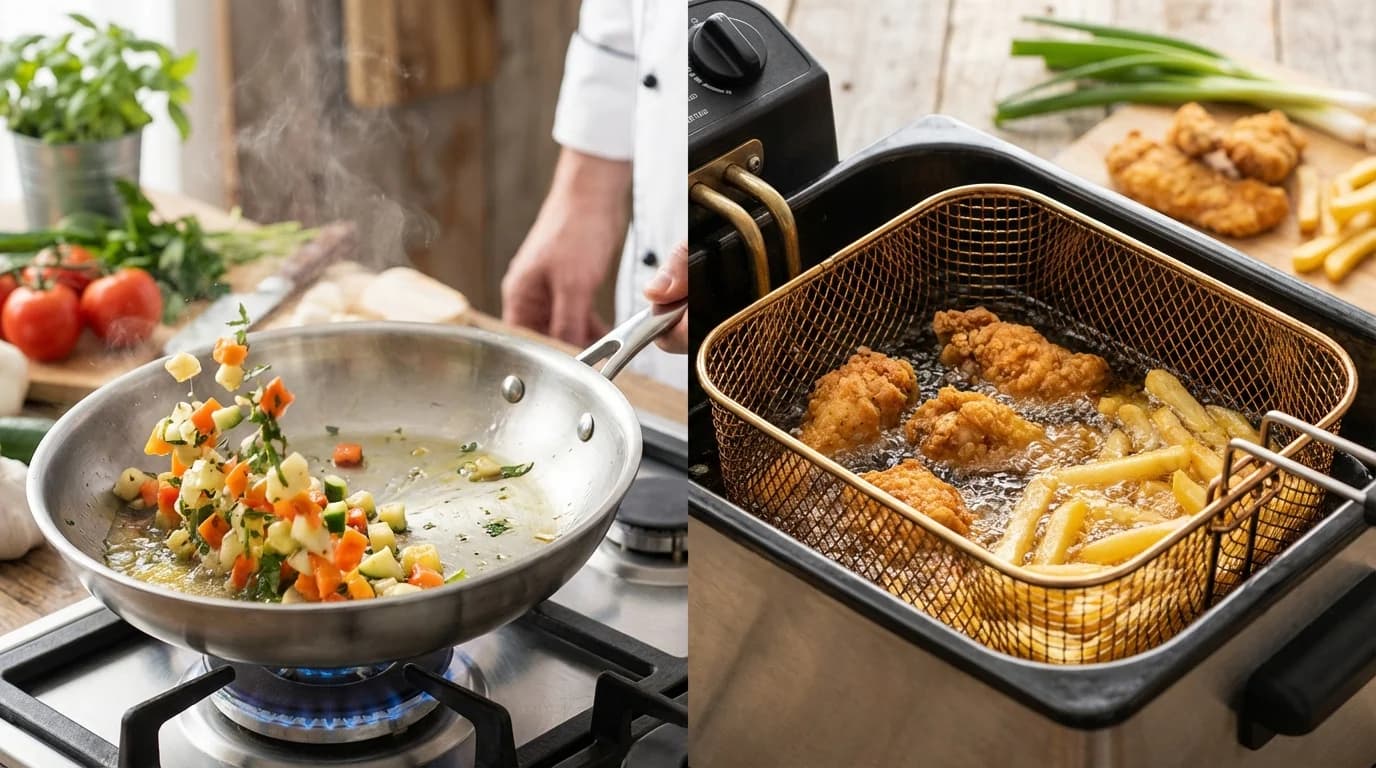
Sautéing vs Frying: Understanding the Key Differences
The terms "sautéing" and "frying" are often used interchangeably in everyday conversation, but they're actually distinct cooking techniques that produce different results. Understanding when and how to use each method will elevate your cooking, helping you achieve the perfect texture and flavor for any dish. This guide breaks down the differences, techniques, and best applications for both sautéing and frying.
What is Sautéing?
The word "sauté" comes from the French verb "sauter," meaning "to jump." It refers to the way food jumps in the pan when you toss it during cooking.
Sautéing Characteristics:
Temperature: Medium-high to high heat (350-400°F) Fat amount: Minimal—just enough to coat the pan (1-3 tablespoons) Cooking vessel: Wide, shallow pan with sloped sides (sauté pan or skillet) Food movement: Constant—tossing, stirring, or flipping frequently Result: Quick cooking with light browning, tender interior, slightly crispy exterior
Sautéing is designed to cook food quickly while developing flavor through caramelization and the Maillard reaction, without creating a crispy crust.
What is Frying?
Frying encompasses several related techniques that all involve cooking food in hot fat, but with varying amounts of oil.
Pan Frying (Shallow Frying)
Temperature: Medium-high heat (350-375°F) Fat amount: Moderate—enough to come halfway up the food (1/4 to 1 inch of oil) Cooking vessel: Heavy skillet or frying pan with straight sides Food movement: Minimal—flip once or twice Result: Golden, crispy exterior; fully cooked interior
Deep Frying
Temperature: 350-375°F (carefully controlled) Fat amount: Large—food is completely submerged (2-3 inches or more) Cooking vessel: Deep pot, Dutch oven, or dedicated deep fryer Food movement: Minimal—turn once halfway through Result: Uniformly crispy, golden exterior; moist interior
Stir-Frying
Temperature: Very high heat (400-500°F) Fat amount: Small to moderate (2-4 tablespoons) Cooking vessel: Wok with high, sloped sides Food movement: Constant vigorous stirring and tossing Result: Quick-cooked with slight char, crisp-tender vegetables
Stir-frying is actually a hybrid technique—it's closer to sautéing but uses some frying characteristics, particularly higher heat and a bit more oil.
The Key Differences at a Glance
| Aspect | Sautéing | Pan Frying | Deep Frying |
|---|---|---|---|
| Oil Amount | Minimal (1-3 tbsp) | Moderate (1/4-1 inch) | Large (full submersion) |
| Temperature | 350-400°F | 350-375°F | 350-375°F |
| Movement | Constant | Minimal | Minimal |
| Cooking Time | Very quick (2-10 min) | Moderate (5-20 min) | Quick to moderate (3-15 min) |
| Best For | Vegetables, thin proteins | Breaded items, cutlets | Battered foods, fries |
| Result | Light browning | Golden crust on both sides | Uniform golden crust |
When to Use Sautéing
Sautéing works best when you want to:
Cook tender ingredients quickly: Vegetables, thinly sliced meat, seafood, and mushrooms benefit from sautéing's quick, high-heat approach.
Preserve texture: Sautéing cooks food through without making it greasy or overly crispy, ideal for vegetables that should remain crisp-tender.
Build layers of flavor: Sautéing aromatics like onions and garlic is the foundation of countless dishes. The quick cooking develops flavor without burning.
Start a dish: Many recipes begin by sautéing aromatics or proteins before adding liquids for braising, making sauces, or making soup.
Perfect Sautéing Applications:
- Stir-fried vegetables for easy stir-fry recipes
- Chicken breast cutlets
- Shrimp and scallops
- Mushrooms
- Leafy greens like spinach and kale
- Aromatics for pasta sauces
- Quick weeknight dinners
When to Use Pan Frying
Pan frying is ideal when you want:
A crispy, golden crust: Breaded or coated foods develop an appealing crunch through pan frying.
Even browning on flat surfaces: Foods with two distinct sides (cutlets, fish fillets, patties) benefit from the stationary cooking and moderate oil.
More substantial cooking: Thicker cuts of meat or bone-in pieces need the moderate heat and longer cooking time that pan frying provides.
Control over oil absorption: Pan frying uses less oil than deep frying, making it a lighter option while still achieving a crispy exterior.
Perfect Pan Frying Applications:
- Breaded chicken cutlets or pork chops
- Fish fillets (especially delicate fish)
- Potato pancakes or latkes
- Hamburgers
- Pork cutlets (schnitzel-style)
- Tofu steaks
- Breakfast items like hash browns
When to Use Deep Frying
Deep frying is the technique of choice when you want:
Uniform, all-over crispiness: Complete submersion ensures every surface gets evenly crispy and golden.
Specific textures: Some foods—french fries, doughnuts, fritters—are defined by their deep-fried texture.
Quick cooking of battered items: Batters need the quick, high heat of deep frying to set properly and create that signature crispy shell around a tender interior.
Traditional preparations: Certain dishes (tempura, fried chicken, churros) are traditionally deep-fried and don't translate well to other methods.
Perfect Deep Frying Applications:
- French fries and potato chips
- Fried chicken
- Doughnuts and fritters
- Tempura vegetables
- Mozzarella sticks
- Spring rolls and egg rolls
- Fish and chips
Mastering the Sauté Technique
Step 1: Prep Everything First
Sautéing moves quickly. Have all ingredients cut to uniform sizes and within reach. This is where mise en place is essential.
Step 2: Heat the Pan
Place your pan over medium-high heat for 2-3 minutes. It's ready when a drop of water immediately sizzles and evaporates.
Step 3: Add Fat
Add oil (or butter for lower heat sautéing). Swirl to coat the pan. The oil should shimmer but not smoke.
Step 4: Add Food
Add your ingredients in a single layer with space between pieces. Overcrowding causes steaming instead of sautéing.
Step 5: Keep It Moving
Toss, stir, or flip frequently—every 30-60 seconds. This ensures even cooking and prevents burning.
Step 6: Monitor Temperature
If food is browning too quickly, reduce heat slightly. If it's steaming instead of browning, increase heat.
Step 7: Remove at the Right Time
Sautéed vegetables should be crisp-tender with light browning. Proteins should be just cooked through. They'll continue cooking briefly from residual heat.
Pro tip: For the professional flip, jerk the pan forward and up in a quick motion, causing food to flip. This takes practice but looks impressive!
Mastering the Pan Frying Technique
Step 1: Prepare Ingredients
Pat food completely dry. Moisture prevents browning and causes oil to spatter. Bread or coat ingredients if desired.
Step 2: Heat Oil
Add enough oil to reach 1/4 to 1/2 inch up the sides of your pan. Heat over medium to medium-high heat until it reaches 350-375°F (use a thermometer for accuracy).
Test readiness: Drop a small piece of bread or a pinch of flour in the oil. It should sizzle immediately but not burn.
Step 3: Add Food Carefully
Gently place food in the hot oil away from you to prevent splatter. Don't overcrowd—leave at least 1 inch between pieces.
Step 4: Don't Move It
Let food cook undisturbed until the first side is golden brown. This develops the crust and makes flipping easier.
Step 5: Flip Carefully
Use tongs or a spatula to flip once the first side is golden. Cook the second side until equally golden and food is cooked through.
Step 6: Drain Excess Oil
Transfer to a wire rack set over a baking sheet or to paper towels to drain excess oil.
Pro tip: Keep fried food warm in a 200°F oven while you cook in batches.
Mastering the Deep Frying Technique
Step 1: Choose the Right Oil
Use oils with high smoke points: vegetable, canola, peanut, or rice bran oil. You need 2-3 inches minimum, often 6-8 cups total.
Step 2: Heat Oil to Precise Temperature
Use a deep-fry or candy thermometer. Target temperature is typically 350-375°F. Too low = greasy food; too high = burnt exterior, raw interior.
Step 3: Prepare Food
Food should be dry or properly battered. Very cold foods (like frozen fries) drop oil temperature, so account for this.
Step 4: Fry in Batches
Add food carefully and don't overcrowd. Overcrowding drops oil temperature too much and causes soggy results.
Step 5: Maintain Temperature
Monitor constantly and adjust heat to keep oil in the target range. Add more food only after oil returns to temperature.
Step 6: Remove and Drain
Use a spider strainer or slotted spoon to remove food when golden brown. Drain on wire racks (better than paper towels for maintaining crispiness).
Step 7: Season Immediately
Add salt or seasonings while food is still hot—this helps them adhere.
Safety note: Never leave hot oil unattended. Keep a lid nearby to smother flames if oil ignites (never use water on an oil fire). See our food safety basics guide for more.
Common Mistakes and How to Avoid Them
Sautéing Mistakes:
Using too much fat: This turns sautéing into shallow frying, making food greasy.
Overcrowding the pan: Food steams instead of browning. Cook in batches if necessary.
Not moving food enough: Stationary food can burn before cooking through. Keep it moving.
Using low heat: Sautéing requires high heat to develop flavor and cook quickly.
Frying Mistakes:
Incorrect oil temperature: Too low = soggy, greasy food; too high = burnt outside, raw inside. Always use a thermometer.
Not drying food: Moisture causes dangerous spattering and prevents browning.
Adding too much at once: Drops oil temperature drastically, resulting in greasy food.
Reusing oil too many times: Oil breaks down and develops off flavors. Strain and reuse 2-3 times maximum.
Choosing the Right Fat
For Sautéing:
Olive oil: Excellent flavor for vegetables and Mediterranean dishes. Medium-high smoke point (375-405°F).
Vegetable/canola oil: Neutral flavor, high smoke point (400-450°F). Good all-purpose choice.
Butter: Beautiful flavor but low smoke point (300-350°F). Use for lower-heat sautéing or combine with oil to raise smoke point.
Ghee (clarified butter): Butter flavor with high smoke point (450°F). Best of both worlds.
For Frying:
Vegetable oil: Neutral, affordable, high smoke point (400-450°F). Most versatile.
Peanut oil: High smoke point (450°F), slightly nutty flavor. Traditional for deep frying.
Canola oil: Neutral flavor, affordable, high smoke point (400°F).
Avoid: Olive oil (unless refined), butter, coconut oil (unless refined)—smoke points are too low.
Healthier Alternatives
If you're watching fat intake:
Instead of deep frying: Try oven-frying with a light coating of oil spray on a wire rack. You won't get identical results, but it's much lighter.
Instead of pan frying: Use non-stick pans for sautéing with minimal oil, or try air fryer recipes which use circulating hot air.
Instead of heavy sautéing: Steam or blanch vegetables first, then quickly sauté with minimal oil just for flavor.
Conclusion
Understanding the difference between sautéing and frying transforms you from someone who follows recipes blindly to a cook who understands why techniques work. Sautéing is about quick cooking with high heat and movement, perfect for tender ingredients and building flavors. Pan frying provides a crispy crust with moderate oil and stationary cooking, ideal for breaded items and cutlets. Deep frying delivers uniform, all-over crispiness through complete submersion, perfect for traditional fried foods.
Each technique has its place in a well-rounded cooking repertoire. Master all three, and you'll have the skills to execute virtually any recipe with confidence. Start by practicing the fundamentals—proper heat, appropriate fat amounts, and correct timing—and you'll soon develop the intuition to know exactly which technique any dish requires.
Whether you're preparing quick weeknight dinners with sautéed vegetables or making crispy fried chicken for a special occasion, these techniques will serve you well throughout your cooking journey.
About myrecipe
myrecipe helps families save, organize, and share their favorite recipes in one place. Plan meals, create shopping lists, and preserve your culinary traditions.
Start Organizing Recipes