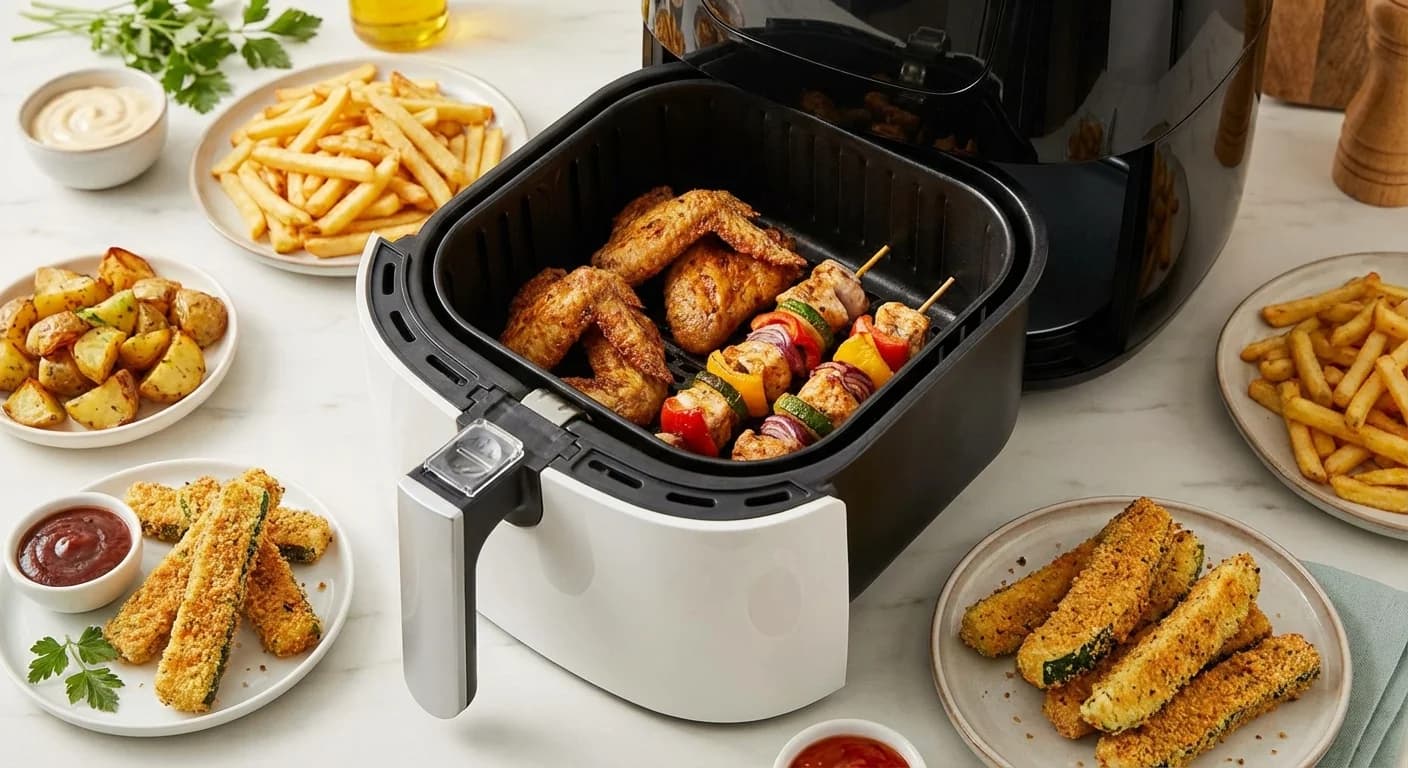
Your air fryer has been sitting on the counter for three months. You've used it twice—once for frozen fries (came out great), once for chicken that somehow burned on the outside and stayed raw inside (disaster). Now it's just expensive counter clutter, and you're not sure why everyone raves about these things.
Key Takeaways
- Air fryers cook 20-30% faster than conventional ovens
- Use 70-80% less oil than deep frying for crispy results
- Don't overcrowd the basket—air circulation is essential
- Shake or flip halfway through for even cooking
- Start with simple recipes to build confidence before complex meals
Air fryers aren't magic, but they're also not complicated. The problem isn't the machine—it's that most people don't understand how they work or where to start. Once you learn a few basic principles and try a handful of foolproof recipes, you'll wonder how you ever lived without it.
In this guide, I'll walk you through exactly how air fryers work, 20 beginner-friendly recipes that actually turn out right, and the techniques that make the difference between success and burnt food.
How Air Fryers Actually Work
An air fryer is essentially a small, powerful convection oven. A heating element warms the air, and a fan circulates that hot air around your food at high speed. This creates the Maillard reaction (browning) and evaporates surface moisture, giving you crispy exteriors without submerging food in oil.
Why They Cook Faster The compact space and high-speed air circulation mean food cooks 20-30% faster than in a conventional oven. What takes 25 minutes at 400°F in your oven might only need 15-18 minutes in an air fryer.
Why They're Healthier Traditional fried chicken uses 2-3 cups of oil. Air-fried chicken uses 1-2 tablespoons—a massive reduction in fat and calories while delivering similar crispy results.
The Catch Air fryers work best for foods that benefit from dry heat and crispiness. They're not ideal for delicate batters, large roasts, or anything that needs gentle, moist cooking. Know the limits and you'll love the machine.
Air Fryer vs. Other Cooking Methods
Here's how air frying stacks up:
| Method | Time | Oil Needed | Texture | Cleanup |
|---|---|---|---|---|
| Air Fryer | 15-20 min ✓ | 1-2 tbsp ✓ | Crispy ✓ | Easy ✓ |
| Deep Frying | 10-15 min ✓ | 2-3 cups | Very crispy ✓ | Hard |
| Oven Roasting | 25-35 min | 2-3 tbsp | Crispy | Medium |
| Pan Frying | 15-20 min | 1/4 cup | Crispy | Medium |
| Microwave | 5-10 min ✓ | 0 tbsp | Soggy | Easy |
When to Use Air Fryer:
- Reheating leftovers (better than microwave)
- Cooking frozen foods (fries, nuggets, wings)
- Small portions (1-4 servings)
- Quick weeknight proteins (chicken, fish, pork chops)
When NOT to Use Air Fryer:
- Large portions (feeding 6+ people)
- Wet batters (they drip through the basket)
- Large roasts (won't fit or cook evenly)
- Delicate foods that need moisture (most seafood)
20 Beginner Air Fryer Recipes
Start Here: The Basics (5 recipes)
1. Frozen French Fries The easiest recipe to build confidence. No prep needed—just dump frozen fries in basket, set to 400°F for 15-18 minutes, shake halfway. They'll come out crispier than oven-baked.
2. Chicken Wings Pat wings dry, toss with 1 tbsp oil and seasoning, air fry at 380°F for 25 minutes, flipping halfway. Crispy skin, juicy inside. Toss with buffalo or BBQ sauce after cooking.
3. Bacon Lay strips in single layer, 400°F for 8-10 minutes. No flipping needed. Perfect bacon with zero splatter cleanup.
4. Toast Place bread directly in basket, 400°F for 3-4 minutes. Faster than a toaster and gives you more control over doneness.
5. Roasted Vegetables Toss broccoli, Brussels sprouts, or cauliflower with oil and salt, 375°F for 12-15 minutes, shaking halfway. Crispy edges, tender centers.
Proteins (7 recipes)
6. Chicken Breasts Pound to even thickness, season with salt, pepper, garlic powder. Air fry at 375°F for 12-15 minutes, flipping halfway. Internal temp should hit 165°F.
7. Salmon Fillets Season with salt, pepper, lemon, 400°F for 8-10 minutes. No flipping needed. Skin gets crispy, fish stays moist.
8. Pork Chops 1-inch thick chops, seasoned simply, 375°F for 12-15 minutes, flipping halfway. Aim for 145°F internal temp.
9. Meatballs Frozen or homemade, 375°F for 10-12 minutes, shaking once. They brown evenly without rolling around a pan.
10. Steak 1-inch ribeye or sirloin, 400°F for 10-14 minutes for medium-rare (flipping halfway). Let rest 5 minutes before slicing.
11. Shrimp Toss with oil, garlic, and paprika, 400°F for 5-7 minutes, shaking halfway. Fast, easy, and perfect every time.
12. Turkey Burgers Form patties, season, 375°F for 12-15 minutes, flipping halfway. They stay moist and develop a nice crust.
Vegetables and Sides (5 recipes)
13. Sweet Potato Fries Cut into 1/4-inch sticks, toss with 1 tbsp oil, 400°F for 15-18 minutes, shaking twice. Crispy outside, fluffy inside.
14. Brussels Sprouts Halve, toss with oil and salt, 375°F for 15 minutes, shake once. The edges get beautifully crispy.
15. Asparagus Toss with oil, garlic, parmesan, 400°F for 8-10 minutes. Quick, healthy side dish.
16. Zucchini Chips Slice thin, toss with oil and seasoning, 375°F for 10-12 minutes, flipping halfway. Healthy snack or side.
17. Corn on the Cob Brush with butter, 400°F for 12-15 minutes, rotating halfway. Sweet, charred kernels.
Quick Meals and Snacks (3 recipes)
18. Quesadilla Assemble quesadilla, place in basket, 350°F for 5-6 minutes, flipping halfway. Cheese melts perfectly, tortilla crisps up.
19. Egg Rolls or Spring Rolls Frozen or homemade, 375°F for 10-12 minutes, flipping halfway. Crispy without deep frying.
20. Reheated Pizza Place slice in basket, 350°F for 3-5 minutes. Crust gets crispy again, cheese melts. Better than microwave by a mile.
Essential Air Fryer Techniques
Master these basics and you'll rarely have failures:
Technique 1: Don't Skip Oil
Even though it's called an "air fryer," most foods need a light coating of oil. Use a spray bottle or toss food in a bowl with 1-2 tablespoons of oil. This helps with:
- Crispiness
- Browning
- Preventing sticking
- Flavor
Technique 2: Don't Overcrowd
Air needs to circulate around food. If the basket is packed, you'll get steamed food instead of crispy. Leave space between items. Cook in batches if needed.
Technique 3: Shake or Flip Halfway
Most recipes benefit from shaking the basket or flipping food at the halfway point. This ensures even cooking and browning on all sides.
Technique 4: Preheat for Best Results
Just like an oven, preheating helps. Most air fryers heat up in 3-5 minutes. Preheat at your cooking temperature, then add food.
Technique 5: Check Earlier Than Recipe Says
Air fryers vary by brand and size. Start checking 2-3 minutes before the recipe time. Better to check early than burn your food.
Technique 6: Use Parchment Liners for Easy Cleanup
Perforated parchment liners (designed for air fryers) make cleanup easier and prevent sticking. Don't use regular parchment—it can blow around from the fan.
Temperature and Time Guide
Use this as your starting point:
Common Foods
| Food | Temperature | Time | Notes |
|---|---|---|---|
| Frozen fries | 400°F | 15-18 min | Shake halfway |
| Chicken breast | 375°F | 12-15 min | Flip halfway, check 165°F |
| Salmon | 400°F | 8-10 min | No flip needed |
| Pork chops | 375°F | 12-15 min | Flip halfway, check 145°F |
| Steak (1") | 400°F | 10-14 min | Flip halfway |
| Wings | 380°F | 25 min | Flip halfway |
| Vegetables | 375°F | 12-15 min | Shake halfway |
| Bacon | 400°F | 8-10 min | No flip needed |
General Rules:
- Lower temp (350-375°F): Thicker items, more delicate foods
- Higher temp (400-425°F): Thin items, frozen foods, maximum crispiness
How myrecipe Helps
Once you start air frying regularly, you'll accumulate favorites—but also tweaks. Maybe your air fryer runs hot and needs 2 minutes less. Maybe you found the perfect seasoning combo for wings.
With myrecipe, you can save air fryer recipes, add notes about timing adjustments for your specific model, and tag them by type (protein, vegetable, snack). Create an "Air Fryer Favorites" collection so your proven recipes are always one click away.
Share your collection with family so anyone can use the air fryer without asking "how long does chicken take?" Your notes and adjustments travel with the recipe.
Common Mistakes to Avoid
Mistake 1: Using Wet Batters
Why it happens: You try to air fry something that needs deep frying, like tempura or beer-battered fish. The fix: Use breadcrumb coatings instead. Wet batters drip through the basket and make a mess. Stick to dry coatings: breadcrumbs, panko, or seasoned flour.
Mistake 2: Not Preheating
Why it happens: Impatience or not knowing it matters. The fix: Preheat 3-5 minutes. It ensures even cooking and better texture. Most air fryers have a preheat function or you can just run it empty.
Mistake 3: Opening the Basket Too Often
Why it happens: Nervousness about burning food. The fix: Resist the urge. Every time you open it, heat escapes and cooking slows. Check once at halfway point, then again near the end.
Mistake 4: Not Drying Food First
Why it happens: Skipping the prep step. The fix: Pat proteins dry with paper towels before seasoning. Moisture on the surface creates steam, preventing crispiness.
Mistake 5: Cooking Everything at 400°F
Why it happens: Assuming higher heat = faster and better. The fix: Delicate items (fish, vegetables) do better at 350-375°F. High heat isn't always the answer. Match temperature to the food.
Frequently Asked Questions
Yes, frozen foods are perfect for air fryers. No need to thaw. Most frozen items (fries, nuggets, wings) just need 15-20 minutes at 400°F. Check package directions and reduce time by 20-30%.
For best results, yes—but just a small amount (1-2 tbsp). Toss food in a bowl with oil or use a spray bottle. Some frozen foods already have oil and don't need more.
Most baskets and trays are dishwasher-safe. For hand washing, soak in warm soapy water, scrub with a soft sponge. Wipe the interior with a damp cloth. Don't use abrasive scrubbers—they damage nonstick coating.
No. Air needs to circulate around each piece. Stacking leads to uneven cooking. If you have more food than fits in one layer, cook in batches.
For 1-2 people: 2-3 quart. For 3-4 people: 5-6 quart. For 5+ people: 8+ quart or consider a dual-basket model. Bigger is usually better—you can cook small batches in a large fryer, but not the reverse.
Organize Your Air Fryer Recipes
Save your favorites, note your model's quirks, and build your cooking confidence.
Start FreeConclusion
Air fryers aren't a replacement for every cooking method, but for quick, crispy, low-oil meals, they're unbeatable. Master the basics—proper oil use, don't overcrowd, shake halfway—and you'll get consistent results every time.
Key takeaways:
- Air fryers cook 20-30% faster than ovens with 70-80% less oil
- Don't overcrowd the basket—air circulation is essential
- Use a little oil for best crispy results
- Shake or flip halfway through cooking
- Start with simple recipes to build confidence
Ready to master your air fryer? Start free with myrecipe and save your go-to recipes, track what works, and finally use that countertop appliance every day.
About myrecipe
myrecipe helps families save, organize, and share their favorite recipes in one place. Plan meals, create shopping lists, and preserve your culinary traditions.
Start Organizing Recipes