Baking vs Roasting Explained: Understanding the Key Differences
"Bake at 350°F" and "roast at 425°F"—but what's really the difference? Both techniques use dry oven heat, yet they produce distinctly different results. Understanding when and how to use each method transforms your cooking, helping you achieve properly crispy vegetables, perfectly risen cakes, and everything in between. This guide breaks down the technical differences, best applications, and techniques for both baking and roasting.
The Technical Difference
At the most basic level:
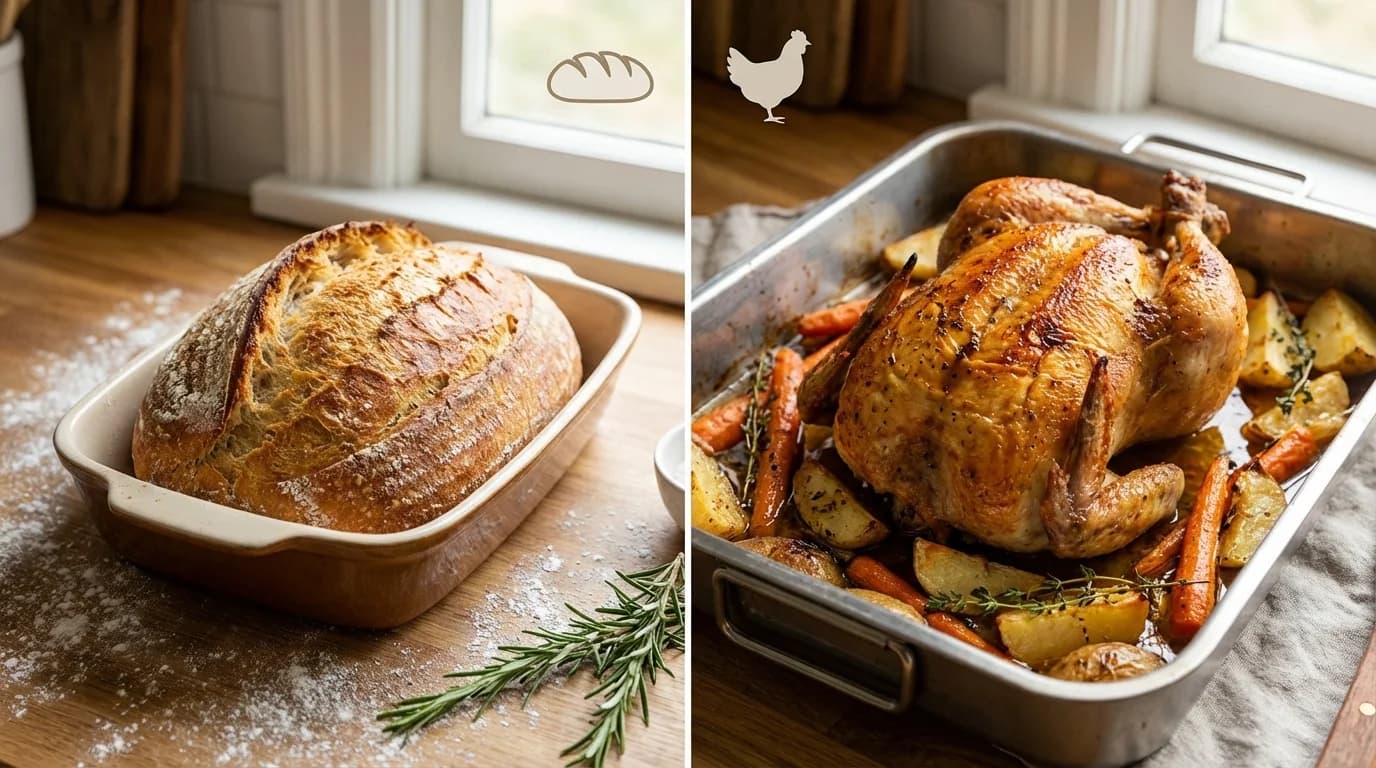
Baking is cooking food with dry heat in an enclosed space (an oven), typically at moderate temperatures (300-375°F), and is generally used for foods with liquid batters or doughs that need to set and rise.
Roasting is cooking food with dry heat in an enclosed space (an oven), typically at higher temperatures (375-500°F), and is generally used for solid foods that you want to develop caramelization and a browned exterior.
The line between them can be blurry—both use the same cooking mechanism (oven heat) but differ primarily in:
- Temperature
- The type of food being cooked
- The desired outcome
Temperature Ranges
While there's overlap, each technique has typical temperature ranges:
Baking Temperatures:
- Low baking: 300-325°F (slow-baking bread, meringues)
- Moderate baking: 325-375°F (most cakes, cookies, casseroles)
- Hot baking: 375-425°F (pizza, quick breads, some pastries)
Roasting Temperatures:
- Low roasting: 275-325°F (slow-roasted meats, large cuts)
- Moderate roasting: 350-400°F (whole chicken, turkey)
- High roasting: 400-500°F (vegetables, quick-cooking proteins)
The overlap zone (350-400°F) is where terminology gets fuzzy. A chicken can be "baked" or "roasted" at 375°F—in common usage, "roasted" sounds more appealing, so that's typically what we call it.
What Do You Bake?
Baking is the technique of choice for foods that:
- Start as batters, doughs, or mixtures
- Need to set or rise during cooking
- Require moderate, even heat
- Shouldn't develop heavy browning or crust
Common Baked Foods:
Breads: Sandwich bread, rolls, baguettes, focaccia
Cakes: Layer cakes, sheet cakes, cupcakes, pound cakes
Cookies: Chocolate chip, sugar cookies, biscotti
Pastries: Croissants, pies, tarts, danishes
Casseroles: Lasagna, mac and cheese, baked ziti
Quick breads: Muffins, banana bread, cornbread, scones
Structured dishes: Quiche, frittatas, soufflés
Baked goods typically have:
- A specific structure that forms during cooking
- A tender or fluffy interior
- A golden (not deeply browned) exterior
What Do You Roast?
Roasting is the technique of choice for foods that:
- Are solid pieces (not batters)
- Benefit from caramelization and browning
- Can withstand higher temperatures
- You want crispy exteriors on
Common Roasted Foods:
Vegetables: Root vegetables, Brussels sprouts, broccoli, cauliflower, squash (see our complete roasting vegetables guide)
Meats: Whole chicken, turkey, beef roast, pork loin, lamb
Poultry parts: Chicken thighs and legs, duck
Fish: Whole fish, thick fish steaks
Nuts: Almonds, cashews, pecans (though sometimes called "toasting")
Seeds: Pumpkin seeds, sunflower seeds
Roasted foods typically have:
- Caramelized, golden-brown exteriors
- Crispy or crusty surfaces
- Concentrated, intensified flavors
- Some char or browning
The Science Behind the Difference
Baking Science:
Moderate heat allows:
- Maillard reaction to proceed gently, creating golden color without burning
- Starch gelatinization in batters and doughs, creating structure
- Protein coagulation at controlled rates, preventing toughness
- Leavening agents to work properly, creating rise
Baking is about transforming liquid batters or pliable doughs into structured, edible products. The heat needs to be controlled and even to prevent burning exteriors while raw interiors remain.
Roasting Science:
Higher heat promotes:
- Caramelization of natural sugars, creating sweet, complex flavors
- Maillard reaction happening more rapidly, developing deep browning
- Moisture evaporation from surfaces, creating crispy textures
- Concentrated flavors as water content reduces
Roasting is about transforming solid foods by developing their exterior while cooking the interior, creating contrasts between crispy outsides and tender insides.
Temperature and Timing Guidelines
Baking Guidelines:
Delicate items (sponge cakes, meringues): 300-325°F, longer time
- Even, gentle heat prevents cracking and overdrying
- Structure develops slowly and evenly
Standard baked goods (most cakes, cookies): 350-375°F, moderate time
- The "Goldilocks zone" for most home baking
- Adequate heat for browning without burning
Quick bakes (pizza, some breads): 400-475°F, short time
- High heat for rapid rise and browning
- Short cooking time prevents drying out
Roasting Guidelines:
Large, tough cuts (whole turkey, prime rib): 275-325°F, long time
- Low, slow heat for even cooking to the center
- Minimal risk of drying out the exterior
Medium roasts (whole chicken, pork loin): 350-400°F, moderate time
- Balanced approach: cooked interior, browned exterior
- Most versatile range
Quick roasts (vegetables, fish, thin cuts): 400-500°F, short time
- High heat for rapid caramelization
- Short time prevents overcooking
Practical Applications and When to Use Each
Use Baking When:
The food has no defined shape: Batters and doughs need the baking process to create structure. You can't "roast" cake batter—it would be a disaster.
Even cooking is critical: Delicate items like soufflés or custards need even, moderate heat throughout to cook properly without curdling or collapsing.
You want a tender, not crispy, result: Casseroles, lasagna, and baked pasta dishes should be tender and cohesive, not crispy.
Following traditional terminology: Some foods are "baked" by convention, even if they could technically be roasted (baked chicken, baked potatoes).
Use Roasting When:
You want caramelization: The natural sugars in vegetables and meat benefit from the higher heat of roasting, creating deeper, more complex flavors.
Crispy exterior is desired: Roasted vegetables need high heat to evaporate surface moisture and create that appealing crispy edge.
Working with solid pieces: Whole chickens, beef roasts, or vegetable chunks are perfect for roasting—they're already structured and benefit from browning.
Time is limited: High-heat roasting cooks faster than moderate baking for many foods.
Technique Tips for Perfect Baking
Preheat Properly
Always preheat your oven fully before baking. Putting batter in a cold or warming oven disrupts the chemical reactions that create rise and structure.
Use the Right Pan
- Dark pans absorb more heat and can over-brown bottoms
- Light, shiny pans reflect heat for more even baking
- Glass pans conduct heat differently—reduce oven temp by 25°F
Don't Open the Door
Opening the oven during baking drops the temperature and disrupts delicate items like cakes and soufflés. Only open when checking for doneness near the expected finish time.
Rotate Halfway Through
Most ovens have hot spots. Rotating pans 180° halfway through baking ensures even browning.
Use an Oven Thermometer
Home ovens are notoriously inaccurate. An oven thermometer tells you the real temperature, allowing you to adjust accordingly.
Technique Tips for Perfect Roasting
High Heat, Proper Spacing
Don't overcrowd the pan. Vegetables and meats need space for air circulation and moisture evaporation. Crowding causes steaming instead of roasting.
Preheat the Pan
For extra-crispy results, preheat the baking sheet. When food hits the hot surface, it immediately starts browning.
Use Adequate Fat
A thin coating of oil promotes browning and prevents sticking. Too little = sticking; too much = greasy results.
Flip or Stir
Turn vegetables or flip meats halfway through roasting for even browning on all sides.
Finish with High Heat
For meats, you can start at a moderate temperature for even cooking, then crank the heat to 450-500°F for the last 10-15 minutes to crisp the skin.
Learn more detailed roasting techniques in our roasting vegetables guide.
Can You Bake and Roast Simultaneously?
Yes, but with caveats:
Temperature compatibility: Both items need to cook at similar temperatures. Vegetables roasting at 425°F and cookies baking at 350°F don't work together.
Timing alignment: Items should finish around the same time, or you need to add/remove items mid-cook.
Flavor consideration: Roasting fish while baking a cake might result in fishy-tasting dessert. Separate these by several hours or clean the oven between.
Oven space: Don't block airflow. Leave space between pans for heat circulation.
Position matters: Roasting typically works best on upper racks (closer to heat source), while baking prefers middle racks (even heat).
Common Terminology Quirks
Some foods defy strict categorization:
"Baked chicken" vs "roasted chicken": Technically the same process. "Roasted" sounds more appealing and suggests better browning.
"Roasted nuts" vs "toasted nuts": Often used interchangeably, though "toasted" sometimes refers to stovetop cooking.
"Baked potato" vs "roasted potato": Whole potatoes are "baked"; cut potatoes are "roasted"—but it's arbitrary.
"Baked fish" vs "roasted fish": Same process, different words. "Roasted" implies higher heat and more browning.
The bottom line: Don't stress too much about terminology. Focus on technique and temperature for the result you want.
Adapting Recipes Between Baking and Roasting
Can You Bake at Roasting Temperatures?
Yes, for some items:
- Pizza bakes at 450-500°F successfully
- Some breads benefit from high-heat starts
- Quick breads can handle 400°F
No for others:
- Delicate cakes will burn on the outside before cooking inside
- Custards will curdle
- Cookies will burn
Can You Roast at Baking Temperatures?
Yes, always: Lower temperatures just take longer and produce less browning. This is often desirable:
- Slow-roasted tomatoes at 300°F develop concentrated flavor
- Low-roasted chicken (325°F) stays more moist
- Roasting vegetables at 375°F instead of 450°F reduces burning risk
The tradeoff is time and less caramelization.
Special Cases and Exceptions
Convection Baking vs. Roasting
Convection (fan-assisted) ovens circulate air:
- Reduces cooking time by ~25%
- Promotes more even browning
- Particularly beneficial for roasting
- For baking, can dry out delicate items
General rule: Reduce temperature by 25°F when using convection, or reduce time by 25%.
Broiling: The Roasting Extreme
Broiling is roasting taken to the extreme—intense, direct heat from above. Use for:
- Quick charring and browning
- Finishing dishes with crispy tops
- Melting cheese
- See our grilling temperatures guide for related techniques
Choosing the Right Technique for Your Food
Ask yourself:
- What's the starting state? Batter/dough = bake; solid food = roast
- What texture do I want? Tender throughout = bake; crispy outside = roast
- How much time do I have? Limited time = high-heat roast; plenty of time = either
- What does the recipe say? Unless you understand the science, follow the recipe
When in doubt, moderate temperatures (350-375°F) work for most foods and minimize the risk of burning or undercooking.
Conclusion
The difference between baking and roasting comes down to temperature, food type, and desired outcome. Baking uses moderate heat to transform batters and doughs into structured foods with tender textures. Roasting uses higher heat to caramelize and brown solid foods, creating crispy exteriors and concentrated flavors.
Both techniques are essential in a complete cooking repertoire. Master the fundamentals—proper temperatures, adequate preheating, correct pan selection, and appropriate timing—and you'll achieve excellent results whether you're baking cookies or roasting chicken.
Don't get hung up on strict definitions or terminology. Focus on understanding what each technique does and choosing the approach that delivers the results you want. With practice, you'll develop intuition for when to bake, when to roast, and how to adjust temperatures and times to achieve perfection every time.
Whether you're preparing quick weeknight dinners or elaborate weekend feasts, understanding these fundamental cooking methods empowers you to cook with confidence and creativity.
About myrecipe
myrecipe helps families save, organize, and share their favorite recipes in one place. Plan meals, create shopping lists, and preserve your culinary traditions.
Start Organizing Recipes