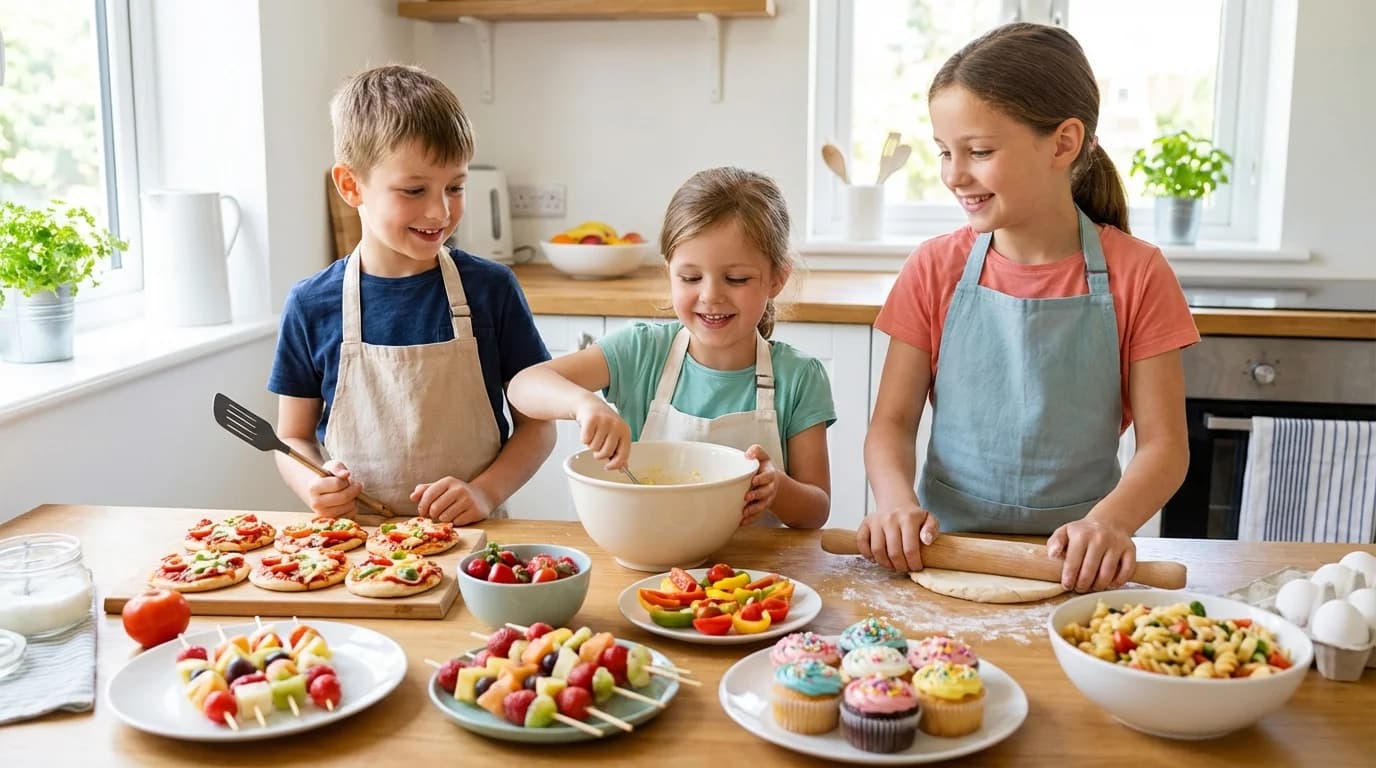
30 Kids Cooking Recipes Easy Enough for Beginners (Ages 5-12)
"Can I help cook dinner?" should be met with "Yes!" not panic. Teaching kids to cook builds confidence, math skills, independence, and—bonus—future adults who can feed themselves.
These 30 easy recipes are designed for kids to make with minimal adult help, organized by age and skill level. From no-cook snacks to full meals, there's something for every young chef.
Why Teaching Kids to Cook Matters
Life skills: Cooking is essential. Kids who learn young become self-sufficient adults.
Academic benefits: Cooking teaches math (measuring), reading (following recipes), science (chemical reactions), and executive function (planning, sequencing).
Confidence: "I made this myself!" is powerful.
Healthy eating: Kids who cook are more likely to try new foods and understand nutrition.
Family bonding: Cooking together creates memories and traditions.
Future independence: Teenagers who can cook won't rely on takeout or instant ramen exclusively.
Kitchen Safety Rules (Ages 5+)
Before starting:
- Wash hands (sing "Happy Birthday" twice while scrubbing)
- Tie back long hair
- Roll up sleeves
- Read entire recipe first
- Get adult permission and supervision level
During cooking:
- Stay in kitchen (don't walk away from stove)
- Keep handles turned inward
- Use oven mitts for hot items
- Clean up spills immediately (slip hazard)
- Ask for help if unsure
Tool safety by age:
- Ages 5-7: Plastic knives, blunt spreaders, hand mixers (supervised)
- Ages 8-10: Butter knives, peelers, can openers, microwave
- Ages 11+: Sharp knives (with training), stove (supervised), oven
30 Easy Kids Cooking Recipes
No-Cook Recipes (Ages 5-7: Great Starting Point)
1. Ants on a Log
Celery sticks, peanut butter, raisins. Kids spread PB, press raisins on top.
Skills learned: Spreading, fine motor control
2. Fruit and Yogurt Parfait
Layer yogurt, granola, berries in clear cup. Beautiful and delicious.
Skills: Layering, measuring, presentation
3. No-Bake Energy Bites
Mix oats, peanut butter, honey, chocolate chips. Roll into balls.
Recipe: 1 cup oats, ½ cup PB, ⅓ cup honey, ⅓ cup chocolate chips Skills: Mixing, rolling, measuring
4. Trail Mix
Combine cereal, nuts, dried fruit, chocolate chips in bowl. Portion into bags.
Skills: Measuring, mixing, portioning
5. Peanut Butter Banana Sushi
Spread PB on tortilla, place banana in center, roll up, slice into rounds.
Skills: Spreading, rolling, using knife (adult supervision)
6. Cheese and Cracker Plate
Arrange crackers, cheese slices, fruit, vegetables on plate. Food art!
Skills: Arranging, presentation, creativity
7. Hummus Veggie Wraps
Spread hummus on tortilla, add cucumbers and carrots, roll up.
Skills: Spreading, rolling, assembly
8. Smoothie
Blend fruit, yogurt, milk. Push blender button (with supervision).
Recipe: 1 banana, ½ cup berries, ½ cup yogurt, ½ cup milk Skills: Measuring, using blender, following steps
Simple Cooking Recipes (Ages 7-9: Using Heat)
9. Scrambled Eggs
Crack eggs in bowl, whisk, cook in pan (adult supervises stove).
Skills: Cracking eggs, whisking, stovetop cooking basics
10. Quesadilla
Cheese between tortilla, cook in pan or microwave until melted.
Skills: Using pan or microwave, flipping (with help), timing
11. Grilled Cheese
Butter bread, add cheese, cook in pan until golden.
Skills: Spreading, pan cooking, flipping
12. Instant Oatmeal with Toppings
Microwave instant oats, add fruit, honey, cinnamon.
Skills: Microwave safety, following directions, customizing
13. English Muffin Pizzas
Spread sauce on English muffin, add cheese and toppings, broil or microwave.
Skills: Spreading, topping, using oven (with supervision)
14. Pancakes from Mix
Follow package directions, pour batter on griddle (adult supervises).
Skills: Reading directions, measuring, pouring, timing
15. French Toast
Dip bread in egg mixture, cook in pan. Adult supervises stovetop.
Recipe: 2 eggs, ¼ cup milk, cinnamon. Whisk, dip bread, cook 3 min per side. Skills: Whisking, dipping, timing
16. Mac and Cheese (Box)
Boil water (supervised), add pasta, drain (adult helps), add cheese packet.
Skills: Boiling, timing, draining safely, mixing
17. Baked Potatoes
Wash potato, poke with fork, microwave 5-7 minutes. Add toppings.
Skills: Microwave cooking, timing, topping creatively
Baking Projects (Ages 8-10: Following Recipes)
18. Chocolate Chip Cookies
Measure, mix, scoop onto sheet, bake. Classic recipe builds confidence.
Skills: Measuring, mixing, scooping, oven use (supervised)
19. Brownies from Mix
Follow box instructions. Hard to mess up, always delicious.
Skills: Following directions, mixing, oven safety
20. Muffins (Banana or Blueberry)
Mix wet and dry ingredients separately, combine, bake in muffin tin.
Recipe: 2 mashed bananas, 1 egg, ⅓ cup oil, 1½ cups flour, ½ cup sugar, 1 tsp baking soda Skills: Mashing, mixing, filling muffin cups, testing doneness
21. Rice Krispie Treats
Melt butter and marshmallows (supervision), stir in cereal, press into pan.
Skills: Melting, stirring, pressing evenly
22. No-Bake Cookies
Boil sugar and butter (supervision), add oats and PB, drop onto waxed paper.
Skills: Stovetop cooking, dropping cookies, patience (letting them set)
23. Homemade Pizza Dough
Mix yeast, flour, water. Knead, let rise, roll out, top, bake.
Skills: Kneading, patience (rising time), rolling dough
Full Meals (Ages 10-12: Independent Cooking)
24. Spaghetti with Meat Sauce
Boil pasta, brown ground beef, add jar sauce, simmer. Complete meal!
Skills: Multi-tasking, stovetop safety, timing multiple components
25. Tacos
Brown ground beef with seasoning, warm tortillas, set up toppings bar.
Skills: Browning meat, seasoning, meal assembly
26. Chicken Stir-Fry
Cut chicken (supervision), stir-fry with veggies, add sauce, serve over rice.
Skills: Knife skills, stir-frying, coordinating meal
27. Homemade Chicken Nuggets
Cut chicken, set up breading station (flour, egg, breadcrumbs), bake.
Skills: Breading technique, baking, safe meat handling
28. Fried Rice
Scramble eggs, set aside. Fry rice with veggies, soy sauce, add eggs back.
Skills: Using leftover rice, multi-step cooking, seasoning
29. Chili
Brown beef, add beans, tomatoes, seasonings. Simmer 30 minutes.
Skills: Full meal from scratch, layering flavors, simmering
30. Breakfast for Dinner
Scramble eggs, cook bacon or sausage, make toast. Coordinate timing.
Skills: Cooking multiple items, timing so everything's ready together
Recipe Complexity by Age
Ages 5-7: Helpers
Can do with supervision:
- Mix ingredients in bowl
- Spread soft spreads
- Tear lettuce
- Wash vegetables
- Press cookie cutters
- Pour measured ingredients
- Shake salad dressing in jar
Best recipes: #1-8 (no-cook recipes)
Ages 8-10: Junior Chefs
Can do with minimal help:
- Crack eggs
- Peel bananas and hard-boiled eggs
- Cut soft foods with butter knife
- Measure ingredients
- Grease pans
- Set timers
- Read simple recipes
Best recipes: #1-23 (no-cook through baking)
Ages 11-12: Independent Cooks
Can do alone (after training):
- Use sharp knives (with proper training)
- Use stove and oven independently
- Follow complete recipes
- Multi-task (pasta + sauce simultaneously)
- Improvise and adjust seasonings
Best recipes: All 30, plus adapting family recipes
Teaching Tips for Parents
Start simple: Master spreading before moving to cutting. Microwave before stove.
Embrace the mess: It's learning. Put down newspaper, wear aprons, expect flour everywhere.
Don't hover: Give space to problem-solve. Intervene only for safety.
Praise effort, not perfection: "You worked so hard on this!" vs. "This is perfect!"
Let them fail safely: Burnt toast teaches timing. Too-salty soup teaches measuring.
Make it routine: "Saturday mornings you make pancakes" creates consistent practice.
Their recipes, their way: Let them customize. Rainbow sprinkles on everything? Sure.
Involve in planning: "What should we make this week?" builds investment.
The Weekly Cooking Lesson Plan
Week 1: No-cook recipe (parfait or trail mix) Week 2: Simple assembly (quesadilla or wrap) Week 3: Microwave cooking (oatmeal or baked potato) Week 4: Stovetop with supervision (scrambled eggs) Week 5: Simple baking (box brownies) Week 6: Recipe reading (cookies from recipe card) Week 7: Full meal with help (pasta with sauce) Week 8: Full meal independently (age-appropriate)
By Month 3: Kid cooks one meal weekly independently (age-appropriate complexity).
Setting Up a Kid-Friendly Kitchen
Low drawer with kid utensils:
- Plastic mixing bowls
- Measuring cups and spoons
- Wooden spoons and silicone spatulas
- Whisks
- Cookie cutters
Kid step stool: Sturdy, non-slip. They need to reach counter safely.
Kid-safe knives (ages 8+): Nylon knives or kids' cooking knife sets.
Aprons: Kid-sized aprons make them feel official.
Recipe cards at eye level: Laminated simple recipe cards they can reference.
Accessible ingredients: Low shelf with frequently used items (flour, sugar, oats).
Common Cooking Challenges and Solutions
"They just want to lick the spoon" Make separate "tasting batter" so they can lick without contaminating. Or pre-mix extra for licking.
"Everything takes three times longer" Yes. Budget extra time. It's an investment in their skills. Choose days you're not rushed.
"They lose interest halfway" Normal for younger kids. Let them step away, call back for "fun parts" (mixing, decorating).
"Measurements are... approximate" Baking teaches precision. If cookies don't turn out because measurements were off, that's a natural consequence lesson.
"Sibling fighting over tasks" Assign clear roles. "You measure, you mix, I crack eggs." Or separate recipes—everyone makes their own pizza.
Making Cooking Educational
Math:
- Measuring (fractions: ½ cup, ¼ teaspoon)
- Doubling/halving recipes
- Temperature and time
- Counting (12 cookies, 6 muffins)
Reading:
- Following recipe directions
- Reading ingredient lists
- Understanding sequence words (first, next, then, finally)
Science:
- States of matter (solid butter → melted → solid again)
- Chemical reactions (baking soda + vinegar)
- Heat transfer
- Emulsification (oil and vinegar separate)
Executive Function:
- Planning (gathering ingredients first)
- Sequencing (step-by-step)
- Time management
- Problem-solving (what if I don't have this ingredient?)
Budget-Friendly Kids Cooking
Use everyday ingredients: Most recipes use pantry staples. No special purchases needed.
Practice recipes are cheap:
- Scrambled eggs: $0.50
- Quesadilla: $0.75
- Pancakes: $1
- Cookies from scratch: $3 (makes 24)
Learn from mistakes: Burnt batch of cookies? That's $1-2 of ingredients, not $20 of takeout. Acceptable learning cost.
Double batch, freeze extras: If making cookies, make double. Freeze dough or baked cookies. More practice, more food.
See budget grocery shopping tips for more savings.
When Kids Can Start Cooking for the Family
Age 8-9: One very simple meal weekly (quesadillas, scrambled eggs, toast)
Age 10-11: One moderate meal weekly with supervision (pasta, tacos, stir-fry)
Age 12+: One full meal weekly independently (chosen from family favorites)
By high school: Teens should cook 2-3 family meals weekly and make own breakfasts/lunches.
Independence timeline:
- Age 12: Can make own breakfast
- Age 13: Can make own lunch
- Age 14: Can cook simple family dinner
- Age 15: Can plan, shop, and cook meal
- Age 16+: Fully self-sufficient in kitchen
Cookbooks and Resources for Kids
Great starter cookbooks:
- "The Complete Cookbook for Young Chefs" (America's Test Kitchen Kids)
- "Cooking Class" series (Deanna F. Cook)
- "How to Cook" (Jamie Oliver - has kids section)
- "The Cooking Book" (DK)
Online resources:
- YouTube kids cooking channels (supervised viewing)
- Kid-friendly recipe websites
- Cooking apps designed for kids
Cooking classes:
- Local community centers often offer kids cooking classes
- Libraries sometimes host free cooking programs
- Sur La Table, Williams-Sonoma kids classes
Cultural Cooking: Teaching Heritage Through Food
Make grandma's recipes together: Pass down family food traditions and stories.
Explore world cuisines: Make Italian pizza, Japanese onigiri, Mexican tacos, Indian naan. Geography + cooking!
Holiday traditions: Involve kids in holiday cooking. Cookie decorating, latke frying, challah braiding.
"Around the world" cooking project: Each week, make dish from different country. Learn about culture while cooking.
Dealing with Kid Cook Failures
Burnt food: "What can we learn? Maybe lower temperature or shorter time next time."
Too salty/sweet: "How could we fix this? Add more of everything else to dilute it."
Didn't rise/set properly: "Let's check the recipe. Did we forget an ingredient or step?"
Inedible result: "That's okay! Even professional chefs have failures. Let's order pizza and try again this weekend."
The key: Focus on learning, not perfection. Every mistake teaches something.
Building to Independence
Phase 1 (Ages 5-7): Helper They assist you. Measuring, mixing, stirring under your direction.
Phase 2 (Ages 8-9): Supervised Cook They lead, you supervise closely. They make decisions with your guidance.
Phase 3 (Ages 10-11): Independent with Oversight They work alone, you check in periodically. Available for questions.
Phase 4 (Ages 12+): Fully Independent They plan, shop (with you), cook, and clean up. You eat and compliment!
Final Thoughts
Teaching kids to cook isn't about creating tiny chefs. It's about building confident, capable humans who can feed themselves, understand nutrition, and find joy in creating food.
Start this weekend:
- Ask your kid what they want to learn to make
- Choose age-appropriate recipe from this list
- Block extra time (no rush)
- Let them lead, you supervise
- Eat together and celebrate
The flour on the floor, the eggshells in the batter, the slightly burnt edges—these are all part of the learning process. In five years, your teenager will cook you dinner. In ten years, your college student won't live on ramen. In twenty years, they'll teach their own kids to cook.
It starts with scrambled eggs on a Saturday morning.
Now go teach someone to cook. The kitchen skills (and memories) will last a lifetime.
For more family cooking ideas, check out cooking with kids ideas and family meal planning tips.
About myrecipe
myrecipe helps families save, organize, and share their favorite recipes in one place. Plan meals, create shopping lists, and preserve your culinary traditions.
Start Organizing Recipes