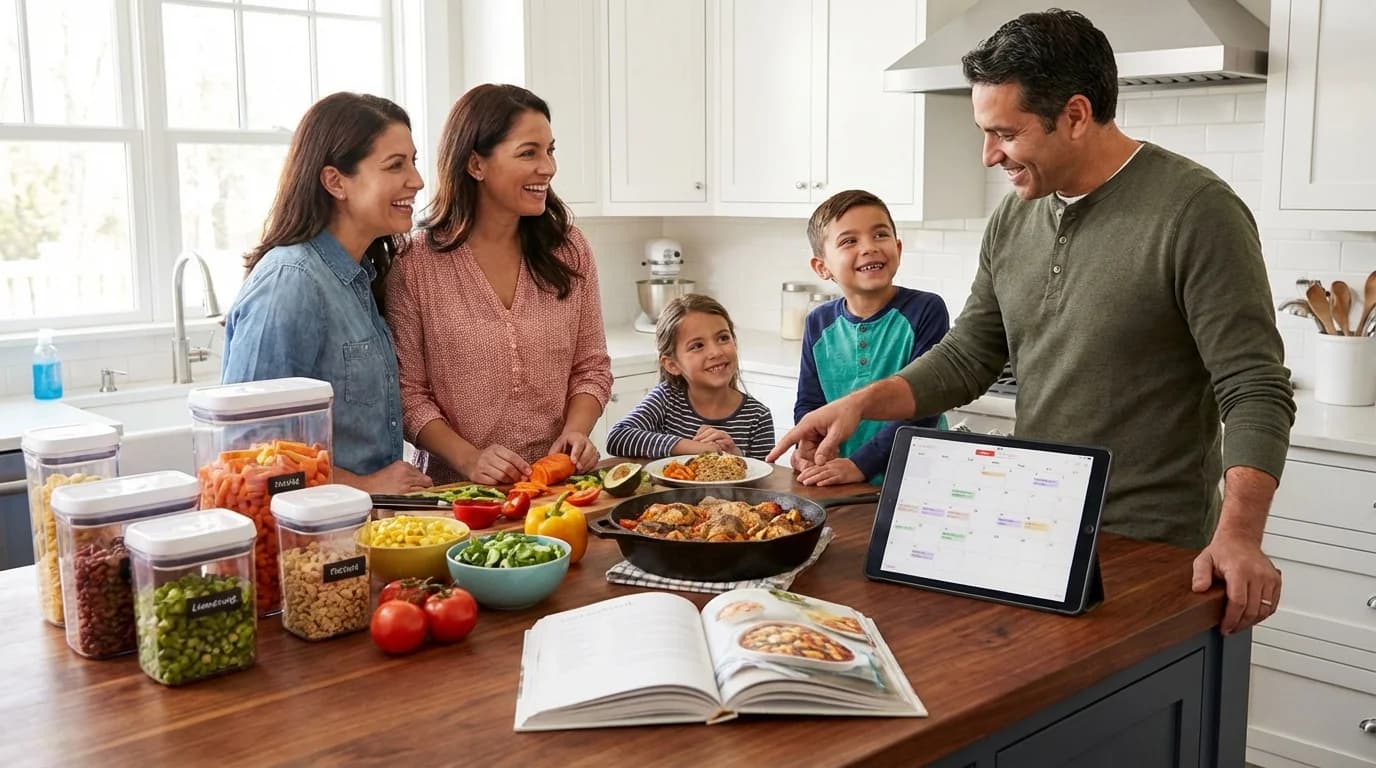
Family Meal Planning Tips: The Complete Guide to Stress-Free Dinners
It's 5:30 PM. Everyone's hungry. You have no idea what's for dinner. The pantry stares back at you, full of random ingredients that don't make a meal. You order takeout. Again.
Sound familiar?
Family meal planning transforms this daily crisis into calm, organized dinners. Less stress, less money spent, healthier eating, and that smug satisfaction of knowing exactly what's for dinner all week.
Why Family Meal Planning Actually Works
Benefits you'll experience:
Time Savings:
- No daily "what's for dinner?" panic
- One grocery trip instead of multiple
- Less time deciding, more time cooking
- Batch prep on weekends
Money Savings:
- 50-70% less takeout spending
- Buy only what you need (less waste)
- Take advantage of sales strategically
- Use ingredients across multiple meals
Health Benefits:
- Control ingredients and portions
- More home-cooked meals
- Less processed food reliance
- Balanced nutrition over the week
Mental Health:
- Reduced decision fatigue
- Less evening stress
- Feeling of control
- Family involvement and bonding
The Basic Family Meal Planning Framework
Step 1: Assess Your Week (10 minutes)
Monday-Friday:
- How many nights cooking at home?
- Any late activities (need quick meals)?
- Night to eat leftovers?
- Special dietary needs this week?
Weekend:
- More elaborate cooking time?
- Meal prep day?
- Eating out planned?
Example weekly structure:
- 5 home-cooked dinners
- 1 leftover night
- 1 eating out/takeout
- 2-3 lunches from leftovers
Step 2: Choose Recipes (15 minutes)
The 5-Recipe Rule: Plan only 5 dinners. The other 2 nights are leftovers or flexible.
Balance your week:
- 2 quick meals (30 min or less)
- 2 moderate effort (45-60 min)
- 1 slow cooker/instant pot (hands-off)
Variety matters:
- Different proteins (chicken, beef, beans, fish)
- Various cuisines (Italian, Mexican, Asian, American)
- Mix of familiar and one new recipe
Sources for recipes:
- Favorites you've made before (70%)
- New recipes to try (30%)
- Pinterest, cookbooks, food blogs
- Ask family for requests
Step 3: Check Your Pantry (5 minutes)
Before shopping, inventory:
- Proteins in freezer
- Canned goods
- Grains and pasta
- Spices and sauces
- Fresh produce (what needs using?)
Base one meal on what you already have. Reduces waste and saves money.
Step 4: Make Shopping List (10 minutes)
Organize by store sections:
- Produce
- Meat/seafood
- Dairy
- Pantry/dry goods
- Frozen
- Other
Check each recipe, write down:
- Ingredients you don't have
- Quantities needed
- Staples running low
Pro tip: Use meal planning apps (Mealime, Plan to Eat) or notes app with template.
Step 5: Shop Once (60-90 minutes)
Shopping strategies:
- Go with a list (resist impulse buys)
- Shop alone if possible (faster, fewer extras)
- Choose one day weekly (Sunday common)
- Check sales ad first, adjust meals if great deals
- Buy in bulk for pantry staples
Stock up sales: If chicken breasts are $1.99/lb (usually $4.99), buy extra and freeze.
Step 6: Prep Ahead (30-90 minutes)
Sunday prep examples:
Minimal (30 min):
- Wash and chop vegetables
- Marinate meat for later in week
- Cook rice or quinoa
- Portion snacks
Moderate (60 min):
- All of above, plus
- Pre-cook ground beef or chicken
- Make one casserole to freeze
- Hard-boil eggs for breakfasts/lunches
Maximum (90 min):
- All of above, plus
- Batch cook 2-3 full meals
- Prep breakfast items (muffins, egg cups)
- Portion individual lunches
The key: Even 15 minutes of prep Sunday saves 45+ minutes during the week.
The Mental Load: Sharing Meal Planning
Common scenario: One person (usually mom) plans, shops, cooks, cleans up. This creates burnout.
Solution: Distribute the load
Partner responsibilities:
- Cooking 2-3 nights weekly
- Choosing recipes for their nights
- Cleaning up after meals
- Grocery shopping (together or alternating)
Kids involvement (by age):
Ages 4-7:
- Choose between 2 dinner options
- Help unload groceries
- Wash vegetables
- Set table
Ages 8-11:
- Pick one recipe weekly
- Help with simple cooking tasks
- Make their own lunch
- Clear and wipe table
Ages 12+:
- Plan and cook one full meal weekly
- Create grocery list for their meal
- Meal prep their school lunches
- Full cleanup after dinner
Family meeting Sunday: 15 minutes together planning week's meals. Everyone has input. Everyone has responsibilities.
Budget-Friendly Meal Planning
Strategies that save money:
Plan around sales: Check weekly grocery ad, plan meals based on what's on sale.
Theme nights:
- Meatless Monday: Beans, eggs, cheese (cheaper proteins)
- Taco Tuesday: Ground beef/turkey, refried beans
- Pasta Wednesday: Budget-friendly, kid-approved
- Slow Cooker Thursday: Cheap cuts, hands-off
- Pizza Friday: Homemade or occasional takeout
Use ingredients multiple ways:
- Rotisserie chicken → Sunday dinner, Monday quesadillas, Tuesday soup
- Ground beef → Tacos Monday, spaghetti Wednesday, chili Friday
- Rice → Side dish Tuesday, fried rice Thursday
Embrace leftovers: Cook double, eat half later in week. Or repurpose:
- Roast chicken → chicken salad sandwiches
- Taco meat → nachos or burrito bowls
- Pasta → pasta salad for lunch
Budget weekly meal plan ($60-75 for family of 4):
- Monday: Spaghetti with meat sauce ($8)
- Tuesday: Bean and cheese burritos ($6)
- Wednesday: Chicken thighs with roasted vegetables ($10)
- Thursday: Leftover chicken quesadillas ($4)
- Friday: Homemade pizza ($9)
- Weekend: Slow cooker chili ($8)
Total: ~$45 for groceries + pantry staples you have = under $60
See family dinner ideas budget for more affordable meals.
Meal Planning for Picky Eaters
The challenge: Family members with different preferences.
Solutions:
Deconstructed meals: Serve components separately so everyone builds their own.
- Taco bar (meat, beans, cheese, toppings separate)
- Pasta bar (pasta, sauce, protein, vegetables each separate)
- Baked potato bar (toppings on the side)
One safe food per meal: Always include one item each picky eater will definitely eat.
New food rule: Try one new food weekly. No pressure to eat it, just present it.
Adult additions: Make base meal kid-friendly, add spicy/strong flavors for adults.
- Kids get plain pasta, adults add red pepper flakes
- Kids get mild tacos, adults add jalapeños
Rotation of favorites: Include 2-3 universally loved meals weekly, try new things other nights.
Check picky eater recipes for more strategies.
Time-Saving Meal Planning Hacks
The Rotation Method: Plan same 15-20 meals monthly. Rotate them. Stops decision paralysis.
Theme nights: Same type of food every week makes planning automatic.
- Monday: Pasta
- Tuesday: Tacos/Mexican
- Wednesday: Chicken
- Thursday: Slow cooker
- Friday: Pizza or easy meal
- Weekend: Bigger family meal
Batch cooking: Double every recipe. Eat half, freeze half for later.
Slow cooker/Instant Pot: Dump ingredients morning, come home to dinner. Minimal active time.
Sheet pan meals: Everything on one pan, bake. Minimal prep and cleanup.
See sheet pan dinners for ideas.
Pre-prepped ingredients: Buy rotisserie chicken, pre-cut vegetables, bagged salads when budget allows. Time is valuable too.
Meal Planning Templates
Template 1: The Simple 5
Week of: [Date]
Monday: [Quick meal] Tuesday: [Moderate meal] Wednesday: [Quick meal] Thursday: [Slow cooker] Friday: [Easy/pizza/takeout] Saturday: [Leftovers or eating out] Sunday: [Family meal/meal prep]
Shopping list: [Add ingredients needed]
Template 2: The Detailed Planner
| Day | Breakfast | Lunch | Dinner | Prep Notes |
|---|---|---|---|---|
| Mon | ||||
| Tue | ||||
| Wed | ||||
| Thu | ||||
| Fri | ||||
| Sat | ||||
| Sun |
Template 3: The Weekly Grid
Print or create in notes app:
WEEK OF: ___________

MONDAY
Dinner: _____________
Sides: ______________
Notes: ______________

TUESDAY
Dinner: _____________
Sides: ______________
Notes: ______________

[Continue for each day]

GROCERY LIST
Produce: ____________
Meat: _______________
Dairy: ______________
Pantry: _____________
Other: ______________
Dealing with Life's Disruptions
What if the plan falls apart?
Sick kid, late meeting, unexpected guests: Have emergency backup meals ready.
Emergency meal ideas:
- Breakfast for dinner (pancakes, eggs, sausage)
- Pasta with jar sauce
- Grilled cheese and soup
- Frozen pizza
- Scrambled eggs and toast
Keep emergency ingredients stocked:
- Pasta and jar sauce
- Eggs
- Bread and cheese (grilled cheese)
- Frozen pizza
- Canned soup
Flexible meal planning: Don't assign meals to specific days. Plan 5 meals, cook whichever fits that day's schedule.
The 80/20 rule: If meal planning works 80% of the time, that's success. Allow flexibility.
Advanced Meal Planning Strategies
Freezer Cooking
Monthly freezer meal prep:
- Spend one Saturday or Sunday
- Make 15-20 freezer meals
- Cook one monthly, minimal daily cooking
Best freezer meals:
- Casseroles
- Soups and stews
- Marinated meats
- Cooked meatballs
- Cookie dough
See freezer meal prep for full guide.
Mix and Match Method
Pre-plan combinations:
- 5 proteins
- 5 carbs/grains
- 5 vegetables
- Mix and match daily
Example: Proteins: Chicken, ground beef, salmon, tofu, beans Carbs: Rice, pasta, potatoes, quinoa, bread Veggies: Broccoli, carrots, salad, green beans, bell peppers
Monday: Chicken + rice + broccoli Tuesday: Ground beef + pasta + salad Wednesday: Salmon + potatoes + green beans
2-Week Meal Rotation
Plan once, repeat: Create 14 different dinners. Cook in same order every two weeks.
Benefits:
- Plan once every two weeks
- Grocery list becomes automatic
- Master your favorite recipes
- Less mental load
Drawback: Less variety, but consistency reduces stress for many families.
Meal Planning Apps and Tools
Free options:
- Google Sheets: Create your own template
- Notes app: Simple weekly list
- Pinterest: Save recipes, create meal plan boards
Paid apps ($5-10/month):
- Plan to Eat: Recipe organizer, meal planner, auto shopping list
- Mealime: Meal plans, recipes, grocery lists
- eMeals: Pre-made meal plans for various diets/budgets
- Paprika: Recipe manager with meal planning
Worth the cost if:
- You value time over money
- Overwhelmed by meal planning
- Want everything in one place
- Use it consistently
Common Meal Planning Mistakes
Mistake 1: Planning too many new recipes Stick to 70% familiar, 30% new. Too many unknowns = overwhelm.
Mistake 2: Overplanning You don't need breakfast, lunch, dinner, and snacks planned. Start with just dinners.
Mistake 3: Being too rigid Life happens. Swap meals or pivot when needed.
Mistake 4: Not involving family Get buy-in from family. They're more likely to eat what they helped choose.
Mistake 5: Planning meals you don't want to cook Be realistic. Tired Tuesday? Plan a 15-minute meal, not a complex recipe.
Mistake 6: Forgetting about schedule Late soccer practice Tuesday? Plan slow cooker or quick meal.
Starting Your Meal Planning Journey
Week 1: Plan 3 dinners Don't try to plan perfectly. Just 3 meals. Build from there.
Week 2: Plan 4-5 dinners Add more as you get comfortable.
Week 3: Add Sunday prep Spend 30 minutes prepping to make weeknights easier.
Week 4: Involve family Get input, assign tasks, make it collaborative.
Month 2: Establish routine Find your rhythm. What day do you plan? Shop? Prep?
Month 3: Refine system By now you know what works. Keep those strategies, drop what doesn't.
Meal Planning for Special Diets
Gluten-free:
- Plan meals naturally GF (rice bowls, salads, roasted meats)
- Stock GF pasta, bread, crackers
- Check all labels (gluten hides everywhere)
Dairy-free:
- Use non-dairy milk, cheese alternatives
- Many meals are naturally dairy-free
- Read labels carefully
Vegetarian/Vegan:
- Plan protein sources (beans, lentils, tofu, tempeh)
- Ensure adequate iron and B12
- Batch cook beans and grains
Food allergies:
- Read every label
- Plan separate meal or easily modified version
- Keep safe alternatives on hand
The Meal Planning Mindset Shift
From: "What should I make for dinner tonight?" To: "What's on the meal plan?"
From: "We have nothing to eat." (Standing in front of full pantry) To: "We have spaghetti planned for tonight."
From: Daily decision-making stress To: One decision-making session weekly
From: Multiple grocery trips, forgotten ingredients To: One efficient shopping trip
From: "Let's just order pizza." (Multiple times weekly) To: "Pizza's planned for Friday!"
Final Thoughts
Family meal planning isn't about being perfect or Pinterest-worthy. It's about reducing daily stress, saving money, and feeding your family well without the evening panic.
Start small: Plan just 3 dinners this week. Make a shopping list. Prep for 20 minutes Sunday.
Build gradually: Add more meals, more prep, more family involvement as it becomes routine.
Be flexible: Life will disrupt plans. That's okay. Having a plan for 80% of dinners is better than no plan at all.
Find YOUR system: What works for your neighbor might not work for you. Experiment until you find your rhythm.
You've got this. The first few weeks are the hardest. Then it becomes automatic, and you'll wonder how you ever functioned without meal planning.
This Sunday:
- Block 30 minutes
- Plan 3-5 dinners
- Make grocery list
- Shop
- Do 15 minutes of prep
Watch your weeknight stress melt away.
For more family meal strategies, check budget meal prep and quick weeknight dinners.
About myrecipe
myrecipe helps families save, organize, and share their favorite recipes in one place. Plan meals, create shopping lists, and preserve your culinary traditions.
Start Organizing Recipes