25 Picky Eater Recipes That Actually Work (Tested by Real Parents)
If you're reading this at 5 PM, staring into the fridge wondering what your picky eater will actually consume tonight, you're not alone. Feeding selective eaters feels like a daily puzzle where the rules keep changing. But here's the good news: with the right recipes and strategies, you can expand your child's palate while maintaining your sanity.
Understanding Picky Eating (You're Not Failing)
First, let's be clear: picky eating is developmentally normal. Most children go through a selective eating phase between ages 2-6. It's an evolutionary survival mechanism—ancient kids who were cautious about new foods were less likely to eat poisonous plants.
Common picky eater traits:
- Refusing entire food groups
- Demanding the same meals repeatedly
- Rejecting foods that touch each other
- Extreme reactions to textures or smells
- Only eating "beige" foods (nuggets, bread, crackers)
The goal isn't to force variety overnight. It's to gradually expand accepted foods while ensuring adequate nutrition.
The Science-Backed Approach to Picky Eating
1. The Division of Responsibility
You decide what, when, and where food is served. Your child decides whether and how much to eat.
This removes power struggles and helps kids learn to trust their hunger cues.
2. The 15-Exposure Rule
Research shows kids often need 15+ exposures to a new food before accepting it. That means offering (not forcing) the same food multiple times in different preparations.
3. Food Chaining
Start with accepted foods and make tiny modifications. If they eat plain pasta, try pasta with butter. Then pasta with butter and parmesan. Then pasta with a cream sauce. Small steps build bridges to new foods.
25 Proven Picky Eater Recipes
Ultra-Safe Starter Recipes (Almost Always Accepted)
1. Butter Noodles with Hidden Veggies
Cook pasta, toss with butter and parmesan. Blend steamed cauliflower or white beans into the butter first—completely invisible.
2. Cheese Quesadillas
Two ingredients: tortilla and cheese. Once accepted, sneak in microscopically diced bell peppers or tomatoes. For more ideas, check our 5-ingredient recipes guide.
3. Homemade Chicken Nuggets
Kids trust nuggets. Make them healthier by using real chicken breast, breadcrumb coating, and baking. Control ingredients and sneak in ground flaxseed.
4. Mac and Cheese (With Butternut Squash)
Make regular mac and cheese, but blend cooked butternut squash into the cheese sauce. The orange color matches perfectly.
5. Plain Cheese Pizza
Start simple: flatbread, pizza sauce, mozzarella. Once this is safe, introduce one tiny topping at a time.
Protein-Packed Options
6. Turkey and Cheese Roll-Ups
Lay out deli turkey, place cheese stick in center, roll up. No bread needed. Kids love the finger-food format.
7. Egg Muffins (Customizable)
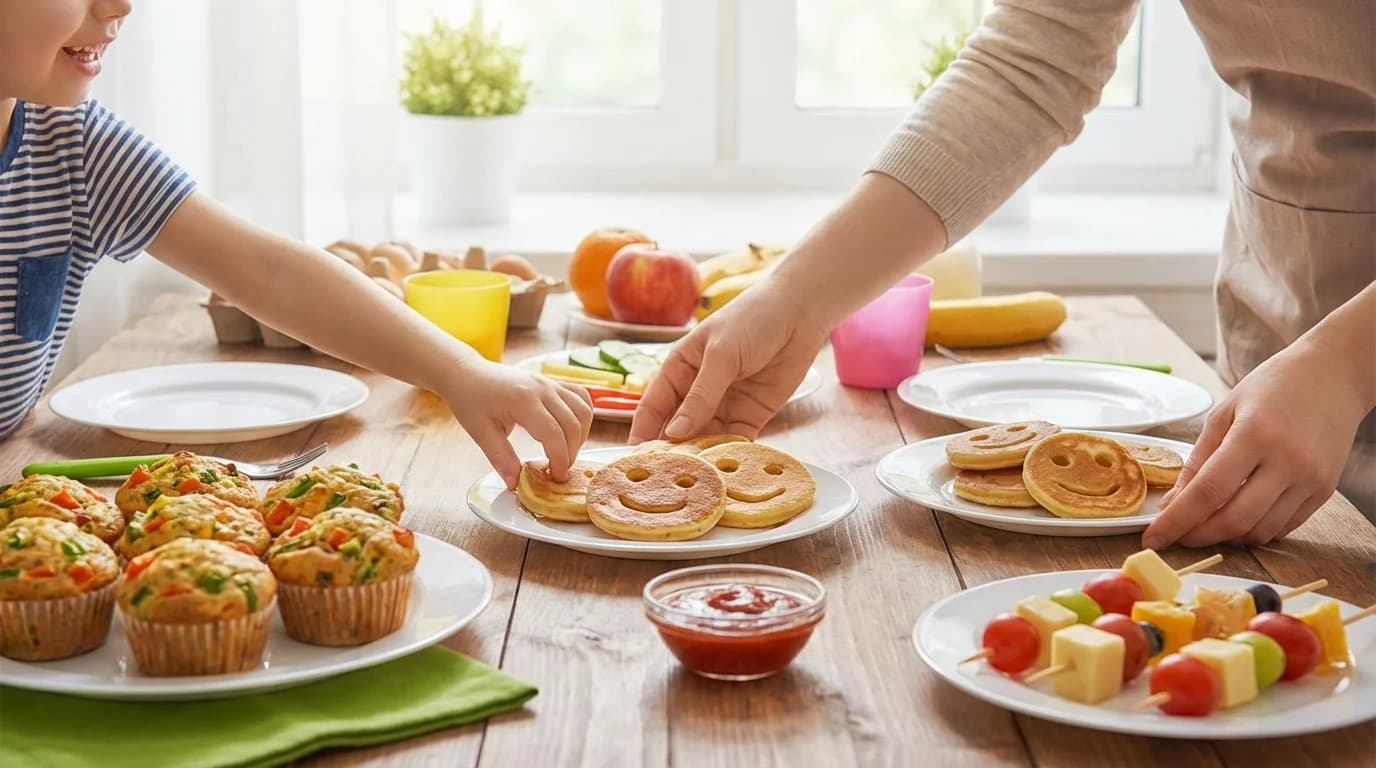
Whisk eggs, add tiny bits of cheese and ham. Pour into muffin tins, bake. Kids can pick their mix-ins.
8. Peanut Butter Banana "Sushi"
Spread peanut butter on tortilla, place banana in center, roll up, slice into rounds. Looks fun, tastes safe.
9. Mini Meatballs
Ground turkey or beef, breadcrumbs, egg, parmesan. Bake in mini size. Serve with ketchup or plain. Check out our chicken meal prep guide for more protein ideas.
10. Tuna or Chicken Salad with Crackers
Mix canned protein with mayo (or Greek yogurt), serve with crackers for dipping. The control of dipping appeals to picky eaters.
Hidden Veggie Champions
11. Smoothie Bowls
Blend banana, berries, spinach (they won't taste it), and milk. Pour into bowl, let kids add toppings: granola, chocolate chips, coconut.
12. Veggie-Loaded Tomato Sauce
Sauté carrots, zucchini, bell peppers, onions until soft. Blend completely smooth with tomato sauce. Serve over pasta. For more sauce ideas, see our easy pasta recipes.
13. Cauliflower Tots
Rice cauliflower, mix with egg, cheese, breadcrumbs. Form into tots, bake until crispy. Serve with ketchup.
14. Sweet Potato Fries
Cut sweet potatoes into fries, toss with olive oil, bake at 425°F until crispy. Salt lightly. The natural sweetness usually wins kids over.
15. Zucchini Pizza Bites
Slice zucchini into rounds, top each with pizza sauce, mozzarella, mini pepperoni. Bake until cheese melts.
Breakfast Solutions
16. Pancakes with Mix-Ins
Make basic pancake batter, let kids choose one mix-in: chocolate chips, blueberries, or banana slices. Freeze extras for quick breakfasts. Related: quick breakfast ideas.
17. Yogurt Parfait Bar
Set out plain or vanilla yogurt, granola, berries, honey. Kids build their own layers.
18. Cinnamon Toast Strips
Whole wheat bread, butter, cinnamon sugar. Cut into strips for dipping in yogurt or applesauce.
19. Mini Waffles
Make waffles in mini waffle maker. Serve with peanut butter for dipping instead of syrup (more protein).
20. Breakfast Banana Split
Slice banana lengthwise, add yogurt in the middle, sprinkle with cereal and berries. Makes healthy look like dessert.
Dinner Wins
21. Deconstructed Tacos
Serve seasoned ground beef, shredded cheese, plain tortillas, and optional toppings separately. Kids assemble their own. Similar approach to our one-pot meals guide.
22. Sheet Pan Dinner (Separated)
Bake chicken tenders, potato wedges, and green beans on same pan but in separate sections. Kids take what they want.
23. Simple Fried Rice
White rice, scrambled egg, peas (or other tiny veggies), soy sauce. Familiar and mild.
24. Plain Grilled Chicken with Dipping Sauces
Grilled chicken breast sliced into strips. Offer multiple dips: ketchup, ranch, honey mustard. The sauce makes it fun.
25. Pasta Primavera (Their Way)
Cook pasta and several veggie options separately. Let kids pick which veggies (if any) go in their bowl. Toss with butter or olive oil.
The Presentation Strategy
How you serve food matters as much as what you serve.
Visual tricks that work:
- Bento boxes: Compartments prevent food touching
- Toothpicks: Spear fruit or cheese cubes on picks
- Cookie cutters: Cut sandwiches into fun shapes
- Dipping stations: Kids love dunking food
- Build-your-own: Tacos, pizzas, bowls give control
- Miniature portions: Tiny servings feel less overwhelming
Color psychology: Beige foods feel safe to picky eaters (predictable, mild). Gradually introduce color through accepted foods. If they eat bananas, try mango. If they eat cheddar, try orange bell peppers.
The Weekly Picky Eater Menu Plan
Monday:
- Breakfast: Pancakes with banana
- Lunch: Turkey and cheese roll-ups, crackers
- Dinner: Homemade chicken nuggets, sweet potato fries
- Snack: Apple slices with peanut butter
Tuesday:
- Breakfast: Egg muffins
- Lunch: Mac and cheese
- Dinner: Plain grilled chicken, white rice, peas
- Snack: Yogurt with granola
Wednesday:
- Breakfast: Cinnamon toast strips
- Lunch: Quesadilla with side of fruit
- Dinner: Mini meatballs with pasta, hidden veggie sauce
- Snack: Cheese and crackers
Thursday:
- Breakfast: Mini waffles with peanut butter
- Lunch: Tuna salad with crackers
- Dinner: Deconstructed tacos
- Snack: Smoothie
Friday:
- Breakfast: Yogurt parfait
- Lunch: Leftover meatballs
- Dinner: Homemade pizza (they add toppings)
- Snack: Veggie sticks with ranch (offered, not required)
Weekend:
- More flexibility, try one new food
- Involve kids in meal prep
- Lower pressure, higher fun
Shopping List for Picky Eater Pantry
Always Keep Stocked:
- Pasta (multiple shapes)
- White rice
- Chicken breast/tenders
- Ground turkey or beef
- Eggs
- Cheese (cheddar, mozzarella, string cheese)
- Whole wheat bread
- Tortillas
- Peanut butter
- Bananas
- Applesauce
- Crackers
- Plain yogurt
Veggie Arsenal (Fresh or Frozen):
- Carrots
- Sweet potatoes
- Peas
- Green beans
- Cauliflower
- Spinach (for hiding in smoothies)
- Cherry tomatoes (some picky eaters like these)
What NOT to Do (Common Mistakes)
1. Short-Order Cooking Making multiple meals creates expectation that you'll cater to demands. Offer 1-2 safe foods with each meal, but don't become a restaurant.
2. Bribing with Dessert "Eat your vegetables to get ice cream" teaches kids that vegetables are punishment and sweets are rewards. Serve small desserts as part of meals, not prizes.
3. Forcing "One Bite" This often backfires, creating negative associations. Instead, encourage "exploring" food—smelling, touching, licking—without eating pressure.
4. Hiding ALL Vegetables While sneaking nutrients helps in the short term, kids also need to learn to accept visible vegetables. Balance both approaches.
5. Only Serving Preferred Foods Always include at least one safe food they'll eat, but also serve the family meal. Exposure without pressure is key.
When to Worry (Red Flags)
Most picky eating resolves naturally. Consult a pediatrician or feeding therapist if:
- Your child eats fewer than 20 different foods
- Entire food groups are refused for months
- Gagging or vomiting with new textures
- Weight loss or poor growth
- Extreme anxiety around mealtimes
- Eating becomes increasingly restrictive over time
Expanding the Palate: The Long Game
Month 1-2: Establish Routine
- Regular meal times
- Family eats together
- New foods offered without pressure
- No separate kids' meals
Month 3-4: Food Exploration
- Kids help with grocery shopping
- Involvement in simple cooking
- Food art projects (building faces with veggies)
- Reading books about food
Month 5-6: Gentle Challenges
- "Rainbow week" (try to eat every color)
- "Food adventure Fridays" (one new food)
- Reward trying, not eating
- Track foods tried on a chart
Making Peace with Picky Eating
Here's what helped me most: realizing that feeding picky eaters isn't about winning daily battles. It's about creating a positive food environment where kids can eventually expand their preferences on their own timeline.
Some kids eat 10 foods at age 4 and 100 foods at age 10. Others are adventurous from the start. Both are normal.
Your job is to:
- Offer nutritious options
- Model healthy eating
- Keep mealtimes pleasant
- Trust the process
Their job is to:
- Decide what and how much to eat
- Learn to listen to hunger cues
- Gradually expand comfort zones
Quick Wins for Tonight
If you need a solution for today's dinner:
- Breakfast for dinner: Pancakes, eggs, fruit
- Build-your-own-tacos: Everyone's happy
- Pasta bar: Plain pasta, butter, parmesan, optional sauce
- Snack dinner: Cheese, crackers, fruit, deli meat, veggies
- Quesadillas: Fast, familiar, filling
For more quick solutions, see our easy dinner ideas and lazy dinner ideas guides.
Final Thoughts
Feeding picky eaters is exhausting. There will be rejected meals, wasted food, and moments when you question everything. But with consistent, pressure-free exposure to varied foods, most kids do expand their palates.
Start with these 25 recipes, pick 5-7 your child might accept, and rotate them weekly. Add one new food every week or two. Celebrate small wins—touching a new food is progress. So is having it on the plate, even if uneaten.
You're doing better than you think. Keep offering, keep modeling, and trust that this phase will pass.
About myrecipe
myrecipe helps families save, organize, and share their favorite recipes in one place. Plan meals, create shopping lists, and preserve your culinary traditions.
Start Organizing Recipes