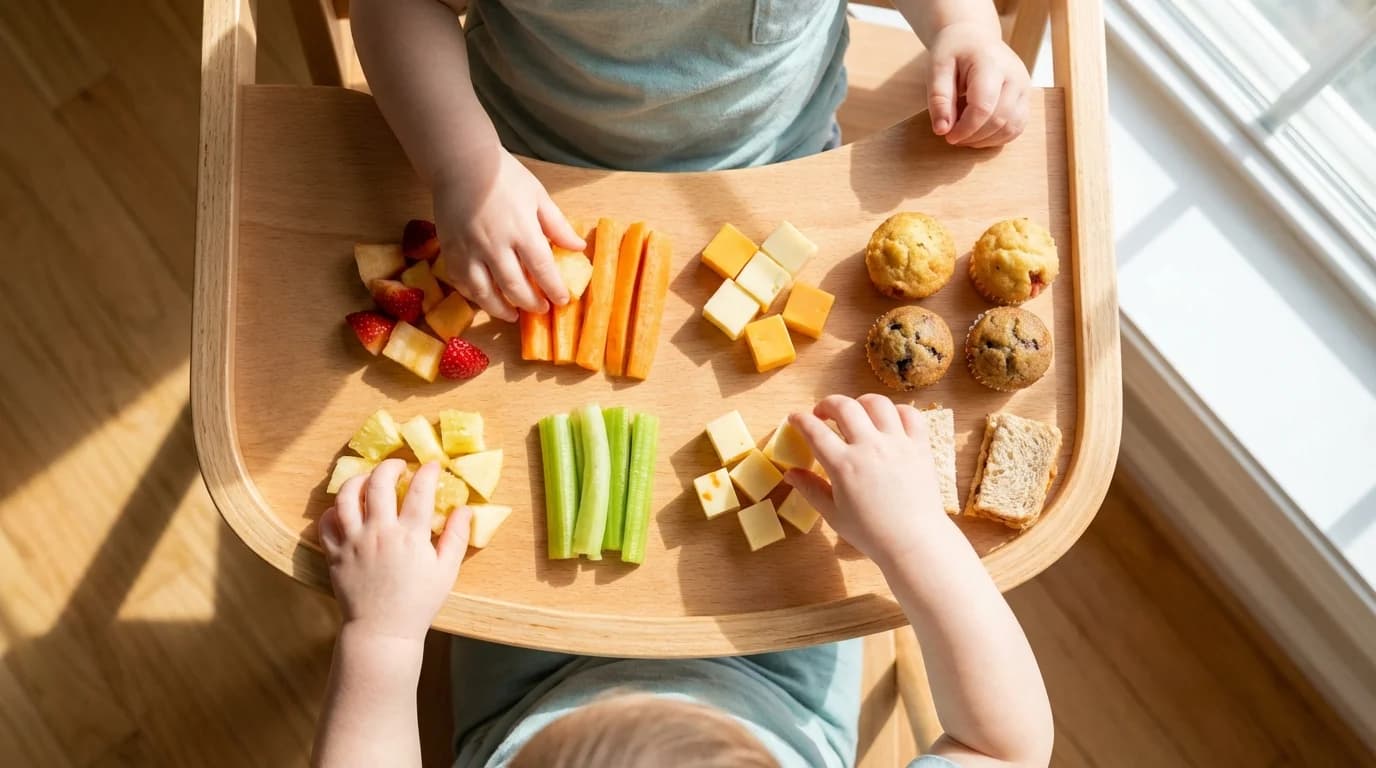
60 Finger Foods for Toddlers (Easy Self-Feeding Ideas for 12-36 Months)
Toddlers are fierce about independence: "I do it myself!" Mealtime is no exception. Finger foods let toddlers practice self-feeding, develop fine motor skills, and feel empowered—while you enjoy a meal without constantly loading a spoon.
These 60 finger foods are safe, nutritious, appropriately sized for little hands, and actually get eaten. Organized by meal and age, with safety guidelines built in.
Finger Food Safety Guidelines
Always:
- Supervise eating (never leave alone with food)
- Have toddler sit while eating
- Know infant/toddler CPR
- Cut round foods into quarters (grapes, cherry tomatoes)
- Avoid hard, crunchy raw vegetables
- Test temperature before serving
Avoid choking hazards:
- Whole grapes or cherry tomatoes (quarter lengthwise)
- Hot dogs (unless cut lengthwise then chopped)
- Popcorn (wait until 4+)
- Whole nuts (nut butters are fine, spread thinly)
- Hard candy or gum
- Chunks of hard cheese (shred or cut small)
- Raw carrots or apples (cook until soft or grate)
Safe shapes and textures:
- Soft enough to squish between fingers
- Small pieces (pea-sized for 12-18 months, gradually larger)
- Strips for younger toddlers (easier to grasp)
- Dissolvable or mashable in mouth
60 Finger Foods by Meal
Breakfast Finger Foods
1. Mini Pancakes Silver-dollar size pancakes toddlers can pick up whole. Make batch, freeze with parchment between, reheat quickly.
2. French Toast Sticks Cut French toast into strips. Perfect for dipping in yogurt or syrup (if you allow).
3. Waffle Quarters Frozen waffles cut into 4 pieces. Top with mashed banana or nut butter.
4. Scrambled Egg Pieces Well-cooked scrambled eggs broken into small pieces. Soft, protein-rich, easy to chew.
5. Egg Muffin Cups Bake eggs with cheese and veggies in muffin tin. Toddler-sized portions, easy to hold. See baby-led weaning recipes for recipe.
6. Toast Strips Whole grain toast cut into strips, plain or with thin spread of nut butter, mashed avocado, or cream cheese.
7. Mini Bagels Quarter a mini bagel. Spread with cream cheese or leave plain.
8. Breakfast Sausage Links Cut into coin-sized pieces. Choose lower-sodium varieties.
9. Banana Slices Ripe banana cut into coins (younger toddlers) or given as half banana (older toddlers).
10. Berries Strawberries quartered, blueberries halved (under 18 months) or whole (18+ months), raspberries whole.
11. Melon Cubes Watermelon, cantaloupe, honeydew cut into small cubes. Refreshing and hydrating.
12. Yogurt Melts Store-bought or homemade frozen yogurt dots. Dissolve easily, good for practicing pincer grasp.
13. Cereal O's Cheerios, Kix, or similar round cereal. Great for pincer grasp practice.
14. Oatmeal Fingers Cook thick oatmeal, press into pan, refrigerate, cut into strips. Holds shape well.
15. Cream Cheese Fruit Dip with Strawberries Cream cheese mixed with a tiny bit of honey (12+ months), serve with strawberry quarters for dipping.
Lunch Finger Foods
16. Cheese Cubes Soft cheese (cheddar, mozzarella, Colby) cut into small cubes or shredded.
17. Deli Meat Roll-Ups Turkey or ham rolled up (not around anything, just rolled). Cut into 1-inch pieces.
18. Quesadilla Triangles Cheese melted between tortilla, cut into small triangles. Simple and filling.
19. Mini Sandwiches Tiny sandwiches made with cookie cutters. PB&J, cream cheese and cucumber, turkey and cheese.
20. Hummus and Pita Soft pita bread torn into pieces, small bowl of hummus for dipping or spreading.
21. Pasta Shapes Large pasta like rigatoni, penne, or fun shapes cooked very soft. Toss with butter, cheese, or mild sauce.
22. Meatballs (Tiny) Marble-sized meatballs, very soft and moist. Turkey or beef. See toddler-approved dinners.
23. Chicken Strips (Tender) Slow-cooked or baked chicken, shredded or cut into small strips. Must be moist.
24. Tuna Salad on Crackers Small dollops of tuna salad on whole grain crackers. Mix tuna with mayo and mashed avocado.
25. Avocado Slices Ripe avocado cut into wedges or cubes. Roll in crushed graham crackers for grip.
26. Sweet Potato Fries Baked until very soft, cut into strips. Natural sweetness toddlers love.
27. Steamed Broccoli Florets Small florets steamed until very soft. The stem acts as a handle.
28. Cucumber Slices Peeled cucumber cut into thick coins or strips. Cool and crunchy.
29. Bell Pepper Strips Roasted or raw red/orange bell peppers (sweeter than green) cut into strips.
30. Cherry Tomatoes (Quartered) Cut into quarters lengthwise. Never serve whole to toddlers.
Dinner Finger Foods
31. Mini Turkey Burgers Slider-sized burger patties. Serve with or without mini bun.
32. Fish Sticks (Homemade) Baked cod or tilapia strips breaded and baked. Mild white fish works best.
33. Salmon Flakes Baked salmon broken into small flakes. Check carefully for bones. Rich in omega-3s.
34. Ground Beef Crumbles Well-cooked ground beef broken into very small pieces. Mix with rice or pasta.
35. Pork Tenderloin Pieces Slow-cooked pork cut into small, tender pieces. Very moist.
36. Rotisserie Chicken Shred meat from rotisserie chicken. Remove skin, check for small bones.
37. Tofu Cubes Baked or pan-fried extra-firm tofu cut into small cubes. Mild flavor, soft texture.
38. Black Beans Canned black beans, rinsed, slightly mashed so they're less round. High in protein and iron.
39. Peas (Mashed or Whole) Frozen peas, cooked, served whole (18+ months) or slightly mashed (12-18 months).
40. Corn (Off the Cob) Cut kernels off cob. Avoid whole kernel corn for younger toddlers (cut kernels in half).
41. Roasted Carrots Carrot sticks roasted until very soft, not crunchy. Test with fork.
42. Green Beans Steamed green beans cut into small pieces or served as "fries" if long enough to hold.
43. Butternut Squash Cubes Roasted until soft, cut into cubes. Naturally sweet.
44. Mashed Potatoes (Formed) Make stiff mashed potatoes, form into tot shapes, bake. Or serve as scoopable mounds.
45. Rice Balls Sticky rice formed into small balls. Can add finely minced veggies.
Snack Finger Foods
46. Apple Slices (Cooked or Grated) Raw apple is a choking hazard. Cook until soft or grate fresh apple.
47. Pear Slices Very ripe pear, skin removed, cut into slices. Soft and sweet.
48. Mandarin Orange Segments Canned or fresh, membranes removed for younger toddlers.
49. Raisins (Chopped or Whole) Whole for 18+ months, chopped for younger. Soak in water briefly to soften.
50. Dried Apricots (Cut) Soft dried apricots cut into small pieces. No sugar added varieties.
51. Graham Crackers Broken into small squares. Choose honey-free varieties for under 12 months if transitioning from BLW.
52. Rice Cakes Break into smaller pieces. Dissolve easily in mouth.
53. Soft Pretzels (Torn) Tear soft pretzels into bite-sized pieces. Avoid hard pretzel sticks.
54. Animal Crackers Small, dissolvable crackers toddlers love. Check for lower sugar options.
55. Cheese Crackers Goldfish, Cheese-Its, or similar. Easy for self-feeding practice.
56. Veggie Puffs or Straws Dissolvable veggie snacks. Good for practicing pincer grasp.
57. Mini Muffins (Homemade) Banana, blueberry, zucchini muffins. Control sugar content when homemade.
58. Soft Cookies Oatmeal cookies, sugar cookies (not hard). Break into smaller pieces for younger toddlers.
59. Fruit Strips Homemade or store-bought fruit leather cut into strips.
60. Popcorn Alternative: Puffed Rice or Corn Soft, dissolvable puffs. NOT regular popcorn (choking hazard).
Finger Foods by Age
12-15 Months
Best options:
- Very soft textures
- Larger pieces they can grasp with fist (strips, wedges)
- Foods that break apart easily in mouth
- Examples: Toast strips, banana chunks, steamed broccoli, soft meatballs, well-cooked pasta
Portion size: 1-2 tablespoons per food
15-18 Months
Developing skills:
- Better pincer grasp (thumb and forefinger)
- Can handle smaller pieces
- More chewing ability
- Examples: Cubed cheese, peas, small pasta shapes, berries (halved), rice balls
Portion size: 2-3 tablespoons per food
18-24 Months
Confident eaters:
- Good chewing skills
- Can use utensils but prefer fingers
- Handle most textures
- Examples: Whole berries, most finger foods from this list, can start practicing with fork and spoon
Portion size: 3-4 tablespoons per food
24-36 Months
Independent feeders:
- Transitioning to using utensils more
- Can eat most family foods (cut appropriately)
- Developing preferences
- Examples: Full range of finger foods, deconstructed meals, foods they can assemble themselves
Portion size: ¼ to ½ cup per food
Weekly Meal Plan with Finger Foods
Monday:
- Breakfast: Scrambled eggs, toast strips, banana slices
- Lunch: Cheese quesadilla triangles, avocado, berries
- Dinner: Mini meatballs, pasta shapes, steamed broccoli
- Snack: Apple slices (cooked), crackers
Tuesday:
- Breakfast: Mini pancakes, sausage coins, melon cubes
- Lunch: Turkey roll-ups, cheese cubes, cucumber slices
- Dinner: Baked fish sticks, sweet potato fries, peas
- Snack: Yogurt melts, banana
Wednesday:
- Breakfast: French toast sticks, berries, yogurt (spoon or fingers)
- Lunch: Hummus, pita pieces, bell pepper strips
- Dinner: Shredded chicken, rice balls, roasted carrots
- Snack: Graham crackers, cheese
Thursday:
- Breakfast: Waffle quarters with nut butter, fruit
- Lunch: Mini sandwiches, veggie sticks, grapes (quartered)
- Dinner: Ground beef crumbles, mashed potatoes (tot-shaped), green beans
- Snack: Rice cakes, avocado
Friday:
- Breakfast: Egg muffin cups, toast, orange segments
- Lunch: Pasta salad (large shapes), cheese, tomatoes (quartered)
- Dinner: Tofu cubes, noodles, steamed broccoli
- Snack: Soft cookie, fruit
Saturday:
- Breakfast: Bigger breakfast—scrambled eggs, pancakes, sausage, fruit
- Lunch: Leftover finger foods or DIY toddler plate
- Dinner: Family meal modified to finger foods
- Snack: Animal crackers, cheese stick
Sunday:
- Breakfast: French toast, berries, yogurt
- Lunch: Quesadilla, beans, avocado
- Dinner: Rotisserie chicken (shredded), mashed potatoes, peas
- Snack: Fruit, crackers
Presentation Tips for Toddler Success
Use divided plates: Toddlers often don't like foods touching. Compartment plates help.
Small portions: Start with 2-3 small pieces of each food. They can always have more. Large piles overwhelm.
Variety of colors: Orange carrots, green broccoli, red tomatoes, yellow cheese. Visual appeal matters.
Let them explore: It's okay if they squeeze, drop, or play with food. That's learning.
No pressure: Offer food, let toddler decide what and how much to eat. Division of responsibility.
Model eating: Toddlers imitate. Eat the same foods alongside them.
Dealing with Toddler Eating Challenges
Throwing food: Signal they're done. End meal calmly. Don't react dramatically (makes it a game).
Eating only one food: Normal. Offer variety, don't force. Preferences change weekly.
Refusing everything: Not every meal will be eaten. Toddlers regulate intake over days, not single meals.
Wanting only "white" foods: Beige food phase is real (bread, pasta, crackers, chicken). Keep offering color without pressure.
Gagging: Babies and toddlers gag as protective reflex. Different from choking. Stay calm, let them work it out.
Nutrition for Toddlers (12-36 Months)
Daily needs (approximate):
- Protein: 2-3 oz (about ¼ cup)
- Grains: 3-5 oz (think 1 slice toast = 1 oz)
- Vegetables: 1-1.5 cups
- Fruits: 1-1.5 cups
- Dairy: 2-2.5 cups (milk, yogurt, cheese combined)
Remember: Toddlers have tiny stomachs. They eat small amounts frequently.
Iron-rich finger foods: Crucial at this age as birth iron stores depleted:
- Meat, poultry, fish
- Eggs
- Beans and lentils
- Fortified cereals
- Tofu
Healthy fats for brain development:
- Avocado
- Nut butters (thin layer)
- Olive oil on foods
- Full-fat dairy
- Fatty fish (salmon)
Making Finger Foods Part of Family Meals
Deconstructed versions:
- Adult taco night → Toddler gets: ground beef crumbles, cheese, tortilla pieces, beans separately
- Adult spaghetti → Toddler gets: meatballs, pasta, sauce on side for dipping
- Adult stir-fry → Toddler gets: small pieces of chicken, very soft veggies, rice
Family-style serving: Place platters on table, toddler takes what they want (within reason). Builds autonomy.
Budget-Friendly Toddler Finger Foods
Cheapest nutritious options:
- Eggs ($0.25 each)
- Bananas ($0.20 each)
- Oatmeal ($0.15/serving)
- Beans ($0.50/serving)
- Rice ($0.25/serving)
- Pasta ($0.30/serving)
- Frozen vegetables ($0.40/serving)
- Potatoes ($0.30/serving)
- Peanut butter ($0.20/serving)
- Whole grain bread ($0.25/slice)
Save money:
- Make from scratch (pancakes, muffins, meatballs)
- Buy frozen vegetables (same nutrition, cheaper)
- Use leftovers creatively
- Avoid pre-packaged toddler snacks (make your own)
Check budget grocery shopping tips for more ideas.
Batch Cooking Finger Foods
Sunday prep (1 hour):
- Bake 3 dozen mini muffins (freeze half)
- Make large batch of pancakes (freeze with parchment between)
- Prepare egg muffin cups for the week
- Cook and portion meatballs
- Roast several vegetables
- Cook proteins (chicken, ground beef) to use multiple ways
Daily assembly (5 minutes): Grab pre-made items from fridge/freezer, add fresh fruit and veggie, heat if needed. Done.
See meal prep on a budget for more strategies.
When to Transition from Finger Foods
Toddlers will gradually:
- Use utensils more (around 18-24 months)
- Eat less with hands (by 3-4 years)
- Prefer "big kid" foods
No rush: Many kids use fingers alongside utensils through preschool. Completely normal.
Encourage utensil use:
- Model using fork and spoon
- Offer easy-to-spear foods
- Pre-load forks and spoons
- Praise attempts, ignore mess
- Have patience—it's a process
Final Thoughts
Finger foods empower toddlers to feed themselves, develop crucial motor skills, and build healthy relationships with food. Yes, it's messier than spoon-feeding. Yes, more food ends up on the floor than you'd like. But the independence and skills they're building? Worth every dropped pea.
This week:
- Choose 8-10 finger foods from this list your toddler might eat
- Prep 2-3 options Sunday
- Offer variety without pressure
- Celebrate any bites
- Trust the process
Your toddler is learning to feed themselves—a massive developmental leap. Give them safe options, supervise closely, and let them explore.
You've got this. Now let them feed themselves.
For more toddler meal ideas, check toddler-approved dinners and kid-friendly meal prep.
About myrecipe
myrecipe helps families save, organize, and share their favorite recipes in one place. Plan meals, create shopping lists, and preserve your culinary traditions.
Start Organizing Recipes