How to Season Cast Iron Cookware: Complete Step-by-Step Guide
Cast iron cookware is legendary for its durability, heat retention, and ability to develop a natural non-stick surface that improves with age. The secret to unlocking these benefits lies in proper seasoning—a process that creates a protective coating through polymerized oil. Whether you've inherited grandma's skillet or just bought your first cast iron pan, this guide will teach you everything you need to know about seasoning and maintaining these kitchen workhorses.
What is Seasoning and Why Does It Matter?
Seasoning is a thin layer of polymerized fat that bonds to the iron, creating a protective, naturally non-stick surface. This coating serves three critical purposes:
Prevents rust: Bare iron oxidizes quickly when exposed to moisture. Seasoning creates a barrier against water and humidity.
Creates non-stick properties: Well-seasoned cast iron rivals modern non-stick pans for easy food release, especially for eggs and pancakes.
Improves with use: Unlike synthetic coatings that degrade over time, cast iron seasoning gets better with each cooking session that adds more polymerized oil layers.
Understanding the Science
When oil is heated beyond its smoke point on iron, it undergoes a chemical change called polymerization. The fat molecules bond together and to the metal, forming a hard, plastic-like coating. This process requires:
- High heat (above the oil's smoke point)
- Thin layers of oil
- Time for the chemical reaction to complete
That's why oven seasoning at 450-500°F works better than stovetop methods—consistent, high heat ensures complete polymerization.
Choosing the Right Oil
The best seasoning oils have high smoke points and the right fatty acid composition:
Best options:
- Flaxseed oil (smoke point: 225°F) - Creates the hardest seasoning but can be brittle
- Grapeseed oil (smoke point: 420°F) - Excellent balance of durability and ease
- Canola oil (smoke point: 400°F) - Affordable and reliable
- Crisco or other vegetable shortening - Traditional choice, works excellently
Avoid:
- Butter (too low smoke point, contains milk solids)
- Olive oil (smoke point too low, can get sticky)
- Coconut oil (doesn't polymerize well)
For beginners, grapeseed oil or Crisco offer the best results with the least fussiness.
How to Season a New Cast Iron Pan
Most new cast iron comes pre-seasoned from the factory, but this initial coating is minimal. Building up additional layers creates a more durable, more non-stick surface.
Step 1: Wash Thoroughly
Even new pans can have manufacturing residue:
- Scrub the pan with hot, soapy water and a stiff brush
- Rinse thoroughly and dry completely with a towel
- Place on a burner over medium heat for 2-3 minutes to evaporate any remaining moisture
Note: This is the only time you should use soap on cast iron unless you're doing a complete restoration.
Step 2: Apply a Thin Layer of Oil
- Pour about a tablespoon of your chosen oil into the pan
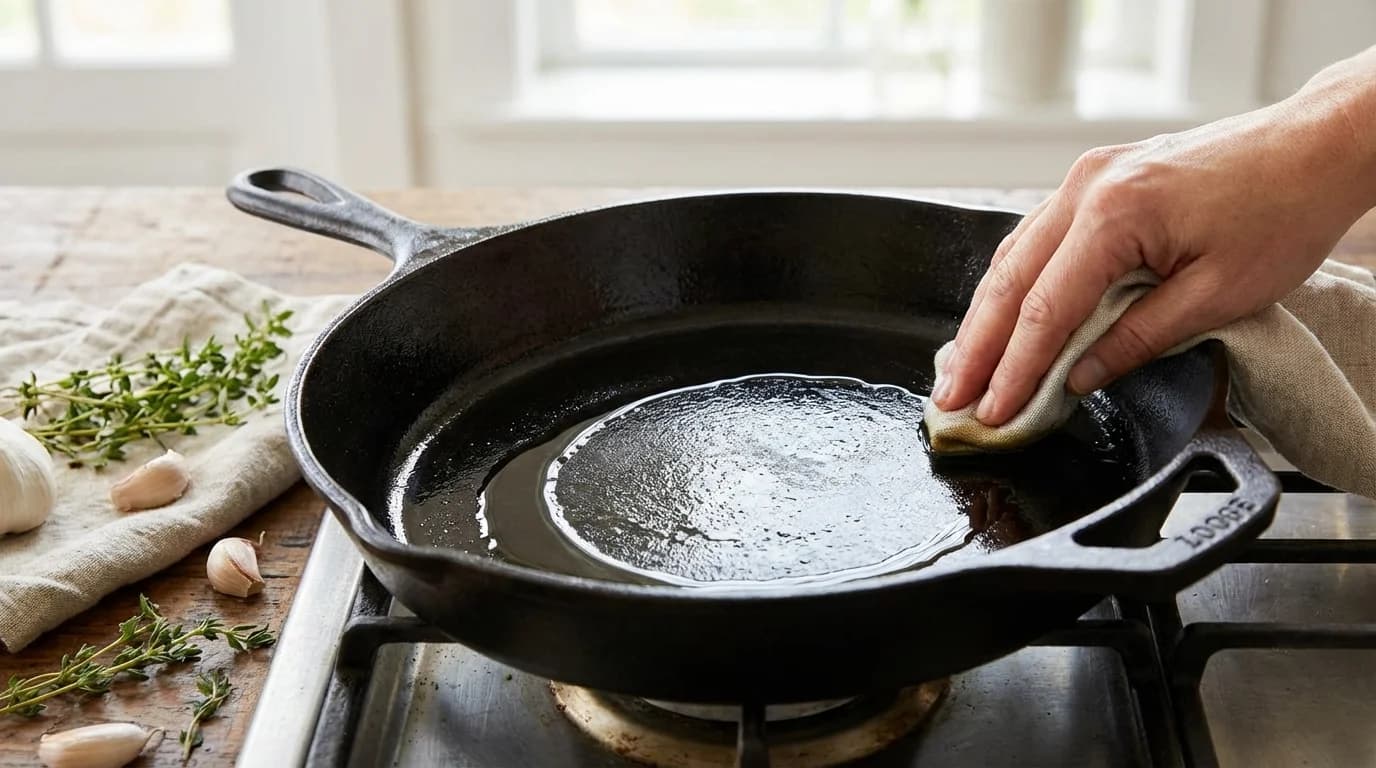
- Use a paper towel or lint-free cloth to spread it across every surface—inside, outside, handle, and bottom
- Critical step: Wipe away excess oil until the pan looks almost dry
The pan should appear matte, not shiny. Excess oil creates sticky spots instead of proper seasoning.
Step 3: Bake the Pan
- Preheat your oven to 450-500°F (check your oil's smoke point)
- Place aluminum foil on the bottom rack to catch any drips
- Put the pan upside down on the middle rack
- Bake for 1 hour
- Turn off the oven and let the pan cool completely inside (2-3 hours)
Placing the pan upside down prevents oil from pooling on the cooking surface.
Step 4: Repeat
One layer provides basic protection, but 3-5 layers create truly excellent seasoning:
- Remove the cooled pan from the oven
- Apply another thin layer of oil, wiping away excess
- Bake for another hour
- Cool completely
- Repeat until you've completed 3-5 cycles
The pan will gradually darken from gray to black as the seasoning builds. A slight brownish tint is normal during early layers.
How to Season an Old or Rusty Cast Iron Pan
Found a rusty cast iron pan at a yard sale or neglected one in your cabinet? Restoration is absolutely possible.
Step 1: Remove Rust and Old Seasoning
For light rust:
- Scrub with steel wool or a metal scouring pad
- Use a 50/50 mixture of white vinegar and water if needed
- Rinse thoroughly and dry immediately
For heavy rust:
- Soak in equal parts white vinegar and water for 1-6 hours (check frequently)
- Scrub with steel wool to remove rust
- Rinse very thoroughly—vinegar can etch the iron if left too long
- Dry immediately and completely
For caked-on seasoning:
- Use the self-cleaning cycle of your oven (if you have one)
- Or use oven cleaner in a well-ventilated area
- Scrub clean and rinse thoroughly
Step 2: Season from Scratch
Once the pan is clean, bare iron, follow the new pan seasoning process above. Restored pans often need 5-6 layers of initial seasoning to build up adequate protection.
Daily Cast Iron Maintenance
Proper daily care maintains your seasoning and prevents problems:
After Cooking: The Quick Clean
- Let the pan cool slightly but clean while still warm
- Rinse with hot water and scrub with a brush or non-metal scrubber
- For stuck-on food, add coarse salt and scrub with a paper towel
- Rinse, dry thoroughly with a towel
- Place on a burner over medium heat for 1-2 minutes to evaporate all moisture
- Apply a very thin layer of oil while still warm, wiping away excess
This "stovetop seasoning" adds micro-layers with each use, continually improving the surface.
When to Use Soap
Modern dish soap won't strip seasoning like old lye-based soaps did. Use soap when:
- The pan is greasy or has cooked strong flavors like fish
- You see sticky residue
- The pan has been stored for a while
Just wash quickly, rinse thoroughly, dry, and apply a thin layer of oil.
Common Seasoning Problems and Solutions
Sticky or Tacky Surface
Cause: Too much oil was applied, or the oven temperature was too low
Fix:
- Place the pan upside down in a 450°F oven for 1 hour
- This will allow excess oil to finish polymerizing
- If still sticky, scrub with coarse salt, reapply a super-thin layer of oil, and re-bake
Flaking or Peeling Seasoning
Cause: Seasoning was applied too thickly or the pan experienced thermal shock
Fix:
- Scrub away loose flakes
- Apply thin layers of oil and re-season
- Avoid shocking the pan with cold water while hot
Uneven Coloring
Cause: Different areas have different amounts of seasoning, or you're cooking acidic foods
Fix: This is purely cosmetic. Continue cooking and the color will even out over time. If bothered, strip and re-season completely.
Food Sticking
Cause: Insufficient seasoning, cooking delicate foods too soon, or inadequate preheating
Fix:
- Add 2-3 more layers of seasoning
- Preheat the pan thoroughly before adding food
- Use adequate fat when cooking (especially for eggs)
- Build up the seasoning with high-fat foods like bacon before attempting eggs or fish
Best Practices for Cast Iron Cooking
To protect and enhance your seasoning:
Do:
- Preheat the pan thoroughly—cast iron takes longer to heat than other cookware
- Use adequate fat when cooking
- Cook high-fat foods like bacon, sausage, and fried chicken regularly
- Store in a dry place
- Season regularly, especially if the pan looks dull
Don't:
- Cook acidic foods (tomatoes, vinegar, citrus) for extended periods until seasoning is very well established
- Let the pan soak in water
- Put hot cast iron into cold water (thermal shock can crack it)
- Store with the lid on (trapped moisture causes rust)
- Use metal utensils aggressively (wooden or silicone tools are gentler)
What to Cook First on Newly Seasoned Cast Iron
Build up your seasoning with these ideal first dishes:
- Bacon: The rendered fat enhances seasoning beautifully
- Cornbread: Requires a greased pan and creates an excellent seasoning layer
- Pan-fried potatoes: Plenty of oil and starch help build the coating
- Grilled cheese: Butter contributes to seasoning development
- Caramelized onions: Long, slow cooking with oil builds layers
Avoid cooking eggs, fish, or acidic tomato sauces until you've built up several months of seasoning through regular use.
Long-Term Storage
If storing cast iron for extended periods:
- Clean and dry thoroughly
- Apply a slightly heavier coat of oil than usual
- Place a paper towel inside to absorb any moisture
- Store in a dry location
- Check every few months and reapply oil if needed
Never store cast iron in humid environments like under the sink or in damp basements.
When to Re-Season Completely
Signs you need to strip and re-season from scratch:
- Extensive rust coverage
- Seasoning is flaking off in large areas
- The surface has become sticky and won't clean up
- You've inadvertently cooked something that damaged the coating (like burning it severely)
Otherwise, regular maintenance seasoning (thin oil layer after washing) is all you need.
The Benefits of Well-Maintained Cast Iron
Properly seasoned cast iron offers incredible advantages:
- Versatility: Stovetop to oven without changing pans
- Heat retention: Stays hot for excellent searing and even cooking
- Durability: Lasts for generations with proper care
- Natural non-stick: No synthetic coatings to worry about
- Iron supplementation: Cooking in cast iron can increase the iron content of food
- Improves with age: Unlike other cookware that degrades, cast iron gets better over time
Cast iron is perfect for pan-searing steaks, baking cornbread, making one-pot meals, and even baking pizza.
Conclusion
Seasoning cast iron isn't difficult—it just requires understanding the process and following simple steps consistently. The initial investment of time to build up 3-5 layers of seasoning pays dividends for years, creating versatile, naturally non-stick cookware that will outlast you.
Start with the basics: clean the pan, apply a thin layer of oil, bake at high heat, and repeat. Maintain your seasoning with quick cleaning and a light oiling after each use. Cook fatty foods regularly, avoid extended exposure to acidic ingredients early on, and your cast iron will develop the legendary patina that makes these pans cherished kitchen heirlooms.
Whether you're cooking quick weeknight dinners or elaborate weekend meals, properly seasoned cast iron will become one of your most-used and most-loved kitchen tools.
About myrecipe
myrecipe helps families save, organize, and share their favorite recipes in one place. Plan meals, create shopping lists, and preserve your culinary traditions.
Start Organizing Recipes