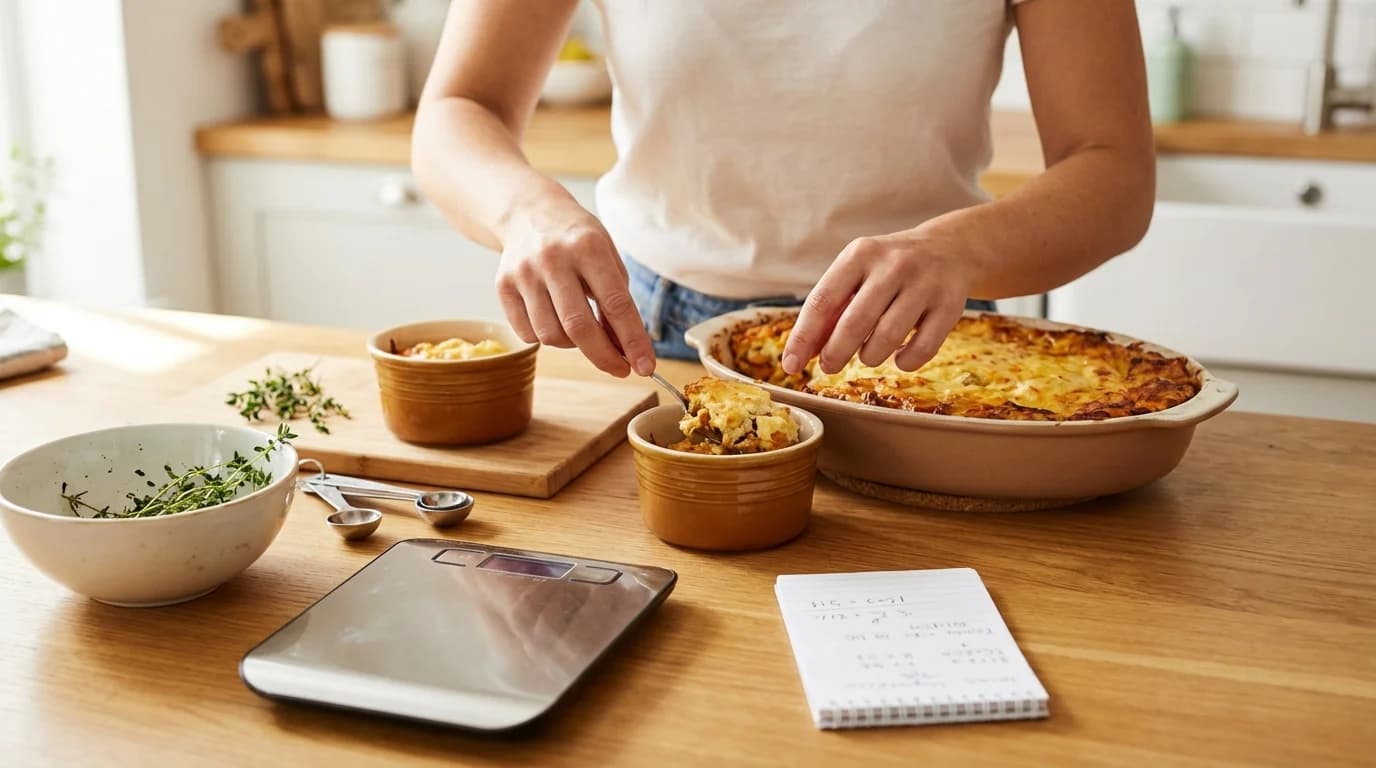
Most recipes are written for 4-6 servings, but what if you only need to feed 1-2 people? Downsizing recipes is a critical skill for anyone cooking for smaller households. Master these techniques and you'll never waste food or eat leftovers for a week again.
This comprehensive guide teaches you exactly how to scale down any recipe with confidence.
Why Downsizing Matters
The Standard Recipe Problem:
- Most recipes serve 4-6 people
- Cookbooks assume family cooking
- Food bloggers optimize for clicks (larger yields = more impressive)
- Restaurant recipes always serve multiple
Who Needs to Downsize:
- Singles living alone (33% of households)
- Couples without kids (34% of households)
- Empty nesters
- Anyone avoiding food waste
- People wanting variety without repetition
Benefits of Smaller Batches:
- Zero food waste
- Fresh food (not day-5 leftovers)
- More variety in diet
- Better portion control
- Ability to try more recipes
The Math of Recipe Scaling
Basic Division Rules
From 6 Servings to 2: Divide all ingredients by 3.
From 4 Servings to 2: Divide all ingredients by 2.
From 4 Servings to 1: Divide all ingredients by 4.
Example:
Original Recipe (Serves 6):
- 6 chicken breasts
- 3 cups rice
- 2 onions
- 6 tbsp soy sauce
Scaled to 2 Servings:
- 2 chicken breasts (6 ÷ 3)
- 1 cup rice (3 ÷ 3)
- 2/3 onion (2 ÷ 3)
- 2 tbsp soy sauce (6 ÷ 3)
Dealing with Odd Numbers
When Division Creates Fractions:
3 Eggs → 1 Egg (for single serving) Use 1 egg + 1 tbsp water for moisture
2 Eggs → 1 Egg (for downsizing by half) Works fine, or use 1 egg + 1 egg white
1.5 Cups → 3/4 Cup Measure carefully or eyeball halfway between 1/2 and 1 cup
2/3 Onion:
- Small onion: Use 1/2
- Large onion: Use 1/3
- Or weigh: 2/3 of average onion = about 100g
Common Measurement Conversions
Tablespoons to Teaspoons:
- 1 tbsp = 3 tsp
- 2/3 tbsp = 2 tsp
- 1/2 tbsp = 1.5 tsp
- 1/3 tbsp = 1 tsp
Cups to Fluid Ounces:
- 1 cup = 8 oz
- 3/4 cup = 6 oz
- 2/3 cup = 5.3 oz
- 1/2 cup = 4 oz
- 1/3 cup = 2.7 oz
- 1/4 cup = 2 oz
Weight Conversions:
- 1 lb = 16 oz
- 3/4 lb = 12 oz
- 1/2 lb = 8 oz
- 1/4 lb = 4 oz
Seasonings Don't Scale Linearly
Critical Rule: Don't Divide Seasonings by Same Ratio
Why Seasonings Are Different
The Science:
- Flavor intensity doesn't scale linearly
- Surface area to volume ratio changes
- Smaller batches need proportionally more seasoning
- But not double—somewhere in between
The 2/3 Rule
When Halving Recipe:
- Don't halve seasonings
- Use 2/3 of original amount
- Taste and adjust
Example:
Original Recipe (Serves 6):
- 3 tsp garlic powder
- 2 tsp paprika
- 1 tsp salt
Scaled to 2 Servings (÷ 3):
- 1.5 tsp garlic powder (not 1 tsp)
- 1 tsp paprika (not 2/3 tsp)
- 1/2 tsp salt (not 1/3 tsp)
Salt Requires Extra Caution
Salt Scales Even Less:
- Start with half what math suggests
- Add more to taste
- Can't remove excess salt
- Different salt types vary (table vs kosher vs sea salt)
Fresh vs Dried Herbs
Conversion:
- 1 tbsp fresh herbs = 1 tsp dried herbs
When Downsizing:
- Fresh herbs: Scale down linearly
- Dried herbs: Use 2/3 rule
- Taste and adjust always
Check our small batch cooking for more seasoning tips.
Cooking Time Adjustments
General Time Rules
Stovetop:
- Usually no time adjustment needed
- Smaller volume heats faster
- Watch more carefully
Oven:
- Reduce time by 20-25% for baked goods
- Check earlier for doneness
- Internal temp is reliable indicator
Slow Cooker:
- Time stays roughly the same
- Minimum liquid requirements still apply
- Use smaller slow cooker if possible
Specific Adjustments by Type
Roasting:
- Individual chicken breasts: Same time as recipe (size matters, not quantity)
- Whole chicken → chicken breast: Reduce time significantly
- Vegetables: Check 5-10 minutes early
Baking:
- 9x13 pan → 8x8 pan: Reduce time by 20-25%
- Full recipe → muffin tins: Reduce time by 30-40%
- Cookies: Usually same time (individual size doesn't change)
Simmering:
- Less liquid = less time to reduce
- Soups/stews: Can reduce time by 1/3
- Sauces: Watch carefully, reduce faster
Equipment Adjustments
Right-Sizing Your Cookware
Replace Large with Small:
Pans:
- 12-inch skillet → 8-inch
- 5-quart pot → 2-quart
- 9x13 baking dish → 8x8 or 9x9
- Full sheet pan → half sheet
Why It Matters:
- Even cooking
- Proper browning
- Appropriate liquid levels
- Better heat distribution
Example: Cooking 1 chicken breast in 12-inch pan:
- Too much empty space
- Sauce spreads thin
- Uneven heating
- Difficult to make pan sauce
Same chicken breast in 8-inch pan:
- Perfect fit
- Sauce concentrates
- Even heating
- Easy pan sauce
Baking Dish Conversions
Volume Matters:
9x13 pan = 14 cups
- 8x8 pan = 8 cups (57% of 9x13)
- 9x9 pan = 10 cups (71% of 9x13)
- Two 8-inch round pans = 10 cups
To Convert:
- Calculate volume needed
- Choose pan with similar capacity
- Adjust baking time
- Check doneness early
Individual Portions:
- Use ramekins (6-8 oz each)
- Muffin tins for individual servings
- Perfect portion control
- Gift-able portions
Browse our portion control recipes for individual serving ideas.
Tricky Ingredients
Canned Goods
Problem: Most cans contain 15 oz, recipes often call for 1-2 cans
Solutions:
Tomatoes:
- Use what you need
- Freeze remainder in ice cube trays
- Or in 1-cup portions
- Lasts 3 months frozen
Beans:
- 1 can = about 1.5 cups drained
- Use portion needed
- Freeze rest in 1/2 cup portions
- Or make another recipe within 3 days
Tomato Paste:
- Buy tube instead of can
- Or freeze tablespoon portions
- Ice cube tray method works well
Eggs
How to "Split" Eggs:
3 Eggs Becomes 1 Egg:
- Use 1 whole egg
- Add 1-2 tbsp milk or water for moisture
- Or use 1 egg + 1 egg white
2 Eggs Becomes 1 Egg:
- Usually just use 1 egg
- Recipe will work fine
- Slight texture difference only
Baking Specifically:
- 1 egg ≈ 3 tbsp liquid
- Can substitute: 3 tbsp applesauce, yogurt, or buttermilk
- Not exact but works in most recipes
Yeast Breads
Yeast Doesn't Scale Well Below Certain Amount:
Minimum Effective Amount:
- 1.5 tsp active dry yeast
- Can't go much lower
- Better to make full batch, freeze portions
Dough Freezing:
- Shape individual portions
- Freeze on sheet pan
- Transfer to bags
- Thaw and bake when needed
Liquids and Broths
Cartons Are Large:
- 32 oz (4 cups) is standard
- Ice cube tray freezing (2 tbsp per cube)
- Or freeze 1-cup portions in bags
- Lasts 3-4 months frozen
Stock Concentrates:
- Better than Bouillon
- Make exactly what you need
- No waste
- Lasts months in refrigerator
Category-Specific Tips
Downsizing Soups and Stews
Reduce Everything:
- Ingredients scale linearly
- Cooking time reduces by 30-40%
- Smaller pot required
- Less liquid to heat
Tips:
- Use 2-3 quart pot (not 6-quart)
- Start checking doneness earlier
- Adjust seasonings at end
- Make 2-3 servings max for freshness
See our cheap soup recipes for small-batch soups.
Downsizing Baked Goods
More Complex Scaling:
Cookies:
- Scale ingredients
- Freeze dough in portions
- Bake 2-4 at a time
- Same baking time
Cakes:
- Use smaller pan
- Reduce baking time 20-25%
- Check with toothpick
- Consider cupcakes instead
Breads:
- Use smaller loaf pan
- Reduce time by 25%
- Check internal temp (190-200°F)
Quick Solution: Bake full recipe, freeze extras well-wrapped.
Downsizing Casseroles
Easy to Scale:
Method:
- Divide all ingredients by desired ratio
- Use appropriate sized dish (8x8 instead of 9x13)
- Reduce baking time 20-25%
- Check center for doneness
Individual Servings:
- Assemble in ramekins
- Perfect portions
- Easier to freeze
- Bake from frozen option
Downsizing Pasta Dishes
Pasta Scaling:
Per Person:
- 2 oz dry pasta (1/2 cup cooked)
- For main dish: 3 oz dry pasta
- Sauce: 1/2 - 3/4 cup per person
Common Mistake: Cooking too much pasta out of habit.
Solution:
- Weigh pasta on scale
- Or measure by cups (1 cup dry = 2 servings)
- Cook only what you need
Check our easy pasta recipes for right-sized portions.
Downsizing Stir-Fries
Perfect for Small Batches:
For One Person:
- 4-6 oz protein
- 2 cups vegetables
- 1 cup cooked rice
- 2-3 tbsp sauce
Tip: Stir-fries actually work better in smaller batches—better searing, not steaming.
Common Downsizing Mistakes
Mistake 1: Scaling Seasonings Equally
Problem: Under-seasoned food.
Solution: Use 2/3 rule for seasonings, taste and adjust.
Mistake 2: Not Adjusting Cooking Time
Problem: Overcooked or undercooked food.
Solution: Check 25% earlier than recipe states.
Mistake 3: Using Wrong-Sized Cookware
Problem: Uneven cooking, poor results.
Solution: Invest in appropriately sized pans and dishes.
Mistake 4: Forgetting About Equipment Minimums
Problem: Blender won't blend, food processor won't process.
Solution: Use immersion blender or hand-chopping for small quantities.
Mistake 5: Rounding Too Aggressively
Problem: Recipe proportions off.
Solution: Be precise with measurements, especially baking.
Tools That Help
Essential Measuring Tools
Kitchen Scale:
- Most accurate for downsizing
- Measure by weight
- Easy odd-fraction measurement
- $15-30 for good digital scale
Measuring Cups and Spoons:
- Need full set including 2/3, 3/4 cups
- Including 1/8 and 1/2 tsp measures
- Clear measuring cups show graduations
Marking Tape:
- Mark half or third levels on measuring cups
- Helpful for frequent downsizing
- Cheap solution
Helpful Apps and Tools
Recipe Scaling Calculators:
- Online free calculators
- Input original servings and desired servings
- Automatically converts
- Good for checking your math
Recipe Management Apps:
- Save scaled versions
- Note adjustments that worked
- Build small-batch recipe collection
Your Downsizing Action Plan
Week 1: Start Simple
- Choose 3 simple recipes to downsize
- Practice basic division
- Focus on stovetop meals (simpler than baking)
- Take notes on what works
Week 2: Equipment Check
- Assess your cookware
- Invest in key small-sized pieces
- Try one-pan downsized meals
- Practice adjusting cooking times
Week 3: Complex Recipes
- Try downsizing casserole
- Attempt baked goods
- Work with canned goods
- Master freezing extras
Week 4: Master Level
- Downsize favorite family recipe
- Perfect your 10 go-to recipes
- Create personal scaling guide
- Make it second nature
Quick Reference Guide
Downsizing Cheat Sheet
From 6 to 2 Servings (÷ 3):
- Ingredients: Divide by 3
- Seasonings: Divide by 2 (2/3 of original)
- Salt: Divide by 4, taste, add more
- Cooking time: Reduce by 20-30%
From 4 to 2 Servings (÷ 2):
- Ingredients: Divide by 2
- Seasonings: Use 2/3 of half (about 1/3 of original)
- Salt: Use 1/3 of original, adjust
- Cooking time: Reduce by 20-25%
Equipment:
- 9x13 pan → 8x8 pan
- 12" skillet → 8" skillet
- 6-qt pot → 2-qt pot
When to Not Downsize
Some Recipes Better Full Size:
Yeast Breads: Minimum yeast requirement, better to make full and freeze.
Large Roasts: Can't buy "half chicken," cook full and use leftovers creatively.
Stock: Not worth making tiny batches, freeze portions.
Cookies: Make full batch, freeze dough in portions.
The Bottom Line
Downsizing recipes is a learnable skill that transforms cooking for smaller households. With proper technique, the right equipment, and attention to seasoning adjustments, you can scale any recipe successfully.
Key Takeaways:
- Math is straightforward - just divide
- Seasonings need special attention - don't scale linearly
- Equipment matters - use appropriately sized cookware
- Cooking times adjust - check earlier than recipe states
- Practice makes perfect - gets easier every time
Start with three recipes this week. Do the math, adjust the seasonings, use the right pans. Build confidence. Soon you'll downsize recipes in your head without thinking.
The ability to scale recipes opens up your entire cookbook collection and every online recipe for smaller household cooking.
Ready for perfectly portioned recipes? Check our cooking for two recipes collection for recipes already sized right.
About myrecipe
myrecipe helps families save, organize, and share their favorite recipes in one place. Plan meals, create shopping lists, and preserve your culinary traditions.
Start Organizing Recipes