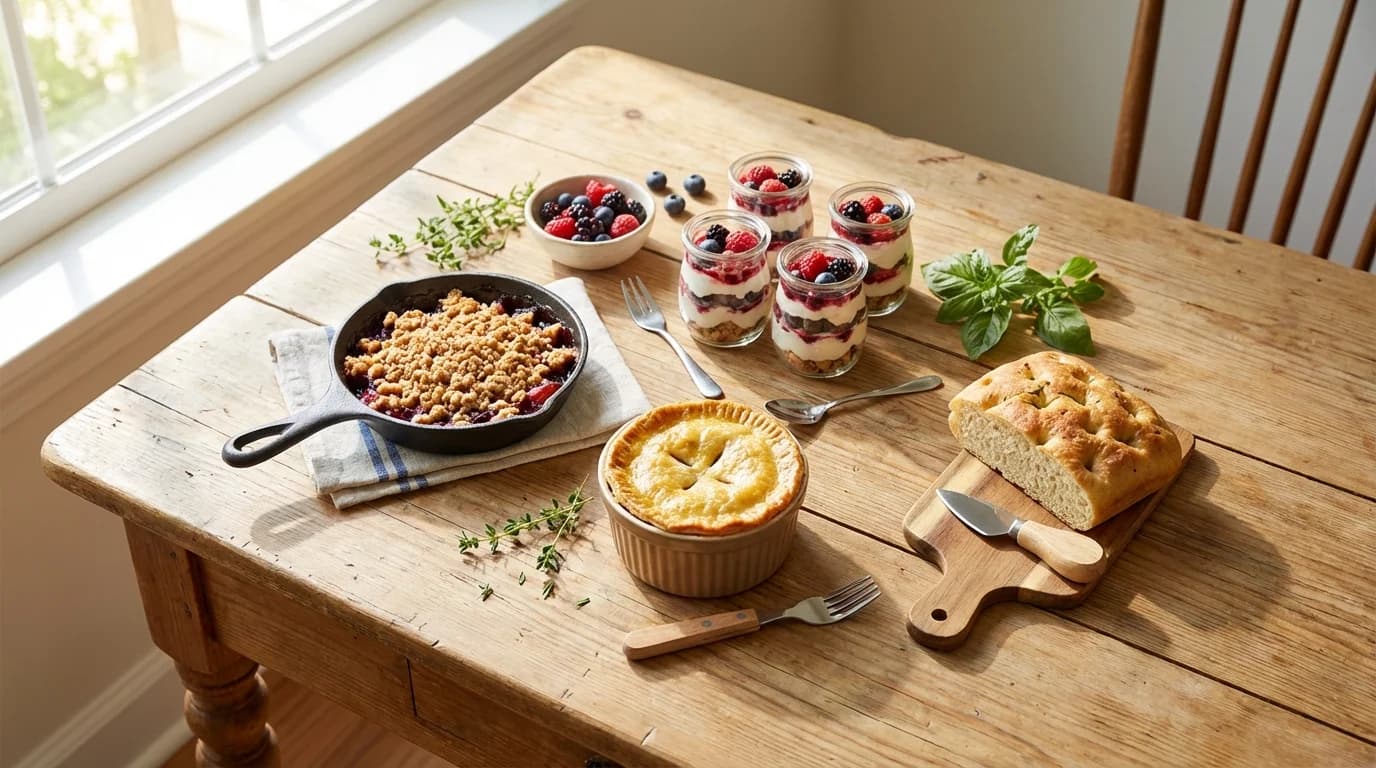
Small batch cooking is the antidote to recipe frustration for anyone tired of making meals that serve six when they only need two. This approach to cooking focuses on quality over quantity, freshness over bulk, and enjoying meals when they're at their best—not reheated for the fifth time.
Whether you're an empty nester, a couple, or cooking solo, mastering small batch techniques will revolutionize your kitchen experience.
What is Small Batch Cooking?
Small batch cooking means preparing food in quantities of 1-4 servings rather than the standard 6-8 servings most recipes yield. It's not just about dividing recipes in half—it's about rethinking your entire approach to cooking.
Core Principles:
- Cook what you'll eat fresh
- Use appropriately sized equipment
- Buy ingredients in smaller quantities
- Embrace quality over quantity
- Reduce food waste to near zero
Who Benefits:
- Empty nesters
- Couples without kids
- Singles living alone
- Anyone wanting better portion control
- People with limited storage space
The Case for Small Batch Cooking
Benefits:
- Fresher meals: Eat food at peak quality
- Less waste: Use ingredients before they spoil
- More variety: Try new recipes more often
- Better nutrition: Smaller portions mean better control
- Cost savings: No throwing away food
- Time efficiency: Smaller quantities cook faster
- Storage freedom: No refrigerator dominated by leftovers
Statistics:
- Average household wastes 30% of food purchased
- Small batch cooking can reduce waste to under 5%
- Single-person households spend 30% more per person on food
- Small batch techniques can cut this premium in half
Essential Small Batch Equipment
Right-Sized Cookware
Skillets and Pans:
- 8-inch skillet (vs standard 12-inch)
- 1.5-2 quart saucepan
- 6-8 inch cast iron pan
- Small nonstick pan
Baking:
- 8x8 baking dish (vs 9x13)
- Quarter sheet pan (vs full sheet)
- 6-inch cake pan
- Individual ramekins (6-8 oz)
- 4-cup muffin tin
Specialty:
- 2-3 quart slow cooker
- 3-quart Dutch oven
- Small food processor
- Immersion blender
Why Size Matters: Using a 12-inch pan for a single chicken breast means:
- Uneven cooking
- More oil needed
- Harder temperature control
- More cleanup
An 8-inch pan cooks single portions perfectly.
Storage Solutions
Immediate Storage:
- 2-cup containers
- Pint mason jars
- Half-pint jars for sauces
- Small freezer bags (quart size)
Prep Storage:
- Small cutting board (easier cleanup)
- Miniature mixing bowls
- 2-cup measuring cups (doubles as mixing)
Tools That Scale Down
Must-Haves:
- Kitchen scale (for precise small portions)
- Small whisk
- Silicone spatulas
- Single-serve blender cup
- Egg separator
- Small strainer
Scaling Recipes: The Math
Standard Recipe Conversion
When Recipe Serves 6: Divide all ingredients by 6 for single serving, by 3 for two servings.
Example:
- Original: 6 chicken breasts, 3 cups rice, 2 onions
- For 2: 2 chicken breasts, 1 cup rice, 2/3 onion
Tricky Ingredients
Eggs:
- 3 eggs → 1 egg (single serving)
- 2 eggs → 1 egg (can't divide eggs cleanly)
Solution: Use 1 egg plus 1-2 tablespoons water for moisture.
Canned Goods:
- 15 oz can → Use 1/2 cup, freeze rest in ice cube trays
- 28 oz tomatoes → Portion into 1-cup servings, freeze
Odd Measurements:
- 2/3 cup → About 1/3 cup (round down slightly)
- 1.5 cups → 3/4 cup
- 5 oz → 2.5 oz (use scale)
Seasonings Don't Scale Linearly
Important Rule: Don't divide seasonings by the same ratio as other ingredients.
Seasoning Scaling:
- Divide spices and herbs by 2/3 instead of 1/2
- Salt requires even less reduction
- Taste and adjust—small batches are more flexible
Example:
- Recipe for 6 calls for 2 tsp garlic powder
- Recipe for 2: Use 1 tsp (not 2/3 tsp)
- Reason: Ratio of surface area to volume changes
Small Batch Cooking Techniques
Pan Searing for One or Two
Perfect Single Protein:
- Use 8-inch pan
- Preheat over medium-high 2 minutes
- Add minimal oil (1 tsp)
- Single layer—don't crowd
- Cook without moving until golden
- Flip once, finish cooking
Why This Works: Properly sized pan means even heat distribution and perfect sear.
Small Batch Baking
Converting Baked Goods:
From 9x13 to 8x8:
- Reduce recipe by 40%
- Same temperature
- Reduce time by 20-25%
Individual Portions:
- Use ramekins or muffin tins
- Reduce baking time by 30-40%
- Check early for doneness
Example Conversion:
- Original brownie recipe: 9x13 pan, 30 minutes
- Small batch: 8x8 pan, 22-24 minutes
- Individual: Muffin tin, 15-18 minutes
Check our easy dinner ideas for more baking tips.
One-Bowl Mixing
For small batches, minimize dishes:
- Mix dry ingredients in measuring cup
- Add wet ingredients to same container
- Use immersion blender in tall container
- Clean as you go
Stovetop Efficiency
Small Batch Soups and Stews:
- Use 2-3 quart pot (not 6-quart)
- Reduce liquid by half
- Shorter cooking time (less liquid to heat)
- More concentrated flavors
Benefits:
- Cooks in 30-40 minutes vs 1-2 hours
- Less energy used
- Fresher-tasting vegetables
25 Small Batch Recipe Ideas
Breakfast (1-2 servings)
1. Small Batch Pancakes 1/2 cup flour, 1/2 cup milk, 1 egg, 1 tbsp sugar. Makes 4 pancakes.
2. Individual Frittata 2 eggs, 1/4 cup vegetables, cheese. Bake in small dish.
3. Single-Serve Baked Oatmeal 1/3 cup oats, 1/3 cup milk, fruit, bake in ramekin.
4. Mini Coffee Cake Mix in mug, microwave 90 seconds. Instant gratification.
5. Two-Person French Toast 2 slices bread, 1 egg, splash milk. Perfect couple's breakfast.
Lunch (1-2 servings)
6. Small Batch Soup 2 cups broth, vegetables, protein. Ready in 20 minutes.
7. Personal Quesadilla 1 tortilla, cheese, fillings. Quick and satisfying.
8. Mini Quiche Make in muffin tin. Freeze extras for grab-and-go.
9. Single-Serve Pasta Salad 2 oz pasta, vegetables, dressing. Perfect cold lunch.
10. Soup and Half Sandwich 1 cup soup, half sandwich. Classic combo, right-sized.
Explore our quick lunch ideas work for portable options.
Dinner (2 servings)
11. Pan-Seared Salmon for Two 2 fillets, lemon-butter sauce, roasted vegetables.
12. Small Batch Meatloaf 8 oz ground beef, form into 2 mini loaves. Cooks in 25 minutes.
13. Skillet Lasagna Layer in small skillet. One pan, two servings, 30 minutes.
14. Personal Pizzas Use pita or naan as base. Customize each one.
15. Stir-Fry for Two 8 oz protein, 2 cups vegetables, sauce. Quick and fresh.
16. Baked Chicken and Rice Small baking dish, everything cooks together.
17. Two-Person Pasta 4 oz pasta, homemade sauce, fresh ingredients.
18. Individual Pot Pies Make in ramekins. Comfort food, perfect portions.
19. Small Batch Chili Use 2-quart pot. Makes 2-3 servings, eat fresh.
20. Sheet Pan Dinner for Two 2 proteins, vegetables. One pan, 25 minutes.
Check our cooking for two recipes collection.
Sides (2-4 servings)
21. Roasted Vegetables Cut 2 cups vegetables, roast on quarter pan.
22. Small Batch Rice 1/2 cup dry rice, 1 cup water. Perfect amount.
23. Garlic Bread for Two Half baguette, butter, garlic. No waste.
24. Two-Serving Salad Make in bowl, dress just before serving.
Desserts (2-4 servings)
25. Mug Brownies Individual chocolate fix in 2 minutes.
26. Small Batch Cookies Make 4-6 cookies instead of 4 dozen.
27. Mini Fruit Crisp Bake in small dish. Warm, fresh, perfect portion.
28. Two-Person Pudding 1 cup milk, scaled-down recipe. Fresh is better.
Shopping Strategies for Small Batch Cooking
Buy Exact Quantities
Produce:
- Single apple, potato, onion (not bags)
- Small bunches herbs
- Loose vegetables by weight
- Pre-cut if it prevents waste
Proteins:
- Request single portions at counter
- Buy pre-portioned packages
- Divide bulk packages immediately
Bulk Bins:
- Buy 1/4 cup rice instead of 5-lb bag
- Get 2 tablespoons of expensive spices
- Purchase exact nut quantities
Strategic Package Buying
When to Buy Larger:
- Freezable items (divide immediately)
- Shelf-stable goods you'll definitely use
- Significant cost savings per unit
When to Buy Smaller:
- Fresh produce
- Dairy products
- Items you're trying for first time
- Expensive ingredients
Store Navigation
Best Sections:
- Butcher counter (custom portions)
- Bulk bins (exact quantities)
- Frozen aisle (pre-portioned)
- Salad bar (small amounts vegetables)
For comprehensive shopping tips, see our budget grocery shopping tips.
Meal Planning for Small Batches
The Three-Day Plan
Instead of weekly planning:
- Plan 3 days at a time
- Shop twice weekly
- Maximum freshness
- Flexibility for changes
Example 3-Day Plan:
- Day 1: Chicken and vegetables
- Day 2: Pasta with marinara (use chicken)
- Day 3: Chicken salad (use remaining chicken)
Ingredient Crossover
Smart Planning: Buy one bunch cilantro, use in:
- Monday: Chicken tacos
- Wednesday: Thai curry
- Friday: Lime-cilantro rice
Flexible Templates
Master 5 Templates:
- Protein + roasted vegetables
- Pasta + sauce + protein
- Stir-fry formula
- Grain bowl assembly
- One-pan bake
Mix and match proteins, vegetables, and seasonings.
Preservation and Storage
Freezing Small Portions
Freeze in Usable Amounts:
- 2 oz pasta portions
- 1/2 cup rice servings
- Single protein portions
- 1 cup soup servings
Label Everything:
- Contents
- Date
- Portion size
- Reheating instructions
Extending Ingredient Life
Vegetables:
- Blanch and freeze excess
- Make pesto from herbs
- Freeze chopped onions
- Dehydrate extras
Dairy:
- Freeze cheese (grate first)
- Freeze butter (stays fresh longer)
- Ice cube tray for milk
- Cream cheese freezes well
Pantry:
- Transfer to airtight containers
- Use oxygen absorbers
- Store in cool, dark place
- Buy smaller packages of flour
Common Small Batch Mistakes
Mistake 1: Using Wrong-Sized Equipment
Problem: 12-inch pan for single chicken breast.
Solution: Invest in 8-inch pans and small baking dishes.
Mistake 2: Not Adjusting Cook Times
Problem: Following original recipe times.
Solution: Reduce by 20-30%, check early for doneness.
Mistake 3: Over-Scaling Seasonings
Problem: Dividing spices by same ratio as ingredients.
Solution: Use 2/3 ratio for seasonings, taste and adjust.
Mistake 4: Buying Out of Habit
Problem: Purchasing family-sized packages.
Solution: Retrain yourself to buy small, even if costlier per ounce.
Mistake 5: Forgetting the Freezer
Problem: Trying to use everything fresh.
Solution: Embrace freezing partial ingredients and components.
Budget Considerations
Cost Per Meal Analysis
Small Batch vs Bulk:
Bulk Cooking:
- Lower cost per serving
- Higher total cost
- Food waste offsets savings
- Storage challenges
Small Batch:
- Slightly higher cost per serving
- Lower total cost
- Minimal waste
- Fresh ingredients
Reality: Small batch often costs less overall due to zero waste.
When Bulk Makes Sense
Buy Bulk:
- Shelf-stable pantry items
- Freezer-friendly proteins on sale
- Non-perishables you definitely use
- Items with long shelf life
Buy Small:
- Fresh produce
- Specialty ingredients
- Items you're testing
- Expensive proteins
Check our meals for one person budget for cost strategies.
Advanced Small Batch Techniques
Pressure Cooking
Instant Pot for Small Batches:
- Use 3-quart model if possible
- Minimum liquid requirements still apply
- Reduce recipes by 60-70%
- Same cook time (pressure doesn't scale)
Sous Vide
Perfect for Small Portions:
- Cook 1-2 proteins precisely
- Portion control built-in
- Reheat without quality loss
- Minimal equipment needs
Fermentation
Small Batch Fermenting:
- Use pint jars instead of gallon crocks
- Easier to manage
- Try new recipes without commitment
- Perfect for one or two
Small Batch Baking Deep Dive
Cookie Conversions
Standard Recipe Makes 4 Dozen:
For 6 Cookies:
- Divide all ingredients by 8
- Use 1 egg (closest to 1.5 egg math works)
- Chill dough briefly
- Same baking temperature
- Watch closely (smaller batch bakes faster)
Bread for One or Two
Mini Loaves:
- Use small loaf pans (5x3 inches)
- Divide bread recipes by 3-4
- Same rise time
- Reduce baking time by 25%
- Makes 1-2 small loaves
Cake Scaling
From 9-inch to 6-inch:
- Reduce recipe by 45%
- Same temperature
- Check 10 minutes early
- Perfect for celebrations for two
Your Small Batch Action Plan
Week 1: Equipment Assessment
- Inventory current cookware
- Identify needed small-batch tools
- Purchase 8-inch skillet and small baking dish
- Organize storage containers
Week 2: Recipe Testing
- Choose 3 small batch recipes
- Practice scaling one favorite recipe
- Test cooking times for smaller portions
- Take notes on what works
Week 3: Shopping Adaptation
- Shop for 3 days only
- Buy small quantities
- Explore bulk bins
- Track actual usage vs waste
Week 4: System Building
- Create small batch recipe collection
- Establish shopping routine
- Optimize prep workflow
- Evaluate cost and time savings
The Small Batch Lifestyle
Beyond Cooking:
- Applies to meal planning
- Shopping habits
- Storage organization
- Kitchen workflow
- Food budget
Long-Term Benefits:
- Less food waste
- More variety in diet
- Better portion control
- Fresher ingredients
- Simplified cooking
Sustainability Impact:
- 30% less food waste
- Reduced packaging
- Smaller carbon footprint
- Supports local shopping
Bottom Line
Small batch cooking isn't just about making less food—it's about making better food. It's about eating meals at their peak, trying new recipes more often, and eliminating the tyranny of endless leftovers.
The initial investment in right-sized equipment and learning to scale recipes pays dividends in fresher meals, less waste, and more enjoyment in cooking.
Start with three small batch recipes this week. Notice how much better fresh food tastes. Appreciate having variety instead of eating the same thing for days.
Small batch cooking is liberation from recipe tyranny. Embrace it.
Ready for more small-portion inspiration? Check our single serving meals easy guide for perfectly portioned recipes.
About myrecipe
myrecipe helps families save, organize, and share their favorite recipes in one place. Plan meals, create shopping lists, and preserve your culinary traditions.
Start Organizing Recipes