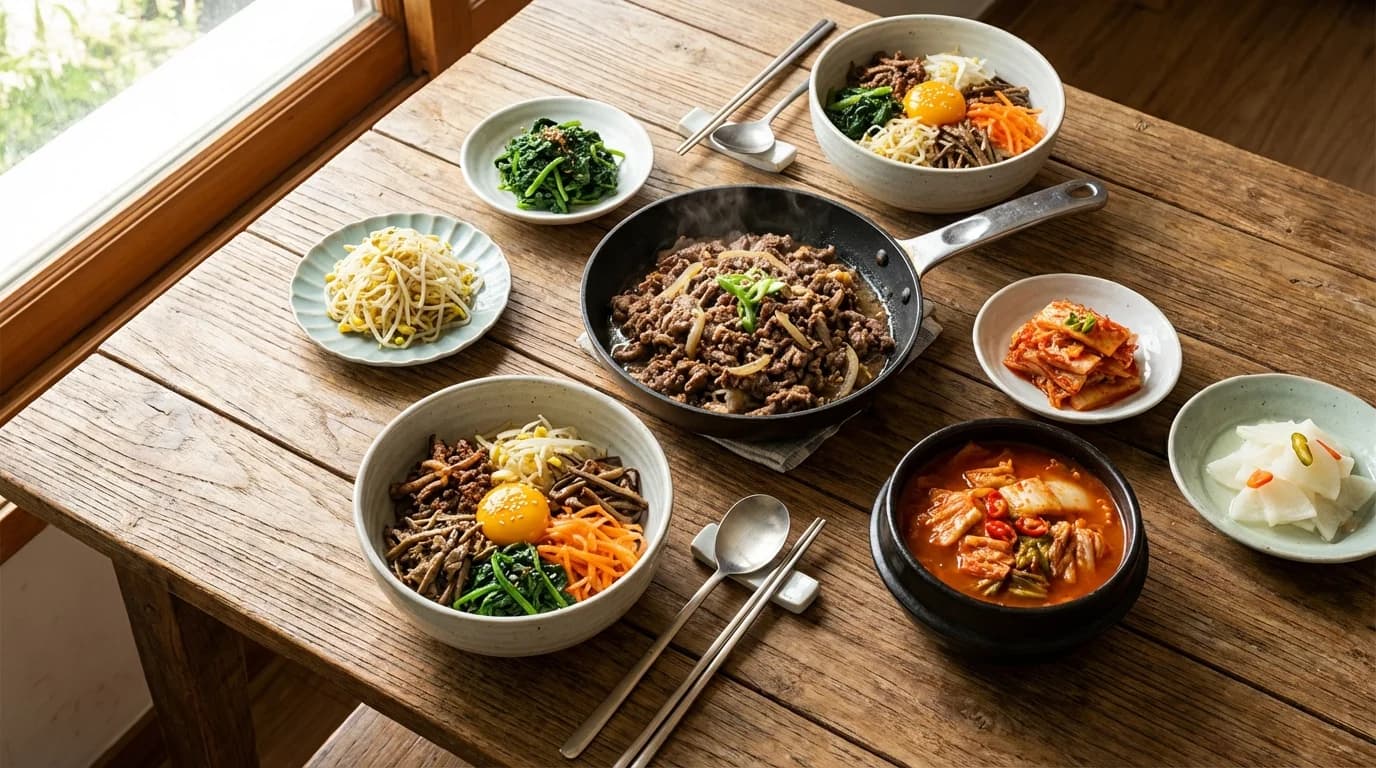
Korean cuisine has exploded in popularity worldwide, and for good reason. The food is flavorful, healthy, and incredibly satisfying. While Korean cooking might seem complex with its fermented ingredients and unfamiliar flavors, many dishes are surprisingly simple to make at home. Once you understand a few key ingredients and techniques, you'll be creating restaurant-quality Korean meals in your own kitchen.
Understanding Korean Cuisine
Korean cooking is all about balance and variety. A typical Korean meal includes rice, soup, a main protein, and several banchan (side dishes). The flavors are bold and layered, combining spicy, sweet, savory, and tangy in harmonious ways.
Core Flavor Principles
Umami: From fermented ingredients like soy sauce, doenjang, and gochujang Balance: Sweet and spicy, tangy and savory work together Fermentation: Kimchi, doenjang, and gochujang add depth Freshness: Crisp vegetables and fresh garlic balance rich flavors Communal: Dishes are meant for sharing
Essential Korean Pantry Ingredients
The Must-Haves
- Gochugaru: Korean red pepper flakes (medium heat, slightly sweet)
- Gochujang: Fermented red pepper paste (sweet, spicy, funky)
- Doenjang: Korean fermented soybean paste (similar to miso but stronger)
- Soy sauce: Regular and dark varieties
- Sesame oil: Toasted, for finishing dishes
- Rice wine: Mirin or Korean cooking wine
- Sugar: Regular white sugar
- Garlic: Fresh cloves, used generously
- Ginger: Fresh, for marinades
- Scallions: Both white and green parts
- Sesame seeds: Toasted, for garnish
Nice to Have
- Korean fish sauce
- Dried anchovies (for stock)
- Dried kelp (dashima)
- Rice vinegar
- Korean pear (for marinades)
- Korean radish (mu)
- Perilla leaves
Shopping tip: Korean grocery stores (H-Mart, 99 Ranch) stock these at much better prices than regular supermarkets.
Recipe: Kimchi Fried Rice (Kimchi Bokkeumbap)
The ultimate comfort food and best way to use leftover rice and kimchi.
Ingredients
- 3 cups cooked rice (day-old is best)
- 1 cup kimchi, chopped
- 1/4 cup kimchi juice
- 4 oz protein (pork belly, spam, or skip for vegetarian)
- 2 scallions, chopped
- 2 tablespoons gochugaru (adjust for heat)
- 1 tablespoon gochujang
- 1 tablespoon soy sauce
- 2 teaspoons sesame oil
- 2 tablespoons vegetable oil
- 4 eggs (for topping)
- Toasted sesame seeds and nori
Method
-
If using meat, cook until crispy in a wok or large pan. Remove.
-
Add vegetable oil to pan. Add kimchi, stir fry 3 minutes until slightly caramelized.
-
Add rice, breaking up clumps. Stir fry 3 minutes.
-
Add gochugaru, gochujang, soy sauce, and kimchi juice. Toss well.
-
Add scallions and sesame oil. Mix thoroughly.
-
Return meat to pan if using.
-
Fry eggs sunny-side up with crispy edges.
-
Serve rice topped with fried egg, sesame seeds, and torn nori.
The secret: Well-fermented, sour kimchi works best. The tanginess balances the richness.
This is one of the best 15 minute meals for using leftovers.
Recipe: Bulgogi (Korean BBQ Beef)
Sweet and savory marinated beef - Korea's most famous dish.
Ingredients
For the marinade:
- 1.5 pounds ribeye or sirloin, thinly sliced
- 1/2 Asian pear, grated (or substitute apple)
- 1/4 cup soy sauce
- 2 tablespoons sugar
- 2 tablespoons sesame oil
- 4 cloves garlic, minced
- 1 tablespoon fresh ginger, minced
- 2 tablespoons mirin
- 2 scallions, chopped
- 1 tablespoon sesame seeds
- Black pepper
For serving:
- Lettuce leaves
- Steamed rice
- Kimchi
- Ssamjang (Korean dipping sauce)
Method
-
Mix all marinade ingredients.
-
Add sliced beef, massage to coat. Marinate 30 minutes (or up to 24 hours).
-
Heat a large pan or grill over high heat.
-
Cook beef in batches without crowding, 2-3 minutes total. Don't overcook.
-
Serve with lettuce leaves for wrapping, rice, and kimchi.
Traditional serving: Wrap meat in lettuce with rice, kimchi, and ssamjang.
The trick: Freeze beef for 30 minutes before slicing for paper-thin slices. The pear enzymes tenderize the meat.
Perfect for meal prep on a budget.
Recipe: Bibimbap (Mixed Rice Bowl)
A colorful rice bowl with vegetables, meat, and egg - customizable and nutritious.
Ingredients
For the bowl:
- 4 cups cooked rice
- 8 oz ground beef
- 1 cup spinach
- 1 cup bean sprouts
- 1 carrot, julienned
- 4 oz mushrooms, sliced
- 4 eggs
- Sesame oil
- Salt
For gochujang sauce:
- 3 tablespoons gochujang
- 1 tablespoon sesame oil
- 1 tablespoon sugar
- 1 tablespoon water
- 1 teaspoon rice vinegar
For beef seasoning:
- 2 tablespoons soy sauce
- 1 tablespoon sugar
- 2 cloves garlic, minced
- 1 teaspoon sesame oil
Method
-
Season ground beef with soy sauce, sugar, garlic, and sesame oil. Cook until browned. Set aside.
-
Blanch spinach and bean sprouts separately. Squeeze dry. Season each with sesame oil and salt.
-
Sauté carrot until tender. Season with salt.
-
Sauté mushrooms until golden. Season with soy sauce.
-
Fry eggs sunny-side up.
-
Mix gochujang sauce ingredients.
-
Assemble: rice in bowl, arrange vegetables and beef on top in sections, egg in center.
-
Serve with gochujang sauce on the side.
-
Mix everything together before eating.
Customization: Use any vegetables you have. Zucchini, cucumber, radish all work.
Great for healthy meal prep recipes.
Recipe: Korean Fried Chicken
Crispy, double-fried chicken with sweet and spicy glaze.
Ingredients
For the chicken:
- 2 pounds chicken wings or drumsticks
- 1 cup potato starch or cornstarch
- 1/2 cup flour
- 1 teaspoon salt
- 1/2 teaspoon black pepper
- Oil for frying
For the sauce:
- 3 tablespoons gochujang
- 2 tablespoons honey
- 2 tablespoons soy sauce
- 2 tablespoons rice vinegar
- 3 cloves garlic, minced
- 1 tablespoon sesame oil
- 1 tablespoon butter
For garnish:
- Toasted sesame seeds
- Chopped scallions
Method
-
Pat chicken completely dry. This is crucial for crispiness.
-
Mix starch, flour, salt, and pepper. Coat chicken thoroughly.
-
Heat oil to 325°F. Fry chicken 10 minutes. Remove and drain.
-
Raise oil temperature to 375°F. Fry again 5-7 minutes until golden and crispy.
-
While chicken fries, make sauce: Mix all sauce ingredients in pan, simmer 3 minutes.
-
Toss hot chicken in sauce.
-
Garnish with sesame seeds and scallions.
The secret: Double frying creates the signature crispy exterior. Don't skip it.
Recipe: Japchae (Stir-Fried Glass Noodles)
Sweet and savory noodles with vegetables - a party favorite.
Ingredients
- 8 oz sweet potato glass noodles
- 8 oz protein (beef, pork, or omit)
- 1 onion, sliced
- 2 carrots, julienned
- 1 bell pepper, sliced
- 4 oz spinach
- 4 oz mushrooms, sliced
- 3 tablespoons soy sauce
- 2 tablespoons sugar
- 2 tablespoons sesame oil
- 2 cloves garlic, minced
- Vegetable oil
- Sesame seeds
Method
-
Soak noodles in warm water 30 minutes. Drain.
-
Boil noodles 5 minutes until translucent. Drain, rinse with cold water.
-
Toss noodles with 1 tablespoon soy sauce, 1 tablespoon sugar, and 1 tablespoon sesame oil.
-
If using meat, marinate with garlic, 1 tablespoon soy sauce, 1 teaspoon sesame oil.
-
Stir fry each vegetable separately with a pinch of salt. Set aside.
-
Cook meat if using.
-
In large pan, combine noodles, vegetables, and meat.
-
Add remaining soy sauce, sugar, and sesame oil. Toss everything together over medium heat.
-
Garnish with sesame seeds.
Tip: Cook vegetables separately to maintain their individual textures and colors.
Perfect for easy stir fry recipes.
Recipe: Sundubu Jjigae (Soft Tofu Stew)
Spicy, comforting stew that's ready in 20 minutes.
Ingredients
- 1 package (14 oz) soft tofu
- 4 oz protein (pork, seafood, or omit)
- 2 cups anchovy or vegetable broth
- 2 tablespoons gochugaru
- 1 tablespoon gochujang
- 2 cloves garlic, minced
- 1 tablespoon soy sauce
- 1 teaspoon sesame oil
- 1 zucchini, sliced
- 4 oz mushrooms
- 2 scallions
- 1 egg
- Sesame seeds
Method
-
In pot, cook protein with sesame oil until nearly done.
-
Add garlic, gochugaru, and gochujang. Stir 1 minute.
-
Add broth, soy sauce, zucchini, and mushrooms. Bring to boil.
-
Gently add tofu in large spoonfuls. Simmer 5 minutes.
-
Add scallions.
-
Crack egg on top. Cover 1 minute to set egg.
-
Garnish with sesame seeds.
-
Serve bubbling hot with rice.
Serving tip: Traditionally served in the same pot it's cooked in, still bubbling.
One of the best cheap soup recipes.
Recipe: Tteokbokki (Spicy Rice Cakes)
Chewy rice cakes in sweet and spicy sauce - addictive Korean street food.
Ingredients
- 1 pound Korean rice cakes (tteok)
- 2 cups water or anchovy broth
- 3 tablespoons gochugaru
- 2 tablespoons gochujang
- 2 tablespoons sugar
- 1 tablespoon soy sauce
- 2 cloves garlic, minced
- 2 scallions, chopped
- Fish cakes (optional)
- Boiled eggs (optional)
- Sesame seeds
Method
-
Soak rice cakes in warm water 10 minutes if frozen or dried.
-
Mix water, gochugaru, gochujang, sugar, soy sauce, and garlic in pan.
-
Bring to boil.
-
Add rice cakes and fish cakes if using. Simmer 10-12 minutes, stirring occasionally.
-
Sauce will thicken as rice cakes release starch.
-
Add scallions and boiled eggs if using.
-
Garnish with sesame seeds.
Consistency tip: Add water if too thick, simmer longer if too thin.
Recipe: Pajeon (Korean Scallion Pancake)
Crispy savory pancake - perfect appetizer or snack.
Ingredients
- 1 cup flour
- 1/2 cup water
- 1 egg
- 1/2 teaspoon salt
- 1 bunch scallions, cut into 3-inch pieces
- 4 oz seafood or kimchi (optional)
- Vegetable oil
For dipping sauce:
- 2 tablespoons soy sauce
- 1 tablespoon rice vinegar
- 1/2 teaspoon gochugaru
- 1 teaspoon sesame seeds
- Pinch of sugar
Method
-
Mix flour, water, egg, and salt to make batter.
-
Heat generous oil in large nonstick pan over medium-high heat.
-
Arrange scallions in pan. Pour batter over them.
-
Add seafood or kimchi if using.
-
Cook 4 minutes until golden and crispy. Flip, cook 3 minutes more.
-
Cut into squares.
-
Mix dipping sauce ingredients.
-
Serve hot with dipping sauce.
The secret: Lots of oil and high heat create the crispy edges.
Recipe: Gimbap (Korean Sushi Rolls)
Rice and vegetable rolls - perfect for lunch boxes.
Ingredients
- 3 cups cooked rice
- 1 tablespoon sesame oil
- 1 teaspoon salt
- 4 sheets roasted seaweed (gim)
- Fillings: spinach, carrots, pickled radish, egg strips, imitation crab, cucumber
Method
-
Season rice with sesame oil and salt while warm.
-
Prepare fillings: blanch spinach, julienne carrots and cucumber, cut pickled radish, make thin omelet and slice.
-
Place seaweed shiny side down on bamboo mat.
-
Spread thin layer of rice, leaving 1 inch at top.
-
Arrange fillings in line across center.
-
Roll tightly using bamboo mat.
-
Brush outside with sesame oil.
-
Slice into bite-sized pieces.
Tip: Dip knife in water between cuts for clean slices.
Perfect for meal prep lunch ideas.
Recipe: Dakgalbi (Spicy Stir-Fried Chicken)
Sweet, spicy, and packed with vegetables.
Ingredients
- 1.5 pounds chicken thighs, cut into chunks
- 2 cups cabbage, chopped
- 1 onion, sliced
- 2 sweet potatoes, sliced
- 2 scallions, chopped
- 3 tablespoons gochujang
- 2 tablespoons gochugaru
- 2 tablespoons soy sauce
- 2 tablespoons sugar
- 2 tablespoons rice wine
- 3 cloves garlic, minced
- 1 tablespoon ginger, minced
- 1 tablespoon sesame oil
- Vegetable oil
- Mozzarella cheese (optional but traditional)
Method
-
Mix gochujang, gochugaru, soy sauce, sugar, rice wine, garlic, ginger, and sesame oil.
-
Marinate chicken 30 minutes.
-
Heat oil in large pan or wok.
-
Add sweet potatoes, cook 5 minutes.
-
Add chicken with marinade, cook 5 minutes.
-
Add cabbage and onion, stir fry until chicken is cooked and vegetables tender.
-
Add scallions.
-
If using cheese, sprinkle on top at the end and let melt.
Modern twist: The cheese is a popular addition that creates amazing flavor contrast.
Great for one pot meals.
Tips for Authentic Korean Flavor
Don't skimp on garlic: Korean cooking uses A LOT of garlic. Embrace it.
Use sesame oil for finishing: It's a flavoring oil, not a cooking oil. Add at the end.
Gochugaru isn't cayenne: Korean red pepper flakes are sweeter and less spicy. Don't substitute cayenne.
Balance sweet and spicy: Korean food often has sugar to balance the heat.
Let kimchi ferment: Well-fermented, sour kimchi has the best flavor for cooking.
Toast sesame seeds: It makes a huge difference in flavor.
Common Mistakes to Avoid
Using the wrong rice: Short-grain white rice is essential. Long-grain doesn't work.
Not marinating long enough: Korean marinades need time to penetrate.
Overcooking vegetables: They should maintain some crunch.
Using old sesame oil: Sesame oil goes rancid. Buy small bottles and replace regularly.
Substituting gochugaru: The flavor is unique. It's worth finding the real thing.
Making Korean Food Work for You
Korean cuisine is ideal for home cooking:
- Most marinades can be made ahead
- Banchan (side dishes) keep for days
- Many dishes are one-pot meals
- Rice and vegetables stretch expensive proteins
- Leftovers often taste better the next day
For more meal planning strategies, see weekly meal prep ideas.
Budget-Friendly Korean Cooking
Korean cooking is naturally economical:
- Rice forms the base of most meals
- Vegetables and tofu are emphasized
- Small amounts of meat go far with marinades
- Kimchi and other banchan add variety without cost
Check out cheap healthy meals for more money-saving ideas.
Conclusion
Korean cooking at home is more accessible than you might think. While the ingredients might seem unfamiliar at first, once your pantry is stocked with gochugaru, gochujang, and sesame oil, you're equipped to make countless dishes. The techniques are straightforward - marinating, stir-frying, and building bold flavors through layering.
Start with simple dishes like kimchi fried rice or bulgogi. Master the balance of sweet, spicy, savory, and tangy that defines Korean cuisine. Learn to use gochujang and gochugaru with confidence. Before long, you'll be creating the vibrant, satisfying flavors that make Korean food so beloved.
The beauty of Korean cooking is its communal nature. These aren't fussy dishes meant for quiet solo dining - they're meant for sharing, for reaching across the table, for the satisfying mix of flavors as you combine rice, banchan, and main dishes in one perfect bite.
Stock your pantry, fire up your stove, and discover why Korean cuisine has captured hearts and taste buds around the world. Your kitchen will smell amazing, your meals will be colorful and nutritious, and you'll understand why Korean food has become one of the world's most craveable cuisines.
About myrecipe
myrecipe helps families save, organize, and share their favorite recipes in one place. Plan meals, create shopping lists, and preserve your culinary traditions.
Start Organizing Recipes