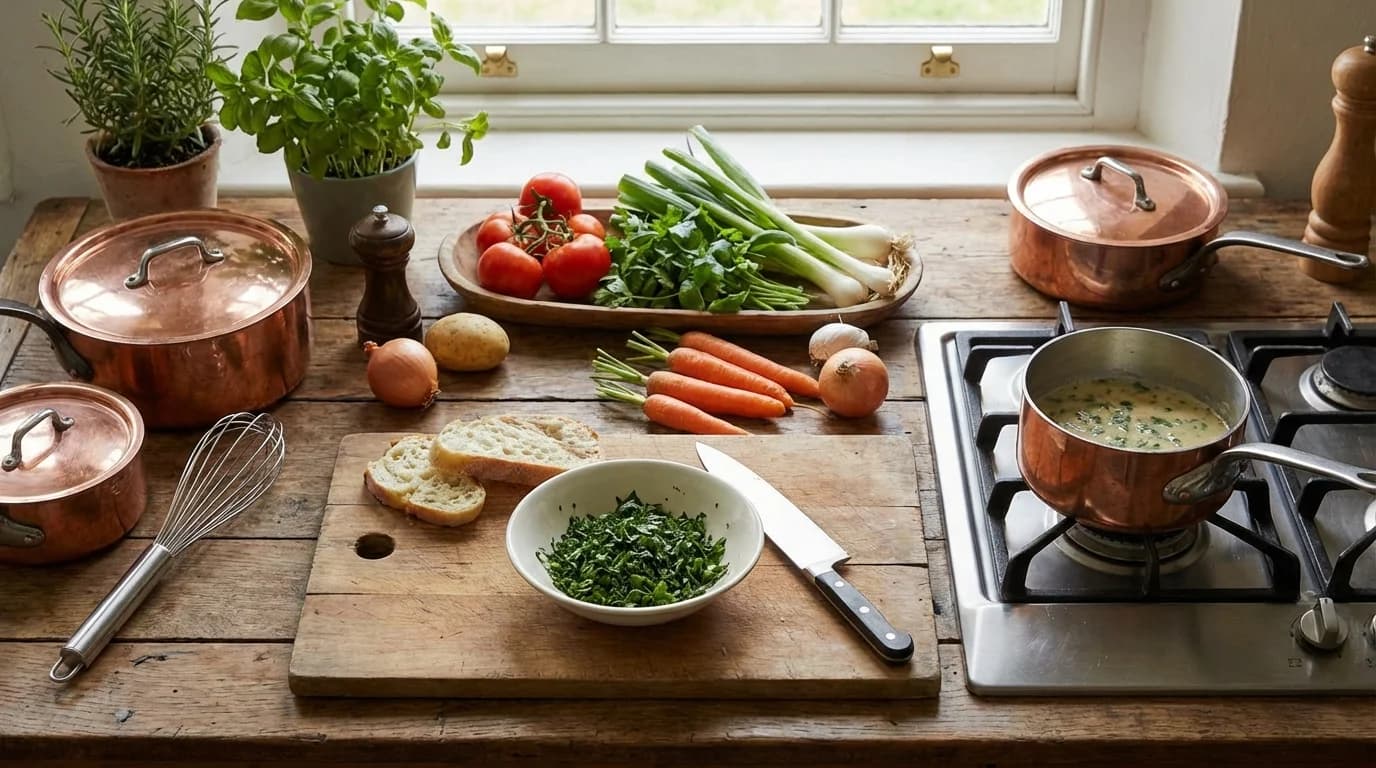
French cuisine has intimidated home cooks for generations, but the truth is that French cooking is built on fundamental techniques that anyone can master. Once you understand the basics - the mother sauces, proper sautéing, making a good stock - you have the foundation for countless classic dishes. French cooking isn't about being fancy; it's about precision, technique, and respecting ingredients.
The French Cooking Philosophy
French cuisine emphasizes technique over shortcuts. A French cook knows that properly caramelizing onions takes time, that a good stock requires patience, and that sauces need attention. But these aren't complicated skills - they're simple techniques done correctly.
Core Principles
Mise en place: Everything in its place - prep before you cook Technique: Proper methods matter more than exact recipes Quality ingredients: Fresh, seasonal, and properly sourced Layered flavors: Build complexity through proper technique Simplicity: Don't over-garnish or complicate
Essential French Techniques
The Mother Sauces
French cooking is built on five "mother sauces" that form the basis for countless variations:
Béchamel: White sauce made with butter, flour, and milk Velouté: Light sauce made with butter, flour, and white stock Espagnole: Brown sauce made with brown stock and tomatoes Hollandaise: Emulsion of egg yolks, butter, and lemon Tomato: Tomato-based sauce with aromatics
Master these five and you've mastered French sauce-making.
Knife Skills
French cooking demands proper knife skills:
- Brunoise: Tiny uniform dice (1-2mm)
- Mirepoix: Diced aromatics (onion, carrot, celery)
- Julienne: Thin matchstick cuts
- Chiffonade: Thin ribbon cuts for herbs
Sharp knives and uniform cuts ensure even cooking.
Sautéing
The cornerstone of French cooking - cooking food quickly in a small amount of fat over high heat. The pan should be hot, ingredients dry, and movement constant.
Essential French Pantry
Basics
- Butter: Unsalted, high-quality European-style if possible
- Flour: All-purpose for roux and baking
- Dijon mustard: Essential for vinaigrettes and sauces
- Wine: Dry white and red for cooking
- Chicken and beef stock: Homemade or quality store-bought
- Heavy cream: For sauces and finishing
- Fresh herbs: Thyme, rosemary, tarragon, parsley, chives
- Shallots: Preferred over onions for delicate dishes
- Good olive oil: For vinaigrettes
- Peppercorns: For freshly ground pepper
Nice to Have
- Cognac or brandy
- Herbes de Provence
- Crème fraîche
- Capers
- Cornichons (tiny pickles)
- Quality vinegars (red wine, white wine, champagne)
Recipe: Classic French Omelet
The ultimate test of technique - simple ingredients, perfect execution.
Ingredients
- 3 large eggs
- 1 tablespoon butter
- Salt and pepper
- Fresh herbs (optional)
Method
-
Beat eggs with fork just until combined (not frothy). Season with salt and pepper.
-
Heat 8-inch nonstick pan over medium-high heat. Add butter.
-
When butter foams, add eggs.
-
Using a fork, stir eggs constantly while shaking the pan.
-
When eggs are still slightly wet but mostly set, stop stirring.
-
Tilt pan and use fork to fold omelet into thirds.
-
Slide onto plate, seam side down.
The goal: Pale yellow outside, creamy inside, no browning.
This is one of the best quick breakfast ideas once you master it.
Recipe: Coq au Vin (Chicken in Red Wine)
A bistro classic that's easier than you think.
Ingredients
- 4 chicken thighs and 4 drumsticks
- 6 slices bacon, cut into pieces
- 2 tablespoons flour
- 1 bottle red wine (Burgundy or Pinot Noir)
- 2 cups chicken stock
- 2 tablespoons tomato paste
- 3 cloves garlic, smashed
- 1 bay leaf
- 4 sprigs fresh thyme
- 8 oz mushrooms, quartered
- 12 pearl onions
- 2 tablespoons butter
- Fresh parsley
- Salt and pepper
Method
-
Season chicken with salt and pepper.
-
Cook bacon in Dutch oven until crisp. Remove.
-
Brown chicken in bacon fat on all sides. Remove.
-
Add onions and mushrooms, cook until golden. Remove.
-
Add flour to pot, cook 1 minute.
-
Add wine, stock, tomato paste, garlic, bay leaf, and thyme. Bring to simmer.
-
Return chicken to pot. Cover, simmer 45 minutes.
-
Add mushrooms and onions, cook 15 minutes more.
-
Stir in butter. Garnish with bacon and parsley.
Perfect for slow cooker meals - transfer to slow cooker after browning.
Recipe: Boeuf Bourguignon (Beef Burgundy)
The ultimate French comfort food - rich, hearty, and deeply flavorful.
Ingredients
- 3 pounds beef chuck, cut into 2-inch pieces
- 6 slices bacon
- 2 tablespoons flour
- 1 bottle red Burgundy wine
- 2 cups beef stock
- 2 tablespoons tomato paste
- 1 large carrot, sliced
- 1 onion, chopped
- 4 cloves garlic, smashed
- Bouquet garni (thyme, bay, parsley tied together)
- 8 oz pearl onions
- 8 oz mushrooms
- 2 tablespoons butter
- Salt and pepper
Method
-
Cook bacon until crisp, remove.
-
Dry beef thoroughly. Brown in batches in bacon fat. Remove.
-
Cook carrot and onion until soft.
-
Add flour, cook 1 minute.
-
Add wine, stock, tomato paste, garlic, and bouquet garni.
-
Return beef to pot. Bring to simmer.
-
Cover, cook in 325°F oven for 2.5 hours.
-
Sauté mushrooms and pearl onions in butter until golden.
-
Add to stew, cook 30 minutes more.
-
Discard bouquet garni. Stir in butter.
Tip: This tastes better the next day. Make ahead for meal prep.
Recipe: Quiche Lorraine
A French classic - savory custard tart with bacon.
Ingredients
For the pastry:
- 1.25 cups flour
- 1/2 cup cold butter, cubed
- 1 egg yolk
- 3 tablespoons cold water
- Pinch of salt
For the filling:
- 6 slices bacon, cooked and crumbled
- 1 cup Gruyère cheese, grated
- 4 eggs
- 1.5 cups heavy cream
- Pinch of nutmeg
- Salt and pepper
Method
-
Make pastry: Pulse flour, salt, and butter until crumbly. Add egg yolk and water, pulse until it comes together. Chill 30 minutes.
-
Roll pastry and line 9-inch tart pan. Prick with fork. Chill 15 minutes.
-
Blind bake: Line with parchment, fill with pie weights. Bake at 375°F for 15 minutes. Remove weights, bake 5 minutes more.
-
Scatter bacon and cheese over crust.
-
Whisk eggs, cream, nutmeg, salt, and pepper.
-
Pour over bacon and cheese.
-
Bake at 350°F for 35-40 minutes until just set.
-
Cool 10 minutes before slicing.
Excellent for make ahead meals and brunches.
Recipe: Ratatouille
Provençal vegetable stew - simple, healthy, and versatile.
Ingredients
- 1 eggplant, diced
- 2 zucchini, diced
- 1 bell pepper, diced
- 1 onion, diced
- 4 tomatoes, chopped
- 4 cloves garlic, minced
- Fresh basil and thyme
- Olive oil
- Salt and pepper
Method
-
Salt eggplant and let drain 30 minutes. Pat dry.
-
Cook each vegetable separately in olive oil until tender. This is important for texture.
-
In the same pan, cook onion and garlic until soft.
-
Add tomatoes, cook 10 minutes.
-
Return all vegetables to pan with herbs.
-
Simmer 15 minutes to marry flavors.
-
Adjust seasoning.
Serving ideas: Hot as a side, room temperature with bread, over pasta, with eggs.
Great for cheap vegetarian meals.
Recipe: Crêpes
Thin, delicate pancakes - sweet or savory.
Ingredients
- 1 cup flour
- 2 eggs
- 1.5 cups milk
- 2 tablespoons melted butter
- Pinch of salt
- 1 tablespoon sugar (for sweet crêpes)
Method
-
Whisk eggs and milk.
-
Add flour, salt, and sugar. Whisk until smooth.
-
Stir in melted butter.
-
Let batter rest 30 minutes.
-
Heat small nonstick pan over medium heat. Butter lightly.
-
Pour 1/4 cup batter, immediately swirl to coat pan.
-
Cook 1 minute until edges lift. Flip, cook 30 seconds.
-
Repeat with remaining batter.
Sweet filling ideas: Nutella, jam, lemon and sugar Savory filling ideas: Ham and cheese, mushrooms, spinach
Perfect for quick breakfast ideas or dessert.
Recipe: French Onion Soup
Rich, caramelized onions in beef broth with melted cheese.
Ingredients
- 4 large onions, thinly sliced
- 4 tablespoons butter
- 1 teaspoon sugar
- 6 cups beef stock
- 1/2 cup dry white wine
- Bay leaf and thyme
- Baguette slices, toasted
- Gruyère cheese, grated
- Salt and pepper
Method
-
Melt butter in large pot over medium heat.
-
Add onions and sugar. Cook 45-60 minutes, stirring occasionally, until deep golden brown. Don't rush this step.
-
Add wine, scrape up browned bits.
-
Add stock, bay leaf, and thyme. Simmer 30 minutes.
-
Season with salt and pepper.
-
Ladle into oven-safe bowls.
-
Top with toasted baguette and cheese.
-
Broil until cheese is melted and bubbly.
The long caramelization time makes this perfect for lazy dinner ideas - it mostly cooks itself.
Recipe: Steak Frites (Steak with French Fries)
Bistro perfection - a perfect steak with crispy fries.
For the steak:
- 2 ribeye or strip steaks (1 inch thick)
- 2 tablespoons butter
- Fresh thyme
- Salt and pepper
Method
-
Bring steak to room temperature. Season generously with salt and pepper.
-
Heat cast iron pan until smoking hot.
-
Add steaks, cook 3-4 minutes without moving.
-
Flip, add butter and thyme. Cook 3-4 minutes, basting with butter.
-
Rest 5 minutes before slicing.
For the frites:
-
Cut potatoes into thin matchsticks.
-
Soak in cold water 30 minutes.
-
Dry thoroughly.
-
Fry at 325°F for 5 minutes. Drain.
-
Raise heat to 375°F. Fry again until golden and crispy.
-
Season with salt immediately.
Shortcut: Use frozen fries for weeknights. Save the double-fry method for special occasions.
Recipe: Mousse au Chocolat
Classic French chocolate mousse - rich, airy, and decadent.
Ingredients
- 6 oz dark chocolate, chopped
- 3 tablespoons butter
- 3 eggs, separated
- 2 tablespoons sugar
- Pinch of salt
Method
-
Melt chocolate and butter together. Let cool slightly.
-
Stir in egg yolks one at a time.
-
Beat egg whites with salt until soft peaks form.
-
Add sugar, beat until stiff peaks.
-
Fold 1/3 of whites into chocolate to lighten.
-
Gently fold in remaining whites.
-
Divide among serving glasses.
-
Chill at least 2 hours.
Note: This contains raw eggs. Use pasteurized if concerned.
Recipe: Chicken Fricassee
A white stew - creamy, comforting, and elegant.
Ingredients
- 4 chicken thighs and 4 drumsticks
- 2 tablespoons butter
- 2 tablespoons flour
- 2 cups chicken stock
- 1 cup white wine
- 8 oz mushrooms, sliced
- 12 pearl onions
- 1/2 cup heavy cream
- Fresh tarragon
- Salt and pepper
Method
-
Season chicken with salt and pepper.
-
Melt butter in Dutch oven. Add chicken, cook 5 minutes per side (don't brown).
-
Remove chicken. Add mushrooms and onions, cook until soft.
-
Add flour, stir 1 minute.
-
Add stock and wine, bring to simmer.
-
Return chicken, cover, simmer 30 minutes.
-
Stir in cream and tarragon.
Great for one pot meals.
Essential French Techniques Explained
Making a Roux
The foundation of many sauces:
- Melt butter in pan
- Add equal amount flour
- Cook, stirring, to desired color (white, blonde, or brown)
White roux: 2-3 minutes (for béchamel) Blonde roux: 5 minutes (for velouté) Brown roux: 15-20 minutes (for espagnole)
Deglazing
After sautéing, add wine or stock to hot pan and scrape up browned bits (fond). This captures flavor that would otherwise be lost.
Reducing
Simmering liquid to evaporate water and concentrate flavor. Most French sauces are reduced to thicken and intensify taste.
Tempering
Gradually adding hot liquid to eggs to raise their temperature without scrambling. Essential for custards and some sauces.
Common Mistakes to Avoid
Rushing caramelization: Whether it's onions or meat, proper browning takes time.
Cold butter in sauces: Butter should be cold when whisked into sauces to create emulsion.
Overcrowding the pan: Leads to steaming instead of browning.
Not seasoning enough: French cooking requires proper seasoning at every stage.
Using the wrong wine: Don't cook with wine you wouldn't drink.
Skipping the rest: Whether meat or pastry, rest periods are crucial.
Tips for Success
Invest in good tools: Heavy Dutch oven, quality knives, proper pans make a difference.
Temperature matters: Room temperature ingredients emulsify better, cold butter makes flakier pastry.
Taste constantly: Adjust seasoning throughout cooking, not just at the end.
Use quality butter: French cooking depends on good butter. European-style is worth it.
Master one recipe completely: Before moving on, perfect one dish. Technique transfers.
Don't skip steps: French recipes have reasons for every step. Follow them.
Making French Cooking Accessible
French techniques apply to everyday cooking:
- Proper browning improves any meat dish
- A simple pan sauce elevates weeknight chicken
- Vinaigrette beats bottled dressing
- Homemade stock transforms soups
For more everyday applications, see our easy dinner ideas.
Conclusion
French cooking basics aren't about being fancy - they're about understanding why techniques work and executing them properly. A perfectly caramelized onion, a properly emulsified sauce, a steak with a good crust - these fundamentals elevate every dish you make, French or otherwise.
Start with simple techniques: make a roux, properly sauté vegetables, create a pan sauce. Master these foundations and you'll find that classic French recipes aren't intimidating - they're simply combinations of techniques you already know.
The beauty of French cooking is that it teaches you to think like a cook, not just follow recipes. Once you understand why you caramelize onions slowly, why you rest meat, why you deglaze pans, you can apply these principles to any cuisine. French technique is universal technique.
Don't be intimidated by fancy names or complex-seeming recipes. Break them into steps, master the techniques one at a time, and soon you'll be creating bistro-quality meals with confidence. After all, French home cooking is simply good technique applied to quality ingredients - and anyone can learn that.
About myrecipe
myrecipe helps families save, organize, and share their favorite recipes in one place. Plan meals, create shopping lists, and preserve your culinary traditions.
Start Organizing Recipes