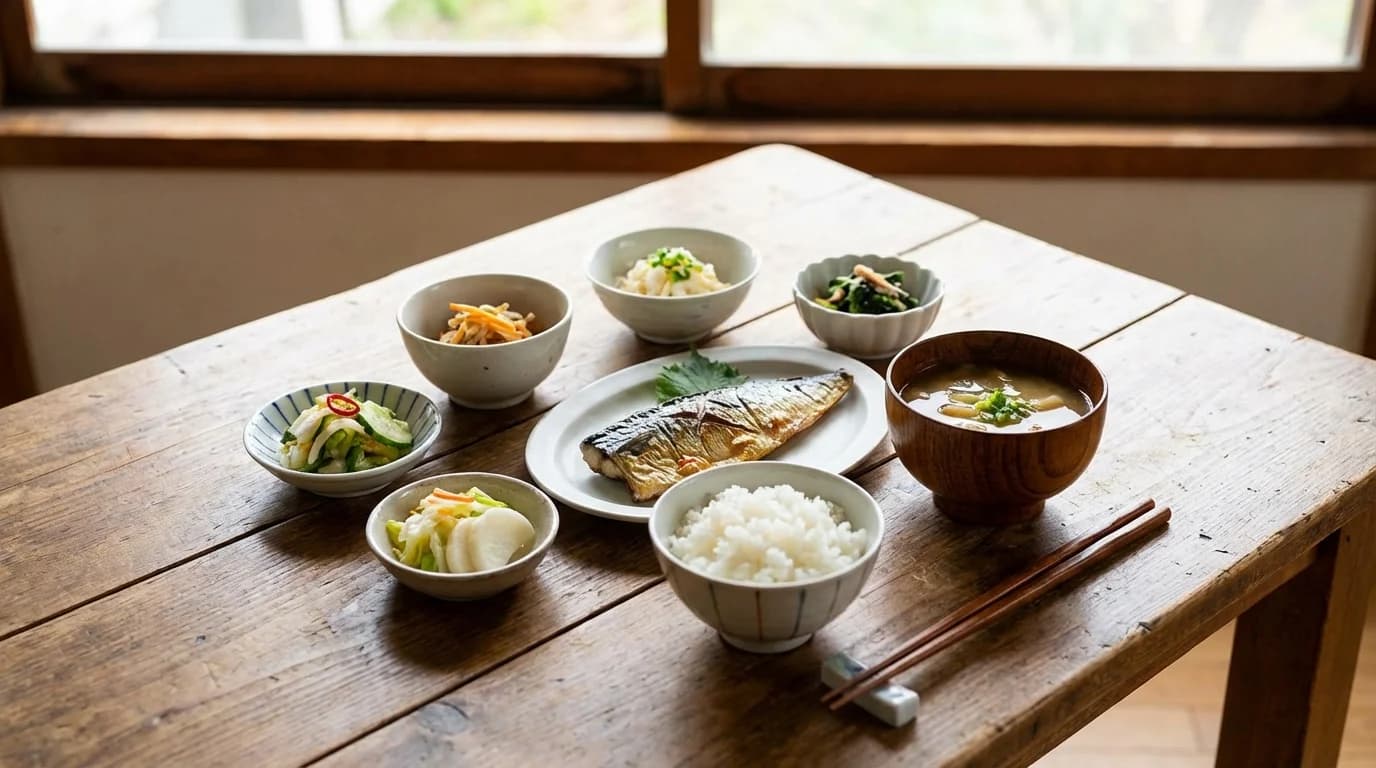
Japanese home cooking (washoku) is fundamentally different from restaurant Japanese food. It's simpler, more comforting, and focused on highlighting the natural flavors of quality ingredients. You don't need specialized equipment or hard-to-find ingredients to create authentic Japanese meals at home - just an understanding of a few key principles and pantry staples.
The Philosophy of Japanese Home Cooking
Japanese cuisine is built on respect for ingredients. The goal isn't to transform ingredients through heavy seasoning or complex techniques, but to prepare them in ways that showcase their inherent qualities. This philosophy makes Japanese cooking both simple and demanding - simple in method, demanding in ingredient quality.
The Five Principles
Umami: The fifth taste - savory depth from dashi, soy sauce, miso, and mushrooms Balance: Not just of flavors, but colors, textures, and temperatures Seasonality: Use ingredients at their peak Simplicity: Let ingredients speak for themselves Mindfulness: Care in preparation shows respect for food
Essential Japanese Pantry Ingredients
The Foundation
- Soy sauce: Both light (koikuchi) and dark varieties
- Mirin: Sweet cooking rice wine
- Sake: For cooking (drinking sake works too)
- Rice vinegar: Mild and slightly sweet
- Miso paste: White (mild) and red (strong) varieties
- Dashi: The foundation of Japanese cooking (bonito and kelp stock)
- Short-grain Japanese rice: Sticky and slightly sweet
- Sesame oil: For finishing (toasted)
- Nori: Dried seaweed sheets
Supporting Ingredients
- Panko breadcrumbs
- Potato starch or cornstarch
- Ginger (fresh)
- Scallions
- Bonito flakes (katsuobushi)
- Kombu (dried kelp)
- Wasabi
- Pickled ginger
Budget tip: Start with soy sauce, mirin, rice, and miso. These four ingredients cover most basic recipes.
Making Dashi: The Foundation of Japanese Cooking
Dashi is a simple stock that provides umami depth to countless dishes. It's the difference between good and great Japanese cooking.
Basic Dashi (Ichiban Dashi)
Ingredients:
- 4 cups cold water
- 1 piece kombu (about 4 inches square)
- 1 cup bonito flakes
Method:
- Wipe kombu with damp cloth (don't wash - the white powder is flavor)
- Soak kombu in cold water for 30 minutes
- Heat water with kombu until just before boiling
- Remove kombu
- Add bonito flakes, turn off heat
- Let steep 5 minutes
- Strain through cheesecloth
Quick version: Use instant dashi powder (hon-dashi). Not as good, but convenient.
Recipe: Teriyaki Chicken
The most recognized Japanese dish in the West - and easy to make authentically.
Ingredients
- 1 pound chicken thighs
- 3 tablespoons soy sauce
- 3 tablespoons mirin
- 2 tablespoons sake
- 1 tablespoon sugar
- 1 teaspoon fresh ginger, grated
- 1 tablespoon vegetable oil
- Sesame seeds for garnish
Method
-
Mix soy sauce, mirin, sake, sugar, and ginger for the teriyaki sauce.
-
Heat oil in a pan over medium-high heat.
-
Add chicken skin-side down. Cook 5 minutes until golden.
-
Flip chicken, cook 4 minutes more.
-
Pour sauce over chicken. Reduce heat to medium.
-
Cook, basting frequently, until sauce thickens and coats chicken (about 5 minutes).
-
The sauce should be glossy and sticky.
-
Sprinkle with sesame seeds. Serve over rice.
The key: The sauce should reduce and caramelize slightly. Don't rush this step.
Perfect for chicken meal prep - it reheats beautifully.
Recipe: Miso Soup
The quintessential Japanese comfort food - simple, nourishing, and endlessly variable.
Ingredients
- 4 cups dashi
- 3 tablespoons miso paste (white or red)
- 1/2 block silken tofu, cubed
- 2 scallions, sliced
- Wakame seaweed, rehydrated (optional)
Method
-
Heat dashi until steaming (don't boil).
-
Add tofu and wakame, simmer gently 2 minutes.
-
Turn off heat.
-
Put miso in a small bowl. Add a ladle of hot dashi and whisk until smooth.
-
Pour miso mixture back into pot. Stir gently.
-
Add scallions.
-
Serve immediately.
Important: Never boil miso. Boiling destroys the beneficial probiotics and makes it bitter.
Variations: Add mushrooms, spinach, clams, or daikon radish.
This is one of the best 10 minute meals you can make.
Recipe: Gyudon (Beef Bowl)
A popular Japanese fast food - sweet and savory beef over rice.
Ingredients
- 1 pound thinly sliced beef (ribeye or sirloin)
- 1 large onion, sliced
- 1 cup dashi
- 3 tablespoons soy sauce
- 2 tablespoons mirin
- 1 tablespoon sake
- 1 tablespoon sugar
- 2 scallions, sliced
- Pickled ginger for serving
- Cooked rice
Method
-
Mix dashi, soy sauce, mirin, sake, and sugar in a pan.
-
Add onions, bring to simmer. Cook 5 minutes until soft.
-
Add beef, separating slices. Cook 3-4 minutes.
-
Serve over steaming rice.
-
Top with scallions and pickled ginger.
Time-saver: This comes together in 15 minutes, making it ideal for quick weeknight dinners.
Recipe: Chicken Katsu
Crispy breaded chicken cutlets - Japanese comfort food at its finest.
Ingredients
- 2 chicken breasts, pounded thin
- Salt and pepper
- 1/2 cup flour
- 2 eggs, beaten
- 1 cup panko breadcrumbs
- Vegetable oil for frying
For tonkatsu sauce:
- 1/4 cup ketchup
- 2 tablespoons Worcestershire sauce
- 1 tablespoon soy sauce
- 1 tablespoon mirin
- 1 teaspoon sugar
Method
-
Season chicken with salt and pepper.
-
Set up breading station: flour, eggs, panko in separate shallow dishes.
-
Coat chicken: flour, then egg, then panko. Press panko to adhere.
-
Heat 1/2 inch oil in a pan to 350°F.
-
Fry chicken 4 minutes per side until golden and cooked through.
-
Drain on paper towels.
-
Mix sauce ingredients.
-
Slice chicken and serve over rice or shredded cabbage. Drizzle with sauce.
Tip: Panko creates a lighter, crispier crust than regular breadcrumbs.
Recipe: Oyakodon (Chicken and Egg Rice Bowl)
Literally "parent and child bowl" - chicken and eggs simmered together.
Ingredients
- 2 chicken thighs, cut into bite-sized pieces
- 1 onion, sliced
- 4 eggs
- 1 cup dashi
- 3 tablespoons soy sauce
- 2 tablespoons mirin
- 1 tablespoon sugar
- 2 scallions, sliced
- Cooked rice
Method
-
Mix dashi, soy sauce, mirin, and sugar in a pan.
-
Add onion, simmer 5 minutes.
-
Add chicken, cook 5 minutes until done.
-
Beat eggs lightly (don't overmix - you want streaks).
-
Pour eggs over chicken in a circular motion.
-
Cover, cook 1-2 minutes until eggs are just set but still soft.
-
Slide over rice, garnish with scallions.
The secret: Don't overcook the eggs. They should be custardy, not rubbery.
This is perfect for budget meal prep.
Recipe: Japanese Curry Rice
Different from Indian curry - slightly sweet, savory, and thick.
Ingredients
- 1 pound meat (chicken, pork, or beef), cubed
- 2 potatoes, cubed
- 2 carrots, sliced
- 1 onion, sliced
- 4 cups water
- 1 box Japanese curry roux (S&B Golden Curry is popular)
- 2 tablespoons vegetable oil
- Cooked rice
Method
-
Heat oil in pot. Brown meat on all sides.
-
Add onion, cook until soft.
-
Add water, potatoes, and carrots. Bring to boil.
-
Reduce heat, simmer 20 minutes until vegetables are tender.
-
Turn off heat. Break curry roux into pieces and add to pot.
-
Stir until dissolved.
-
Return to low heat, simmer 10 minutes until thick.
-
Serve over rice.
Note: The roux blocks contain flour and spices pre-mixed. They're not cheating - they're standard in Japanese homes.
Perfect for one pot meals that please everyone.
Recipe: Ginger Pork (Shogayaki)
Simple, flavorful, and ready in minutes.
Ingredients
- 1 pound thinly sliced pork loin
- 3 tablespoons soy sauce
- 2 tablespoons mirin
- 1 tablespoon sake
- 2 tablespoons fresh ginger, grated
- 1 tablespoon vegetable oil
- Shredded cabbage for serving
Method
-
Mix soy sauce, mirin, sake, and ginger.
-
Marinate pork 15 minutes.
-
Heat oil in pan over high heat.
-
Add pork in a single layer. Cook 2 minutes per side.
-
Add remaining marinade, cook 1 minute until sauce thickens.
-
Serve over rice with shredded cabbage.
This is a staple 15 minute meal.
Recipe: Tamagoyaki (Japanese Rolled Omelet)
Sweet rolled omelet - a bento box essential.
Ingredients
- 4 eggs
- 2 tablespoons dashi
- 1 tablespoon sugar
- 1/2 tablespoon soy sauce
- Vegetable oil for cooking
Method
-
Beat eggs with dashi, sugar, and soy sauce.
-
Heat a small rectangular pan (or regular pan) over medium heat. Oil lightly.
-
Pour thin layer of egg mixture into pan.
-
When partially set, roll egg to one end of pan.
-
Oil empty part of pan, pour in more egg mixture, lifting rolled portion to let egg flow underneath.
-
Roll again, incorporating the new layer.
-
Repeat until egg is used up.
-
Let cool slightly, slice into pieces.
Alternative: Use a regular pan and roll into a cylinder. It won't be perfectly rectangular but will taste the same.
Recipe: Yakisoba (Stir-Fried Noodles)
Japanese comfort food - quick, satisfying, and customizable.
Ingredients
- 12 oz fresh yakisoba noodles (or substitute ramen noodles)
- 8 oz protein (pork, chicken, or shrimp)
- 2 cups cabbage, chopped
- 1 carrot, julienned
- 1 onion, sliced
- 3 tablespoons yakisoba sauce (or mix Worcestershire, soy sauce, ketchup)
- 2 tablespoons vegetable oil
- Pickled ginger and aonori (seaweed powder) for topping
Method
-
If using fresh noodles, rinse under hot water to separate.
-
Heat oil in wok or large pan.
-
Cook protein until done, remove.
-
Add vegetables, stir fry until tender-crisp.
-
Add noodles, stir fry 2 minutes.
-
Return protein to pan.
-
Add sauce, toss everything together.
-
Top with pickled ginger and aonori.
Great for easy stir fry recipes.
Recipe: Onigiri (Rice Balls)
The ultimate portable meal - simple rice balls with various fillings.
Ingredients
- 3 cups cooked short-grain rice (still warm)
- Salt
- Fillings: cooked salmon, umeboshi (pickled plum), tuna mayo, grilled salmon
- Nori strips
Method
-
Wet hands with water, rub with salt.
-
Take 1/2 cup rice, make indentation in center.
-
Add filling.
-
Cover with more rice, shape into triangle.
-
Wrap with nori strip.
Variations: Mix ingredients into rice (sesame seeds, furikake) or keep plain.
Perfect for meal prep lunch ideas.
Recipe: Chawanmushi (Savory Egg Custard)
Delicate steamed egg custard - comfort in a bowl.
Ingredients
- 3 eggs
- 1.5 cups dashi, cooled
- 1 tablespoon soy sauce
- 1 teaspoon mirin
- 4 shrimp
- 4 mushrooms, sliced
- Spinach or other greens
Method
-
Beat eggs gently (avoid bubbles).
-
Mix in cooled dashi, soy sauce, and mirin. Strain.
-
Divide shrimp, mushrooms, and greens among 4 small bowls or cups.
-
Pour egg mixture over ingredients.
-
Cover with foil.
-
Steam over medium heat for 15 minutes until just set.
Test: Insert toothpick - if it comes out clean, it's done.
Tips for Authentic Japanese Cooking
Rice is crucial: Short-grain Japanese rice is essential. Medium-grain can substitute; long-grain cannot.
Quality over quantity: Japanese portions are smaller than Western servings but higher quality.
Balance your meal: A traditional meal has rice, soup, main dish, and pickles.
Use fresh ginger: Ground ginger doesn't work in Japanese cooking.
Don't overcomplicate: Japanese home cooking is simple. Resist the urge to add extra ingredients.
Presentation matters: Take an extra moment to arrange food attractively.
Common Mistakes to Avoid
Boiling miso: Always add miso after removing from heat.
Overcooking fish: Japanese-style fish is tender and moist, not dry.
Wrong rice: Jasmine or basmati won't work for Japanese dishes.
Too much sauce: Japanese cooking is subtle. Less is more.
Skipping dashi: It provides the umami foundation. Instant dashi is acceptable; plain water isn't.
Meal Planning Japanese-Style
Japanese home cooking is ideal for simple meal planning:
Basic template:
- Rice
- Miso soup
- Protein (fish or meat)
- Vegetable side
- Pickles
This structure works for endless variations. For more ideas, see our weekly meal prep ideas.
Budget-Friendly Japanese Cooking
Japanese home cooking is naturally economical:
- Rice stretches expensive proteins
- Tofu and eggs are cheap proteins
- Seasonal vegetables are emphasized
- Nothing goes to waste
Check out cheap healthy meals for more money-saving strategies.
Conclusion
Japanese home cooking is more approachable than you might think. It's not about mastering complex sushi techniques or sourcing rare ingredients. It's about understanding a few fundamental flavors - soy sauce, mirin, sake, dashi - and using them to highlight quality ingredients.
Start with simple dishes like teriyaki chicken or miso soup. Master the art of cooking perfect rice. Learn to make basic dashi. These foundations will carry you through countless Japanese meals.
The beauty of Japanese home cooking is its restraint. You don't need dozens of spices or elaborate preparations. A perfectly grilled piece of fish with a squeeze of lemon, served over rice with miso soup and pickles, is a complete and satisfying meal.
Embrace the simplicity. Respect your ingredients. Take care in presentation. These are the principles that make Japanese home cooking both easy to execute and deeply rewarding to experience. Your kitchen will smell amazing, your meals will be balanced and nourishing, and you'll discover why Japanese cuisine has captivated the world with its elegant simplicity.
About myrecipe
myrecipe helps families save, organize, and share their favorite recipes in one place. Plan meals, create shopping lists, and preserve your culinary traditions.
Start Organizing Recipes