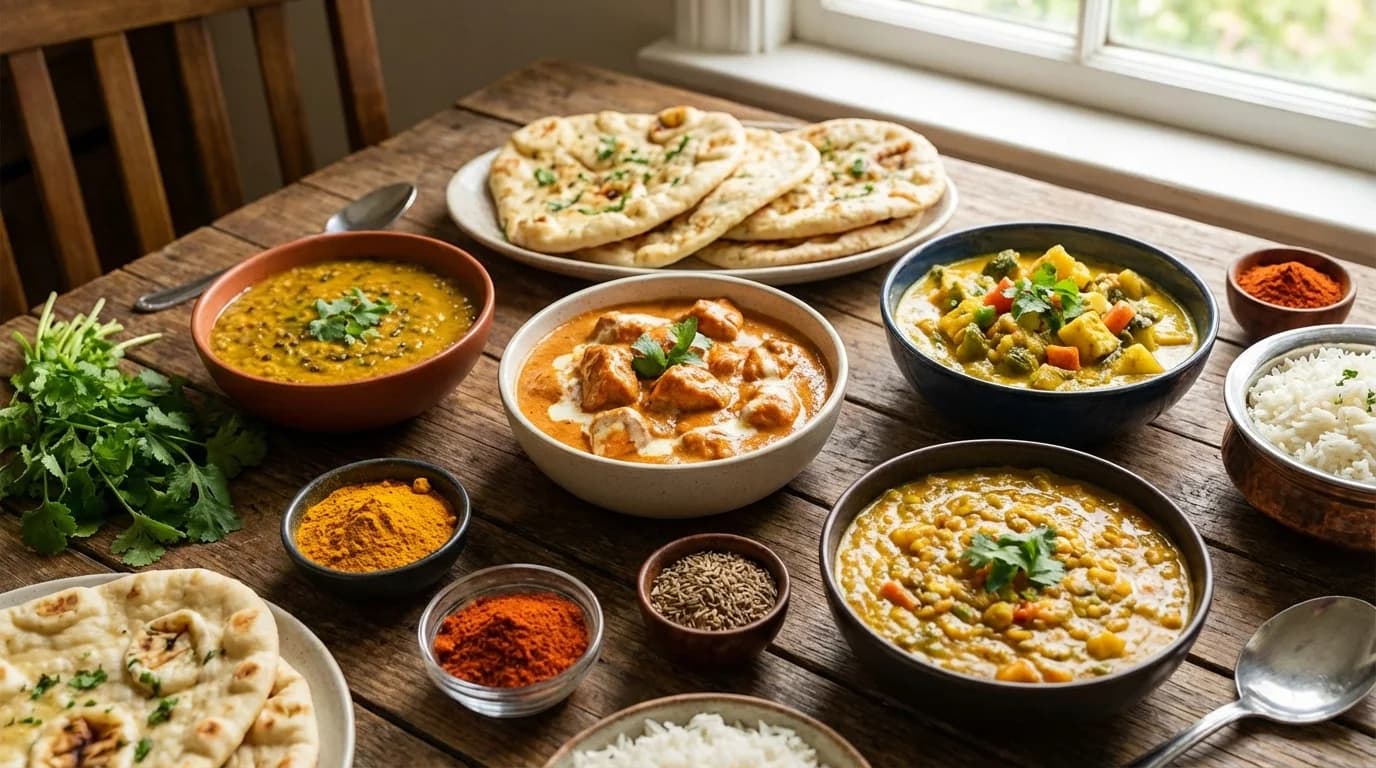
Indian curry is one of the world's most beloved comfort foods. The complex layers of flavor might seem intimidating, but once you understand the building blocks, making authentic curry at home is surprisingly straightforward. You don't need dozens of spices or special equipment - just a few key ingredients and techniques.
Understanding Indian Curry
First, let's dispel a myth: there's no single spice called "curry." Curry refers to a saucy dish with meat, vegetables, or legumes cooked in a spiced gravy. The flavor profile varies dramatically by region, with North Indian curries typically being cream-based and rich, while South Indian versions are often coconut-based and lighter.
The Building Blocks of Curry
Every curry follows a basic structure:
- Base aromatics: Onions, garlic, ginger
- Spice blend: Whole or ground spices (or both)
- Liquid base: Tomatoes, cream, coconut milk, yogurt, or broth
- Main ingredient: Protein or vegetables
- Finishing touches: Fresh herbs, cream, ghee
Understanding this framework allows you to create countless variations.
Essential Spices for Your Indian Pantry
You don't need every spice in the grocery store. These ten spices cover most curry recipes:
The Core Six
- Cumin: Earthy and warm (both whole seeds and ground)
- Coriander: Citrusy and sweet
- Turmeric: Earthy, slightly bitter, gives golden color
- Garam masala: A blend of warming spices (cinnamon, cardamom, cloves, black pepper)
- Chili powder: For heat (adjust to taste)
- Curry powder: A convenience blend for quick cooking
The Supporting Four
- Cardamom: Floral and sweet
- Cinnamon: Warm and sweet
- Mustard seeds: Nutty and pungent when heated
- Fenugreek: Maple-like aroma
Storage tip: Whole spices keep for years. Ground spices lose potency after 6 months. Buy small quantities and store in airtight containers away from heat and light.
The Technique: Building Flavor
Step 1: Blooming Spices
Heating spices in oil "blooms" them, releasing essential oils and deepening flavor. This step is non-negotiable for authentic taste.
For whole spices: Heat in oil until fragrant and sizzling For ground spices: Add after onions soften, cook 1-2 minutes
Warning: Ground spices burn quickly. Watch carefully and reduce heat if needed.
Step 2: The Onion Base
Properly cooked onions form the backbone of most curries. The goal is golden-brown and soft, which takes 10-15 minutes over medium heat. Don't rush this step.
Step 3: Aromatics
Garlic and ginger go in after onions are cooked. Fresh is essential - jarred versions lack the punch needed for authentic flavor. A 1:1 ratio is standard, though some recipes use more ginger.
Time-saver: Make ginger-garlic paste in bulk. Blend equal parts peeled ginger and garlic with a splash of water. Store in the fridge for up to a week or freeze in ice cube trays.
Step 4: Tomato Base
Many North Indian curries use tomatoes as the liquid base. Cook until they break down and oil separates from the sauce - about 5-7 minutes. This is called "masala" and it's the flavor foundation.
Step 5: Simmering
Add your protein or vegetables and liquid. Simmer until everything is cooked and flavors meld. Longer cooking (30+ minutes) develops deeper flavor.
Beginner Recipe: Chicken Curry (Murgh Curry)
This is a straightforward North Indian-style curry - creamy, mildly spiced, and foolproof.
Ingredients
For the curry:
- 1.5 pounds chicken thighs, cut into chunks
- 2 large onions, finely chopped
- 3 tablespoons oil or ghee
- 4 cloves garlic, minced
- 2-inch piece ginger, minced
- 2 large tomatoes, pureed (or 1 cup canned crushed tomatoes)
- 1/2 cup heavy cream or coconut cream
- Fresh cilantro for garnish
Spices:
- 1 teaspoon cumin seeds
- 2 teaspoons ground coriander
- 1 teaspoon ground cumin
- 1/2 teaspoon turmeric
- 1 teaspoon garam masala
- 1/2 teaspoon chili powder (adjust for heat)
- Salt to taste
Method
-
Heat oil in a large pot. Add cumin seeds and let sizzle for 30 seconds.
-
Add onions and cook until golden brown (10-15 minutes). This is crucial for depth of flavor.
-
Add garlic and ginger, cook 1 minute until fragrant.
-
Add ground spices (coriander, cumin, turmeric, chili powder). Stir for 1-2 minutes. If it starts sticking, add a splash of water.
-
Add pureed tomatoes. Cook until oil separates from the masala (about 7 minutes). The mixture should be thick and dark.
-
Add chicken pieces. Coat thoroughly with the masala.
-
Add 1 cup water and salt. Bring to a boil, then reduce heat and simmer covered for 25 minutes, stirring occasionally.
-
Stir in cream and garam masala. Simmer 5 more minutes uncovered.
-
Garnish with fresh cilantro. Serve with rice or naan.
This recipe is excellent for meal prep on a budget - it actually tastes better the next day as flavors develop.
Recipe: Butter Chicken (Murgh Makhani)
The most popular curry in Indian restaurants worldwide, and surprisingly easy at home.
Ingredients
For marinating:
- 1.5 pounds chicken breast or thighs
- 1 cup plain yogurt
- 1 tablespoon lemon juice
- 1 teaspoon garam masala
- 1/2 teaspoon chili powder
For the sauce:
- 3 tablespoons butter
- 1 onion, finely chopped
- 3 cloves garlic, minced
- 1-inch ginger, minced
- 1 can (14 oz) crushed tomatoes
- 1 teaspoon garam masala
- 1/2 teaspoon chili powder
- 1/2 cup heavy cream
- 1 tablespoon sugar
- Salt to taste
- Fresh fenugreek leaves (optional but authentic)
Method
-
Marinate chicken in yogurt, lemon juice, garam masala, and chili powder for 30 minutes (or overnight).
-
Grill or broil chicken until cooked through and slightly charred. Cut into pieces.
-
Melt butter in a large pan. Cook onion until soft.
-
Add garlic and ginger, cook 1 minute.
-
Add tomatoes, garam masala, chili powder, and salt. Simmer 15 minutes.
-
Blend the sauce until smooth (use an immersion blender or transfer to a regular blender).
-
Return sauce to pan. Add cream and sugar. Simmer 5 minutes.
-
Add chicken pieces. Cook 5 minutes to let flavors combine.
-
Garnish with cream swirl and fresh fenugreek if available.
The subtle sweetness and creamy texture make this a favorite for easy dinner ideas that please everyone.
Recipe: Chana Masala (Chickpea Curry)
A vegetarian staple that's hearty, protein-rich, and budget-friendly.
Ingredients
- 2 cans (15 oz each) chickpeas, drained
- 2 tablespoons oil
- 1 onion, chopped
- 3 cloves garlic, minced
- 1-inch ginger, minced
- 2 tomatoes, chopped
- 1 teaspoon cumin seeds
- 2 teaspoons ground coriander
- 1 teaspoon ground cumin
- 1/2 teaspoon turmeric
- 1 teaspoon garam masala
- 1/2 teaspoon chili powder
- 1 teaspoon dried mango powder (amchur) or lemon juice
- Fresh cilantro
- Salt to taste
Method
-
Heat oil, add cumin seeds until sizzling.
-
Add onion, cook until golden (10 minutes).
-
Add ginger and garlic, cook 1 minute.
-
Add ground spices, stir for 1 minute.
-
Add tomatoes, cook until soft and oil separates (7 minutes).
-
Add chickpeas and 1 cup water. Mash some chickpeas against the pot to thicken sauce.
-
Simmer 15 minutes until sauce thickens.
-
Add garam masala and mango powder (or lemon juice).
-
Garnish with cilantro.
This is perfect for cheap vegetarian meals and keeps well for days.
Recipe: Dal Tadka (Tempered Lentil Curry)
Comfort food at its finest - simple, nutritious, and satisfying.
Ingredients
For the dal:
- 1 cup yellow lentils (toor dal or yellow split peas)
- 3 cups water
- 1/2 teaspoon turmeric
- Salt to taste
For the tadka (tempering):
- 2 tablespoons ghee or oil
- 1 teaspoon cumin seeds
- 1 teaspoon mustard seeds
- 3 cloves garlic, sliced
- 1 onion, sliced
- 2 dried red chilies
- Fresh curry leaves (if available)
- Chopped tomato
- Cilantro for garnish
Method
-
Rinse lentils thoroughly. Cook with water and turmeric until soft (about 25 minutes). Whisk until creamy.
-
In a separate pan, heat ghee. Add cumin and mustard seeds. When they sputter, add garlic and red chilies.
-
Add onion, cook until golden.
-
Add tomato, cook until soft.
-
Pour this tadka over the cooked dal. Mix well.
-
Simmer together for 5 minutes.
-
Garnish with cilantro. Serve with rice.
Dal is incredibly economical and works beautifully for pantry staple meals.
Recipe: Vegetable Korma
A mildly spiced, creamy curry loaded with vegetables.
Ingredients
- 4 cups mixed vegetables (potatoes, carrots, peas, cauliflower, beans)
- 1 onion, chopped
- 3 cloves garlic, minced
- 1-inch ginger, minced
- 1/2 cup cashews, soaked in warm water
- 1/2 cup coconut cream or heavy cream
- 2 tablespoons oil
- 1 teaspoon cumin seeds
- 2 teaspoons ground coriander
- 1/2 teaspoon turmeric
- 1 teaspoon garam masala
- Salt to taste
Method
-
Blend soaked cashews with 1/2 cup water to make a smooth paste.
-
Heat oil, add cumin seeds.
-
Add onion, cook until golden.
-
Add garlic and ginger, cook 1 minute.
-
Add ground coriander and turmeric, stir 1 minute.
-
Add vegetables, coat with spices.
-
Add cashew paste, cream, and 1 cup water.
-
Cover and cook until vegetables are tender (15-20 minutes).
-
Stir in garam masala.
This mild, creamy curry is great for introducing kids to Indian flavors.
Recipe: Rogan Josh (Lamb Curry)
A Kashmiri classic with rich, aromatic flavors.
Ingredients
- 1.5 pounds lamb shoulder, cubed
- 2 onions, pureed
- 1 cup yogurt
- 3 tablespoons oil
- 4 cloves garlic, minced
- 2-inch ginger, minced
- 2 teaspoons ground coriander
- 1 teaspoon ground cumin
- 1 teaspoon Kashmiri chili powder (for color, not heat)
- 1/2 teaspoon turmeric
- 1 teaspoon garam masala
- 4 cardamom pods
- 1 cinnamon stick
- Salt to taste
Method
-
Heat oil, add cardamom and cinnamon.
-
Add pureed onions, cook until golden brown (15 minutes).
-
Add garlic and ginger, cook 2 minutes.
-
Add ground spices, stir 1 minute.
-
Add lamb, brown on all sides.
-
Add yogurt gradually, stirring constantly to prevent curdling.
-
Add 1 cup water and salt. Cover and simmer 1.5 hours until lamb is tender.
-
Stir in garam masala.
The long cooking time makes this perfect for dump and go slow cooker recipes - just use a slow cooker instead.
Accompaniments: Rice and Bread
Basmati Rice
Cook basmati rice in a 1:1.5 ratio (rice to water). Rinse thoroughly first to remove excess starch. Add a bay leaf and cinnamon stick for aromatic rice.
Simple Naan
While traditional naan requires a tandoor, you can make a simplified version:
- Mix 2 cups flour, 1 teaspoon sugar, 1/2 teaspoon salt, 1/2 teaspoon baking powder
- Add 1/4 cup yogurt and water to form soft dough
- Let rest 1 hour
- Roll into ovals, cook in a hot skillet with butter
- Brush with garlic butter
Tips for Better Curry
Layer flavors: Don't dump all spices at once. Whole spices first, then ground spices, then garam masala at the end.
Use yogurt carefully: Add it gradually at room temperature to prevent curdling. Stir constantly.
Adjust consistency: Too thick? Add water or broth. Too thin? Simmer uncovered or add ground cashews.
Balance flavors: Curry should have layers - heat, tang, sweet, salt, and umami. Add sugar to balance acidity, lime juice for brightness.
Make ahead: Most curries taste better the next day. Cool completely before refrigerating.
Common Mistakes to Avoid
Burning spices: Ground spices burn quickly. If they start to stick, immediately add liquid.
Raw spice flavor: Undercooked spices taste harsh. Cook ground spices for at least 1-2 minutes.
Watery curry: Simmer uncovered to reduce liquid. The sauce should coat the back of a spoon.
Curdled yogurt: Always bring yogurt to room temperature and add gradually while stirring.
Oversalting: Spices contain some salt. Taste before adding more salt at the end.
Meal Planning with Curry
Indian curries are exceptional for meal prep. Make a large batch on Sunday and enjoy it throughout the week. The flavors actually improve after a day or two in the refrigerator.
For variety, pair with different sides:
- Monday: Curry with basmati rice
- Tuesday: Curry wrapped in naan as a burrito
- Wednesday: Curry over quinoa for a healthier option
- Thursday: Curry with roasted vegetables
Check out our weekly meal prep ideas for more planning strategies.
Budget-Friendly Curry Cooking
Indian cuisine is inherently economical:
- Lentils and chickpeas are cheap protein sources
- Dried spices are inexpensive and last months
- Curries stretch a small amount of meat with vegetables and sauce
- Rice and flatbreads are filling and affordable
For more money-saving strategies, see our guide on cheap healthy meals.
Conclusion
Indian curry is far more accessible than you might think. With a handful of spices and an understanding of basic techniques - blooming spices, properly cooking onions, and building layers of flavor - you can create authentic curries that rival any restaurant.
Start with a simple chicken curry or chana masala. Master the technique of building a flavor base. Then experiment with different proteins, vegetables, and regional variations. The beauty of curry is its flexibility - once you understand the framework, you can improvise based on what's in your kitchen.
Don't be intimidated by long ingredient lists or unfamiliar spices. Break the recipe into steps, take your time with the foundation, and taste as you go. Before long, you'll be creating fragrant, complex curries without even consulting a recipe.
The reward is more than just delicious food. Making curry at home connects you to a centuries-old culinary tradition that has brought comfort and joy to billions of people. Heat up your spices, fill your kitchen with irresistible aromas, and discover why curry has become a beloved dish around the world.
About myrecipe
myrecipe helps families save, organize, and share their favorite recipes in one place. Plan meals, create shopping lists, and preserve your culinary traditions.
Start Organizing Recipes