How to Poach Eggs Perfectly: Foolproof Method & Tips
Poached eggs epitomize simple elegance—silky whites enveloping a gloriously runny yolk, with no added fat required. Yet they intimidate many home cooks who end up with stringy whites or broken yolks. This comprehensive guide demystifies egg poaching, teaching you the foolproof technique that delivers restaurant-quality results every single time, whether you're making eggs Benedict for brunch or topping your quick breakfast ideas.
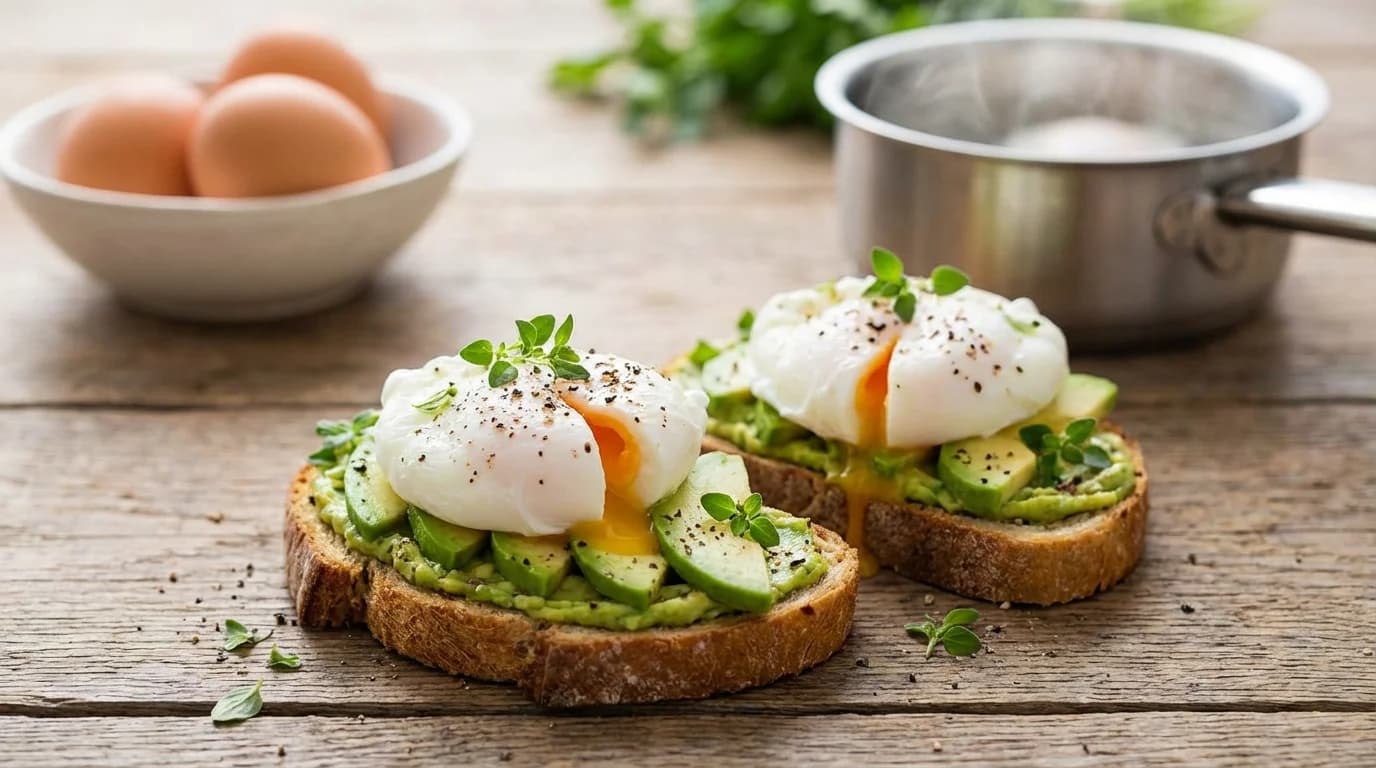
What is a Perfectly Poached Egg?
A perfect poached egg has:
- Tender, set whites with no raw, runny parts
- Liquid, flowing yolk that coats everything it touches
- Compact, oval shape without stringy wisps
- Smooth surface without a ragged appearance
- No taste of vinegar (if using vinegar method)
The goal is eggs that look as good as they taste—ideal for elegant presentations and simple weekday breakfasts alike.
The Science of Poaching
Understanding what happens during poaching helps you avoid common mistakes:
Egg whites begin setting at 144-149°F, while yolks set at 149-158°F. This narrow temperature window is why poaching requires gentle heat—water that's too hot overcooks the whites before they can wrap around the yolk, creating those wispy threads. Water that's too cool doesn't set the whites quickly enough, causing the egg to spread.
The whirlpool method (which we'll cover) uses centrifugal force to wrap the whites around the yolk as they set, creating that classic teardrop shape.
Essential Equipment
You don't need special equipment, but these items help:
Must-have:
- Deep saucepan or sauté pan (at least 3 inches deep)
- Slotted spoon for removing eggs
- Small bowl or ramekin for each egg
- Timer
Nice-to-have:
- Fine-mesh strainer (removes watery whites for neater results)
- Instant-read thermometer (to check water temperature)
- Poaching pods (silicone cups that hold shape, though purists argue these aren't "true" poaching)
The Foolproof Poaching Method
This method works reliably every single time:
Step 1: Use Fresh Eggs
This is the single most important factor. Fresh eggs (less than one week old) have thick, cohesive whites that hold together beautifully. Older eggs have thin, watery whites that spread out and create wispy strands.
Freshness test: Place an egg in a bowl of water. Fresh eggs sink and lay flat. Older eggs stand on one end or float (don't use floaters—they're too old).
Step 2: Strain Out Watery Whites (Optional but Recommended)
This game-changing step eliminates 90% of poaching problems:
- Crack the egg into a fine-mesh strainer held over a bowl
- Let it sit for 20-30 seconds
- The thin, watery white drains through, leaving only the thick white that will cling to the yolk
- Gently transfer to a small bowl or ramekin
This creates incredibly neat poached eggs with minimal wispy bits.
Step 3: Prepare the Water
- Fill a deep saucepan with 3-4 inches of water
- Add 1 tablespoon of white vinegar per quart of water (optional—see the vinegar debate below)
- Bring to a bare simmer—small bubbles should just break the surface occasionally
- Ideal temperature: 180-190°F (just below a simmer)
Important: Never let the water reach a rolling boil. Aggressive bubbles break up the egg whites.
Step 4: Create a Gentle Whirlpool
Using a spoon, stir the water to create a gentle whirlpool. This isn't a vortex—just a circular current. The motion helps wrap the whites around the yolk as they cook.
Step 5: Add the Egg
- Hold your ramekin with the egg close to the water surface
- Gently tip the egg into the center of the whirlpool
- The current will wrap the whites around the yolk
Don't drop from a height—this breaks the yolk and spreads the whites.
Step 6: Let It Cook Undisturbed
Set a timer for exactly 3 minutes for:
- Set whites
- Runny, liquid yolk
Timing adjustments:
- 2.5 minutes: Very soft, slightly loose whites
- 3 minutes: Classic poached egg (recommended)
- 4 minutes: Firmer whites, slightly thickened yolk
- 5 minutes: Jammy yolk (not quite hard-boiled)
Step 7: Remove and Drain
- Use a slotted spoon to lift the egg from the water
- Gently touch the bottom of the spoon to a paper towel to absorb excess water
- Slide onto your dish immediately
If the egg looks wet or has vinegary water clinging to it, you can briefly dip it in a bowl of clean warm water before serving.
The Vinegar Debate: To Add or Not to Add?
Vinegar helps egg whites coagulate faster, creating neater edges. But there are tradeoffs:
Pros:
- Whites set more quickly and compactly
- Reduces wispy strands
- More forgiving for beginners
Cons:
- Can make eggs taste slightly sour if too much is used
- Can slightly toughen the whites
- Unnecessary if using fresh eggs and straining method
Verdict: If you're using the straining method with fresh eggs, skip the vinegar. If your eggs are older or you want extra insurance, use just 1 tablespoon per quart of water—enough to help coagulation without affecting taste.
Alternative: The Vortex Method (No Vinegar)
For the purest poached egg:
- Bring water to a bare simmer (no vinegar)
- Strain egg to remove watery whites
- Stir water vigorously to create a strong vortex
- Drop the egg directly into the center
- The spinning motion wraps the whites tightly around the yolk
- Cook for 3 minutes
This method produces beautiful eggs without any vinegar taste, but requires confidence and fresh eggs.
Poaching Multiple Eggs
Making poached eggs for a crowd requires a different approach:
Method 1: Sequential Poaching
- Poach eggs one at a time
- Transfer to a bowl of warm water (not hot—you don't want them to continue cooking)
- Hold in the warm water for up to 30 minutes
- Reheat briefly (30 seconds) in simmering water before serving
Method 2: Batch Poaching
- Bring a large pot of water to a bare simmer
- Crack eggs into individual ramekins
- Add 2-3 eggs simultaneously, spacing them apart
- Cook for 3 minutes
- Remove with a slotted spoon
This works well for 4-6 eggs but requires practice to manage timing.
Method 3: Make-Ahead Poaching
Perfect for meal prep or entertaining:
- Poach eggs as normal
- Immediately transfer to an ice bath to stop cooking
- Refrigerate in water for up to 2 days
- To serve, reheat in simmering water for 60-90 seconds
This is how restaurants serve dozens of eggs Benedict during brunch service.
Troubleshooting Common Problems
Problem: Wispy, Stringy Whites
Causes:
- Eggs aren't fresh enough
- Water is too hot (boiling instead of simmering)
- Didn't strain out watery whites
Solutions:
- Use eggs less than one week old
- Lower heat to maintain bare simmer (180-190°F)
- Always strain eggs before poaching
Problem: Egg Spreads Out Instead of Staying Compact
Causes:
- Water isn't moving (no whirlpool)
- Egg dropped from too high
- Eggs are old
Solutions:
- Create a gentle whirlpool before adding egg
- Lower ramekin to water surface before releasing
- Use the freshest eggs possible
Problem: Yolk Breaks During Cooking
Causes:
- Rough water (boiling instead of simmering)
- Dropped from too high
- Stirred during cooking
Solutions:
- Reduce heat to bare simmer
- Gently slide egg in from close to the surface
- Don't disturb the egg while cooking
Problem: Whites Are Undercooked/Slimy
Causes:
- Water temperature too low
- Didn't cook long enough
- Removed too soon
Solutions:
- Maintain water temperature at 180-190°F
- Stick to 3-minute timing
- Test by gently touching—whites should be set
Problem: Eggs Taste Like Vinegar
Causes:
- Too much vinegar in water
- Didn't drain properly
Solutions:
- Use maximum 1 tablespoon vinegar per quart water
- Briefly dip in clean warm water after removing
- Consider skipping vinegar if using fresh eggs and straining method
Serving Suggestions
Poached eggs elevate countless dishes:
Classic presentations:
- Eggs Benedict with hollandaise sauce
- Eggs Florentine (over spinach)
- On avocado toast
- Over hash or home fries
Modern applications:
- Topping grain bowls
- On quick lunch ideas salads
- Over roasted vegetables
- Crowning easy pasta recipes
- On top of soups (ramen, vegetable soup)
- With budget-friendly meals
The running yolk acts as a built-in sauce, enriching whatever it touches.
Poaching Eggs in the Microwave
For a single egg when you're short on time:
- Fill a microwave-safe mug or bowl with 1/2 cup water
- Crack in a fresh egg
- Cover with a small plate
- Microwave on high for 60 seconds
- Check—if whites aren't set, microwave in 10-second increments
Results aren't quite as elegant as stovetop poaching, but it works for quick 10-minute meals.
Storing and Reheating Poached Eggs
Storage:
- Transfer poached eggs to ice water immediately
- Once fully chilled, transfer to a container with fresh cold water
- Refrigerate for up to 2 days
Reheating:
- Bring a small pot of water to a bare simmer
- Lower the cold egg into the water
- Heat for 60-90 seconds (just until warmed through)
- Remove and serve immediately
This technique is essential for meal prep and makes adding protein to weekday breakfasts effortless.
Beyond Chicken Eggs
The poaching technique works for other eggs too:
Quail eggs: Cook for just 1.5-2 minutes—they're delicate and tiny
Duck eggs: Cook for 4-5 minutes—they're larger with richer yolks
Goose eggs: Cook for 6-7 minutes—these are enormous and make a dramatic presentation
Adjust timing based on size, but the fundamental technique remains the same.
Conclusion
Perfect poached eggs aren't the result of luck or magic—they're the product of understanding the science and following simple techniques consistently. Fresh eggs, proper water temperature, gentle handling, and precise timing are all you need to create restaurant-quality results at home.
Start by mastering the basic method with a single egg. Once you can consistently produce perfect poached eggs, experiment with the make-ahead method for meal prep or batch poaching for entertaining. The versatility of poached eggs—from elegant brunch centerpieces to quick weeknight protein—makes this an invaluable technique worth perfecting.
With practice, poaching eggs will become second nature, giving you the confidence to add this elegant protein to your regular cooking rotation. Whether you're elevating your quick breakfast ideas or preparing an impressive brunch spread, perfectly poached eggs are within your reach.
About myrecipe
myrecipe helps families save, organize, and share their favorite recipes in one place. Plan meals, create shopping lists, and preserve your culinary traditions.
Start Organizing Recipes