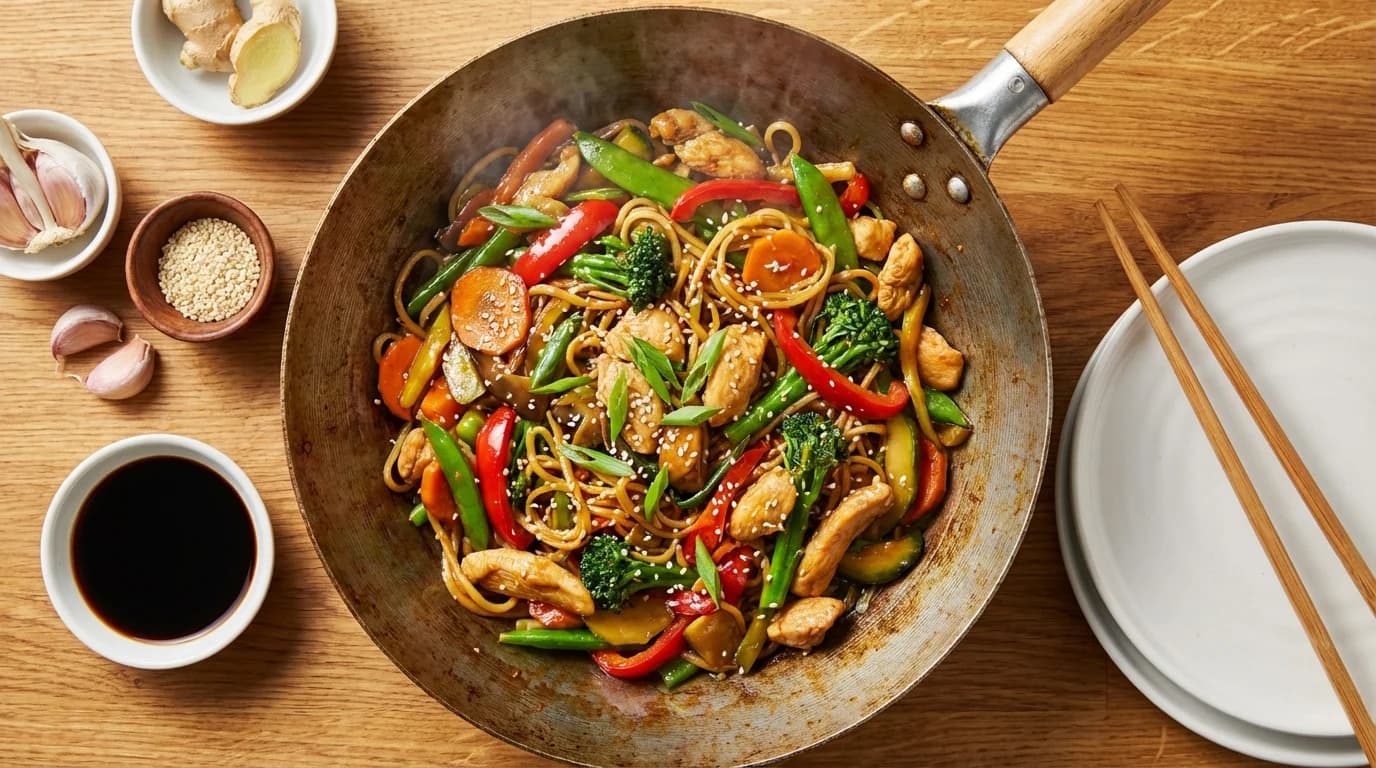
Stir frying is one of the most practical cooking techniques you can master. It's fast, healthy, versatile, and produces restaurant-quality results at home. Once you understand the fundamentals, you can create endless variations using whatever vegetables and proteins you have on hand.
What Makes Stir Frying Special
Stir frying originated in China thousands of years ago as a fuel-efficient cooking method. By cutting ingredients small and cooking them quickly over high heat, cooks could prepare meals rapidly while preserving nutrients and creating complex flavors through caramelization.
The technique spread throughout Asia, with each region developing signature styles. Chinese stir fries often feature soy sauce and ginger. Thai versions include fish sauce and chilies. Korean stir fries showcase gochujang and sesame oil. Despite regional differences, the core technique remains consistent.
Essential Equipment
Do You Need a Wok?
While a traditional carbon steel wok is ideal, it's not essential. A large skillet (12-14 inches) with sloped sides works perfectly for home stir frying. The key is having enough surface area for ingredients to make contact with the heat without crowding.
If buying a wok: Choose carbon steel over nonstick. Season it properly and it will develop a natural nonstick surface while distributing heat beautifully.
If using a skillet: Stainless steel or cast iron work better than nonstick for achieving the coveted "wok hei" - that slightly charred, smoky flavor.
Other Tools You'll Need
- Sharp knife: For uniform cutting
- Cutting board: Preferably large
- Wooden spoon or spatula: For constant stirring
- Small bowls: For organizing prepped ingredients (mise en place)
- Measuring spoons: For sauces and seasonings
The Golden Rules of Stir Frying
Rule 1: Prep Everything First
Stir frying happens fast - usually under 5 minutes of actual cooking. You won't have time to chop vegetables or mix sauces once you start. This concept of "mise en place" (everything in its place) is crucial.
Before turning on the heat:
- Cut all vegetables and proteins
- Mix your sauce in a small bowl
- Have oil and aromatics ready
- Organize ingredients in the order you'll add them
Rule 2: Cut Uniformly
Pieces should be similar in size so they cook evenly. Generally, aim for bite-sized pieces about 1-2 inches. Dense vegetables like carrots should be cut thinner than softer ones like bell peppers.
Rule 3: Hot Wok, Cold Oil
Get your wok or skillet smoking hot before adding oil. Then add oil and swirl to coat. This prevents sticking and helps achieve that professional sear.
Rule 4: Don't Crowd the Pan
Overloading leads to steaming instead of searing. Work in batches if necessary. Your ingredients should have room to breathe and make contact with the hot surface.
Rule 5: Keep It Moving
"Stir fry" is both noun and instruction. Constantly move ingredients around the pan to prevent burning while ensuring even cooking.
Rule 6: Cook in Order
Add ingredients based on cooking time: proteins first, then aromatics, hard vegetables, soft vegetables, and sauce last.
Building Your Stir Fry Pantry
Essential Sauces and Seasonings
- Soy sauce: Both light (for seasoning) and dark (for color)
- Oyster sauce: Adds umami depth
- Sesame oil: For finishing (not cooking - it burns easily)
- Rice wine or dry sherry: For deglazing and flavor
- Cornstarch: For thickening sauces and velveting proteins
- Sugar: Balances salty flavors
- Chili sauce or paste: Sambal oelek, sriracha, or gochujang
Fresh Aromatics
- Garlic: Minced or sliced
- Ginger: Fresh, peeled and minced
- Scallions: White parts for cooking, green for garnish
- Shallots: For Vietnamese and Thai stir fries
Common Vegetables
- Bell peppers
- Broccoli
- Snap peas or snow peas
- Carrots
- Bok choy
- Mushrooms
- Bean sprouts
- Cabbage
Basic Stir Fry Sauce Formula
Master this template and you can create countless variations:
3 parts soy sauce 2 parts water or broth 1 part rice wine or vinegar 1 part sugar or honey 1 teaspoon cornstarch Aromatics: Garlic, ginger, chili
Mix everything in a bowl before cooking. The cornstarch will thicken the sauce when it hits the hot pan.
Beginner Recipe: Classic Chicken and Vegetable Stir Fry
This is your foundation recipe. Once you master it, the variations are endless.
Ingredients
Protein:
- 1 pound chicken breast, thinly sliced
- 1 tablespoon cornstarch
- 1 tablespoon soy sauce
Vegetables:
- 1 bell pepper, cut into strips
- 2 cups broccoli florets
- 1 carrot, thinly sliced
- 1/2 onion, sliced
Aromatics:
- 3 cloves garlic, minced
- 1 tablespoon fresh ginger, minced
- 2 scallions, chopped (white and green parts separated)
Sauce:
- 3 tablespoons soy sauce
- 2 tablespoons water
- 1 tablespoon rice wine
- 1 tablespoon sugar
- 1 teaspoon cornstarch
- 1/2 teaspoon sesame oil
For cooking:
- 3 tablespoons vegetable oil (divided)
Method
-
Velvet the chicken: Toss sliced chicken with cornstarch and soy sauce. Let sit 15 minutes. This creates a protective coating that keeps meat tender.
-
Prep everything: Mix sauce in a bowl. Arrange vegetables, aromatics, and chicken near the stove.
-
Cook protein: Heat wok until smoking. Add 2 tablespoons oil. Add chicken in a single layer. Let sear 1 minute without stirring. Flip and cook another minute. Remove to a plate.
-
Cook vegetables: Add remaining oil. Add carrots and broccoli (the hardest vegetables). Stir fry 2 minutes. Add bell pepper and onion. Cook 2 more minutes. Add 2 tablespoons water if vegetables start to burn.
-
Add aromatics: Push vegetables to the side. Add garlic, ginger, and white parts of scallions to the center. Cook 30 seconds until fragrant.
-
Combine: Return chicken to pan. Stir sauce and pour over everything. Toss constantly until sauce thickens and coats everything (about 1 minute).
-
Finish: Remove from heat. Garnish with green scallions. Serve over rice.
This recipe is perfect for meal prep for beginners - make a big batch and portion it out for the week.
Recipe: Beef and Broccoli
A Chinese-American classic that's actually easy to make at home.
Ingredients
- 1 pound flank steak, thinly sliced against the grain
- 4 cups broccoli florets
- 3 tablespoons soy sauce
- 2 tablespoons oyster sauce
- 1 tablespoon sugar
- 1 teaspoon cornstarch
- 3 cloves garlic, minced
- Oil for cooking
Method
- Velvet beef with cornstarch and 1 tablespoon soy sauce
- Blanch broccoli in boiling water for 2 minutes, drain
- Mix remaining soy sauce, oyster sauce, sugar, cornstarch, and 3 tablespoons water
- Sear beef in hot oil, remove
- Cook garlic 30 seconds
- Add broccoli and sauce
- Return beef, toss until sauce thickens
- Serve over rice
For more protein-focused meals, check out our guide on high protein meal prep.
Recipe: Shrimp and Snap Pea Stir Fry
Light, fresh, and ready in under 10 minutes.
Ingredients
- 1 pound large shrimp, peeled and deveined
- 2 cups snap peas, trimmed
- 2 tablespoons soy sauce
- 1 tablespoon rice wine
- 1 teaspoon sugar
- 1 tablespoon ginger, minced
- 2 cloves garlic, minced
- Red pepper flakes (optional)
- Oil for cooking
Method
- Mix sauce ingredients
- Heat oil in wok until smoking
- Add shrimp, cook 1 minute per side, remove
- Add snap peas, stir fry 2 minutes
- Add garlic and ginger, cook 30 seconds
- Return shrimp, add sauce
- Toss until shrimp is cooked through (about 1 minute)
This is one of the best 15 minute meals you can make.
Recipe: Vegetarian Tofu Stir Fry
Proof that stir fries don't need meat to be satisfying.
Ingredients
- 1 block firm tofu, pressed and cubed
- Mixed vegetables (bell peppers, mushrooms, bok choy, carrots)
- 3 tablespoons soy sauce
- 1 tablespoon hoisin sauce
- 1 teaspoon sesame oil
- 2 cloves garlic, minced
- 1 tablespoon ginger, minced
- Vegetable oil
Method
- Press tofu to remove excess water, cut into cubes
- Fry tofu in oil until golden on all sides, remove
- Stir fry vegetables starting with hardest first
- Add aromatics
- Mix soy sauce, hoisin, sesame oil, and 2 tablespoons water
- Return tofu, add sauce, toss to coat
Perfect for our cheap vegetarian meals collection.
Recipe: Korean-Style Spicy Pork
Introducing gochujang - Korean fermented chili paste.
Ingredients
- 1 pound pork shoulder or loin, thinly sliced
- 1 onion, sliced
- 2 scallions, chopped
- 2 tablespoons gochujang
- 2 tablespoons soy sauce
- 1 tablespoon sugar
- 1 tablespoon rice wine
- 2 cloves garlic, minced
- 1 teaspoon sesame oil
- Sesame seeds for garnish
Method
- Mix gochujang, soy sauce, sugar, wine, garlic, and sesame oil
- Marinate pork 15 minutes
- Heat oil in wok
- Cook pork over high heat until caramelized (4-5 minutes)
- Add onion, cook 2 minutes
- Add scallions, toss
- Garnish with sesame seeds
The sweet-spicy-savory combination is addictive and works great for easy stir fry recipes.
Tips for Success
Protein texture: Slice meat thin and against the grain. Partially freezing meat (30 minutes) makes slicing easier.
Even cooking: Cut vegetables into similar sizes. Blanch dense vegetables (broccoli, carrots) before stir frying if you want them very tender.
Sauce thickness: If your sauce is too thin, mix a bit more cornstarch with water and add it. Too thick? Add water or broth to loosen.
Heat management: If food starts burning, reduce heat or add a splash of water to cool the pan momentarily.
Wok hei: That elusive smoky flavor comes from extremely high heat and a little charring. Don't be afraid to let ingredients sit still for 30 seconds occasionally to develop color.
Common Mistakes to Avoid
Wet vegetables: Dry vegetables thoroughly after washing. Water causes splattering and prevents proper browning.
Too much sauce: You want to coat ingredients, not drown them. Start with less - you can always add more.
Soggy stir fry: This happens from overcrowding or not enough heat. Cook in batches if necessary.
Burning garlic: Garlic burns quickly. Add it after vegetables have cooked a bit, not at the beginning with oil.
Underseasoning: Taste before serving. Stir fries often need a final hit of soy sauce, salt, or acid (vinegar, lime) to balance flavors.
Serving Suggestions
Stir fries are traditionally served over:
- Steamed white rice: The classic choice
- Fried rice: For extra flavor
- Brown rice: For added nutrition
- Noodles: Lo mein, rice noodles, or udon
- Cauliflower rice: For a low-carb option
For complete meals, pair with a simple soup or spring rolls.
Meal Prep and Leftovers
Stir fries are excellent for weekly meal prep ideas. Cook a large batch and divide into containers with rice. They keep 4-5 days in the refrigerator.
Reheating tip: Add a splash of water or broth when reheating to refresh the sauce and prevent drying out.
Beyond the Basics
Once you're comfortable with basic stir fries, explore:
- Pad Thai: Thailand's famous rice noodle dish
- Char Kway Teow: Malaysian smoky noodles
- Mongolian Beef: Sweet and savory with scallions
- Kung Pao Chicken: Sichuan spicy with peanuts
- Singapore Noodles: Curry-flavored rice noodles with shrimp
Conclusion
Stir frying is one of the most valuable cooking techniques you can learn. It's quick enough for 10 minute meals, healthy, budget-friendly, and endlessly adaptable. Once you understand the basic principles - high heat, proper prep, correct order of ingredients, and balanced sauce - you can create infinite variations based on what's in your fridge.
Start with the classic chicken and vegetable stir fry. Master the technique. Then experiment with different proteins, vegetables, and sauces. Before long, you'll be improvising delicious stir fries without even looking at a recipe.
The beauty of stir frying is that it rewards both precision and creativity. Follow the guidelines, but don't be afraid to experiment. After all, some of the best stir fries come from using up whatever vegetables need to be eaten before they go bad.
Heat your wok, prep your ingredients, and discover why billions of people across Asia rely on this cooking method every single day.
About myrecipe
myrecipe helps families save, organize, and share their favorite recipes in one place. Plan meals, create shopping lists, and preserve your culinary traditions.
Start Organizing Recipes