40 Healthy After-School Snacks Kids Will Devour (Quick & Nutritious)
The door flies open. Backpack drops. First words: "I'm STARVING!"
After-school hunger is real and intense. Kids need energy to refuel after a long school day, tide them over until dinner, and support growing bodies. But you don't want them filling up on chips and cookies that'll spike blood sugar and ruin dinner appetites.
These 40 healthy after-school snacks strike the perfect balance: quick to prepare, actually nutritious, and satisfying enough that kids won't raid the pantry 10 minutes later.
The After-School Snack Formula
Successful after-school snacks include:
Protein (keeps them full longer) + Complex Carbs (sustained energy) + Optional: Fruit or Veggie (vitamins, fiber)
This combination prevents blood sugar crashes and holds them until dinner.
40 Healthy After-School Snack Ideas
Protein-Packed Champions
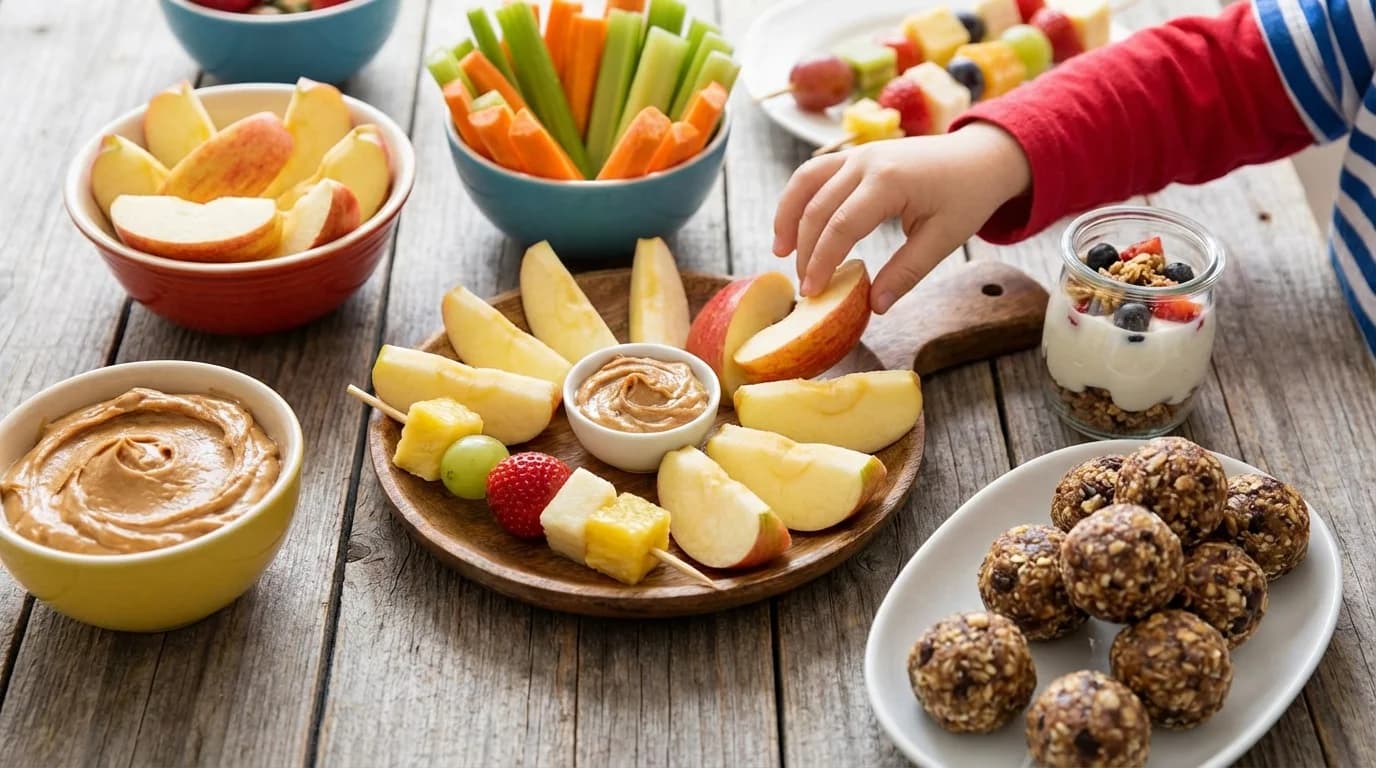
1. Apple Slices with Peanut Butter
Classic for a reason. The protein and healthy fat in peanut butter + fiber in apple = satisfied kids. Use almond butter for variety.
Prep: Slice apple, serve with 1-2 tbsp nut butter for dipping.
2. String Cheese and Whole Grain Crackers
Portable, no-prep protein. Add crackers for staying power.
Portion: 1-2 string cheeses, 8-10 crackers
3. Hard-Boiled Eggs
Prep a dozen on Sunday. Perfect grab-and-go protein. Sprinkle with tiny bit of salt or everything bagel seasoning.
Tip: Pre-peel for younger kids.
4. Greek Yogurt Parfait
Layer Greek yogurt, granola, and berries in a cup. Protein-rich and feels like a treat.
Quick version: Pre-portion yogurt in cups Sunday night, kids add their own toppings. Related to quick breakfast ideas.
5. Hummus and Veggie Sticks
Carrots, cucumber, bell peppers with hummus for dipping. The protein in chickpeas keeps hunger at bay.
Make it fun: Use cookie cutters on bell peppers for shapes.
6. Cheese Cubes and Grapes
Simple, satisfying combo. Cut grapes in half for younger kids.
Portion: 1 oz cheese, small bunch grapes
7. Turkey and Cheese Roll-Ups
Lay out turkey slice, place cheese stick in center, roll up. High protein, handheld.
Add crunch: Wrap in lettuce leaf or serve with crackers.
8. Cottage Cheese and Fruit
Full-fat cottage cheese with pineapple, peaches, or berries. High in protein and calcium.
Tip: Buy individual cups or portion yourself for grab-and-go.
9. Edamame (Lightly Salted)
Steam frozen edamame, sprinkle with light salt. Kids love popping beans out of pods.
Protein boost: 1 cup edamame has 17g protein!
10. Nut Butter Energy Bites
Mix oats, peanut butter, honey, chocolate chips. Roll into balls, refrigerate. Make a big batch Sunday.
Recipe: 1 cup oats, 1/2 cup PB, 1/3 cup honey, 1/3 cup chocolate chips, mix and roll.
Whole Grain Options
11. Whole Grain Toast with Avocado
Mash avocado on whole grain toast, sprinkle with salt. Healthy fats + fiber.
Upgrade: Add everything bagel seasoning or sliced hard-boiled egg.
12. Popcorn (Air-Popped)
Whole grain snack that's actually healthy when not loaded with butter. Season with parmesan or cinnamon.
Portion: 3 cups popped = great serving size.
13. Whole Grain Crackers with Cheese Spread
Whole grain crackers with cream cheese or spreadable cheese. Add cucumber slices.
Kid-friendly brands: Triscuits, Wheat Thins, whole grain Goldfish.
14. Banana with Granola
Slice banana, sprinkle with granola, drizzle with honey. Feels indulgent, actually nutritious.
Make it special: Use a fun bowl or cup.
15. Whole Grain Bagel with Cream Cheese
Half a bagel with cream cheese. Substantial enough to fill them up.
Additions: Cucumber slices, turkey, or jam.
16. Homemade Trail Mix
Whole grain cereal, nuts (if no allergies), dried fruit, a few chocolate chips. Let kids customize their mix.
Build-your-own bar: Set out ingredients in bowls, kids create their blend.
17. Oatmeal with Toppings
Instant or 2-minute oats with brown sugar, cinnamon, raisins. Warm and comforting on cold days.
Quick hack: Microwaveable oat cups.
18. Whole Wheat Pita with Hummus
Cut pita into triangles, serve with hummus. Whole grain + protein combo.
Add: Cucumber or carrot sticks.
Fruit-Based Snacks
19. Frozen Grapes
Wash grapes, freeze. They taste like mini popsicles! Refreshing and naturally sweet.
Bonus: Takes longer to eat (good for mindless snackers).
20. Apple "Cookies"
Slice apple into rounds, spread with nut butter, sprinkle with granola or mini chocolate chips. Fun presentation changes everything.
21. Fruit Salad Cups
Pre-portion fruit salad in small cups Sunday night. Grab-and-go all week.
Keep fresh: Add splash of lemon juice to prevent browning.
22. Banana "Nice Cream"
Blend frozen banana until creamy. Add cocoa powder or peanut butter. Tastes like ice cream, actually just fruit.
Prep: Peel and freeze bananas in advance.
23. Smoothie
Blend frozen fruit, yogurt, milk, spinach (they won't taste it). Pour in cup with straw.
Protein boost: Add scoop of nut butter or protein powder.
24. Clementines and Almonds
Peel-and-eat fruit with handful of almonds. Sweet + savory + protein.
Portion: 1 clementine, 10-15 almonds.
25. Berry and Yogurt Dip
Plain Greek yogurt mixed with honey, serve with strawberries for dipping.
Fun factor: Let kids dip their own.
26. Watermelon Slices with Feta
Sweet watermelon with small cubes of feta. Surprisingly delicious combo kids love.
Summer favorite: Refreshing and hydrating.
Veggie-Forward Options
27. Mini Bell Peppers with Ranch
Small sweet peppers with ranch dip. Crunchy, colorful, satisfying.
Easier than: Cutting full-size peppers—minis are ready to eat.
28. Cucumber Rounds with Cream Cheese
Slice cucumber into rounds, top each with small dollop cream cheese and everything bagel seasoning.
Make it fancy: Call them "cucumber coins."
29. Celery with Nut Butter and Raisins (Ants on a Log)
Classic kid snack. Celery, peanut butter, raisins. Crunchy, creamy, sweet.
Variation: Use cream cheese and dried cranberries.
30. Cherry Tomatoes and Mozzarella
Cherry tomatoes (halved) with mozzarella balls. Add basil if they'll eat it.
Caprese for kids: Drizzle with balsamic if they like it.
31. Guacamole and Chips
Homemade or store-bought guacamole with whole grain tortilla chips or veggie chips.
Healthy fats: Avocado is brain food!
32. Roasted Chickpeas
Crunchy, salty, protein-packed. Roast canned chickpeas with olive oil and seasonings.
Recipe: Drain chickpeas, toss with oil and spices, roast 400°F for 30-40 min.
Warm and Cozy Snacks
33. Cheese Quesadilla
Tortilla with cheese, cooked until melty. Cut into triangles. Serve with salsa or sour cream. Related to 5-ingredient recipes.
Add protein: Shred some leftover chicken inside.
34. Mini Pizzas
English muffin or pita, pizza sauce, mozzarella. Broil 2-3 minutes.
Let them build: Kids top their own pizzas.
35. Tomato Soup and Grilled Cheese
Small cup of tomato soup with half grilled cheese for dipping.
Comfort food: Perfect for fall and winter afternoons.
36. Mac and Cheese (Small Portion)
Leftover mac and cheese reheated. Keep portion small so it doesn't ruin dinner.
Healthier version: Add frozen peas or broccoli. Check easy pasta recipes for ideas.
37. Soft Pretzel with Mustard or Cheese Dip
Frozen soft pretzels heated up with dipping sauce.
Whole grain option: Choose whole wheat soft pretzels.
38. Cheesy Toast
Whole grain bread with shredded cheese melted on top. Simple, warm, satisfying.
Add: Tomato slices before melting cheese.
Sweet Treats (That Are Actually Healthy)
39. Homemade Muffins
Bake mini muffins Sunday: banana, blueberry, apple cinnamon. Portion-controlled and you control sugar.
Freeze extras: Defrost one each day.
40. Yogurt-Covered Fruit Bites
Dip strawberries or banana slices in Greek yogurt, freeze on parchment. Sweet, cold, protein-rich.
Like: Healthy version of candy.
The Weekly Snack Prep Plan
Sunday (30-45 minutes):
Make from scratch:
- Hard-boil a dozen eggs
- Make energy bites (no-bake)
- Bake mini muffins
- Portion fruit salad into cups
- Make hummus (or buy pre-made)
Prep for easy assembly:
- Wash and cut vegetables (carrots, peppers, cucumber)
- Wash berries
- Portion trail mix ingredients into bags
- Pre-portion yogurt into cups
- Slice cheese
Stock grab-and-go items:
- String cheese
- Individual yogurts
- Applesauce pouches
- Whole grain crackers
- Granola bars (look for low sugar, high protein)
Daily (2-3 minutes): Assemble snack before kids get home using prepped ingredients. Or set out 2-3 options they can choose from.
For more prep strategies, see meal prep for beginners.
The Snack Station Strategy
Create a designated snack area kids can access independently:
Low shelf or drawer with:
- Whole fruit (apples, bananas, oranges)
- Individual packaged items (crackers, cheese, yogurt)
- Small bags of trail mix or energy bites
- Water bottles
Countertop basket with:
- Fruit that doesn't need refrigeration
- Whole grain crackers
- Rice cakes
Rules:
- Choose one snack when you get home
- Sit at table to eat (not wandering around)
- Clean up after yourself
- Only from designated snack area (not full pantry access)
This builds independence while keeping choices healthy.
Age-Appropriate Portions
Ages 5-7:
- About 100-150 calories
- Example: 1 string cheese + 8 crackers + small apple
Ages 8-10:
- About 150-200 calories
- Example: Apple with 2 tbsp peanut butter + 10 crackers
Ages 11-13:
- About 200-300 calories (bigger appetites, growth spurts)
- Example: Greek yogurt parfait with granola and berries + handful of almonds
Adjust based on:
- Activity level (athletes need more)
- Time until dinner
- What they ate at lunch
Timing Matters
Ideal snack time: 2.5-3 hours before dinner
Too early (right after school if dinner is 6 PM): They'll be hungry again before dinner.
Too late (5:30 PM if dinner is 6 PM): Ruins appetite for dinner.
The sweet spot: 3:30-4:00 PM snack for 6:00-6:30 PM dinner.
If dinner is late (7 PM+): Offer a substantial snack around 4 PM, or split into two smaller snacks (4 PM and 5:30 PM).
Snacks That Won't Ruin Dinner
Choose snacks that:
- Aren't huge portions (see age guidelines above)
- Include protein and fiber (keep them satisfied but not overfull)
- Are offered 2.5-3 hours before dinner
Avoid:
- Sugary snacks (blood sugar spike then crash = extra hungry at dinner)
- Very filling snacks close to dinnertime (cheese pizza at 5:30 PM)
- Unlimited grazing (set boundaries)
Budget-Friendly Healthy Snacks
Cheapest healthy options:
- Popcorn: Bulk popcorn kernels are pennies per serving
- Bananas: Consistently cheap year-round
- Carrots: Buy full-size, cut yourself
- Peanut butter: Versatile and economical
- Eggs: Great protein for the price
- Oats: Make your own energy bites or oatmeal
- Apples: Especially in fall
- Cheese blocks: Cheaper than pre-sliced or string cheese
- Whole grain bread: Make toast variations
- Frozen fruit: Cheaper than fresh, same nutrients
Skip these expensive options:
- Pre-packaged individual snacks
- Organic everything (buy organic for Dirty Dozen only)
- Specialty snack bars ($1-2 each)
- Pre-cut vegetables (convenience tax)
Check our budget grocery shopping tips for more money-saving ideas.
Handling Picky Snackers
They only want chips and cookies:
Strategy:
- Don't keep junk food in easy reach
- Offer 2-3 healthy options ("Do you want apple with PB or cheese and crackers?")
- Let them occasionally earn a treat (Friday snacks can include a cookie)
- Model eating healthy snacks yourself
They say they're not hungry:
Maybe they actually aren't! Don't force it. Offer water and a small snack if they change their mind.
They want to snack all evening:
Set clear boundaries: one after-school snack, then no eating until dinner. Boredom eating is a habit to avoid establishing.
They want huge portions:
Start small. They can always have seconds if still hungry. Teaching portion awareness is valuable.
Allergy-Friendly Snacks
Nut-Free (for schools/allergies):
- Sunbutter (sunflower seed butter) instead of peanut butter
- Hummus
- Cheese and crackers
- Yogurt
- Hard-boiled eggs
- Edamame
- Cheese quesadilla
Dairy-Free:
- Fruit with dairy-free yogurt
- Vegetables with hummus
- Dairy-free cheese alternatives
- Nut butter on toast
- Smoothies with non-dairy milk
- Trail mix
- Popcorn
Gluten-Free:
- Fresh fruit and vegetables (all naturally GF)
- Yogurt, cheese, eggs
- Gluten-free crackers or pretzels
- Popcorn
- Rice cakes
- Gluten-free toast or bagels
Sports Practice Snacks
Need quick energy before practice:
30-60 minutes before:
- Banana
- Applesauce pouch
- Small granola bar
- Few crackers with cheese
Avoid: Heavy, high-fat, or high-fiber snacks right before (can cause cramping).
After practice recovery:
- Chocolate milk (protein + carbs for recovery)
- String cheese and fruit
- Nut butter sandwich
- Greek yogurt with granola
Teaching Kids to Listen to Hunger Cues
Ask: "Are you hungry or bored?"
Help kids distinguish between true hunger and eating for entertainment.
Use the hunger scale:
- 1 = Starving
- 5 = Comfortable
- 10 = Stuffed
Aim to stay between 3-7. Snack when at 3-4, stop when reaching 6-7.
Honor their "no": If they say they're not hungry, don't push it. They're learning to self-regulate.
Don't use food as reward: "Finish homework and you can have a snack" makes food a prize rather than fuel.
When Snacks Are Replacing Meals
Red flags:
- Eating huge after-school snacks then refusing dinner
- Grazing all evening instead of eating meals
- Demanding specific snacks instead of eating family meals
Solutions:
- Reduce snack portions
- Move snack time earlier
- Set clear boundaries (one snack, then kitchen closes)
- Make family dinner non-negotiable
- Look at overall daily nutrition (maybe breakfast or lunch is lacking)
Involving Kids in Snack Prep
Younger kids (5-7):
- Washing fruit
- Choosing between 2 options
- Portioning crackers into bags
- Mixing trail mix
Older kids (8-10):
- Making their own energy bites
- Assembling yogurt parfaits
- Preparing vegetable sticks
- Following simple snack recipes
Tweens/teens (11+):
- Planning weekly snack menu
- Grocery shopping for snack ingredients
- Fully independent snack prep
- Making snacks for siblings
Kids who help prepare are more likely to eat it!
Snacks for Special Situations
Homework Marathon: Brain-boosting snacks with protein and healthy fats (nuts, eggs, cheese, avocado).
Before Big Game: Easy-to-digest carbs for quick energy (banana, toast, applesauce).
After-School Play Date: Easy-to-share: popcorn, cut fruit, cheese and crackers, muffins.
Didn't Eat Lunch: More substantial snack with protein (hard-boiled egg, turkey and cheese, Greek yogurt).
The Snack Rotation
Monday: Apple slices with peanut butter Tuesday: String cheese and whole grain crackers Wednesday: Yogurt parfait Thursday: Hummus and veggies Friday: Homemade muffin and cheese stick
Rotate 5-7 favorites. Kids like predictability. Switch up weekly as preferences change.
Final Thoughts
After-school snacks don't need to be elaborate. They need to be ready, nutritious, and satisfying enough to prevent dinner-ruining hunger (or a pantry raid of junk food).
Start simple:
- Pick 5 snacks from this list your kids will actually eat
- Prep on Sunday
- Set up accessible snack station
- Establish routine: one snack, at table, then done
The goal isn't perfect nutrition every day. It's creating habits where healthy snacking is the norm, not the exception.
Tomorrow:
- Stock up on 2-3 healthy snack staples
- Prep one option Sunday night
- Have it ready when kids walk in the door
Watch them devour something nutritious instead of begging for chips. That's a parenting win.
For more healthy family eating ideas, check out kid-friendly meal prep and healthy meal prep recipes.
About myrecipe
myrecipe helps families save, organize, and share their favorite recipes in one place. Plan meals, create shopping lists, and preserve your culinary traditions.
Start Organizing Recipes