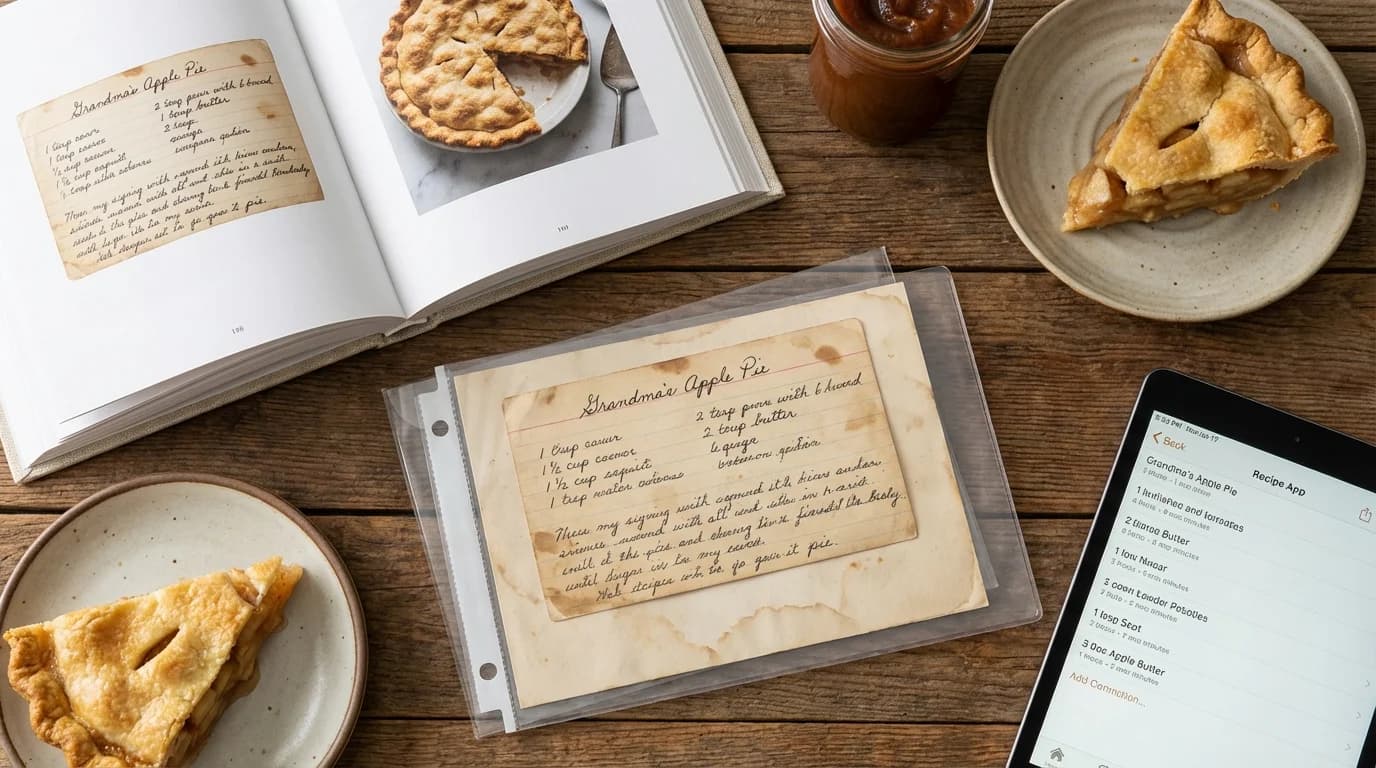
Two years ago, my friend Karen lost everything in a house fire—including her grandmother's recipe box containing 60 years of handwritten family recipes. She had meant to scan them, planned to digitize them someday, always intended to make copies. But someday never came, and now those recipes are gone forever.
That devastating loss taught me (and eventually inspired this guide) that recipe preservation isn't something to put off. Recipes—especially family heirlooms—are irreplaceable pieces of heritage that deserve the same protection we give to photos, legal documents, and other valuables.
Whether you have handwritten recipe cards from deceased grandparents, a lifetime collection of tested favorites, or a growing digital library, proper preservation ensures they survive fires, floods, technological changes, and the passage of time. This comprehensive guide covers everything you need to know to preserve recipes in any format, forever.
Understanding the Threats
Before we discuss preservation, understand what you're protecting against.
Physical Threats to Recipes
Environmental Damage:
- Heat (deteriorates paper, fades ink)
- Humidity (mold, mildew, warping)
- Light (especially UV, fades and degrades)
- Dryness (brittleness, cracking)
- Pests (insects, rodents)
- Dust and dirt
Accidents:
- Fire
- Water damage (floods, leaks, spills)
- Physical damage (tears, creases, stains)
- Misplacement or loss
- Accidental disposal
Use and Handling:
- Cooking splatters
- Repeated handling
- Bending and folding
- Writing on fragile surfaces
- Poor storage containers
Time:
- Natural degradation of paper
- Ink fading
- Adhesive failure
- Chemical breakdown of materials
Digital Threats
Technology Obsolescence:
- File formats becoming unreadable
- Software no longer supported
- Hardware incompatibility
- Platform shutdown
Storage Failure:
- Hard drive crashes
- Cloud service discontinuation
- Corrupted files
- Deleted accounts
Security Issues:
- Lost passwords
- Hacked accounts
- Accidental deletion
- No legacy access
User Error:
- Files overwritten
- Folders misplaced
- Poor organization
- Insufficient backups
Human Threats
Family Dynamics:
- Disagreements about ownership
- Recipes discarded during moves or estate settling
- Lack of interest from next generation
- Assumed someone else was preserving
Knowledge Loss:
- Techniques not documented (lost with person)
- Context not recorded (why recipes matter)
- Stories not captured
- Connections not preserved
The Three-Pronged Preservation Strategy
Effective preservation requires multiple approaches.
1. Physical Preservation (Protect Originals)
For Original Handwritten Recipes:
Archival Storage:
- Acid-free page protectors
- Lignin-free materials
- Archival-quality boxes
- Individual sleeves for fragile items
- See detailed heirloom preservation guide
Environmental Control:
- Temperature: 65-70°F (18-21°C)
- Humidity: 30-50% relative humidity
- Darkness or UV-protected storage
- Clean, ventilated space
- Away from kitchen hazards
Handling Protocols:
- Clean, dry hands (or cotton gloves for very fragile items)
- Handle by edges
- No food or drink nearby
- Work on clean surface
- Minimal handling frequency
For Recipe Books and Cards in Active Use:
Protective Measures:
- Lamination (cold laminate for originals)
- Clear acrylic recipe holders
- Page protectors in binders
- Recipe book stands (prevent splaying)
- Wipeable covers
Usage Systems:
- Create working copies for cooking
- Keep originals in safe storage
- Display using reproductions
- Rotate displayed items
- Never use originals near stove/oven
2. Digital Preservation (Create Backups)
High-Quality Digitization:
Scanning Standards:
- Resolution: 600 DPI minimum for archival
- Color Mode: Color (even for B&W recipes)
- File Format: TIFF for masters, JPEG for use copies
- Storage: Uncompressed for archival masters
Photography Standards:
- 12+ megapixel camera
- Natural, even lighting
- Neutral background
- Directly overhead (no angle)
- Multiple shots
- Both sides of cards
Transcription:
- Type recipes exactly as written
- Preserve original language and spelling
- Add clarifications in brackets
- Note illegible portions
- Include all marginalia
- Link typed version to image of original
Digital Organization:
File Structure:
Recipe Archive/
├── Masters (Original high-res scans)/
│   ├── By Family Member/
│   └── By Date Digitized/
├── Use Copies (Web/print quality)/
│   ├── By Category/
│   └── By Source/
├── Transcriptions/
│   ├── PDFs/
│   └── Word Docs/
└── Metadata/
    ├── Inventory Lists/
    └── Documentation/
Metadata: Embed information in files:
- Creator/source
- Date created/acquired
- Description
- Keywords
- Copyright status
- Location of physical original
Platform Choice: Use recipe-specific apps like myrecipe.app:
- Purpose-built for recipes
- Proper categorization and tagging
- Searchability
- Family sharing
- Automatic backup
- Export capabilities
- Long-term reliability
3. Distributed Preservation (Multiple Copies)
The 3-2-1 Backup Rule:
- 3 total copies of everything
- 2 different types of storage media
- 1 copy stored off-site
Backup Strategy:
Primary Copy (Working Version):
- On your computer or in recipe app
- Organized and easily accessible
- Updated regularly
- This is your active collection
Secondary Backup (Local):
- External hard drive or SSD
- Updated monthly
- Stored in different location in home
- Protects against computer failure
Tertiary Backup (Off-Site):
- Cloud storage (Google Drive, Dropbox, etc.)
- Updated automatically or monthly
- Protects against fire, flood, theft
- Accessible from anywhere
Additional Backups:
- Shared with family members (distributed)
- Printed versions for most important recipes
- Multiple cloud services for redundancy
- DVD/Blu-ray (updated annually, but less reliable long-term)
Backup Schedule:
- Real-time: Cloud sync for active recipe app
- Weekly: Quick backup of new additions
- Monthly: Complete backup to external drive
- Quarterly: Verify all backups are accessible
- Annually: Update long-term archival storage
Format-Specific Preservation
Handwritten Recipe Cards
Immediate Actions:
- Photograph front and back (high quality)
- Scan at 600 DPI
- Transcribe while still legible
- Store in archival sleeves
- Place in climate-controlled location
Long-Term:
- Regular condition checks
- Re-scan if deteriorating
- Consider professional conservation for extremely fragile items
- Never laminate irreplaceable originals with heat (damages)
Recipe Books and Cookbooks
For Family Cookbooks:
- Scan all pages including covers, inscriptions, notes
- Photograph books showing spine, binding, condition
- Transcribe handwritten additions
- Store upright or flat (never spine-bent)
- Climate-controlled environment
For Annotated Commercial Cookbooks:
- Scan pages with handwritten notes
- Photograph annotations
- Consider whether book itself is archival (probably not)
- Focus on preserving the additions
- Original book can be used; preserve personal elements
Digital-Only Recipes
From Websites:
- Save complete recipe (many apps do this automatically)
- Save original URL and date accessed
- Download any associated photos
- Export to multiple formats (PDF, DOCX, etc.)
- Keep original webpage screenshot
- Don't rely on bookmarks (sites disappear)
From Apps and Software:
- Regular exports to standard formats
- Don't rely solely on one platform
- Keep recipes in readable formats (PDF, text, Word)
- Avoid proprietary formats when possible
- Back up to separate locations
Email and Messages:
- Forward recipe emails to recipe management system
- Screenshot recipe texts/messages
- Transcribe into standard format
- Don't leave recipes scattered in email
Photos of Recipes
Quick Phone Photos:
- Better than nothing!
- Organize into dedicated album/folder
- Back up to cloud automatically
- Eventually transcribe or scan properly
- Regular photo backups essential
Improving Photo Quality:
- Retake in better light if possible
- Use scanning apps (Adobe Scan, Microsoft Lens)
- Crop and enhance for readability
- Save both original and enhanced versions
Creating a Complete Archive
Documentation Beyond Recipes
Context Preservation:
For Each Recipe, Also Document:
- Source (person, book, website, etc.)
- Date acquired
- Occasions when made
- Family members associated with it
- Stories and memories
- Modifications made over time
- Current status (still made? How often?)
- Who knows how to make it
Supporting Materials:
- Photos of finished dishes
- Videos of cooking process
- Audio recordings of family members
- Historical photos
- Family tree showing recipe transmission
- Timeline of recipe evolution
- Cultural and historical context
Family Food Archive: Create comprehensive family food history:
- All recipes with full context
- Cooking traditions documented
- Food memories recorded
- Cultural heritage explained
- Multiple generations represented
Inventory and Cataloging
Master Inventory: Create spreadsheet or database:
- Item description
- Format (original card, digital, etc.)
- Current location (physical and/or digital)
- Condition
- Backup locations
- Source/provenance
- Priority level (critical, important, general)
- Last verified date
Update Regularly:
- When adding new recipes
- After major preservation work
- Annually at minimum
- After any moves or reorganization
Specialized Preservation Situations
Very Old Recipes (100+ years)
Extra Care Required:
- Professional assessment recommended
- Highest quality digitization
- Multiple backup formats
- Minimal handling
- Possible professional conservation
- Document extensively
- Consider museum-quality archival storage
Newspaper Clippings
Immediate Danger:
- Newsprint deteriorates rapidly
- Highly acidic (damages itself and nearby items)
- Often faded and fragile
Preservation Steps:
- Scan or photograph immediately
- Separate from other recipes
- Store in individual acid-free sleeves
- Consider deacidification treatment
- Accept that originals may not survive long-term
- Digital preservation is critical
Recipe Collections on Unusual Media
Postcards, Advertisements, Pamphlets:
- Various sizes and materials
- May require custom storage
- Archival sleeves sized appropriately
- Full digitization essential
Audio or Video Recipes:
- Digitize immediately if on cassette, VHS, etc.
- Multiple digital copies
- Transcribe audio/video to text
- Update format as technology changes
Estate Planning for Recipe Collections
Include in Your Will or Trust:
- Who inherits physical collection
- Access to digital collections
- Account credentials location
- Intentions for preservation
- See detailed inheritance planning guide
Provide Access Information:
- List all accounts and platforms
- Password location
- Backup locations
- Contact information for services
Appoint Steward:
- Designate someone responsible
- Ensure they understand importance
- Train them in preservation
- Provide clear instructions
Testing and Verification
Regular Backup Checks:
Monthly:
- Verify cloud sync is working
- Check that new recipes are backed up
- Quick scan of organization
Quarterly:
- Test one backup fully (can you actually access/restore?)
- Verify files are not corrupted
- Check storage conditions for physical items
- Update any changed passwords/access
Annually:
- Full audit of all backups
- Replace aging external drives (5-7 year lifespan)
- Update backup software/methods
- Review and improve system
- Test disaster recovery plan
Disaster Recovery Plan: Document how to recover if:
- Computer crashes
- House fire
- Cloud service shutdown
- Account locked
- Primary caretaker incapacitated
Sharing While Preserving
Controlled Access:
- Share recipes digitally rather than lending originals
- Create high-quality printed copies for family
- Use platforms with privacy controls
- Maintain primary archive while sharing copies
Family Distribution:
- Multiple family members have complete digital copies
- Distributed preservation (if one person's storage fails, others have it)
- Coordinated backups
- Shared responsibility
Public Sharing (If Desired):
- Share stories and select recipes publicly
- Educate others about preservation
- Contribute to food history
- Keep full archive private, share selections publicly
Long-Term Considerations
Format Migration
Technology Changes:
- File formats become obsolete
- Software becomes unsupported
- Storage media fails over time
Plan for Migration:
- Use standard formats when possible (PDF, JPEG, plain text)
- Review every 5 years
- Migrate to new formats/platforms as needed
- Keep multiple format versions
- Don't rely on proprietary systems
Future-Proofing:
- Plain text transcriptions (readable forever)
- Standard image formats
- PDF (universal standard)
- Avoid formats tied to specific software versions
Passing Down Preservation Knowledge
Teach Next Generation:
- How your preservation system works
- Where everything is stored
- How to access backups
- Why it matters
- Their role in continuing it
Document the System:
- Written guide to your organization
- Location of all backups
- Access instructions
- Update procedures
- Troubleshooting tips
Quick-Start Preservation Plan
This Week
Day 1: Assess what you have
- Take inventory
- Identify most fragile/important items
- Note current storage conditions
Day 2: Photograph everything
- Quick photos of all physical recipes
- Upload to cloud storage
- Basic backup created
Day 3: Set up digital system
- Choose platform (myrecipe.app recommended)
- Create account
- Set up backup automation
Day 4: Begin proper digitization
- Start with most fragile items
- High-quality scans or photos
- Transcribe critical recipes
Day 5: Create backup system
- External drive backup
- Cloud backup
- Share with family member
Weekend: Improve physical storage
- Move recipes to better location
- Archival sleeves for most important items
- Separate originals from working copies
This Month
- Complete digitization of critical items
- Set up comprehensive backup system
- Create master inventory
- Improve physical storage
- Share with family
This Year
- Digitize entire collection
- Implement complete preservation system
- Test all backups
- Document full context and stories
- Create estate plan for collection
- Train next generation
The Peace of Mind
Proper preservation means:
- Never losing precious family recipes
- Protecting against disasters
- Easy sharing with family
- Preserved context and stories
- Legacy secured for future generations
- Peace of mind that your efforts won't be lost
That recipe box from your grandmother? It deserves preservation that ensures your great-great-grandchildren will still have access to her wisdom, her handwriting, her love made tangible through food.
Start preserving today. Future generations will thank you.
Ready to begin comprehensive recipe preservation? Try myrecipe.app for free to create a permanent, searchable, shareable digital home for your recipes with automatic backup, family sharing, and preservation features built in. Combined with proper physical storage, you'll ensure your culinary heritage lasts forever.
About myrecipe
myrecipe helps families save, organize, and share their favorite recipes in one place. Plan meals, create shopping lists, and preserve your culinary traditions.
Start Organizing Recipes