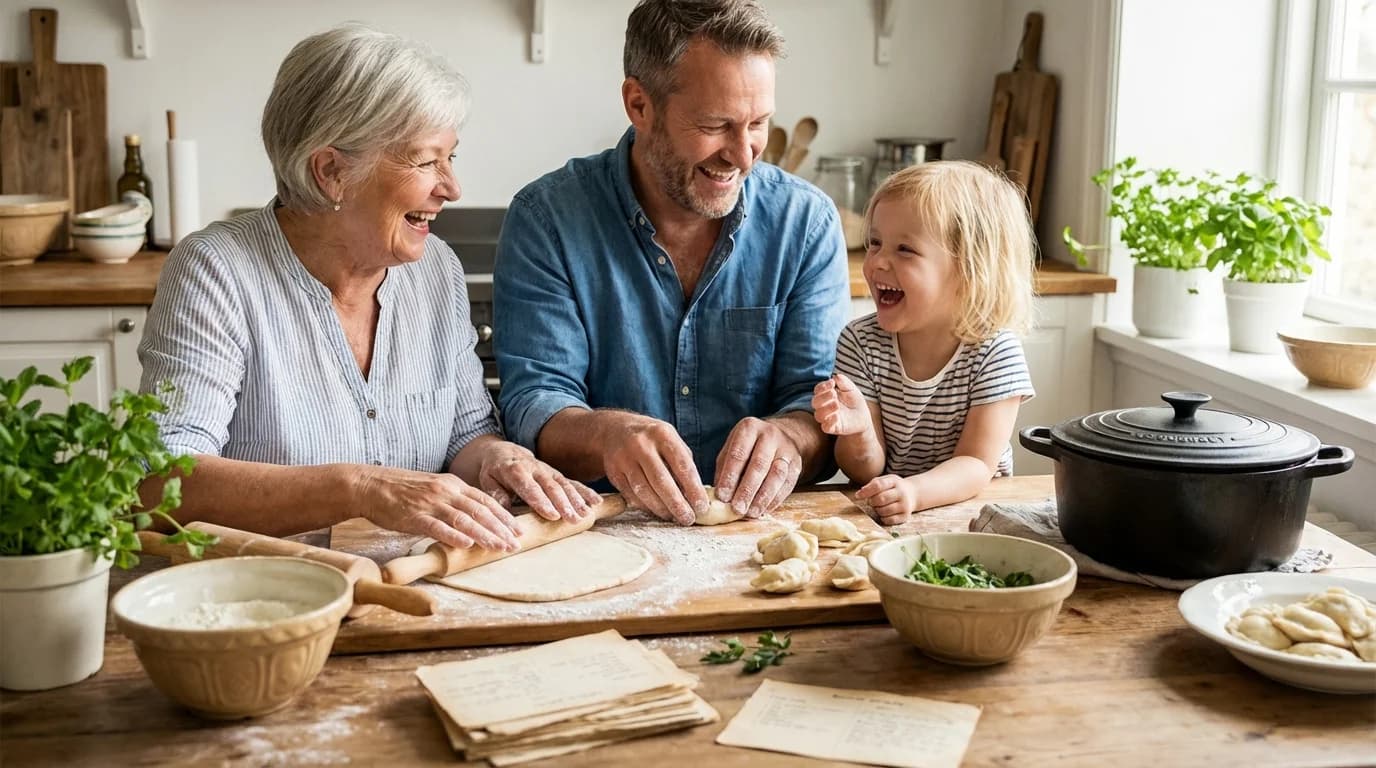
My daughter is ten, and last week she asked if we could make "the Christmas cookies" even though it was April. She meant my grandmother's kolacky—the cream cheese pastries filled with apricot jam that we make every December. They've become her tradition too, passed from my great-grandmother to my grandmother to me to her, spanning four generations and crossing an ocean.
But here's what worries me: she knows we make them at Christmas, but does she know why? Does she know her great-great-grandmother brought this recipe from Poland in 1920? Does she know the story about the year we ran out of jam and tried raspberry and the whole family rebelled? Will she remember how the dough should feel, how to know when they're perfectly golden?
Preserving cooking traditions requires more than passing down recipes—it means transmitting the full context: the techniques, the stories, the rhythms, the reasons why. It's about ensuring that future generations don't just have the instructions, but understand the culture and connection that make these dishes meaningful.
What Are Family Cooking Traditions?
Family cooking traditions are the food practices, recipes, and rituals that define your family's culinary identity.
Components of Cooking Traditions
Specific Recipes:
- Dishes made for generations
- Family variations on classic recipes
- Recipes unique to your family
- Dishes that "we always make"
Cooking Techniques:
- How your family does things
- Special methods passed down
- Kitchen rhythms and workflows
- Tricks and shortcuts specific to your family
Food Rituals:
- What you eat on certain occasions
- Who cooks what
- How meals are structured
- Serving styles and table traditions
Cultural Practices:
- Food tied to cultural or religious identity
- Seasonal or holiday foods
- Regional specialties
- Immigrant adaptations
Shared Knowledge:
- When to use which ingredients
- Where to source special items
- How to know when something is "right"
- The unwritten rules of your family kitchen
Why Preservation Matters
Cultural Identity: Food traditions connect family members to their cultural roots and give children a sense of heritage.
Family Bonds: Cooking together and sharing traditional foods strengthens family relationships across generations.
Living History: Food traditions are tangible links to ancestors and their experiences.
Stability and Comfort: In a changing world, food traditions provide continuity and grounding.
Skills Transfer: Traditional cooking teaches valuable life skills and self-sufficiency.
At Risk of Loss: Without active preservation, traditions disappear in one or two generations as elders pass away and modern life accelerates.
Documenting Your Family's Cooking Traditions
Before you can pass them down, capture what they are.
Creating a Tradition Inventory
List Your Family's Signature Dishes:
- What do you always make for Thanksgiving?
- What dish is requested at birthdays?
- What recipe did you learn from your grandmother?
- What food makes you think "home"?
- What would you be devastated to lose?
Identify Cooking Rituals:
- Sunday dinner preparations
- Holiday baking sessions
- Summer canning or preserving
- Annual family cooking events
- Daily routines (who makes breakfast, how coffee is made)
Note Special Techniques:
- How your family makes pie crust
- Your grandmother's way of rolling meatballs
- Dad's grilling method
- Secret seasonings or flavor combinations
- Kitchen organization systems
Document Food Culture:
- How your family shops (farmers markets, specific stores)
- Seasonal eating patterns
- Make-ahead traditions
- Leftovers and food waste approaches
- Table manners and serving customs
Recording the Full Context
For Each Tradition, Document:
The What:
- Exact recipe with measurements
- Ingredients (including preferred brands)
- Equipment needed
- Timing
The How:
- Step-by-step written instructions
- Photos or video of process
- Special techniques
- What it should look like/feel like/smell like at each stage
- Common mistakes and how to avoid them
The Why:
- Origin story (where did this recipe come from?)
- Cultural or religious significance
- Why your family makes it
- When it's traditionally prepared
- Who taught it to whom
The Who:
- Family members associated with this dish
- Memories and stories
- Different versions by different family members
- Who loves it most
The When:
- Occasions for this dish
- Seasonal considerations
- How timing has changed over years
- Calendar of family food traditions
Preservation Methods:
- Write detailed descriptions
- Photograph or video the process
- Audio record family members explaining
- Create digital cookbook with full context
- Preserve handwritten recipes
Teaching Traditions to the Next Generation
Documentation alone isn't enough—traditions must be actively transmitted.
Hands-On Learning
Cook Together Regularly:
- Make it routine, not just special occasions
- Start when children are young (even toddlers can help)
- Assign age-appropriate tasks
- Gradually increase complexity
- Make it fun, not a chore
Demonstrate First, Then Guide:
- Show the full process first
- Then walk them through it step by step
- Let them do it while you supervise
- Eventually, supervise while they lead
- Finally, be available for questions as they work independently
Repeat, Repeat, Repeat:
- Make the same dishes multiple times
- Muscle memory matters
- Each time, add new details
- Annual traditions require annual practice
- Consistency builds mastery
Allow Mistakes:
- Let them make errors (within reason)
- Discuss what went wrong and why
- Problem-solving builds understanding
- Mistakes become their own stories
- Perfectionism prevents learning
Progressive Skill Building:
Ages 3-5: Stirring, pouring measured ingredients, placing cookies on sheets
Ages 6-8: Measuring, cracking eggs, mixing, simple cutting with supervision
Ages 9-12: Following recipes with guidance, basic cooking, more complex prep
Ages 13-16: Independent cooking, technique refinement, improvisation
Ages 17+: Full mastery, teaching others, creating variations
Creating Meaningful Experiences
Make It Special:
- Dedicate time without rushing
- Create positive associations
- Allow space for conversation
- Share stories while cooking
- Celebrate successes
Build Anticipation:
- "Next Christmas, you'll help make this"
- "When you're older, I'll teach you the secret ingredient"
- Create milestones (first time making solo, etc.)
- Make learning traditional recipes a rite of passage
Include Them in Planning:
- Let them help choose what to make
- Involve them in grocery shopping
- Teach menu planning
- Explain ingredient selection
- Show seasonal eating
Document Their Learning:
- Take photos of them at different ages making the dish
- Record their first attempts
- Note their observations and questions
- Create their own recipe book
- Celebrate milestones
Teaching Beyond Recipes
Explain the "Why":
- Why we make this at this time
- Why these ingredients
- Why this method
- Cultural/historical reasons
- Family significance
Share Stories:
- How you learned it
- Memories of making it with elders
- Funny disasters
- Family history connected to dish
- What it means to you
Teach Principles, Not Just Steps:
- What makes a good pie crust (not just this recipe)
- How flavors work together
- How to adjust seasoning
- When to improvise vs. follow exactly
- How to recover from mistakes
Pass Down Kitchen Wisdom:
- How to organize cooking
- Timing multiple dishes
- Working efficiently
- Safety practices
- Kitchen maintenance
Adapting Traditions for Modern Life
Traditions must evolve to survive.
Respectful Adaptation
What to Preserve Absolutely:
- Core techniques that define the dish
- Cultural or religious elements
- Family stories and context
- Original recipes (even if you also adapt)
What Can Evolve:
- Ingredients (substitutions for availability/dietary needs)
- Timing (faster methods if needed)
- Portion sizes
- Presentation
- Tools and equipment
Making It Work for Your Life:
- Adapt recipes for your family size
- Modify for dietary needs (allergies, health)
- Adjust for your schedule
- Use modern equipment thoughtfully
- Maintain spirit even if details change
Document the Evolution:
- Note what you changed and why
- Keep both "original" and "adapted" versions
- Explain your reasoning
- This becomes part of the tradition's story
Dealing with Challenges
When Kids Aren't Interested:
- Don't force it
- Make it fun and low-pressure
- Find aspects they enjoy (maybe not cooking but setting table?)
- Plant seeds and be patient
- Interest often emerges later in life
When Time is Limited:
- Focus on a few key traditions
- Make simplified versions more often
- Reserve full traditional preparation for special occasions
- Quality over quantity
- Even once a year maintains connection
When Family is Scattered:
- Video call while cooking together remotely
- Share the tradition by sharing recipes online
- Coordinate to make same dish same day
- Create shared digital family cookbook
- Plan annual in-person cooking gatherings
When Recipes Don't Work:
- Old recipes may have missing steps or changed ingredients
- Research similar recipes for guidance
- Test and document adjustments
- Consult elder family members if possible
- Accept that some details may be lost (but preserve what you can)
Creating New Traditions
You're not just preserving—you're also building.
Starting New Family Traditions
Choose Purposefully:
- What matters to your family now?
- What do you want your children to remember?
- What brings your family together?
- What reflects your values?
Make It Repeatable:
- Simple enough to sustain
- Connected to specific occasion or time
- Something everyone can participate in
- Creates positive associations
Document from the Start:
- Record the first time
- Explain why you're starting this
- Photo/video early iterations
- Note how it evolves
- This becomes "origin story" for future generations
Examples of New Traditions:
- Sunday morning pancake ritual
- Birthday person chooses dinner menu
- First day of school breakfast
- Seasonal cooking projects (apple picking → pie making)
- Cultural fusion (combining heritage from both parents)
- Annual family baking day
Blending Cultural Traditions
In Multicultural Families:
- Honor both/all cultural backgrounds
- Create fusion dishes
- Explain significance of each tradition
- Let children experience full diversity
- Document the blending process itself
Creating Inclusive Traditions:
- Modify for dietary restrictions
- Include family members who can't cook (other roles)
- Make accessible for different abilities
- Value participation over perfection
Preserving Traditions Through Major Life Changes
When Elders Pass Away
Act Before If Possible:
- Record them cooking
- Write down their stories
- Learn their techniques while you can
- Preserve their recipes thoroughly
After They're Gone:
- Continue making their dishes
- Share stories about them while cooking
- Teach children about the person behind the recipe
- The tradition keeps their memory alive
- Making their food becomes honoring them
Memorial Cooking:
- Make their favorite dish on their birthday
- Include their recipes in holiday meals
- Share with family who knew them
- Pass down stories along with food
Through Divorce or Family Changes
Maintain Food Stability:
- Food traditions can provide continuity for children
- Continue important traditions in new configurations
- Both parents can maintain same traditions separately
- Food connects to family identity, not just household structure
Create New Traditions:
- New family structures need their own traditions
- Blended families can combine traditions
- Make space for innovation
- Honor past while building future
Across Geographical Distance
Remote Tradition Sharing:
- Ship special ingredients
- Video call while cooking
- Share photos and results
- Create synchronized cooking dates
- Use technology to maintain connection
Annual Gatherings:
- Make the most of in-person time
- Intensive tradition transmission during visits
- Record everything
- Create memories to sustain until next visit
The Role of Technology
Digital Tools for Preservation
Recipe Apps: myrecipe.app and similar platforms offer:
- Searchable recipe database
- Photo and video storage
- Notes and stories alongside recipes
- Family sharing features
- Meal planning with traditional recipes
- Access from anywhere
Video Documentation:
- YouTube (private or unlisted videos)
- Google Photos/iCloud (shared albums)
- Dedicated family video archives
- Short clips of specific techniques
- Full cooking sessions recorded
Social Media:
- Private family groups
- Share cooking in progress
- Build digital family cookbook collaboratively
- Multi-generational participation
- Easy photo/video sharing
Balance Digital and Hands-On
Technology Should Support, Not Replace:
- Use digital tools to preserve and share
- But actual cooking must be hands-on
- Screen time documenting ≠ time learning to cook
- Videos complement but don't substitute real practice
- The goal is competent cooks, not just documented recipes
Creating a Family Cookbook
Consider creating a comprehensive family cookbook that preserves traditions fully.
Include:
- All traditional recipes with full context
- Photos of dishes and family members
- Stories and memories
- Cultural and historical information
- Family tree
- Cooking techniques explained
- Calendar of annual food traditions
- Space for next generation to add their own
Formats:
- Printed book for each family household
- Digital version for easy updates
- Both (digital master, print special occasions)
- Individual recipe cards for daily use
- Comprehensive archive for preservation
Measuring Success
Signs Your Traditions Are Being Preserved:
- Next generation can make signature dishes independently
- Children request traditional foods
- Family stories are retold with the cooking
- Younger members are teaching each other
- Traditions adapt and continue rather than ending
- Food continues to bring family together
- Cultural identity remains strong
It's Okay If:
- Some traditions fade (not everything will survive)
- Adaptations change dishes somewhat
- Not everyone participates equally
- New traditions replace some old ones
- The tradition evolves significantly
What Matters Most:
- The spirit continues
- Food remains connector
- Stories are told
- Skills are passed down
- Family bonds strengthen through shared food
- Cultural identity is valued and transmitted
The Gift You're Giving
When you preserve cooking traditions, you're offering your children:
- Connection to their ancestry
- Practical life skills
- Cultural identity and pride
- Sensory links to their childhood
- Stories about who they come from
- Comfort in familiar flavors
- Something tangible to pass to their own children
You're creating a living legacy that connects past, present, and future through the universal language of food. Every time your daughter makes those kolacky, she's touching the same tradition her great-great-grandmother created a century ago. She's part of something larger than herself.
That's worth preserving. That's worth the effort.
Start today. Cook something traditional with your children. Share the story. Take photos. Write it down. Create the connection.
Your family's culinary heritage is waiting to be passed on.
Ready to preserve your family's cooking traditions? Try myrecipe.app for free to create a comprehensive digital archive of your family recipes, stories, and traditions that you can share across generations and geography.
About myrecipe
myrecipe helps families save, organize, and share their favorite recipes in one place. Plan meals, create shopping lists, and preserve your culinary traditions.
Start Organizing Recipes