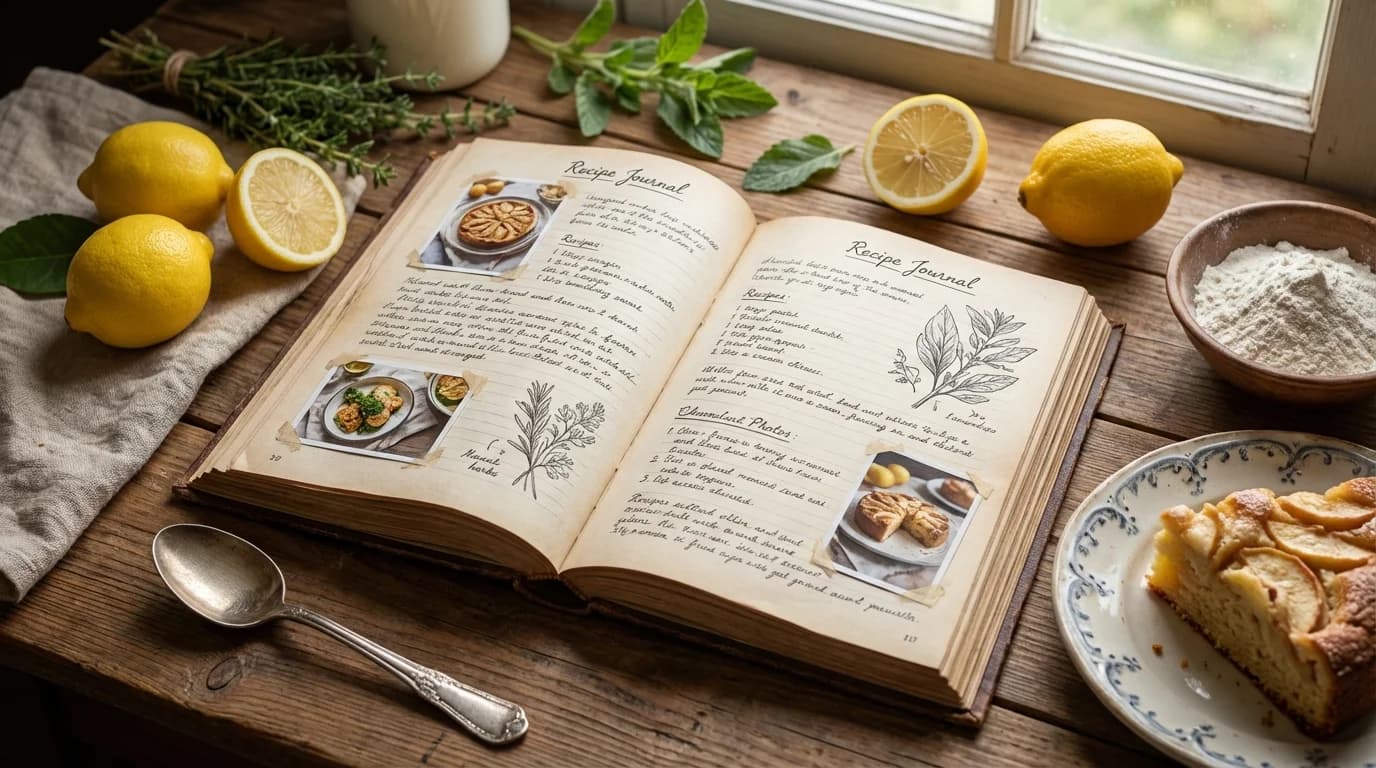
I started recipe journaling three years ago on a whim, thinking I'd track a few cooking experiments and be done. What started as simple notes became a rich chronicle of my culinary journey—complete with failed attempts, triumphant discoveries, seasonal traditions, and memories connected to every dish.
Now, when I flip through my recipe journal, I'm not just reading cooking instructions. I'm reliving dinner parties with friends, seeing how my skills progressed, remembering what my kids loved (and rejected!), and preserving food moments that would otherwise be forgotten. It's part cookbook, part diary, part creative outlet, and completely personal.
Recipe journaling is different from simply collecting recipes. It's about documenting your relationship with food, your growth as a cook, and the stories that make each dish meaningful. Whether you're a beginner or experienced cook, keeping a recipe journal can transform cooking from routine to remarkable.
What is Recipe Journaling?
Recipe journaling goes beyond recipe collection—it's active documentation of your cooking life.
Recipe Collection vs. Recipe Journaling
Recipe Collection:
- Static repository of recipes
- Focus on ingredients and instructions
- Organized for future reference
- Primarily functional
Recipe Journaling:
- Living document of cooking experiences
- Includes attempts, failures, successes
- Documents process and evolution
- Combines function with reflection
- Personal narrative through food
Why Keep a Recipe Journal?
Skill Development:
- Track your cooking progress over time
- Learn from mistakes (documented failures prevent repeats)
- See patterns in what works and what doesn't
- Build confidence through visible improvement
Memory Keeping:
- Preserve food memories before they fade
- Remember who you cooked for and when
- Document family gatherings and special occasions
- Create tangible record of your food life
Creativity Outlet:
- Express yourself through writing and design
- Experiment with illustrations, collages, photos
- Make cooking more intentional and mindful
- Transform routine activity into creative practice
Problem Solving:
- Record what worked in recipes
- Note modifications for next time
- Track seasonal variations
- Remember oven quirks, timing adjustments, etc.
Legacy Building:
- Create something to pass down
- Show your children/grandchildren your journey
- Document your signature recipes
- Preserve your unique cooking voice
Recipe Journal Formats
Choose the format that fits your style.
Physical Journals
Blank Notebook:
- Pros: Complete creative freedom, affordable, tangible
- Cons: No structure, requires discipline to maintain
- Best for: Creative types, freeform thinkers, artists
- Recommended: Leuchtturm1917, Moleskine, or nice composition book
Structured Recipe Journal:
- Pros: Pre-made templates, prompts included, looks polished
- Cons: Less flexibility, can feel restrictive
- Best for: Beginners, organized personalities
- Recommended: Keepsake Kitchen Diary, The Recipe Journal
Scrapbook Style:
- Pros: Lots of space for photos, clippings, creativity
- Cons: Bulky, can be messy, not great for reference
- Best for: Visual thinkers, memory keepers
- Recommended: 12x12 scrapbook albums
Ring Binder System:
- Pros: Reorganizable, add/remove pages, customizable
- Cons: Less portable, can look messy
- Best for: People who like flexibility and organization
- Setup: Use dividers for categories, printable templates
Digital Journals
Dedicated Apps:
- myrecipe.app: Recipe-specific, includes notes and journaling features
- Day One: Beautiful journaling app with tagging and photos
- Notion: Customizable database approach
- Pros: Searchable, backed up automatically, multimedia
- Cons: Screen-based, less tactile
- Best for: Tech-comfortable people, those wanting searchability
Digital Documents:
- Google Docs, Word, Pages
- Pros: Simple, familiar, free
- Cons: Basic, not optimized for recipes/journals
- Best for: Simple needs, budget-conscious
Photo-Based:
- Instagram, photo apps with captions
- Pros: Visual, easy sharing, built-in backup
- Cons: Public (unless private account), not detailed
- Best for: Visual documentation, social sharing
Hybrid Approach
Many recipe journalists use both:
- Physical journal: For reflections, drawings, tactile experience
- Digital system: For searchable recipe database
- Integration: Photos of physical pages stored digitally, printouts of digital entries in physical journal
This combines the best of both: tactile creativity with digital functionality.
What to Include in Your Recipe Journal
Essential Elements
The Recipe Itself:
- Title and date made
- Ingredients and measurements
- Instructions
- Source (where recipe came from)
- Yield/servings
Your Experience:
- How it turned out
- What worked well
- What to change next time
- Difficulty level for you
- Time it actually took (vs. recipe estimate)
Contextual Information:
- Who you made it for
- Occasion or reason
- Season or weather
- Your mood or circumstances
- Why you chose this recipe
Optional But Valuable
Ratings and Reviews:
- Overall rating (stars or scale)
- Taste rating
- Difficulty rating
- Would-make-again rating
- Family members' reactions
Photos:
- Finished dish
- Process shots (especially new techniques)
- Plating presentation
- The mess (sometimes these are the best memories!)
- People enjoying the food
Modifications:
- Substitutions you made
- Adjustments for dietary needs
- Creative variations
- Successful experiments
- Failed attempts (learn from these!)
Reflections:
- What you learned
- Skills you practiced
- Memories created
- Connections to other recipes or experiences
- Personal growth observations
Practical Notes:
- Shopping notes (where to find special ingredients)
- Prep-ahead tips
- Storage instructions
- Leftover ideas
- Cost breakdown
Recipe Journaling Methods and Styles
The Experimental Journal
Focus: Documenting cooking experiments and recipe development
Format:
- Hypothesis: What you're trying to achieve
- Variables: What you're changing
- Method: Detailed process notes
- Results: What happened
- Conclusions: What you learned
- Next steps: What to try next
Perfect for:
- Recipe developers
- Adventurous cooks
- Bakers perfecting techniques
- People who love process
Example Entry:
Chocolate Chip Cookie Experiment #7
Date: March 15, 2025
Hypothesis: Browning butter will add nutty depth
Variables: Browned butter instead of softened butter
Method: [Detailed process]
Results: Amazing flavor but cookies spread too much
Conclusion: Need to chill dough longer with browned butter
Next: Experiment #8 with 2-hour chill time
The Memory Keeper Journal
Focus: Preserving food memories and moments
Format:
- Brief recipe reference
- Detailed story about the occasion
- Who was there
- What made it special
- Photos of people (not just food)
- Quotes or memorable moments
- How you felt
Perfect for:
- Sentimental cooks
- Family-focused people
- Those who cook for connection
- Memoirists
Example Entry:
Mom's Chicken Soup
January 20, 2025

Made this today for Sarah who has the flu. As I chopped
celery, I remembered being home sick as a kid and Mom
bringing me this soup in bed. Sarah said "This is the
best soup ever, Mom" and I felt the circle complete.
Attached: Photo of Sarah smiling with soup bowl,
recipe card in Mom's handwriting
The Visual Journal
Focus: Artistic expression through food and cooking
Format:
- Hand-drawn recipe cards
- Watercolor ingredient illustrations
- Collages of food packaging, clippings, tickets from meals out
- Photography with artistic notes
- Color coding and beautiful typography
- Minimal text, maximum visual impact
Perfect for:
- Artists
- Visual learners
- Instagram-aesthetic lovers
- Creative types
The Technical Journal
Focus: Precise cooking data and skill development
Format:
- Exact measurements and times
- Temperature readings
- Technique notes
- Equipment used
- Troubleshooting data
- Conversion charts
- Scientific observations
Perfect for:
- Serious bakers
- Data-oriented cooks
- People learning advanced techniques
- Culinary students
The Seasonal Journal
Focus: Cooking through the seasons
Format:
- Organized by season or month
- Market finds and seasonal ingredients
- What's in season locally
- Traditions for each season
- Year-over-year comparisons
Perfect for:
- Farm-to-table cooks
- Garden cooks
- People who love seasonal eating
- Tradition builders
The Quick-Note Journal
Focus: Simple, sustainable logging
Format:
- Date, recipe name, quick rating
- One-line note on modifications
- Would-make-again yes/no
- Quick photo
- Minimal time investment
Perfect for:
- Busy people
- Beginners building the habit
- People who find detailed journaling overwhelming
- Maintenance rather than deep reflection
Creative Recipe Journaling Ideas
Themed Journal Projects
Year of Mastery:
- Pick one category (bread, pasta, French cooking, etc.)
- Document your journey mastering it
- Track skills developed
- Note milestone recipes
Family Recipe Revival:
- Work through family recipe collection
- Make each recipe
- Document your version alongside original
- Interview family about memories
- Create living family cookbook
Budget Cooking Journal:
- Track cost per serving
- Document budget-friendly meals
- Note sales and seasonal pricing
- Develop repertoire of affordable favorites
- Track food waste reduction
Baking Through a Cookbook:
- Choose one cookbook
- Make every recipe (or category)
- Document each attempt
- Rate and review
- Develop expertise in that style
Seasonal Eating Project:
- Commit to eating seasonally for a year
- Document what's available each month
- Create seasonal recipe collections
- Note price variations
- Build annual rhythm
Technique Challenge:
- List techniques you want to master
- Document practice sessions
- Track improvement
- Note resources that helped
- Celebrate milestones
Collaborative Journaling
Family Cooking Journal:
- Shared journal in the kitchen
- Everyone who cooks adds entry
- Different handwriting styles
- Becomes family record
- Kids can contribute drawings
Cooking Date Journal:
- Document cooking with partner
- Each person writes their perspective
- Date night memories
- Recipe development together
- Relationship building through food
Cooking Club Journal:
- Shared digital journal
- Each member documents their attempts at monthly recipe
- Compare notes and experiences
- Build community
- Learn from each other
Mixed Media Approaches
Pocket Additions:
- Create pockets in journal pages
- Store original recipe cards
- Keep menu cards from restaurants
- Include farmers market receipts
- Attach special ingredient packaging
Photo Integration:
- Print small photos (phone printer or printing service)
- Tape or glue into journal
- Add captions and notes
- Before/after photos
- Process documentation
Washi Tape and Decoration:
- Use washi tape for sections
- Color-code by category
- Add decorative elements
- Make it beautiful and functional
- Express personality
Recipe Card System:
- Write recipes on cards
- Journal on facing pages
- Keep cards in page protectors
- Removable for cooking
- Permanent documentation
Building the Recipe Journaling Habit
Getting Started
Start Small:
- Commit to journaling one recipe per week
- Don't try to document everything
- Focus on recipes you actually want to remember
- Build the habit before expanding
Choose Your Trigger:
- Journal right after cooking (while fresh)
- Set aside Sunday for week review
- Journal during morning coffee
- Make it part of meal planning routine
Keep It Accessible:
- Physical journal: In the kitchen
- Digital journal: On home screen
- Make it easier to do than to skip
Lower the Bar:
- Some documentation is better than none
- Date, recipe name, and one note counts
- Don't let perfectionism prevent journaling
- Messy pages are authentic pages
Maintaining Momentum
Regular Review:
- Weekly: Glance through recent entries
- Monthly: Read through the month
- Seasonal: Compare to same season last year
- Annual: Full review of year's cooking journey
Make It Rewarding:
- Use nice pens, beautiful journals
- Allow time and space for creativity
- Share entries with family/friends
- Celebrate milestones (100 entries!)
Connect to Goals:
- Use journal to support cooking goals
- Track skill development
- Note health improvements
- Document family connection through food
Overcoming Common Obstacles
"I don't have time":
- Start with 2-minute entries
- Quick note is better than nothing
- Batch journal once a week
- Use voice notes, transcribe later
"I'm not a good writer":
- You're writing for yourself, not publication
- Bullet points count
- Focus on facts if reflection feels hard
- It will improve with practice
"I forget to do it":
- Set phone reminder
- Keep journal where you'll see it
- Journal before eating (make it a rule)
- Make it part of cleanup routine
"Nothing I cook is interesting enough":
- Everyday cooking matters most
- Document the ordinary
- You'll treasure these entries later
- Your Tuesday pasta night is worth recording
Digital Recipe Journaling
Using Recipe Apps
myrecipe.app Features for Journaling:
- Add notes to any recipe
- Upload photos of your results
- Rate and review
- Track when you made it
- Add comments and variations
- Tag recipes with occasions or memories
- Search your notes later
Journaling Workflow:
- Add recipe to your collection
- Make the recipe
- Add notes immediately after
- Upload photo of finished dish
- Rate overall experience
- Note modifications for next time
Photo-Based Digital Journals
Instagram or Photo Apps:
- Take photo of dish
- Write caption with story, recipe notes, reflections
- Use hashtags for organization (#myfamilyrecipes #baking #dinnerparty)
- Create highlights or albums by category
- Easy to share, beautiful presentation
Benefits:
- Visual first (perfect for food)
- Easy on phone (always with you)
- Social sharing built in
- Searchable by hashtag
- Backed up to cloud
Hybrid Digital-Physical
Best Approach for Many:
- Use myrecipe app for searchable recipe database
- Keep physical journal for reflections and stories
- Print favorite entries from digital journal
- Scan physical pages to digital for backup
- Get benefits of both formats
Recipe Journal Prompts
When you're not sure what to write:
Reflection Prompts:
- What did I learn from making this?
- How has my approach to this recipe changed over time?
- What memory does this dish create?
- Who would appreciate this recipe and why?
- What does this dish tell me about myself?
Practical Prompts:
- What would I do differently next time?
- What kitchen tool made this easier?
- How could I make this faster/healthier/cheaper?
- What season is best for this recipe?
- Who taught me this technique?
Creative Prompts:
- If this recipe were a person, who would it be?
- What music goes with this dish?
- What would Grandma say about my version?
- How does this recipe connect to my heritage?
- What story does this ingredient tell?
Preserving Your Recipe Journal
Physical Journal Preservation
While Using:
- Keep away from cooking splatters (or embrace the authenticity!)
- Use archival-quality journals and pens if planning to keep long-term
- Consider page protectors for precious entries
- Store in safe place away from moisture
Long-term:
- Digitize by photographing or scanning pages
- Store digital backup in cloud
- Keep physical journal in safe location
- Pass down to next generation
- Consider creating printed copies from digital scans
Digital Journal Backup
Regular Backups:
- Export journal entries monthly
- Save to multiple cloud services
- Keep offline copy on external drive
- PDF important entries
- Don't rely solely on one platform
The Journey, Not the Destination
Recipe journaling isn't about creating a perfect record—it's about being present with your cooking, honoring the process, and creating a meaningful chronicle of your food life.
Your recipe journal might be messy, imperfect, full of crossed-out notes and splattered pages. That's exactly what makes it authentic and valuable. Years from now, you'll treasure those imperfect records of real life more than any pristine, unused journal.
Start today. Write about tonight's dinner. Document that recipe you're trying. Record how you felt while cooking. Your culinary story deserves to be told, and your future self will thank you for preserving these everyday moments that make up a life.
Ready to start your recipe journaling journey? Try myrecipe.app for free and begin documenting your cooking adventures with built-in journaling features, photo uploads, and note-taking tools designed specifically for recipes.
About myrecipe
myrecipe helps families save, organize, and share their favorite recipes in one place. Plan meals, create shopping lists, and preserve your culinary traditions.
Start Organizing Recipes