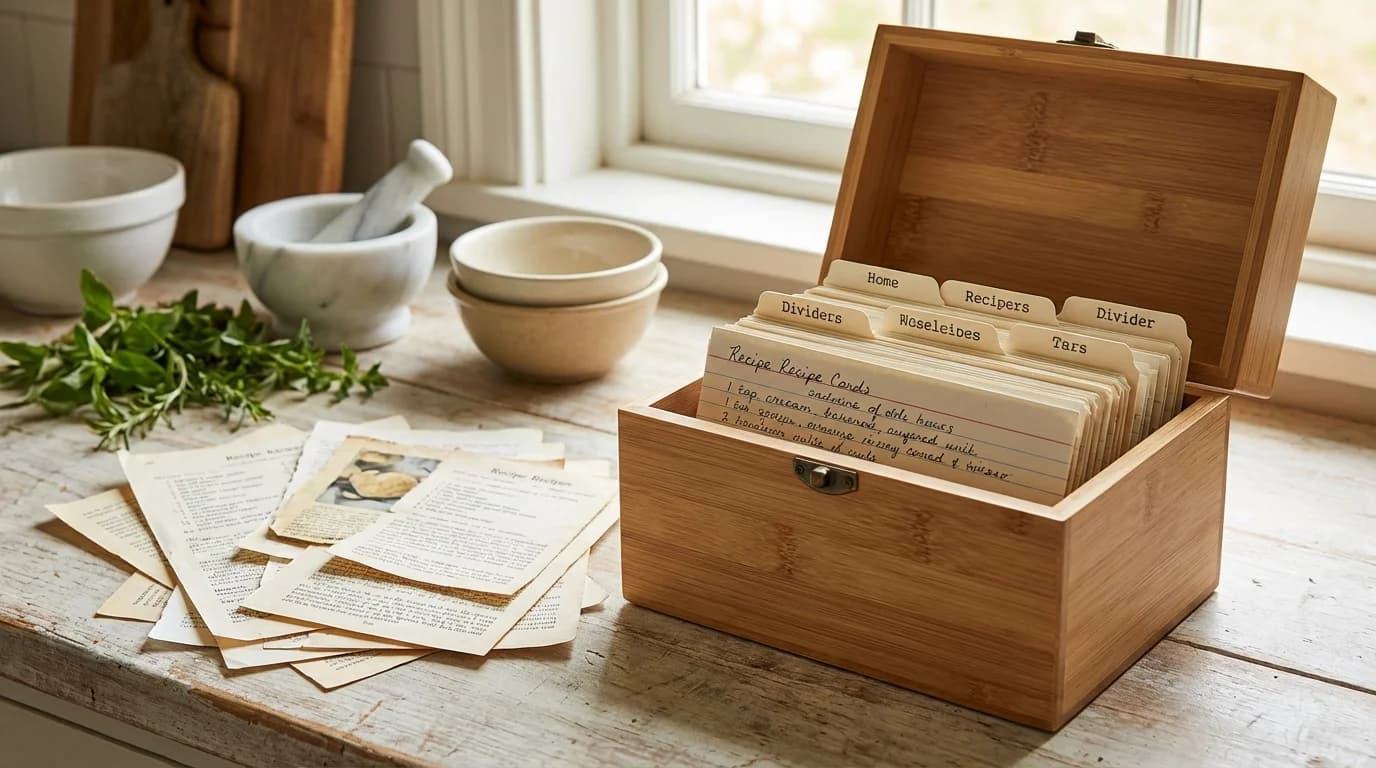
I inherited my grandmother's recipe box last year—a beautiful wooden box stuffed with over 300 recipe cards accumulated over six decades. It was a treasure trove of culinary history, but it was also complete chaos. Pie recipes mixed with main dishes, cards from the 1960s wedged between newspaper clippings from last year, and no discernible system whatsoever.
Sound familiar?
Whether you've inherited a chaotic collection, accumulated your own over the years, or are just starting to build a recipe box, having a solid organization system transforms your collection from frustrating to functional. Let me share the strategies that worked for me—and hundreds of other recipe box enthusiasts—to create a system that actually works.
Why Recipe Box Organization Matters
Before we dive into the how-to, let's talk about why this matters:
Time Savings: A well-organized recipe box means finding your grandmother's apple pie recipe in seconds, not spending 20 minutes frantically searching through cards while the oven preheats.
Preservation: Proper organization and storage protect fragile recipe cards from damage, stains, and deterioration.
Discovery: When recipes are organized, you're more likely to explore your collection and try recipes you'd forgotten about.
Legacy Building: An organized recipe box is easier to share with family members and pass down to future generations.
Mental Clarity: There's something deeply satisfying about a beautifully organized collection—it makes cooking feel more intentional and enjoyable.
Step 1: The Great Recipe Box Audit
Before you can organize, you need to know what you have.
Empty Everything Out
Yes, completely empty your recipe box (or boxes). This might feel overwhelming, but it's essential.
Create Sorting Stations:
- Clear a large table or floor space
- Have plenty of room to spread out
- Good lighting is crucial for reading faded handwriting
- Set aside 2-3 hours of uninterrupted time
Initial Sort: Keep, Question, Discard
Definite Keepers:
- Family recipes, especially handwritten ones
- Recipes you make regularly
- Recipes with sentimental value
- Unique or unusual recipes you can't find elsewhere
Question Pile:
- Recipes you've never made but might try
- Duplicates (you might keep the best version)
- Recipes with missing information
- Recipes from magazines or books (available elsewhere)
Discard Pile:
- Recipes for ingredients you can't stand
- Damaged cards with illegible text
- Multiple exact duplicates
- Recipes that no longer align with your dietary needs
Pro tip: Don't throw anything away yet. Sleep on your decisions, especially for inherited recipes. You might want to digitize them before discarding.
Check for Damage and Needed Repairs
As you sort, set aside:
- Cards that need laminating
- Recipes to be rewritten for legibility
- Cards that should be photographed before they deteriorate further
- Items needing special archival storage
Step 2: Choose Your Organization System
There's no one-size-fits-all approach. Choose based on how you actually cook and think about food.
System 1: Category-Based Organization
This is the most popular approach for a reason—it mirrors how we think about meals.
Main Categories:
- Appetizers & Snacks
- Soups & Salads
- Main Dishes (subdivide by protein: Beef, Chicken, Pork, Seafood, Vegetarian)
- Side Dishes
- Breads & Rolls
- Desserts (subdivide: Cookies, Cakes, Pies, etc.)
- Beverages
- Sauces & Condiments
Pros: Intuitive, easy for family members to use, works well for general cooking Cons: Hard to categorize combination dishes, doesn't account for occasions
System 2: Occasion-Based Organization
Perfect if you cook for specific events or seasons.
Categories:
- Everyday Weeknight Dinners
- Weekend Cooking Projects
- Holiday Recipes (subdivide by holiday)
- Party & Entertaining
- Potluck Favorites
- Special Occasion (birthdays, anniversaries)
- Seasonal (Summer BBQ, Fall Comfort Food, etc.)
Pros: Matches how many people actually use recipes, easy to find what you need for events Cons: Some recipes fit multiple occasions, not ideal for day-to-day cooking
System 3: Family Member Organization
Ideal for inherited collections or family cookbooks.
Categories:
- Grandma Smith's Recipes
- Mom's Specialties
- Aunt Jane's Collection
- Your Own Creations
- Dad's Grilling Recipes
Within each person's section, you might subdivide by type (Grandma Smith: Desserts, Main Dishes, etc.)
Pros: Preserves family heritage, easy to know recipe source, great for sentimental value Cons: Harder to find specific dish types, can feel impractical for daily use
System 4: Hybrid Approach
Most people benefit from combining systems.
Example Structure:
- Primary organization by category (Appetizers, Mains, Desserts, etc.)
- Special sections for:
- Holiday Favorites
- Grandma's Recipes
- Weekly Rotation (recipes you make often)
- To Try (recipes you haven't tested yet)
This gives you the intuitive benefit of categories with the flexibility to honor special collections.
System 5: Frequency-Based Organization
A practical approach for actual cooking.
Categories:
- Weekly Staples (make at least monthly)
- Special Occasions (make a few times per year)
- Someday/Maybe (want to try but haven't yet)
- Archived (sentimental but don't make anymore)
Pros: Puts most-used recipes within easy reach, very practical Cons: Requires more maintenance as cooking habits change
Step 3: Physical Organization Tools
Now that you have a system, let's talk about the physical setup.
Recipe Box Options
Traditional Recipe Boxes:
- Classic wooden boxes with dividers
- Acrylic boxes (see contents at a glance)
- Vintage tins (charming but may not protect as well)
- Expandable file boxes for large collections
Size Considerations:
- 4x6" cards: Most common, fits standard recipe cards
- 3x5" cards: Smaller, more compact, good for simple recipes
- Mixed sizes: Get a box with adjustable dividers
Multiple Box System: For large collections, consider:
- Everyday recipes in kitchen
- Special occasion recipes in storage
- Archived/sentimental recipes in safe location
Divider Strategies
Pre-Made Dividers:
- Purchase sets that match your system
- Available in many styles and colors
- Often include alphabetical or category labels
DIY Dividers:
- Cut from heavyweight cardstock
- Laminate for durability
- Customize labels to your exact needs
- Use colors to denote different systems (green for vegetables, red for meat, etc.)
Tab Placement:
- Offset tabs make it easy to see all categories at once
- Consider primary tabs (main categories) and secondary tabs (subcategories)
Card Organization Within Categories
Alphabetical: Within each category, arrange recipes A-Z by recipe name
- Easy to find specific recipes
- Works well for large categories
Chronological: Order by when they were added or by season
- Sees newest additions first
- Tracks how your cooking evolves
Frequency: Most-made recipes toward the front
- Very practical for cooking
- Requires occasional reorganization
Family Order: If organized by person, then by their own system or preference
- Honors the original organization
- Maintains authenticity
Step 4: Protecting Your Recipes
Recipe cards are precious—protect them properly.
For Everyday Use Cards
Lamination:
- Protects from spills and grease
- Makes cards wipeable
- Use cold lamination for old cards (heat can damage)
Page Protectors:
- Slip cards into clear protective sleeves
- Still readable, fully protected
- Can remove for photocopying
Clear Recipe Card Box:
- Keeps dust and moisture out
- See-through lets you browse without removing lid
For Heirloom and Fragile Cards
Archival Storage:
- Use acid-free page protectors
- Store in climate-controlled environment
- Keep away from direct sunlight
- Consider archival storage boxes
Photo Documentation:
- Photograph every heirloom card (front and back)
- Create digital backups using myrecipe.app
- Store digital copies in multiple locations
Working Copies:
- Create typed or printed versions for actual cooking
- Keep originals in protected storage
- This preserves the handwriting while keeping it safe
Storage Location
Active Recipe Box:
- Keep in kitchen but away from stove moisture and heat
- Closed container to prevent grease and dust
- Accessible but protected
Archive Storage:
- Cool, dry location
- Away from basements (moisture) and attics (heat/temperature swings)
- In sealed containers to prevent pest damage
Step 5: Maintaining Your System
Organization is ongoing, not a one-time project.
Monthly Maintenance
Quick Review (15 minutes):
- Refile any misplaced cards
- Remove recipes you tried and didn't like
- Move frequently-used recipes to front
- Add new recipes to proper categories
Quarterly Deep Clean
Every 3 Months (1 hour):
- Remove all cards and wipe down box
- Check for damage or deterioration
- Reorganize if categories aren't working
- Update your system as needed
Annual Audit
Once a Year (2-3 hours):
- Complete review of entire collection
- Remove recipes you won't make
- Consider if organizational system still works
- Plan improvements for next year
- Back up any new handwritten recipes digitally
Adding New Recipes
Create a Holding System:
- "To Add" section in box
- Small envelope for loose clippings
- Folder for printed internet recipes
Regular Processing:
- Weekly or bi-weekly, properly file new additions
- Decide if they're worthy of permanent spot
- Write them on proper recipe cards if needed
Maintain Consistency:
- Use same card size and style
- Follow your established categories
- Include all information (source, date added, rating)
Creative Recipe Box Ideas
Color-Coding System
Assign colors to categories:
- Red for meats
- Green for vegetables
- Yellow for breakfast
- Blue for desserts
Use colored cards, colored dividers, or colored stickers.
Rating System
Add visual ratings to cards:
- Stars for difficulty level
- Hearts for family favorites
- Dollar signs for cost
- Clocks for time required
Source Tracking
Note on each card:
- Where recipe came from
- Who shared it
- Date you first made it
- Date acquired
Seasonal Rotation
Keep current season's recipes at front:
- Spring: fresh salads, lighter dishes
- Summer: grilling, no-bake desserts
- Fall: comfort foods, apple recipes
- Winter: stews, holiday baking
Success Tracking
Add to each card:
- Date each time you make it
- Rating for each attempt
- Notes on modifications
- Who you served it to
The Hybrid Approach: Physical + Digital
Many modern cooks use both systems.
Benefits of Going Hybrid
Physical Box Advantages:
- Tangible connection to heritage
- No screen needed while cooking
- Handwriting preserved
- Can be displayed and cherished
Digital System Advantages:
- Searchable by ingredient
- Automatically backed up
- Easy to share with family
- Can scale recipes automatically
- Never lose a recipe
How to Implement
-
Maintain Physical Box: Keep organized as described above
-
Create Digital Backup: Use myrecipe.app to store digital versions
-
Use Each for Different Purposes:
- Physical: browse, inspiration, sentimental cooking
- Digital: search, share, meal planning, grocery lists
-
Cross-Reference: Add digital ID to physical cards if desired
This gives you the best of both worlds—the charm and heritage of physical cards with the practicality of digital organization.
Dealing with Common Recipe Box Challenges
Challenge: Too Many Recipes
Solution: Be ruthlessly practical
- Keep recipes you've made in the past 2 years
- Digitize everything else as an archive
- Create a "Maybe" box for recipes you might try
- Review "Maybe" box annually and discard what you haven't tried
Challenge: Inconsistent Card Sizes
Solution: Multiple strategies
- Use a larger box that accommodates different sizes
- Create separate sections for different sizes
- Rewrite all recipes on uniform cards (time-consuming but creates consistency)
- Use page protectors that fit largest size
Challenge: Faded or Damaged Cards
Solution: Preservation steps
- Photograph immediately before further deterioration
- Rewrite while still legible
- Store originals in archival protection
- Use rewritten version for cooking
Challenge: Recipes from Multiple Sources
Solution: Standardization system
- Rewrite internet printouts on cards
- Transcribe magazine clippings
- Photocopy cookbook pages and trim to card size
- Note original source on each standardized card
Challenge: Family Members Want Copies
Solution: Easy sharing
- Digitize your collection for easy distribution
- Create a shared digital family cookbook
- Photocopy most-requested recipes
- Consider making duplicate recipe boxes as gifts
Special Collection Ideas
Beyond the main recipe box, consider creating:
Holiday Recipe Box
A separate box just for holiday recipes:
- Organized by holiday
- Includes party planning notes
- Shopping lists for big meals
- Traditional menus
Quick Weeknight Box
Small box of go-to recipes:
- 30-minute meals
- 5-ingredient recipes
- Family favorites
- Keep right in kitchen for easy access
Entertaining Box
Recipes specifically for guests:
- Appetizers that can be made ahead
- Impressive main dishes
- Party-size recipes
- Includes serving suggestions
"Grandma's Box"
Dedicated box for inherited recipes:
- Preserved family heirlooms
- Organized as she had them, or by type
- Includes photos and stories
- Never used for actual cooking—these are archival
Making It Beautiful
Organization doesn't have to be purely functional—make it enjoyable:
- Use beautiful dividers and cards
- Display your recipe box proudly
- Add decorative labels
- Include small photos of finished dishes
- Use washi tape or stickers for personality
- Choose a box that matches your kitchen aesthetic
A recipe box that's beautiful and well-organized is more likely to be used and maintained.
The Bigger Picture
An organized recipe box is more than just a functional tool—it's a curated collection of your family's culinary story. Every card represents a meal, a memory, a moment in time.
When you organize these recipes with care, you're:
- Honoring the people who created and shared them
- Making it easier to continue traditions
- Building something that can be passed down
- Creating a resource that brings joy rather than frustration
Whether you choose a simple category system or an elaborate hybrid approach, the best organization system is the one you'll actually maintain. Start with the basics, adjust as you go, and don't be afraid to change things if they're not working.
Your perfectly organized recipe box is waiting—it just needs a little time and attention to get there.
Ready to complement your physical recipe box with digital organization? Try myrecipe.app for free and create a searchable, shareable version of your recipe collection that you can access from anywhere.
About myrecipe
myrecipe helps families save, organize, and share their favorite recipes in one place. Plan meals, create shopping lists, and preserve your culinary traditions.
Start Organizing Recipes