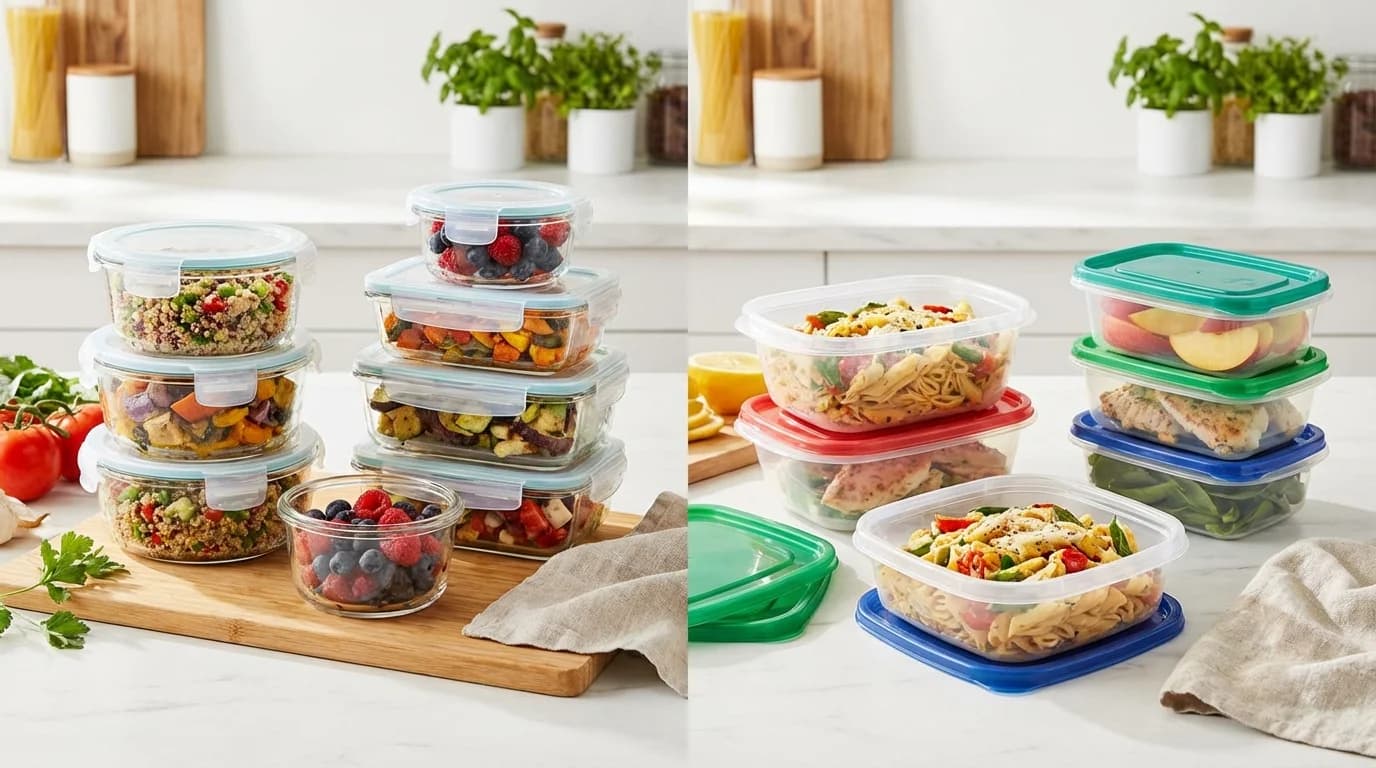
You spent two hours prepping beautiful, healthy meals for the week. You grab a plastic container from your cabinet—it's stained orange from last week's tomato sauce, the lid doesn't quite seal, and it smells vaguely like garlic no matter how many times you've washed it. Your fresh meal goes into a questionable container, and suddenly that meal prep doesn't seem so appealing.
Key Takeaways
- Glass containers last longer and don't stain, but cost 2-3x more than plastic
- Four non-negotiables: airtight seal, microwave safe, dishwasher safe, right size
- Start with 10-12 containers in 2-3 cup size for most meal prep needs
- Matching lids are crucial—mismatched sets lead to frustration and waste
- BPA-free plastic is safe for cold storage; use glass for reheating acidic foods
The container matters just as much as what you put in it. The right containers keep food fresh longer, reheat evenly, stay organized in your fridge, and actually make you want to eat your meal prep. The wrong containers lead to leaks, freezer burn, stained plastic, and wasted food.
This guide covers everything you need to know about meal prep containers: glass vs plastic pros and cons, which sizes you actually need, organization strategies, and how to avoid the mistakes that cost people hundreds of dollars in containers they never use. For food safety info, see how long does meal prep last.
Why Container Choice Matters
Before you click "buy" on a random container set, understand what makes a good meal prep container:
The Four Non-Negotiables
1. Airtight Seal
- Prevents leaks in your bag
- Keeps food fresh 2-3 days longer
- Stops odors from spreading in your fridge
- Essential for freezer storage
2. Microwave Safe (If Reheating)
- Not all containers can go in the microwave
- Some release chemicals when heated
- Lids may warp at high temperatures
- Look for "microwave safe" label
3. Dishwasher Safe
- Hand-washing 20+ containers weekly is unsustainable
- Dishwasher heat sanitizes better than hand washing
- Top rack vs bottom rack matters for some materials
4. Right Size for Your Portions
- Too small = not enough food, still hungry
- Too large = food looks sad and insufficient
- Wastes fridge space with excess air
If a container doesn't meet all four criteria for your needs, don't buy it.
Glass vs Plastic: The Complete Comparison
The great meal prep container debate. Here's the honest assessment of both.
| Feature | Glass | Plastic | Winner |
|---|---|---|---|
| Cost | $3-8 per container | $1-3 per container | Plastic |
| Lifespan | 10+ years | 1-3 years | Glass |
| Weight | Heavy | Lightweight | Plastic |
| Staining | Never stains | Stains easily | Glass |
| Odor retention | None | Absorbs odors | Glass |
| Microwave safe | Yes (evenly) | Check label | Glass |
| Freezer safe | Some (check label) | Most types | Plastic |
| Oven safe | Yes (without lid) | Never | Glass |
| Breakable | Yes (shatter risk) | No | Plastic |
| Dishwasher safe | Yes | Yes (top rack) | Tie |
| Chemical leaching | None | Possible when heated | Glass |
| Environmental | Recyclable | Adds to waste | Glass |
| Presentation | Professional look | Can look worn | Glass |
Best Use Cases
| Use Case | Recommended | Why |
|---|---|---|
| Home storage | Glass | No staining, lasts longer |
| Work commute | Plastic | Lightweight, unbreakable |
| Kids' lunches | Plastic | Won't shatter if dropped |
| Tomato-based dishes | Glass | No staining |
| Freezer meals | Plastic | Better for temperature changes |
| Curries & turmeric dishes | Glass | No staining |
| Oven reheating | Glass | Oven-safe |
| Budget setup | Plastic | Much cheaper upfront |
| Long-term investment | Glass | Lasts 10+ years |
The Hybrid Approach (What Most People Actually Use)
Glass for:
- Home storage of prepped components
- Recipes with tomato sauce or curry
- Overnight oat mason jars
- Meals you reheat at home
Plastic for:
- Work/school lunches you transport daily
- Freezer storage
- Kids' meals
- Snack portions and small sides
You don't have to pick just one. Most successful meal preppers use both strategically.
Container Sizes You Actually Need
Don't buy a random variety pack. Here's the practical breakdown.
| Size | Capacity | Qty Needed | Best For | Example Meals |
|---|---|---|---|---|
| Large | 6-8 cups (48-64 oz) | 3-4 | Salads, big grain bowls | Buddha bowls, burrito bowls |
| Medium | 3-4 cups (24-32 oz) | 8-10 | Standard meals (workhorse) | Chicken & rice, pasta, stir-fry |
| Small | 1-2 cups (8-16 oz) | 6-8 | Snacks, sides, breakfast | Overnight oats, yogurt parfaits |
| Extra Small | 2-4 oz | 4-6 | Dressings, dips, sauces | Salad dressing, guacamole |
The Starter Set
If you're just beginning, buy:
| Item | Quantity | Purpose |
|---|---|---|
| Medium containers | 6 | Daily lunches |
| Small containers | 3 | Snacks or components |
| Large containers | 2 | Big batch prep |
| Sauce containers | 4 | Dressings and dips |
| Total (Plastic) | $30-50 | |
| Total (Glass) | $60-90 |
Add more as you figure out your actual usage patterns.
Specialized Container Types
Beyond basic rectangles, these specialty containers solve specific meal prep problems.
Divided Containers (Bento-Style)
What they are: Multiple compartments in one container, keeping foods separated
Best for:
- Kids' lunches (variety without mixing)
- Portion control (pre-set compartment sizes)
- Foods you don't want touching (wet and dry items)
- Visually appealing presentation
Examples:
- 3-compartment: Main protein/grain + two veggie sides
- 2-compartment: Entree + side
- 5-compartment: Snack box style
Watch out for: Compartments are often smaller than they look. Measure to ensure adequate portions.
Mason Jars
What they are: Wide-mouth glass jars (8-32 oz) with screw-on lids
Best for:
- Overnight oats
- Layered salads (dressing on bottom)
- Soups (wide-mouth only)
- Smoothie prep (dry ingredients)
- Chia seed pudding
Pros: Cheap, readily available, great for layered meals, attractive presentation Cons: Not ideal for reheating, circular shape wastes fridge space, can break
Soup Containers
What they are: Deep, narrow containers specifically designed for liquids
Best for:
- Soups, stews, chili
- Oatmeal and porridge
- Curries and saucy dishes
Key features: Extra-tight seal to prevent leaks, deeper design for liquid capacity
Tip: Look for containers with a silicone gasket in the lid for leak-proof transport.
Freezer Containers
What they are: Containers specifically rated for freezer storage
Best for:
- Long-term meal storage (2-3 months)
- Casseroles and baked dishes
- Soups and stews
- Pre-portioned proteins
Requirements:
- Must be labeled "freezer safe" (not all containers are)
- Should have tight seal to prevent freezer burn
- Leave 1 inch headspace for liquid expansion
Material note: Plastic generally freezes better than glass (less cracking risk).
Organization & Storage Systems
Having containers is one thing. Storing them efficiently is another.
Container Organization Tips
The Lid Problem Lids are always the chaos factor. Here's how to solve it:
Solution 1: Same Brand, Same Size Buy multiple containers from one brand in one size. All lids are interchangeable. No more matching game.
Solution 2: Snap Lids to Containers Always store containers with lids attached. Takes more space but saves sanity.
Solution 3: Dedicated Lid Organizer Use a file organizer or tension rods vertically to store lids separately but organized by size.
Fridge Organization
Stack by Meal Day:
- Monday meals in front
- Friday meals in back
- Eat front to back for FIFO (first in, first out)
Create Zones:
- Breakfast shelf
- Lunch shelf
- Dinner shelf
- Snacks in door or drawer
Color-Code System:
- Use colored lids or tape
- Blue = breakfast, green = lunch, red = dinner
- Or assign colors per family member
Freezer Organization
Label Everything:
- Meal name
- Date frozen
- Reheating instructions
Freeze Flat:
- Lay bags flat to freeze
- Once solid, stack vertically like files
- Saves massive amounts of space
Inventory List:
- Keep a list on freezer door
- Check off items as you use them
- Prevents buying duplicates or forgetting what you have
Common Container Mistakes (And How to Avoid Them)
Mistake 1: Buying Mismatched Random Containers
Why it happens: You buy what's on sale or looks cute without thinking about your system.
The problem: Nothing stacks properly, lids don't match, and your cabinet is chaos. You can't find the right lid, so containers sit unused.
The fix: Choose 2-3 container brands maximum. Stick with them. Buy multiples of the same size for stackability. Boring but functional beats cute chaos.
Mistake 2: Not Checking Microwave Safety
Why it happens: You assume all containers are microwave-safe.
The problem: You put a non-microwave-safe plastic container in the microwave. It melts, warps, or releases chemicals into your food. Some lids are microwave-safe but only with the vent open.
The fix: Look for "microwave safe" symbol on bottom. When in doubt, transfer food to a microwave-safe plate or bowl. Never microwave containers with metal trim or non-vented lids.
Mistake 3: Overfilling Containers
Why it happens: Trying to fit a full portion in a container that's slightly too small.
The problem: Lid doesn't seal properly, leading to leaks. Or food is compressed and looks unappetizing. Sauces overflow when heated.
The fix: Fill containers only to 80% capacity. Leave space for steam expansion when reheating. Use the next size up if you're forcing the lid closed.
Mistake 4: Using Glass Containers for Commuting
Why it happens: Glass seems more appealing and healthier.
The problem: Your bag is ridiculously heavy with 3 glass containers. One shift in your backpack and glass breaks, ruining your lunch and creating a dangerous mess.
The fix: Glass for home storage, plastic for transport. Or invest in insulated lunch bags with protective compartments if you must use glass.
Mistake 5: Not Venting When Reheating
Why it happens: You forget to crack the lid or open the vent.
The problem: Steam builds up pressure, causing the lid to pop off explosively in the microwave. Hot food splatters everywhere. Or excess steam makes food soggy.
The fix: Always crack the lid or open the steam vent before microwaving. After heating, let sit for 30 seconds before fully opening to allow steam to escape gradually.
Mistake 6: Putting Hot Food in Sealed Containers
Why it happens: You want to get meal prep done quickly and move on.
The problem: Steam condenses inside the sealed container, creating excess moisture that makes food soggy. Can also promote bacterial growth if sealed while still warm.
The fix: Let food cool to room temperature (no more than 2 hours for safety). Or refrigerate uncovered until cool, then seal. For faster cooling, spread food on sheet pans first.
Container Care & Maintenance
Make your containers last longer with proper care.
Removing Stains from Plastic
Method 1: Baking Soda Paste
- Make paste with baking soda and water
- Scrub stained areas
- Let sit 30 minutes, then wash
Method 2: Sun Bleaching
- Wash container thoroughly
- Place in direct sunlight for 4-8 hours
- UV rays naturally bleach stains
Method 3: Vinegar Soak
- Fill container with equal parts vinegar and water
- Soak overnight
- Wash thoroughly
Reality check: Some tomato stains are permanent. That's plastic life.
Removing Odors
For plastic:
- Crumple newspaper inside overnight (absorbs odors)
- Wash with baking soda and lemon juice
- Freeze overnight (kills odor-causing bacteria)
For glass:
- Usually dishwasher is enough
- For stubborn smells, soak in vinegar solution
When to Replace Containers
Replace plastic when:
- Lids no longer seal properly (warped)
- Deep scratches or cracks appear (harbor bacteria)
- Plastic becomes cloudy or discolored
- Chemical smell develops
- Generally: every 1-2 years with regular use
Replace glass when:
- Chips or cracks appear (can shatter)
- Lid seal deteriorates
- Generally: glass lasts 10+ years, replace lids every 3-5 years
Budget-Friendly Container Strategies
Quality containers don't have to break the bank.
Where to Buy for Less
Dollar stores: Decent plastic containers for $1-3, good for kids' lunches or when you know you might lose containers
Warehouse stores (Costco, Sam's Club): Best value for bulk sets, especially glass
After-holidays sales: Buy in January and July when storage items are deeply discounted
Restaurant supply stores: Commercial-grade plastic containers at low prices, very durable
What to Splurge On vs Save On
Splurge on:
- Containers for daily use (your lunch set)
- Containers for foods that stain (tomato dishes)
- Specialty items like leak-proof soup containers
Save on:
- Freezer containers (cheap plastic works fine)
- Containers for dry snacks
- Single-use situations (potlucks, kids' field trips)
The $50 Complete Starter Set
Glass option:
- 6 medium glass containers: $30
- 4 small glass containers: $15
- 6 small sauce containers (plastic): $5 Total: $50
Plastic option:
- 10 medium plastic containers: $20
- 6 small plastic containers: $10
- 6 sauce containers: $5
- 2 large containers: $8
- 4 divided containers: $7 Total: $50
How myrecipe Helps Plan Your Container Needs
When you're prepping multiple recipes, knowing what containers you'll need ahead of time saves frustration. You don't want to finish cooking only to realize you're three containers short.
Save your meal prep recipes in myrecipe with notes about container type and size. Tag recipes "medium-container" or "mason-jar" to quickly see what you'll need for the week. Before shopping or prepping, pull up your planned recipes and check you have enough containers. Small detail, but it prevents that annoying moment of Tetris-ing leftovers into random mismatched containers.
Your Container Action Plan
Week 1: Assess Current Situation
- Gather all your current containers
- Throw out anything cracked, stained beyond recognition, or missing lids
- Count what you actually have by size
- Note what you're missing
Week 2: Buy Starter Set
- Based on your meal prep volume, buy:
- 6-8 medium containers (your daily drivers)
- 3-4 small containers
- 2 large containers
- Choose glass OR plastic based on your lifestyle
- Stick to one brand
Week 3: Test Your System
- Do one full week of meal prep with new containers
- Note what works and what doesn't
- Identify any size gaps
Week 4: Fine-Tune
- Buy any additional sizes you need
- Set up your organization system
- Establish cleaning and storage routine
Frequently Asked Questions
Glass is chemically inert—it doesn't leach anything into your food regardless of temperature. BPA-free plastic is generally safe, but some studies suggest other chemicals (like phthalates) may leach when heated. If you're concerned about chemical exposure, especially for reheating, glass is the safer choice. For cold storage, quality BPA-free plastic is fine.
Spray container with cooking spray before adding tomato-based foods—the oil creates a barrier. Or line with parchment paper. Honestly though, tomato staining is inevitable with plastic. If appearance matters, use glass for tomato sauces, curries, and other pigmented foods.
Some glass containers are freezer-safe, others aren't. Check the label. If freezing in glass, leave 1 inch of headspace for expansion, and let hot food cool completely before freezing. Don't put glass directly from freezer to oven—let it come to room temperature first to prevent thermal shock cracking.
Wide, shallow containers work best for salads—easier to mix and toss. Or use mason jars with dressing on bottom, hearty vegetables next, and greens on top (flip and shake before eating). Divided containers keep toppings separate until you're ready to eat.
For one person prepping 5 lunches and 5 dinners weekly: 10-12 medium containers (accounting for dishwasher time). Add 4-6 small containers for snacks and sides. If you prep for a family or do freezer meals, multiply accordingly. Better to have a few extra than constantly run out.
The Bottom Line on Containers
The perfect meal prep container setup is:
- Right for your lifestyle: Glass for home, plastic for transport
- Properly sized: 80% of your containers should be medium (3-4 cups)
- From 1-2 brands: Stackable, matchable, sustainable
- Maintained well: Replaced when worn, cleaned properly
- Organized logically: System that makes grabbing meals effortless
Your containers are the infrastructure of your meal prep habit. Invest the time and modest money to get this right, and meal prep becomes 10 times easier. Cut corners here, and you'll fight with stained, leaking, mismatched containers every single week.
Ready to match your container collection with organized meal prep recipes? Start organizing your recipes free with myrecipe—no credit card required.
About myrecipe
myrecipe helps families save, organize, and share their favorite recipes in one place. Plan meals, create shopping lists, and preserve your culinary traditions.
Start Organizing Recipes