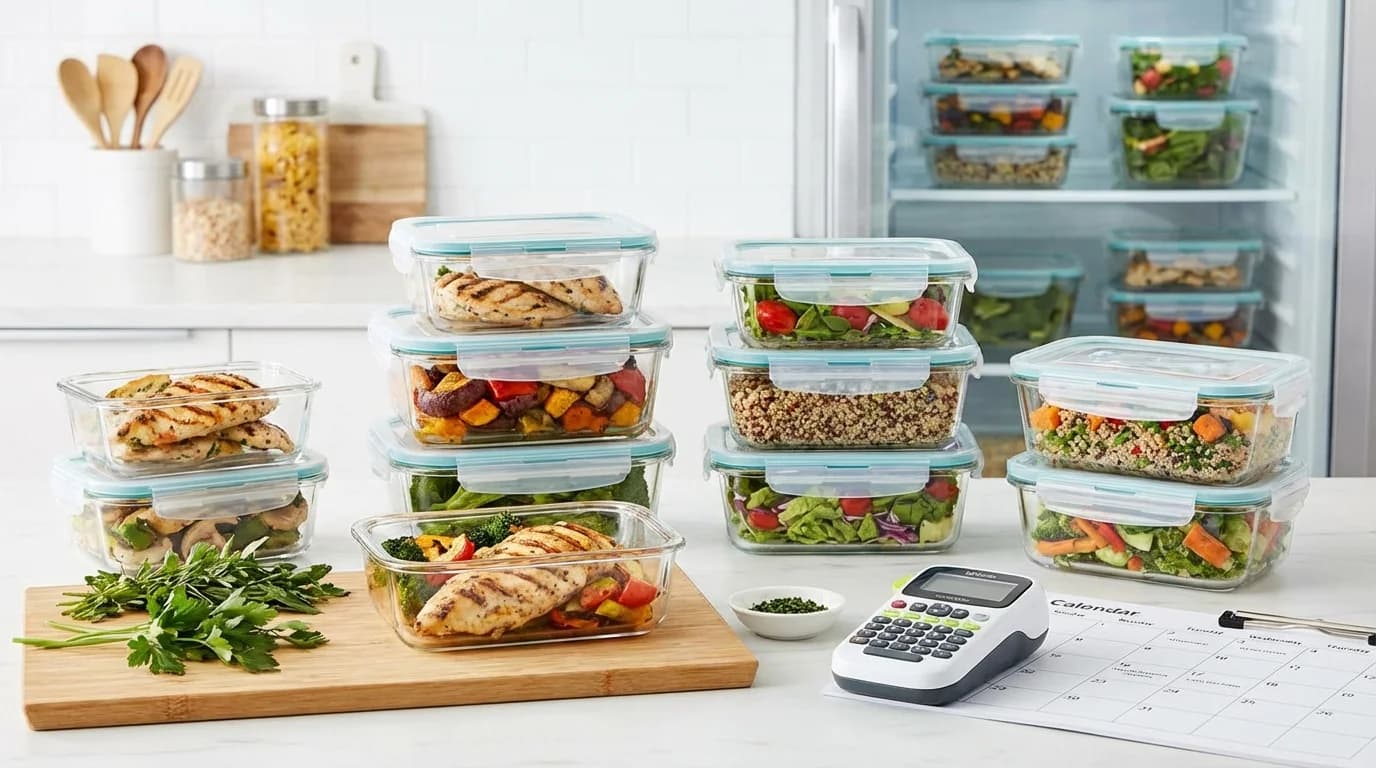
How Long Does Meal Prep Last? Complete Food Storage Guide
You just spent two hours prepping beautiful meals for the week. Everything's portioned into containers, neatly stacked in your fridge, and you're feeling accomplished. But then Thursday rolls around, and you're staring at that container wondering: is this still safe to eat?
Key Takeaways
- Cooked proteins last 3-4 days in the fridge, 2-3 months in the freezer
- Seafood has the shortest life—only 2-3 days refrigerated, 1-2 months frozen
- Salads with dressing last 1-2 days; without dressing, 3-5 days
- When in doubt, use the 4-day rule for refrigerated meal prep
- Cool food within 2 hours of cooking and store below 40°F immediately
If you've ever played food safety roulette with your meal prep, you're not alone. The truth is, different foods have wildly different shelf lives, and knowing these timelines is the difference between reducing food waste and gambling with your gut health.
The general rule? Most cooked meal prep stays fresh for 3-4 days in the fridge and 2-3 months in the freezer. But that's just the starting point. Some foods last longer, some shorter, and storage method makes a massive difference.
In this guide, I'm breaking down exactly how long every type of meal prep lasts, what signs to look for when food goes bad, and how to maximize freshness so you can meal prep with confidence. For container recommendations, see our meal prep containers guide.
The Basic Timeline: Fridge vs. Freezer
Before we dive into specific foods, let's establish the baseline storage times:
| Food Type | Refrigerator (40°F) | Freezer (0°F) | Freezes Well? |
|---|---|---|---|
| Cooked chicken, beef, pork | 3-4 days | 2-3 months | ✓ Yes |
| Cooked seafood | 2-3 days | 1-2 months | ✓ Yes |
| Cooked grains (rice, quinoa) | 4-5 days | 1-2 months | ✓ Yes |
| Cooked pasta (in sauce) | 3-4 days | 1-2 months | ✓ Yes |
| Cooked vegetables | 3-5 days | 8-12 months | ✓ Yes |
| Soups and stews | 3-4 days | 2-3 months | ✓ Yes |
| Casseroles | 3-4 days | 2-3 months | ✓ Yes |
| Egg-based dishes | 3-4 days | Not recommended | ✗ No |
| Salads with dressing | 1-2 days | Not recommended | ✗ No |
| Salads without dressing | 3-5 days | Not recommended | ✗ No |
| Sauces and gravies | 3-4 days | 2-3 months | ✓ Yes |
Remember, these are quality guidelines, not hard safety cutoffs. Food stored properly in the freezer remains safe indefinitely, but quality degrades over time.
How Long Does Meal Prep Last by Food Type?
Let's get specific. Here's what you need to know about the most common meal prep foods:
Chicken Meal Prep
Refrigerator: 3-4 days Freezer: 2-3 months
Cooked chicken is one of the most versatile meal prep proteins, but it's also one of the riskier ones if stored too long. Whether you're prepping grilled chicken breasts, shredded rotisserie chicken, or chicken thighs, the 3-4 day rule applies.
Pro tip: Chicken stored in sauce or broth lasts longer than dry chicken. The moisture barrier helps prevent bacterial growth.
Signs it's gone bad: Slimy texture, sour or ammonia-like smell, grayish color (fresh cooked chicken should be white or light brown).
Beef and Pork Meal Prep
Refrigerator: 3-4 days Freezer: 2-3 months
Ground beef, steak strips, pork chops, and meatballs all follow the same timeline. The key is cooling them quickly after cooking and storing them in airtight containers.
Pro tip: Ground beef dishes like taco meat or Bolognese sauce often last toward the longer end (4 days) because the acids in tomatoes and spices act as natural preservatives.
Signs it's gone bad: Off smell, slimy texture, discoloration, or any signs of mold.
Seafood Meal Prep
Refrigerator: 2-3 days Freezer: 1-2 months
Fish and shellfish are more delicate than other proteins. Shrimp, salmon, and white fish should be eaten within 2-3 days max. If you know you won't eat it by day three, freeze it on day one.
Pro tip: Slightly undercook seafood if you're meal prepping. It'll finish cooking when you reheat it and won't become rubbery.
Signs it's gone bad: Strong fishy or ammonia smell, mushy texture, dull color.
Rice and Grain Bowls
Refrigerator: 4-5 days Freezer: 1-2 months
Rice, quinoa, farro, and other grains generally last longer than proteins. However, there's one major exception: rice can harbor Bacillus cereus bacteria if not cooled and stored properly.
Pro tip: Cool rice quickly by spreading it on a baking sheet before portioning. Store it within 1 hour of cooking to minimize bacterial growth.
Signs it's gone bad: Hard, dried-out texture, sour smell, slimy feel, or visible mold.
Pasta Dishes
Refrigerator: 3-5 days Freezer: 1-2 months
Pasta in sauce lasts 3-4 days, while plain cooked pasta can last up to 5 days if tossed in a little olive oil to prevent sticking.
Pro tip: Slightly undercook pasta if you're meal prepping—it'll continue to absorb sauce and soften over time.
Signs it's gone bad: Slimy texture, off smell, discoloration, or mold on the surface.
Vegetable Meal Prep
Refrigerator: 3-5 days (cooked), 5-7 days (raw, cut) Freezer: 8-12 months (blanched)
Cooked vegetables vary widely in longevity. Roasted vegetables typically last 4-5 days, while steamed or sautéed vegetables last 3-4 days. Raw vegetables last even longer.
| Vegetable | Meal Prep Friendly? | Fridge Life | Notes |
|---|---|---|---|
| Bell peppers | ✓ Yes | 5-7 days | Hold up well cooked or raw |
| Broccoli | ✓ Yes | 4-5 days | Roasts and steams well |
| Cauliflower | ✓ Yes | 4-5 days | Great roasted |
| Carrots | ✓ Yes | 5-7 days | Excellent raw or cooked |
| Green beans | ✓ Yes | 4-5 days | Blanch for best results |
| Sweet potatoes | ✓ Yes | 4-5 days | Perfect for bowls |
| Lettuce | ✗ No | 1-2 days | Wilts quickly |
| Cucumbers | ✗ No | 1-2 days | Gets mushy |
| Tomatoes | ✗ No | 1-2 days | Gets watery |
| Zucchini | ✗ No | 2-3 days | Releases water |
Pro tip: Store raw and cooked vegetables separately. Add raw cucumbers, tomatoes, or lettuce to your meal right before eating.
Signs they've gone bad: Slimy texture, off smell, discoloration, or visible mold.
Soups and Stews
Refrigerator: 3-4 days Freezer: 2-3 months
Soups and stews are meal prep champions because they actually improve in flavor over the first few days as ingredients meld together.
Pro tip: Leave a little headspace when freezing soups—liquids expand when frozen.
Signs they've gone bad: Sour smell, separated or curdled appearance, mold on surface, or bubbling/fizzing when you open the container.
Casseroles and Baked Dishes
Refrigerator: 3-4 days Freezer: 2-3 months
Lasagna, enchilada casserole, baked ziti, and shepherd's pie all last about the same time. The cheese and sauce help keep everything moist.
Pro tip: Portion casseroles before storing. Individual portions reheat more evenly than trying to scoop from a large dish.
Signs they've gone bad: Sour or off smell, mold growth, liquid separation, or crusty dried-out edges.
Egg-Based Meal Prep
Refrigerator: 3-4 days Freezer: Not recommended
Hard-boiled eggs, egg muffins, frittatas, and breakfast casseroles all follow the 3-4 day rule. While you can freeze eggs, the texture often becomes rubbery and watery.
Pro tip: Peel hard-boiled eggs before storing to make them grab-and-go ready.
Signs they've gone bad: Sulfur or rotten smell, slimy texture, discoloration.
Salads and Fresh Ingredients
Refrigerator: 1-2 days (dressed), 3-5 days (undressed) Freezer: Not recommended
This is where most people make mistakes. A salad with dressing will wilt and become soggy within a day or two. Salads without dressing can last 3-5 days if stored properly.
Pro tip: Use the mason jar method—dressing on bottom, hearty vegetables in the middle, delicate greens on top. Shake when ready to eat.
Signs they've gone bad: Slimy leaves, brown wilted edges, off smell.
Factors That Affect How Long Meal Prep Lasts
Storage time isn't just about the food itself—these factors play a huge role:
Temperature Control
Your fridge should be at 40°F or below, and your freezer at 0°F or below. Even a few degrees warmer significantly reduces shelf life.
Check this: Put a thermometer in your fridge. Many fridges run warmer than their settings indicate, especially older models.
Container Quality
Airtight containers are non-negotiable. Exposure to air accelerates bacterial growth and causes food to dry out.
Best options:
- Glass containers with snap-tight lids
- BPA-free plastic with secure seals
- Vacuum-sealed bags for freezer storage
Avoid: Containers with loose lids, non-food-grade plastic, or anything cracked or warped.
How Quickly You Cool Food
Bacteria multiply rapidly between 40°F and 140°F (the "danger zone"). The faster you cool food and get it into the fridge, the longer it lasts.
Cooling tips:
- Divide large batches into smaller, shallow containers
- Don't stack hot containers—let air circulate
- Use an ice bath for soups and sauces
- Get food into the fridge within 2 hours of cooking
How Often You Open Containers
Every time you open a container, you introduce new bacteria and temperature fluctuations. This is why individual portions last longer than family-sized batches.
Better approach: Portion everything into single-serving containers. You only open what you're going to eat.
Signs Your Meal Prep Has Gone Bad
When in doubt, throw it out. But here are the telltale signs that food is no longer safe:
Visual Signs
- Mold: Any visible mold means the entire container should be discarded
- Discoloration: Gray chicken, brown beef, or darkened vegetables
- Separation: Sauces that look curdled or liquids that have separated oddly
- Sliminess: Any slimy film on food is bacteria growth
Smell Test
- Sour or tangy: When it shouldn't be
- Ammonia-like: Particularly in proteins
- Off smell: If it doesn't smell right, it's not right
- No smell at all: Some bacteria don't produce odor, so smell alone isn't foolproof
Texture Changes
- Slimy or sticky: When food should be dry
- Mushy: When it should be firm
- Hard or dried out: Excessive dryness can indicate bacterial growth or freezer burn
Taste (Last Resort)
If something passes the visual and smell tests but you're still unsure, take a tiny taste. If it tastes off, spit it out and discard the food.
Never taste: Anything with visible mold, strong odors, or sliminess.
How to Maximize Meal Prep Shelf Life
Want your meal prep to last as long as possible? Follow these strategies:
1. Label Everything
Write the date on every container. Use painter's tape and a marker, or invest in reusable labels.
2. Follow FIFO (First In, First Out)
Put newer meal prep behind older meal prep. Eat the oldest meals first.
3. Store Ingredients Separately
Keep proteins, grains, and vegetables in separate containers until ready to eat. This prevents cross-contamination and extends freshness.
4. Use the Freezer Strategically
If Sunday's meal prep includes meals for Thursday and Friday, freeze those portions immediately. Thaw them in the fridge the night before eating.
5. Invest in a Vacuum Sealer
Vacuum-sealed foods last 2-3 times longer than foods in regular containers because there's no air exposure.
6. Keep a Meal Prep Log
Track what you make and when. After a few weeks, you'll know exactly how long your specific meals last in your specific fridge. Save your successful meal prep recipes in myrecipe so you can easily reference cooking dates, ingredients, and notes about how long each dish stayed fresh.
Common Mistakes to Avoid
Mistake 1: Prepping for the Entire Week on Sunday
Why it's risky: By Friday, some foods are pushing 5+ days old.
The fix: Prep for 3-4 days at a time, or prep and freeze half your portions immediately.
Mistake 2: Not Cooling Food Properly
Why it's risky: Putting hot food directly into the fridge warms up everything else and creates condensation (which breeds bacteria).
The fix: Cool food to room temperature first, then refrigerate. Use shallow containers for faster cooling.
Mistake 3: Using the Wrong Containers
Why it's risky: Containers that aren't airtight let in bacteria and dry out food.
The fix: Invest in quality containers with tight-sealing lids. It's worth the upfront cost.
Mistake 4: Ignoring Your Senses
Why it's risky: You talk yourself into eating something that seems questionable because you don't want to waste food.
The fix: Trust your gut. If something seems off, it probably is. Food poisoning isn't worth the $5 you'll save.
Mistake 5: Overcrowding Your Fridge
Why it's risky: Air can't circulate properly, creating warm spots where bacteria thrive.
The fix: Leave space between containers for airflow. If your fridge is packed, freeze some meals or prep less at once.
Frequently Asked Questions
While some foods can technically last 7 days, it's not ideal for food safety or quality. Most cooked proteins should be eaten within 3-4 days. If you want to prep for a full week, freeze meals 5-7 and thaw them midweek.
"Best by" refers to peak quality—food is safe to eat past this date. "Use by" is the last date recommended for consumption. For meal prep, focus on the general storage timelines in this guide rather than package dates.
Use a refrigerator thermometer. Place it in the center of the middle shelf for an accurate reading. Your fridge should be 40°F or below, ideally between 35-38°F.
Only if it was thawed in the refrigerator and hasn't been sitting out. Refreezing reduces quality (texture becomes mushier), but it's safe. However, don't refreeze anything thawed at room temperature.
Not significantly. The airtight seal matters more than the material. However, glass doesn't absorb odors or stain like plastic, so it might seem fresher. Plus, glass is microwave-safe and better for the environment.
Final Thoughts
Understanding how long meal prep lasts transforms you from a nervous "is this still good?" worrier into a confident meal prep pro. The peace of mind alone is worth it.
Here's what to remember:
- Most cooked meal prep lasts 3-4 days in the fridge, 2-3 months in the freezer
- Seafood has the shortest shelf life at 2-3 days
- Proper cooling, airtight containers, and correct temperatures are crucial
- When in doubt, trust your senses and throw it out
Start small, pay attention to how your specific meals hold up over time, and adjust accordingly. And as you discover which recipes stay fresh longest, keep them organized in myrecipe so you can build your perfect meal prep rotation.
Your healthier, less stressful, more delicious week starts now.
About myrecipe
myrecipe helps families save, organize, and share their favorite recipes in one place. Plan meals, create shopping lists, and preserve your culinary traditions.
Start Organizing Recipes