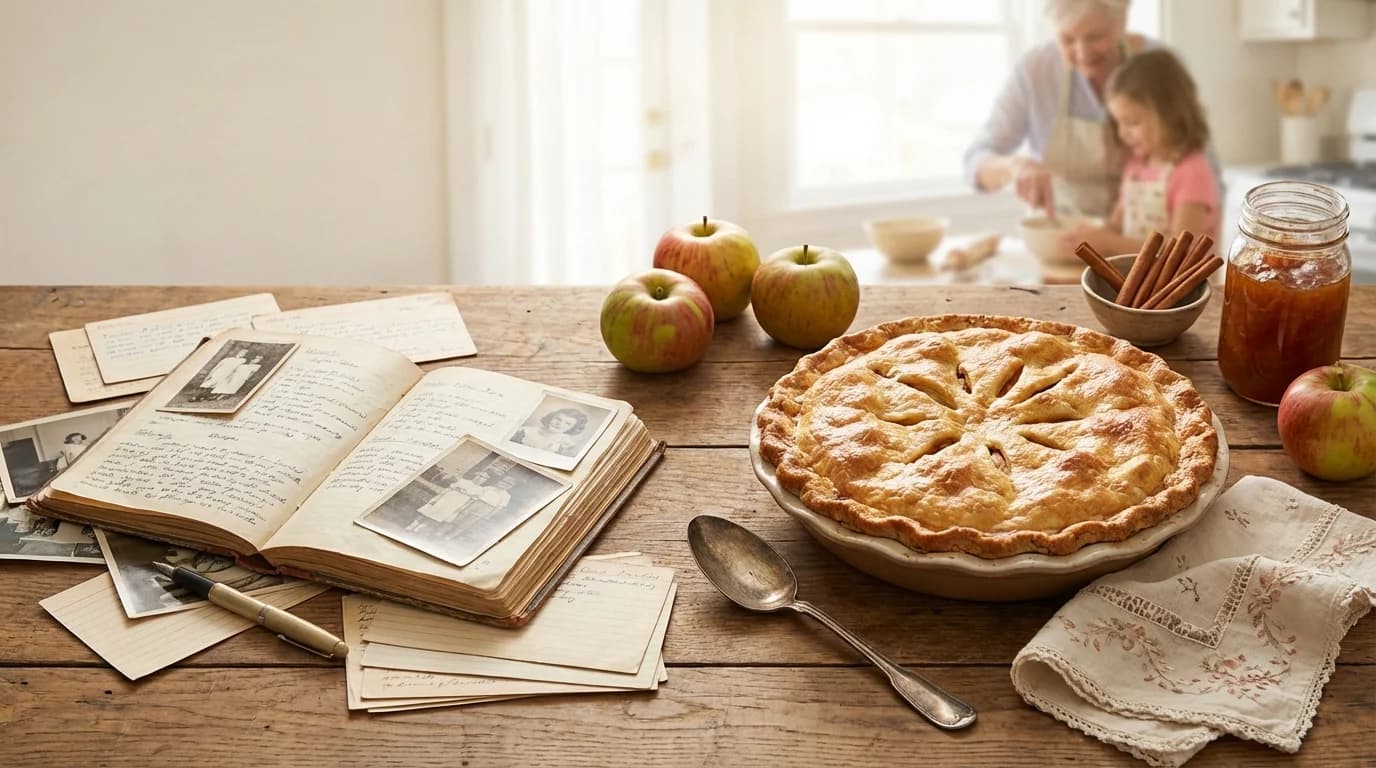
My most vivid childhood memories involve food. Not just the taste of my grandmother's apple strudel, but the sound of her humming while rolling dough, the way afternoon light fell across her kitchen table, how she'd let me sprinkle cinnamon sugar, and the feeling of being included in something sacred and ordinary at the same time.
When she passed away, I realized I'd never written down those moments. The recipe survived on a splattered index card, but the full sensory experience—the context that made it meaningful—existed only in my fading memory.
Food memory keeping is about preserving those complete experiences: not just what we ate, but who we ate with, why it mattered, how it made us feel, and the stories woven through our relationship with food. It's documenting the edible autobiography of our lives.
Whether you're preserving family traditions, documenting your cooking journey, or simply honoring the role food plays in your life, food memory keeping creates a rich archive that connects past, present, and future.
What is Food Memory Keeping?
Food memory keeping goes beyond recipe preservation—it's documenting the full context of your culinary life.
The Complete Food Memory
Sensory Elements:
- How it tasted
- How it smelled
- Textures and temperatures
- Visual presentation
- Sounds associated with cooking or eating
Contextual Information:
- Who was there
- What occasion or everyday moment
- When and where
- Why this meal mattered
- What else was happening in your life
Emotional Landscape:
- How you felt
- Moods and atmospheres
- Relationships and dynamics
- What made it memorable
- How it connects to other memories
Cultural and Historical Context:
- Family traditions
- Cultural significance
- Historical events
- Economic circumstances
- Generational transmission
Why Preserve Food Memories?
Personal Reasons:
- Relive cherished moments
- Process experiences through reflection
- Track your food journey
- Create tangible life record
- Honor important relationships
Family Reasons:
- Pass down traditions with full context
- Help next generation understand their heritage
- Preserve stories that would otherwise be lost
- Create shared family narrative
- Build stronger connections
Cultural Reasons:
- Document changing food cultures
- Preserve immigrant experiences
- Record regional traditions
- Capture historical moments through food
- Contribute to culinary history
Methods for Capturing Food Memories
Written Documentation
Food Diary/Journal: Document meals and associated memories regularly
What to Record:
- Date and meal type (Sunday breakfast, Thanksgiving dinner, Tuesday leftovers)
- What you ate (brief description or recipe reference)
- Who you ate with (or alone—that matters too)
- Where (kitchen table, restaurant, picnic, car)
- Special circumstances or context
- How you felt
- Why this meal is worth remembering
Example Entry:
October 15, 2024 - Sunday Dinner

Made Mom's pot roast for the first time since she passed.
Sarah set the table the way Mom always did - good dishes,
cloth napkins, candles even though it's just us. When I
carved the roast, I could hear Mom's voice telling me to
cut against the grain. Emma (age 7) said "This tastes like
Grandma's house smelled." I cried in the kitchen and Sarah
pretended not to notice. The recipe works, but without Mom's
running commentary, the kitchen felt too quiet.

Note: Next time, play Mom's favorite Sinatra album while cooking.
Meal Memoirs: Longer, more reflective pieces about significant food memories
Approach:
- Choose meaningful food memory
- Write full narrative essay
- Include sensory details
- Explore why it matters
- Connect to larger life themes
Food Letters: Write letters to family members about shared food memories
Format:
- "Dear Sarah, remember when..."
- Share your perspective on shared meals
- Ask them to share their memories
- Create dialogue through food
- Can be delivered or kept as archive
Visual Documentation
Photography: Pictures preserve what words cannot
What to Photograph:
- The food itself (finished dish and ingredients)
- The cooking process
- The table setting
- People eating and enjoying
- The location/environment
- Details (grandmother's hands kneading dough, your child's messy face)
- The aftermath (empty plates, leftovers, messy kitchen)
Photography Tips:
- Natural light when possible
- Include people, not just plates
- Capture the messy, authentic moments
- Take photos before AND during the meal
- Don't let perfect photography prevent participation
- Quick phone photos are fine—documentation matters more than artistry
Video Recording: Captures movement, sound, and atmosphere
What to Film:
- Family members cooking and sharing techniques
- Conversations around the table
- Children's reactions to new foods
- Holiday traditions
- Cooking demonstrations by elders
- Just everyday dinner (this becomes precious later)
Scrapbooking: Combine photos, ephemera, and written memories
Include:
- Photos from meals
- Menu cards from restaurants
- Recipe cards or printouts
- Handwritten notes
- Ticket stubs
- Food packaging from special ingredients
- Newspaper clippings
- Decorative elements
Audio Recording
Recorded Conversations: Capture the voices and stories of loved ones
What to Record:
- Oral recipe instructions from family elders
- Stories about traditional dishes
- Conversations during cooking or meals
- Family members' food memories
- Cultural context and historical information
- Techniques explained verbally
- Just ambient dinner conversation
Interview Questions:
- What's your earliest food memory?
- What did your family eat for celebrations?
- How did you learn to cook?
- What recipes matter most to you and why?
- What foods remind you of specific people?
- How has your cooking changed over time?
- What do you wish you'd learned from your own parents/grandparents?
Recipe Narration: Record yourself or family members talking through recipes
Benefits:
- Captures personality and voice
- Includes details that wouldn't be written
- Preserves accent and speech patterns
- Future generations hear actual voices
- Reveals thought process and approach
Digital Tools and Platforms
Recipe Apps with Memory Features: myrecipe.app allows you to:
- Store recipes with extensive notes
- Add photos from each time you make a dish
- Document occasions and memories
- Tag by event, season, or people
- Create timeline of cooking experiences
- Include family stories with recipes
Social Media as Memory Archive: Instagram, Facebook, or private family groups
Advantages:
- Easy photo uploads
- Date-stamped automatically
- Can include multiple family members' perspectives
- Searchable (hashtags)
- Backed up in cloud
- Easy to share
Considerations:
- Public vs. private settings
- Platform longevity (export regularly)
- Ownership of content
- May feel performative rather than authentic
Food Blogs: Personal website documenting food memories
Approach:
- Can be public or private (password-protected)
- Combines recipes, photos, and storytelling
- Organized and searchable
- Can become family heirloom
- Requires more technical setup
Voice Note Apps: Quick audio memory capture
Use For:
- Immediate impressions during or after meals
- Quick memory captures when you can't write
- Recording elders' spontaneous stories
- Ambient sound from gatherings
- Stream-of-consciousness food thoughts
Creating a Food Memory Archive
Physical Archive
The Food Memory Box:
Include:
- Written memories and journals
- Printed photos
- Recipe cards (especially handwritten originals)
- Menus from special restaurants
- Family cookbook
- Letters about food
- Newspaper clippings
- Food-related heirlooms (vintage utensils, grandmother's apron, etc.)
Organization:
- Chronological (by year or decade)
- By person (Mom's memories, Grandma's recipes, etc.)
- By theme (holidays, everyday meals, celebrations)
- By location (family home, favorite restaurants, travel)
Storage:
- Acid-free boxes and page protectors
- Climate-controlled location
- Protected from light and moisture
- Clearly labeled for future generations
- Accessible for regular review and additions
Digital Archive
Organized File System:
Folder Structure:
Food Memories/
├── Written Memories/
│   ├── By Year/
│   ├── By Person/
│   └── By Event/
├── Photos/
│   ├── Family Meals/
│   ├── Special Occasions/
│   ├── Cooking Process/
│   └── People/
├── Videos/
│   ├── Cooking Demonstrations/
│   ├── Interviews/
│   └── Gatherings/
├── Audio/
│   ├── Recipes Narrated/
│   ├── Interviews/
│   └── Ambient Recordings/
└── Recipes/
    ├── Family Heirlooms/
    └── Personal Favorites/
Backup Strategy:
- Primary storage (computer)
- Cloud backup (Google Drive, Dropbox)
- External hard drive
- Shared with family members (distributed backup)
- Regular updating schedule
Metadata: Tag files with:
- Date
- People involved
- Location
- Occasion
- Keywords for searching
Hybrid Approach
Best of Both Worlds:
- Physical journal for immediate, tactile recording
- Scan or photograph pages for digital backup
- Digital photos printed for physical archive
- Audio/video stored digitally, transcripts in physical journal
- Recipe cards photographed and stored in digital cookbook
Food Memory Projects
Themed Memory Collections
Holiday Food Traditions:
- Document all holiday meals over multiple years
- Track how traditions evolve
- Include family members' perspectives
- Recipe collection with stories
- Photos from each year
- Note who attends, menu changes, new traditions
Year in Food:
- Document every dinner for a year
- Simple notes: date, meal, who, brief memory
- Reveals patterns and routines
- Captures ordinary moments
- Shows seasonal cycles
- Becomes precious record of "normal life"
Restaurant Memory Book:
- Save menus from meaningful restaurant meals
- Write about who you were with and why
- Include photos if allowed
- Note what you ordered
- Capture the conversation and connection
- Track favorite places over time
Travel Food Diary:
- Document every meal during trips
- Include local markets, street food, restaurants
- Recipe approximations of dishes you loved
- Cultural observations
- Photos of food and places
- Sensory descriptions
Generational Food Stories: Interview family members about their food memories
- Record (audio or video)
- Transcribe
- Organize by person or theme
- Include photos if available
- Create family food history
Collaborative Memory Keeping
Family Food Group:
- Private Facebook group or WhatsApp group
- Everyone shares meal photos and memories
- Creates ongoing archive
- Multiple perspectives on shared meals
- Easy participation
- Accessible to all generations
Shared Digital Album:
- Google Photos or iCloud shared album
- Everyone contributes photos
- Add captions with memories
- Automatically organized by date
- Everyone has access
- Great for distributed families
Recipe Exchange with Memories:
- Family members share recipes
- Required: Include story or memory with each recipe
- Compile into family cookbook
- Both recipes and narratives preserved
- Collaborative creation
Cooking and Recording:
- Film family members cooking together
- Interview while cooking
- Capture technique and story simultaneously
- Create video archive
- Can be edited into short films
Prompts for Food Memory Writing
When you're not sure what to write:
Sensory Prompts:
- Describe the smell of your grandmother's kitchen
- What's the first food you remember tasting?
- What food makes you feel most comforted?
- Describe the sound of your favorite meal being prepared
- What food texture do you find most satisfying?
People Prompts:
- Who taught you to cook your favorite dish?
- What meal would you make for someone you love?
- Describe a meal with someone no longer in your life
- What food does your mother/father make better than anyone?
- Who do you most love cooking for and why?
Place Prompts:
- Describe the kitchen where you learned to cook
- What restaurant holds the most memories?
- Where did your family eat Sunday dinners?
- Describe eating a meal in your favorite place
- What food do you associate with home?
Time Prompts:
- What did you eat on important days (graduation, wedding, etc.)?
- How has your relationship with food changed over time?
- What foods mark the seasons in your life?
- Describe a typical meal from your childhood
- What will you cook when you're very old?
Emotion Prompts:
- What meal made you cry? Why?
- Describe the most joyful meal you've experienced
- What food represents comfort to you?
- When did food bring your family together?
- What meal changed how you see cooking?
Preserving Elders' Food Memories
Act with Urgency: These memories are time-sensitive—record them while you can.
Interview Techniques:
- Schedule dedicated time (not during busy cooking)
- Bring recording device
- Ask open-ended questions
- Let them ramble (tangents contain treasure)
- Request demonstrations while filming
- Ask for specific details (brands, stores, prices, techniques)
- Record multiple sessions (memories surface gradually)
Make It Comfortable:
- Interview in their kitchen
- Have them handle familiar tools
- Look through old photos together
- Cook something while talking
- Don't rush
- Show genuine interest
What to Capture:
- Their earliest food memories
- How they learned to cook
- Traditional recipes and techniques
- Stories about specific dishes
- How food/cooking has changed
- Their proudest cooking moments
- What they wish they'd learned from their parents
- Advice for future generations
Follow-Up:
- Share the recordings with them
- Ask clarifying questions
- Have them review transcripts
- Include in family archive
- Create something tangible (printed book, video compilation)
Sharing Food Memories
Within the Family
Family Newsletter:
- Monthly or quarterly food memory feature
- Different family member contributes each time
- Shares memory and associated recipe
- Builds collective archive
- Keeps family connected
Annual Family Cookbook Update:
- Each year, add new recipes and memories
- Family members contribute
- Document how recipes evolve
- Include photos from year's gatherings
- Creates ongoing tradition
Memory Meal Events:
- Gather to cook and eat from memory archive
- Each person shares a story
- Recreate specific memorable meal
- Video record the event
- Create new memories while honoring old ones
Public Sharing (If Desired)
Food Blog or Social Media:
- Share family food stories publicly
- Connects with others who have similar memories
- Preserves stories in public archive
- May inspire others to document their memories
- Consider privacy of living family members
Community Cookbook Projects:
- Contribute to community or cultural cookbook
- Share heritage recipes with stories
- Preserve cultural food traditions
- Connect with others from similar backgrounds
Oral History Projects:
- Contribute to university or historical society projects
- Document immigrant food experiences
- Preserve regional food traditions
- Contribute to culinary anthropology
Making Food Memory Keeping a Habit
Start Small:
- One memory per week
- Quick notes after special meals
- Just dates and dishes to start
- Build complexity gradually
Connect to Existing Habits:
- Journal while Sunday coffee brews
- Write during meal planning
- Document after holiday meals
- Add to meal photo routine
Make It Easy:
- Keep journal in kitchen
- Use phone notes app
- Voice record while doing dishes
- Set reminders on meal days
Create Rituals:
- Sunday food memory review
- Monthly deep reflection
- Seasonal memory projects
- Annual archive organization
Involve Others:
- Make it family activity
- Share entries with loved ones
- Create collaborative projects
- Make memories together while documenting
The Legacy You're Creating
Food memory keeping might feel indulgent—why write about what you ate for dinner? But these records become invaluable.
Ten years from now, you'll read about an ordinary Tuesday night dinner and remember your child at that age, your life in that season, how it felt to be that version of yourself.
Fifty years from now, your grandchildren will read about the meals you shared and understand you not just as elder, but as person who loved, laughed, and found meaning in the simple act of feeding those you cherished.
Food memories are life memories. By preserving them, you're honoring the full richness of your experience and ensuring that the stories behind the recipes survive as long as the recipes themselves.
Start today. Write about last night's dinner. Photograph this morning's breakfast. Record your mother's voice telling that story about the time the turkey caught fire. These ordinary moments are building blocks of an extraordinary life.
Your food memories matter. Preserve them.
Ready to start keeping your food memories? Try myrecipe.app for free to organize recipes alongside the stories, photos, and memories that make them meaningful. Create a comprehensive archive of your culinary life that you can treasure and share.
About myrecipe
myrecipe helps families save, organize, and share their favorite recipes in one place. Plan meals, create shopping lists, and preserve your culinary traditions.
Start Organizing Recipes