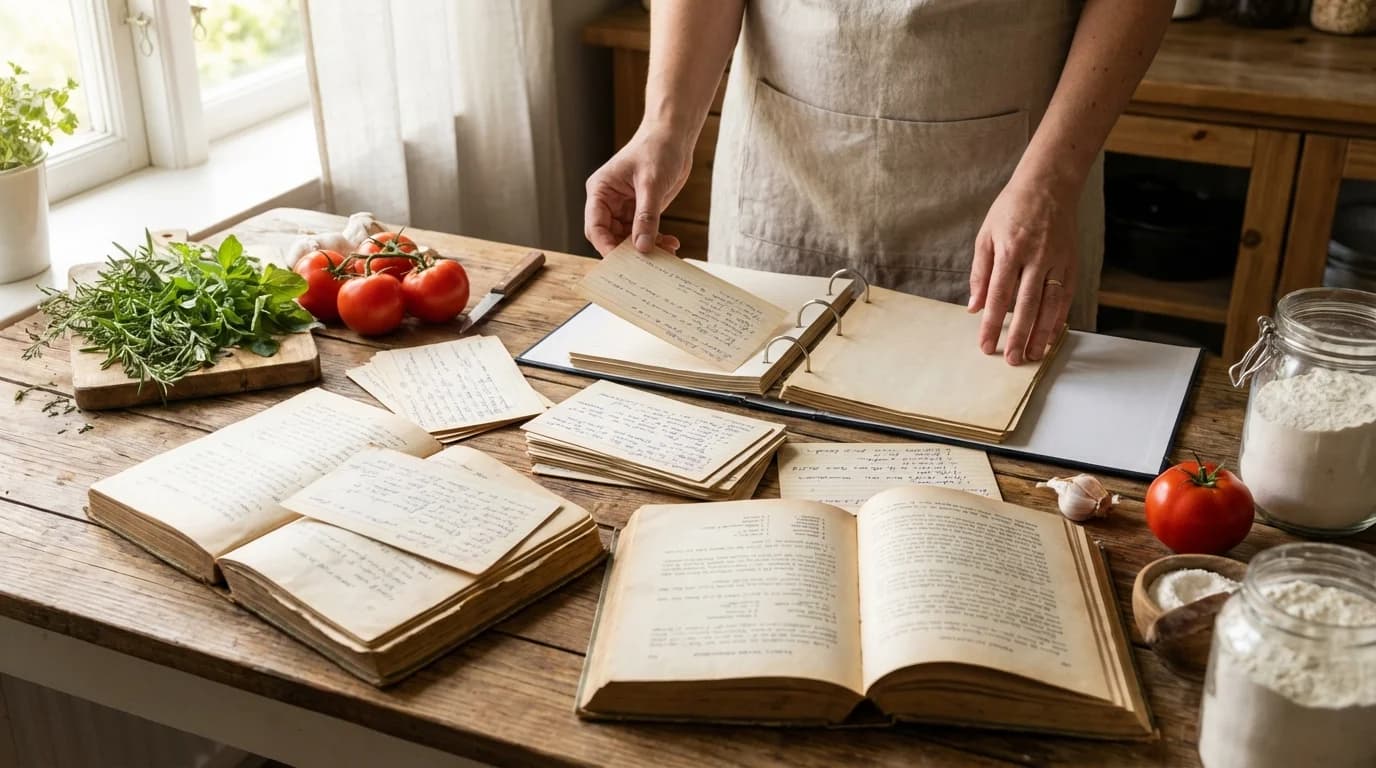
When I started building my family's recipe collection five years ago, I thought it would be simple: gather some recipe cards, type them up, maybe make a little cookbook. What I didn't expect was how transformative the process would become.
As I reached out to aunts, cousins, and my grandmother, recipes became conversations. Conversations became stories. Stories became a rich tapestry of family history I never knew existed. That simple recipe for potato soup turned into an hour-long discussion about my great-grandmother surviving the Depression. A cookie recipe sparked memories of Christmas mornings spanning four generations.
Building a family recipe collection isn't just about preserving food instructions—it's about capturing your family's identity, honoring those who came before, and creating something meaningful to pass forward. Whether you're starting from scratch or expanding an existing collection, these tips will help you create a recipe collection that truly matters.
Start with Your "Why"
Before you begin gathering recipes, get clear on your purpose. This will guide every decision you make.
Common Reasons for Creating a Family Recipe Collection
Preservation: Protect recipes before they're lost
- Older family members are aging
- Handwritten recipe cards are deteriorating
- Recipes exist only in memory
Connection: Bring family together
- Create shared project across generations
- Start conversations about family history
- Build relationships through cooking
Legacy: Pass something meaningful to future generations
- Give children/grandchildren tangible heritage
- Document family traditions
- Create heirloom to be treasured
Practical Use: Actually cook these recipes
- Make family favorites more accessible
- Share recipes easily among family
- Build go-to collection of tried-and-true recipes
Special Occasion: Mark a milestone
- Wedding gift for newlyweds
- Retirement project
- Family reunion centerpiece
- Memorial for deceased family member
Your "why" determines your scope, format, and approach. A preservation project looks different from a practical cooking collection, and that's okay.
Gathering Recipes: Cast a Wide Net
The richest collections come from multiple sources.
Identify Your Recipe Sources
Living Family Members:
- Parents and grandparents (highest priority)
- Aunts, uncles, and cousins
- Great-aunts and elderly relatives
- Family friends who cooked for gatherings
- That cousin who brings the amazing dish to every potluck
Physical Sources:
- Recipe boxes and card files
- Cookbooks with handwritten notes
- Loose recipe cards
- Newspaper clippings and magazine tearouts
- Handwritten notebooks
- Church or community cookbooks featuring family recipes
- Recipes written in Bible margins (surprisingly common!)
Digital Sources:
- Emails sharing recipes
- Family group chats
- Social media posts
- Digital photos of recipes
- Scanned documents
Memory and Oral Tradition:
- Recipes that exist only in someone's head
- Techniques passed down verbally
- Family traditions around food
- Stories about signature dishes
The Family Recipe Survey
Create a simple survey to send family members:
Questions to Ask:
- What's your signature dish that everyone asks you to make?
- What recipe did you learn from your parents/grandparents?
- What dish reminds you most of family gatherings?
- Do you have any handwritten recipe cards or cookbooks?
- What food traditions does our family have?
- Are there recipes you wish you'd learned from someone who's passed?
- Would you be willing to cook a dish with me so I can document it?
Make it easy to respond—provide multiple formats (email, phone call, in-person interview, video chat).
Conducting Recipe Interviews
Some of the best recipes come from sitting down with family members.
Interview Tips:
- Record everything: Audio or video, with permission
- Ask open-ended questions: "Tell me about this recipe" not "Is this good?"
- Let them reminisce: The stories are as valuable as the recipes
- Ask about techniques: "How do you know when it's done?"
- Request demonstrations: Watching is worth a thousand words
- Photograph or film the process: Capture visual techniques
- Don't rush: Some interviews reveal unexpected treasures
Key Questions During Cooking:
- Where did this recipe come from?
- How has it changed over time?
- What memories do you associate with it?
- What's the secret to making it perfectly?
- What mistakes do people make?
- Are there any special tools or techniques?
- How did you learn to make this?
These conversations often reveal not just recipes, but family history, immigrant stories, economic hardships, celebrations, and the everyday life of your ancestors.
Organization Strategies
A good organizational system makes your collection usable and maintainable.
Categorization Systems
Standard Categories:
- Appetizers & Snacks
- Soups & Salads
- Main Dishes (subdivided by protein)
- Side Dishes
- Breads & Baked Goods
- Desserts
- Beverages
- Preserves & Canning
Heritage-Based Organization:
- By family branch (Mom's side, Dad's side)
- By family member (Grandma's recipes, Aunt Marie's specialties)
- By generation (Great-grandparents, Grandparents, Parents, Your generation)
- By cultural origin (Italian heritage, Irish traditions, etc.)
Occasion-Based System:
- Holiday recipes (subdivided by holiday)
- Sunday dinners
- Everyday weeknight meals
- Special celebrations
- Seasonal favorites
Hybrid Approach (Most Popular):
- Primary organization by recipe type
- Special sections for heritage or occasions
- Cross-referencing with tags
Choose the system that matches how your family thinks about food.
Tagging for Easy Discovery
Beyond categories, tags make recipes findable:
Useful Tags:
- Source: Grandma Helen, Aunt Rita, Mom
- Era: 1950s, 1970s, modern
- Difficulty: Easy, moderate, advanced
- Time: Quick, weekend project, all-day
- Dietary: Vegetarian, gluten-free, dairy-free
- Season: Summer, winter, spring, fall
- Occasion: Christmas, Thanksgiving, birthdays, weddings
- Status: Family favorite, tried-and-true, never tried
- Cultural: Italian, Southern, Jewish, traditional
Digital platforms like myrecipe.app make tagging effortless and searching instantaneous.
Standardizing Recipe Format
Consistency makes your collection more usable.
Create a Template
Essential Elements:
Recipe Name
Source (who contributed/created it)
Date (when created or acquired)
Category/Tags
Servings/Yield
Prep Time
Cook Time
Total Time

Ingredients:
(with precise measurements)

Instructions:
(numbered steps)

Notes:
(variations, tips, history, stories)
Optional but Valuable:
- Difficulty rating
- Cost estimate
- Nutritional information
- Equipment needed
- Storage instructions
- Make-ahead instructions
- Freezer-friendly notation
Handling Inconsistencies
Real family recipes are messy. Here's how to standardize without losing authenticity:
Vague Measurements:
- Preserve original: "a handful of flour"
- Add clarification: "[approximately 1/2 cup]"
- Note in comments if you tested and confirmed
Missing Information:
- Mark clearly: "[temperature not specified]"
- Add your research: "[similar recipes suggest 350°F]"
- Document when you test and confirm
Contradictory Versions:
- Include both versions
- Note differences: "Grandma's original version" vs. "Mom's adaptation"
- Let family members decide which they prefer
Unclear Instructions:
- Add clarifying steps based on your knowledge
- Mark additions: "[stir constantly to prevent burning]"
- Include photos or videos demonstrating technique
Digital vs. Physical: Finding Your Balance
Most successful family recipe collections use both formats.
Physical Collection Benefits
Why Keep Physical:
- Preserves handwritten originals (irreplaceable sentimental value)
- Tangible heirloom to display
- No technology needed
- Can be beautiful coffee table piece
- Easier for older family members to use
Physical Formats:
- Original recipe cards in organized box
- Printed family cookbook
- Scrapbook-style recipe book with photos and stories
- Laminated cards for heavy use
- Ring binder with page protectors
Digital Collection Benefits
Why Go Digital:
- Searchable (find "chicken lemon garlic" instantly)
- Shareable (send to family anywhere)
- Scalable (double recipe with one click)
- Backed up (never lose recipes)
- Accessible (cook from phone or tablet)
- Updateable (add notes, photos, ratings)
- Space-efficient (hundreds of recipes, zero physical space)
Digital Platforms:
- myrecipe.app - Purpose-built for recipe collections with family sharing
- Cloud storage (Google Drive, Dropbox) - Simple storage and backup
- Recipe apps - Various features and price points
- Personal website/blog - Full customization
- Digital cookbook services - Professional-quality output
The Hybrid Approach (Recommended)
Best of Both Worlds:
- Preserve original handwritten cards in archival storage
- Digitize all recipes for daily use
- Use digital for cooking, searching, and sharing
- Create printed cookbooks for special occasions/gifts
- Store digital photos of originals alongside typed versions
This protects precious originals while making recipes actually usable.
Adding Context and Stories
Recipes without stories are just instructions. Context transforms them into heritage.
What to Document Beyond Ingredients
Recipe Origin Stories:
- How this recipe came into the family
- Who created or adapted it
- Historical context (Depression-era, wartime, immigrant story)
- Why it became a family favorite
Memories and Associations:
- First time you remember eating it
- Occasions when it's traditionally made
- Family members most associated with this dish
- Funny or touching stories about the recipe
- How it's evolved over generations
Cultural and Historical Context:
- Regional food traditions
- Immigrant heritage
- Religious or cultural significance
- How ingredients or methods have changed
- Economic factors influencing the recipe
Personal Touches:
- Why this recipe matters to the contributor
- Secret techniques or tips
- Common mistakes to avoid
- Preferred variations
- Who in the family loves or hates it (both are fun stories!)
Ways to Capture Stories
Written Narratives: Type up stories as part of recipe notes or separate sections
Audio Recordings: Record family members talking about recipes (invaluable primary sources)
Video Documentation: Film family members cooking and sharing memories
Photos: Include images of:
- Original handwritten recipe
- Family member cooking
- Finished dish at family gatherings
- Historical photos related to the recipe
- The person who created or is known for the recipe
Testing and Verification
Don't assume old recipes will work as written.
Why Testing Matters
Common Issues:
- Missing steps (assumed knowledge)
- Ingredient changes (products reformulated)
- Equipment evolution (ovens cook differently now)
- Measurement ambiguities ("medium onion" = ??)
- Typographical errors in old cards
- Faded handwriting misread
How to Test Recipes
First Attempt:
- Follow recipe as written
- Document any confusion or problems
- Take notes on what works and what doesn't
- Photograph the process and result
Troubleshooting:
- Research similar recipes if something seems off
- Consult with the recipe source if possible
- Make educated adjustments based on cooking knowledge
- Document changes you make
Final Version:
- Create tested, verified version
- Note what you changed from original
- Include both "authentic" and "adapted" versions if significantly different
- Mark tested recipes so family knows they're reliable
Multiple Testers:
- Have several family members test important recipes
- Compare results and notes
- This catches errors and provides different perspectives
- Particularly important for recipes from deceased relatives
Involving the Whole Family
The best collections are collaborative projects.
Getting Family Members Engaged
Make It a Group Project:
- Assign different family branches to different people
- Create shared folder where everyone contributes
- Host recipe collection parties where family cooks together
- Make it a family reunion activity
Different Roles for Different People:
- Elders: Share recipes, demonstrate techniques, tell stories
- Middle generation: Coordinate, organize, test recipes
- Younger generation: Handle technology, photography, social media sharing
- Everyone: Contribute favorite recipes and memories
Create Excitement:
- Share progress updates in family group chat
- Post photos of recipe testing
- Create competitions (best recipe story, oldest recipe, etc.)
- Celebrate milestones (100 recipes collected!)
Handling Family Dynamics
When People Are Reluctant:
- Explain why it matters (preservation, legacy)
- Make it easy (offer to come to them, multiple response methods)
- Start with enthusiastic family members; others may follow
- Frame as honoring their knowledge and contribution
- One-on-one may work better than group requests
When Recipes Are "Secret":
- Respect boundaries (some people aren't ready to share)
- Explain the recipes will be kept within family
- Offer to include attribution and story
- Sometimes people share after seeing others participate
- Consider privacy settings in digital platforms
When There Are Competing Versions:
- Include all versions without declaring a "winner"
- Note differences: "Grandma's version" vs. "Aunt Sue's adaptation"
- Let family members add their variations
- Document the evolution as part of the story
Maintaining and Growing Your Collection
A family recipe collection should be a living document.
Regular Maintenance
Monthly (15 minutes):
- Add any new recipes acquired
- Update notes on recipes you've made
- Back up digital collection
- File any physical recipes obtained
Quarterly (1 hour):
- Review organization system (still working?)
- Add photos of dishes you've made
- Update family with progress or new additions
- Test a few "never tried" recipes
Annually (Half day):
- Comprehensive review of collection
- Update contact info for recipe sources
- Create year-end summary for family
- Consider printing updated cookbook version
- Plan next year's collection goals
Continuous Growth
Make It Ongoing:
- Always have notebook or app ready for new recipes
- Conduct at least one recipe interview per year
- Document new family recipes as they're created
- Add photos from family gatherings
- Update recipes based on cooking experiences
Encourage Contribution:
- Create easy submission method (email, shared folder, app)
- Acknowledge and thank contributors publicly
- Show how you've used submitted recipes
- Make younger generation feel invested
- Allow family to add notes and variations to existing recipes
Creating Shareable Versions
Once you have a collection, share it meaningfully.
Digital Sharing
Family Recipe Platform: Use myrecipe.app to:
- Create private family collection
- Give all family members access
- Allow commenting and sharing of photos
- Everyone can save favorites to their own account
- Update once, available to everyone
Cloud Sharing:
- Create shared Google Drive or Dropbox folder
- Organize with clear folder structure
- Include both recipe files and photos
- Give appropriate permissions to family members
Recipe Website or Blog:
- Create family recipe website
- Include stories and photos
- Allow family to comment
- Can be private (password-protected) or public
Physical Sharing
Printed Cookbooks:
- Create for weddings, anniversaries, reunions
- Print-on-demand services (Blurb, Shutterfly, Lulu)
- Include photos, stories, family tree
- Beautiful gift and keepsake
Recipe Cards:
- Print individual recipes as cards
- Give sets as gifts
- Include in care packages
- Perfect for bridal showers or new households
Special Editions:
- Holiday recipe booklet
- "Greatest Hits" collection
- Individual family member's specialties
- Themed collections (desserts, holiday meals, etc.)
Preserving for Future Generations
Think beyond your immediate needs.
Long-term Preservation
Multiple Backups:
- Cloud storage (Google Drive, Dropbox)
- External hard drive (updated regularly)
- Recipe management platform with automatic backup
- Printed version in safe location
Archival-Quality Physical Storage:
- Acid-free page protectors for originals
- Climate-controlled storage location
- Protected from light, moisture, pests
- Clearly labeled for future family members
Accessible Format:
- Use common file formats (PDF, JPEG, DOCX)
- Avoid proprietary formats that may become obsolete
- Include printed indexes and guides
- Make sure next generation knows where everything is stored
Teaching the Next Generation
Involve Kids and Grandkids:
- Cook family recipes together
- Tell stories while you cook
- Let them contribute their versions
- Teach them about family heritage through food
- Make them part of the preservation project
Create Traditions:
- Annual family cooking day
- Recipe of the month in family newsletter
- Cooking lessons from elders to youth
- Family cookbook as coming-of-age gift
Document the Present:
- Today's everyday recipes become tomorrow's heritage
- Encourage current generation to document their favorites
- Take photos of family cooking now
- Record stories and techniques while you can
Common Mistakes to Avoid
Learn from others' experiences:
What Not to Do
Waiting Too Long:
- Don't assume you'll "get to it later"
- Older family members won't be around forever
- Recipe cards deteriorate more every year
- Start now with high-priority items
Perfectionism Paralysis:
- Don't wait for the perfect system
- Start simple and improve as you go
- Done is better than perfect
- You can always reorganize later
Doing It All Alone:
- Don't shoulder the entire project yourself
- Involve family (different perspectives enrich collection)
- Ask for help when needed
- Delegate appropriate tasks
Neglecting Testing:
- Don't assume old recipes work as written
- Test before declaring them "verified"
- Document any issues or needed changes
- Save future cooks from frustration
Forgetting the Stories:
- Recipes without context are just instructions
- Capture memories while people can share them
- Record the "why" not just the "what"
- Stories are what make collection meaningful
Poor Organization from the Start:
- Create a system early
- Don't just accumulate recipes in random files
- Consistent formatting saves time later
- Good recipe box organization prevents chaos
Your Recipe Collection Journey
Building a family recipe collection is a journey, not a destination. It's one of the most meaningful projects you can undertake—connecting past, present, and future through the universal language of food.
Getting Started Today
Week 1:
- Decide on your primary purpose
- Choose your digital platform (myrecipe.app is purpose-built for this)
- Identify 5 priority recipes to start with
- Reach out to 2-3 key family members
Month 1:
- Collect 15-20 core family recipes
- Conduct at least one family interview
- Set up your organization system
- Test your 5 highest-priority recipes
Year 1:
- Build collection to 50-100 recipes
- Interview all available older family members
- Create first printed version or cookbook
- Establish maintenance routine
Beyond:
- Continuous collection and refinement
- Annual family recipe events
- Passing knowledge to next generation
- Growing and evolving the collection
Remember: this project honors your family's past, enriches your present, and creates a legacy for the future. Every recipe you preserve, every story you capture, every connection you make through food adds to your family's living history.
Start small if you need to, but start today. Your family's culinary heritage is worth preserving.
Ready to begin your family recipe collection? Try myrecipe.app for free to organize, preserve, and share your family's recipes with beautiful digital tools designed specifically for this purpose.
About myrecipe
myrecipe helps families save, organize, and share their favorite recipes in one place. Plan meals, create shopping lists, and preserve your culinary traditions.
Start Organizing Recipes