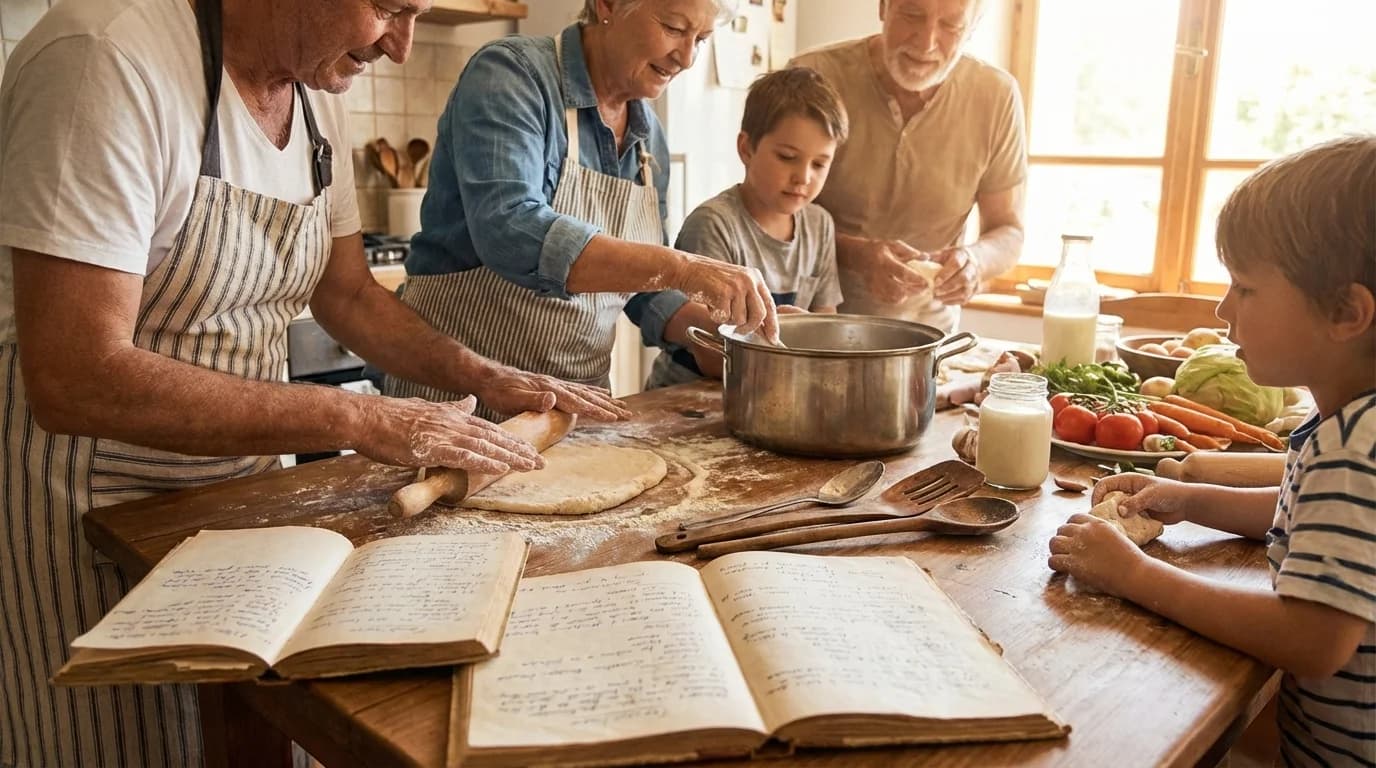
Imagine holding a beautiful cookbook filled with your grandmother's handwritten recipes, photos from family gatherings, and stories about the dishes that have brought your family together for generations. A family cookbook is more than just a collection of recipes—it's a tangible piece of your heritage that can be passed down and treasured for years to come.
Creating a family cookbook might seem like a daunting task, but with the right approach and tools, it's an incredibly rewarding project that brings families together. Whether you're planning a printed book for a family reunion or a digital collection to share online, this guide will walk you through every step of the process.
Why Create a Family Cookbook?
Before we dive into the how-to, let's explore why family cookbooks are so valuable:
Preservation: Family recipes often exist only in someone's memory or on aging recipe cards. A cookbook ensures they're preserved for future generations.
Connection: The process of creating a cookbook brings family members together, sparking conversations about shared memories and traditions.
Gift-Giving: A family cookbook makes an incredibly meaningful gift for weddings, graduations, holidays, or milestone birthdays.
Education: It teaches younger generations about their culinary heritage and the cultural traditions behind family dishes.
Storytelling: Cookbooks provide space to share not just recipes, but the stories, personalities, and history that make your family unique.
Step 1: Planning Your Cookbook
Define Your Scope
Start by deciding what your cookbook will include:
- Full family archive or specific branch (mom's side, Italian heritage, etc.)?
- All recipes or curated favorites?
- Multi-generational or single generation focus?
- Themed (holiday recipes, desserts only) or comprehensive?
For your first cookbook, consider starting smaller and more focused. You can always create additional volumes later.
Choose Your Format
Printed Cookbook:
- Tangible keepsake that looks beautiful on a shelf
- Easy to use while cooking (no screens)
- Can be professionally bound or homemade
- Best for: Gifts, formal presentations, special occasions
Digital Cookbook:
- Easy to update and add new recipes
- Instantly shareable with family worldwide
- Searchable and interactive
- Cost-effective for large families
- Best for: Ongoing collections, large families, frequent updates
Hybrid Approach: Many families create a digital master collection (using platforms like myrecipe.app) and then generate printed versions for special occasions. This gives you the best of both worlds.
Set Your Timeline
Creating a cookbook takes time. Be realistic:
- Quick project (2-3 months): 20-30 curated recipes, simple design
- Standard project (6-9 months): 50-75 recipes, custom design, family contributions
- Comprehensive project (1-2 years): 100+ recipes, extensive research, interviews, professional layout
Step 2: Gathering Recipes
Collect from Multiple Sources
Cast a wide net:
- Old recipe boxes and card files
- Cookbooks with family annotations
- Recipes passed down verbally (interview older relatives)
- Family group chats and emails
- Social media posts about family recipes
- Funeral programs (many families include favorite recipes)
- Wedding or anniversary celebration materials
Pro tip: Create a shared folder or use a recipe organization platform where family members can submit recipes. This makes collection easier and gets everyone involved early in the process.
Test Every Recipe
This is crucial. Don't assume an old recipe will work as written:
- Ingredient names and availability change over time
- Oven temperatures and cooking methods have evolved
- Some recipes assumed knowledge that wasn't written down
- Recipes might have errors or missing steps
Testing helps you:
- Verify accuracy
- Add missing details
- Update outdated terminology
- Take photos of the finished dish
- Note any necessary modifications
Standardize Recipe Format
Create a template that every recipe will follow:
Essential Elements:
- Recipe name
- Source (who contributed or originated it)
- Yield/servings
- Prep time, cook time, total time
- Ingredient list (with precise measurements)
- Step-by-step instructions
- Temperature settings
- Storage instructions (if applicable)
Optional But Valuable:
- Story or memory about the recipe
- Occasions when it's traditionally served
- Difficulty level
- Dietary information (vegetarian, gluten-free, etc.)
- Substitution suggestions
- Photo of the dish
- Photo of the original recipe card or contributor
Step 3: Organizing Your Content
Create Logical Categories
Group recipes in a way that makes sense for your family:
Traditional Approach:
- Appetizers and Snacks
- Soups and Salads
- Main Dishes (subdivide by protein if needed)
- Side Dishes
- Breads and Baked Goods
- Desserts
- Beverages
Alternative Organizations:
- By family member ("Grandma's Specialties," "Uncle Joe's BBQ")
- By occasion (Holidays, Sunday Dinners, Birthday Traditions)
- By season
- By cultural heritage
- By time period (Recipes from the 1950s, 1980s, etc.)
Many cookbooks use a combination—main categories by meal type, with special sections for holiday recipes or individual family members' signature dishes.
Add Supplementary Content
A great family cookbook includes more than just recipes:
Front Matter:
- Dedication page
- Family tree or key contributors list
- Introduction explaining the cookbook's purpose
- How to use the cookbook
- Measurement conversion charts
- Cooking tips and techniques
Interspersed Throughout:
- Family photos from gatherings
- Stories and anecdotes
- Quotes from family members
- Historical context about recipes
- Tips and variations
Back Matter:
- Index (alphabetical and by category)
- Blank pages for notes and additions
- Future recipe ideas
- Metric conversions
- Substitution guide
Step 4: Design and Layout
Choose Your Design Style
Your design should reflect your family's personality:
Classic/Traditional:
- Serif fonts
- Vintage recipe card graphics
- Muted color palette (cream, burgundy, forest green)
- Ornate borders and decorative elements
Modern/Clean:
- Sans-serif fonts
- Lots of white space
- Bold, simple graphics
- Bright accent colors
Rustic/Homestyle:
- Hand-drawn elements
- Warm earth tones
- Kraft paper aesthetics
- Casual, friendly fonts
Vintage/Nostalgic:
- Retro color schemes (mint, pink, yellow)
- Mid-century graphics
- Faded photo treatments
- Typewriter-style fonts
Design Tools
For Printed Cookbooks:
- Canva: User-friendly with cookbook templates ($12.99/month)
- Adobe InDesign: Professional layout software (requires learning curve)
- Microsoft Publisher: Mid-level option for Windows users
- Apple Pages: Free for Mac users, decent templates
- Blurb BookWright: Free software specifically for creating books
For Digital Cookbooks:
- Google Docs/Slides: Simple, free, collaborative
- Recipe apps with sharing features: myrecipe.app allows you to create beautiful digital collections
- WordPress or Squarespace: For creating a family recipe website
- Notion: Flexible database approach with great sharing features
Layout Best Practices
Readability First:
- Use at least 11-12pt font for body text
- Ensure high contrast between text and background
- Give recipes plenty of space (avoid cramming)
- Use clear hierarchy (recipe name, ingredients, instructions)
Visual Appeal:
- Include photos when possible (finished dish, process shots, family photos)
- Use consistent styling throughout
- Add visual breaks with graphics, borders, or decorative elements
- Leave white space—don't fill every inch
Practical Design:
- Start each recipe on a new page or clearly separate from the previous one
- Make ingredient lists scannable (bullets, checkboxes)
- Number instruction steps
- Use bold or italics to highlight key information
Step 5: Gathering Stories and Context
This is what transforms a recipe collection into a true family treasure.
Interview Family Members
Ask questions like:
- Who created this recipe or where did it come from?
- What occasions was it made for?
- Are there any funny stories about making this dish?
- How has the recipe changed over the years?
- What memories do you associate with this food?
- Were there any challenges in sourcing ingredients?
- Did anyone in the family dislike this dish? (those stories are fun too!)
Pro tip: Record these conversations (with permission). Audio or video clips can be included in digital cookbooks, and the recordings themselves become family archives.
Research Family History
Add depth to your cookbook by researching:
- Immigration history (which recipes came from the old country?)
- Regional food traditions
- Historical events that influenced family eating habits
- Economic changes and how they affected what the family ate
- Cultural or religious traditions surrounding food
Collect Family Photos
Pictures bring cookbooks to life:
- Old photos of family gatherings
- Photos of relatives cooking
- Holiday celebrations featuring the food
- The original handwritten recipe cards
- Modern recreations of classic dishes
Make sure to caption photos with names, dates, and locations. This information becomes increasingly valuable over time.
Step 6: Writing and Editing
Recipe Writing Best Practices
Be Specific:
- "1 cup diced onion" not "1 onion, diced"
- "350°F" not "moderate oven"
- "10-12 minutes until golden brown" not "bake until done"
Include Important Details:
- Size of pans and baking dishes
- Whether ingredients should be at room temperature
- Resting times
- Doneness indicators beyond just time
Preserve Authentic Voice: If Grandma always called it "icebox cake" don't change it to "no-bake refrigerator dessert." Preserve the language that makes the recipe authentic to your family.
Edit Thoroughly
Even though it's a family project, quality matters:
- Proofread multiple times
- Have several family members review for accuracy
- Test recipes as written to catch errors
- Check that all measurements and instructions are clear
- Verify names, dates, and historical information
- Ensure consistency in formatting and terminology
Consider creating a style guide for your cookbook that specifies:
- How to write measurements (1/2 cup vs. ½ cup)
- Capitalization rules
- How to cite recipe sources
- Date formats
- How to handle recipe variations
Step 7: Publishing Your Cookbook
Digital Publishing Options
Recipe Apps and Platforms: Platforms like myrecipe.app allow you to:
- Create beautiful digital cookbooks
- Share privately with family members
- Allow family to add comments and photos
- Update recipes easily
- Search and filter by various criteria
- Access from any device
PDF Distribution:
- Create a PDF version for easy email sharing
- Include hyperlinked table of contents
- Can be printed on-demand by recipients
- Maintain exact formatting
Family Website or Blog:
- Create a dedicated recipe website
- Allow ongoing additions and updates
- Include comment sections for family interaction
- Great for extended families spread across distances
Print Publishing Options
Professional Printing Services:
- Blurb: High-quality photo books, excellent for cookbooks ($15-100+ depending on size)
- Shutterfly: User-friendly, frequent sales ($20-60)
- Lulu: Wide variety of binding options and sizes ($10-50)
- Mixbook: Good customization options ($15-70)
- Local print shops: Support local business, can see samples in person
Print Considerations:
- Binding: Spiral/comb (lays flat, practical), hardcover (durable, gift-worthy), softcover (economical)
- Paper: Glossy for photos, matte for text-heavy pages, thick enough to prevent show-through
- Size: 8.5x11" (standard, lots of space), 6x9" (compact, cookbook shelf size), 8x8" (square, modern look)
DIY Options:
- Print at home and use a binding machine
- Use page protectors in a three-ring binder
- Create a recipe box with printed cards instead of a book
How Many Copies?
Consider:
- One for each household in your immediate family
- Extras for future weddings/graduations
- A master copy for family archives
- One for yourself to annotate and update
Digital publishing makes it easy to print more copies as needed rather than ordering a large quantity upfront.
Step 8: Sharing and Maintaining
Launch Your Cookbook
Make the unveiling special:
- Host a family gathering centered around recipes from the cookbook
- Have contributors sign copies
- Create a hashtag for family members to share their cooking results
- Set up a shared photo album for family members' interpretations
Keep It Living
The best family cookbooks grow over time:
Create a System for Updates:
- Annual review and revision process
- Way for family members to submit new recipes
- Process for adding photos from family gatherings
- Method for incorporating feedback and corrections
Digital Master Copy: Even if you've printed books, maintain a digital master that can be updated. Platforms like myrecipe.app excel at this—your family's collection grows and improves continuously, and you can generate updated print versions whenever needed.
Encourage Contribution:
- Make younger family members feel invested
- Create "next generation" sections for new recipes
- Document how family members adapt traditional recipes
- Include photos of kids and grandkids cooking
Special Cookbook Ideas
Theme-Based Family Cookbooks
- Holiday Cookbook: Just Thanksgiving, Christmas, or other holiday traditions
- Dessert Cookbook: Family's sweet specialties
- Heritage Cookbook: Recipes from the family's country of origin
- Wedding Cookbook: Given to newlyweds with essential family recipes
- Baby Cookbook: Recipes for new parents (family favorites that freeze well, one-handed meals, etc.)
Collaborative Projects
- Four Generations: Each generation contributes their signature recipes
- Reunion Cookbook: Created specifically for a big family reunion
- Fundraiser: Sell copies to raise money for a family cause or charity
- Memorial Cookbook: Honor a deceased family member's culinary legacy
Common Challenges and Solutions
Challenge: Family members won't participate or submit recipes Solution: Make it easy by interviewing them yourself, start with key contributors, show early samples to build excitement
Challenge: Recipes don't work when tested Solution: Work with the contributor to troubleshoot, note modifications made, preserve original with notes about updates
Challenge: Cost is prohibitive for large family Solution: Digital-first approach with print-on-demand, create PDF for free distribution, seek sponsors within family
Challenge: Disagreement about which recipes to include Solution: Set clear criteria early, be inclusive when possible, create themed volumes for different preferences
Challenge: Cookbook project stalls or feels overwhelming Solution: Start smaller, set realistic timelines, delegate tasks, use templates and tools to simplify
The Emotional Value
Creating a family cookbook is about more than just food. It's about:
- Honoring the family members who came before you
- Creating a tangible legacy for those who come after
- Bringing your current family together through a shared project
- Preserving traditions that might otherwise be lost
- Telling your family's unique story through the universal language of food
The process itself—gathering recipes, testing dishes, interviewing relatives, designing pages—becomes a journey through your family's history. You'll learn things you never knew, understand your heritage more deeply, and create something that truly matters.
Getting Started Today
Don't wait for the "perfect time" to start your family cookbook. Begin with these simple steps:
- Create a collection system: Set up a myrecipe.app account or shared folder for gathering recipes
- Identify your top 10 must-include recipes: Start with the absolute essentials
- Reach out to 3 key family members: Ask them to contribute their signature dishes
- Test one recipe this week: Make it, photograph it, write it up properly
- Set a realistic goal: Decide on a target completion date (family reunion? holiday?)
Your family's culinary heritage is worth preserving. Every recipe tells a story, and every story deserves to be remembered. Whether you create a simple collection or an elaborate heirloom cookbook, you're giving your family a gift that will be treasured for generations.
Ready to start your family cookbook project? Try myrecipe.app for free to begin organizing and preserving your family recipes today.
About myrecipe
myrecipe helps families save, organize, and share their favorite recipes in one place. Plan meals, create shopping lists, and preserve your culinary traditions.
Start Organizing Recipes