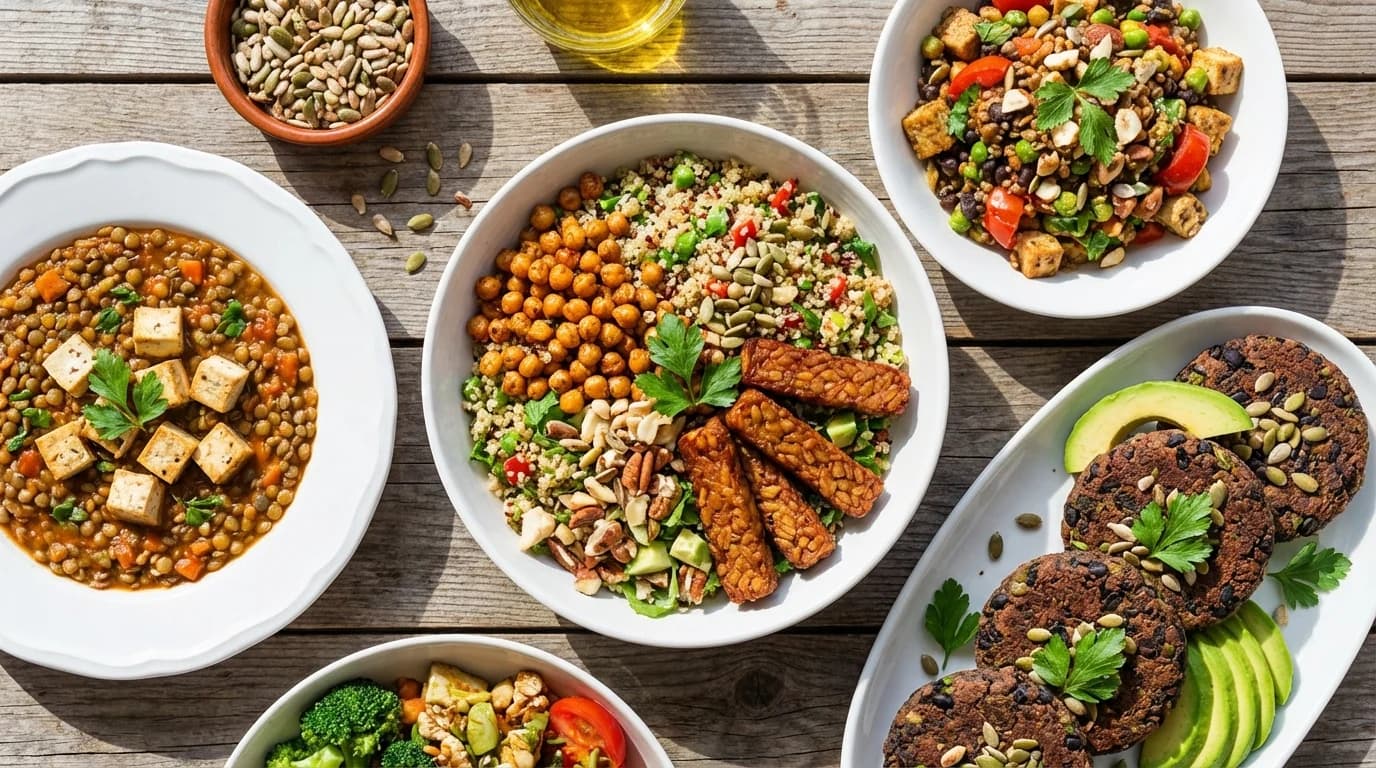
Getting enough protein on a plant-based diet is easier than most people think. With the right ingredients and recipes, you can easily hit 20-30 grams of protein per meal while enjoying delicious, satisfying food that fuels your body.
This guide shares 25 high-protein plant-based meals plus strategies for meeting your daily protein needs without meat, dairy, or eggs.
Understanding Plant-Based Protein
Daily Protein Needs:
- Sedentary adults: 0.8g per kg of body weight (about 50-60g daily)
- Active adults: 1.0-1.2g per kg (60-80g daily)
- Athletes: 1.4-2.0g per kg (80-120g daily)
Top Plant Protein Sources:
- Lentils: 18g per cooked cup
- Chickpeas: 15g per cooked cup
- Black beans: 15g per cooked cup
- Tofu: 20g per cup
- Tempeh: 31g per cup
- Edamame: 17g per cup
- Quinoa: 8g per cooked cup
- Seitan: 25g per 3.5 oz
- Hemp seeds: 10g per 3 tablespoons
- Nutritional yeast: 8g per 2 tablespoons
- Peanut butter: 8g per 2 tablespoons
25 High-Protein Plant-Based Meals
Breakfast Options (20g+ protein)
1. Tofu Scramble with Nutritional Yeast (24g protein) Crumble firm tofu and sauté with turmeric, nutritional yeast, vegetables, and black beans. Serve with whole wheat toast.
2. Protein-Packed Smoothie Bowl (22g protein) Blend frozen banana, protein powder (pea or hemp), peanut butter, spinach, and plant milk. Top with hemp seeds and granola.
3. Tempeh Bacon and White Bean Hash (26g protein) Marinate and pan-fry sliced tempeh. Serve with mashed white beans, sautéed kale, and roasted potatoes.
4. High-Protein Oatmeal (21g protein) Cook oats with pea protein powder stirred in. Top with peanut butter, chia seeds, and sliced almonds.
5. Chickpea Flour Omelet (20g protein) Make a batter with chickpea flour, water, and vegetables. Cook like an omelet and stuff with sautéed mushrooms and spinach.
Lunch Ideas (20g+ protein)
6. Lentil and Quinoa Bowl (25g protein) Combine cooked lentils and quinoa with roasted vegetables, tahini dressing, and a sprinkle of hemp seeds.
7. Tempeh Buddha Bowl (28g protein) Marinate and bake tempeh cubes. Serve over brown rice with edamame, broccoli, and peanut sauce.
8. Chickpea Salad Sandwich (22g protein) Mash chickpeas with tahini, lemon juice, celery, and seasonings. Serve on whole wheat bread with sprouts.
9. Black Bean Burrito Bowl (24g protein) Layer black beans, brown rice, quinoa, corn, peppers, and guacamole. Top with pumpkin seeds.
10. Seitan Banh Mi Bowl (27g protein) Slice marinated seitan and serve with rice, pickled vegetables, cucumber, and sriracha mayo.
For more bowl inspiration, check our vegetarian meal prep ideas.
Dinner Recipes (25g+ protein)
11. Lentil Bolognese Over Whole Wheat Pasta (26g protein) Cook brown lentils in marinara sauce with Italian seasonings. Serve over protein-enriched pasta. Top with nutritional yeast.
12. Tofu Stir-Fry with Peanut Sauce (28g protein) Press and bake extra-firm tofu until crispy. Stir-fry with edamame and vegetables. Toss with peanut sauce.
13. Black Bean and Quinoa Stuffed Peppers (25g protein) Fill bell peppers with quinoa, black beans, corn, and salsa. Bake until tender.
14. Thai Peanut Curry with Chickpeas and Tofu (30g protein) Simmer coconut milk with curry paste, chickpeas, cubed tofu, and vegetables. Serve over brown rice.
15. Tempeh Tacos (27g protein) Crumble and season tempeh with taco spices. Serve in tortillas with black beans, lettuce, and cashew crema.
16. Seitan Steak with Mashed White Beans (32g protein) Pan-sear seasoned seitan. Serve with mashed white beans (add garlic and olive oil) and roasted Brussels sprouts.
17. High-Protein Veggie Burger (24g protein) Make patties from black beans, quinoa, oats, and hemp seeds. Serve on whole wheat buns with avocado.
18. Chickpea Curry with Spinach (23g protein) Simmer chickpeas in coconut curry sauce with spinach. Serve over quinoa for extra protein.
19. Lentil and Sweet Potato Shepherd's Pie (26g protein) Layer cooked lentils with vegetables and top with mashed sweet potatoes mixed with white beans.
20. Tofu and Vegetable Pad Thai (25g protein) Stir-fry rice noodles with pressed tofu, bean sprouts, and peanuts. Toss in tamarind-based sauce.
Similar to our easy stir-fry recipes but optimized for protein.
High-Protein Snacks and Meals
21. Protein-Packed Smoothie (28g protein) Blend pea protein powder, frozen berries, banana, peanut butter, spinach, hemp seeds, and plant milk.
22. Edamame Fried Rice (24g protein) Use day-old rice, edamame, tofu, frozen peas and carrots. Season with soy sauce and sesame oil.
23. White Bean and Vegetable Soup (22g protein) Simmer white beans with vegetables, vegetable broth, and Italian herbs. Serve with nutritional yeast on top.
24. Quinoa and Black Bean Salad (21g protein) Mix cooked quinoa, black beans, corn, bell peppers, and lime-cilantro dressing. Top with pepitas.
25. Lentil and Chickpea Chili (27g protein) Combine lentils, chickpeas, tomatoes, peppers, and chili spices. Simmer until thick. Serve with cornbread.
For more budget-friendly plant protein ideas, see our cheap vegetarian meals.
Building High-Protein Plant-Based Plates
The Formula:
- Primary protein source: Tofu, tempeh, seitan, or legumes (15-20g)
- Secondary protein: Quinoa, whole wheat, or protein-enriched pasta (5-8g)
- Protein booster: Hemp seeds, nutritional yeast, or nut butter (3-5g)
- Vegetables: Any type (1-3g)
Example Meal:
- Baked tempeh (20g)
- Quinoa (8g)
- Roasted vegetables with tahini drizzle (4g)
- Total: 32g protein
Protein Combining Myth
Good News: You don't need to combine complementary proteins at every meal. Your body pools amino acids throughout the day, so eating a variety of plant proteins over 24 hours is sufficient.
Key Principle: Eat a variety of whole plant foods (legumes, grains, nuts, seeds) and you'll naturally get all essential amino acids.
Budget Tips for High-Protein Plant-Based Eating
1. Buy Dried Beans and Lentils
- Dried beans: $1.50 per pound = 6-7 cups cooked
- Canned beans: $1.00 per can = 1.5 cups
- Savings: 60-70% by cooking from dried
2. Make Your Own Protein Powder Blend hemp seeds, pea protein isolate (buy in bulk), and cocoa powder. Store in a jar.
3. Use Tofu Strategically A $2 block of tofu provides 80g protein (4 servings at 20g each = $0.50 per serving).
4. Buy in Bulk Purchase quinoa, nutritional yeast, hemp seeds, and nuts from bulk bins.
5. Grow Sprouts at Home Turn beans and lentils into sprouts for increased protein bioavailability. Costs pennies.
For more budget strategies, see our meal prep on a budget guide.
Sample High-Protein Day (100g protein)
Breakfast: Tofu scramble with toast (24g)
- Tofu: 20g
- Whole wheat toast: 4g
Snack: Apple with peanut butter (8g)
Lunch: Lentil quinoa bowl (25g)
- Lentils: 18g
- Quinoa: 4g
- Hemp seeds: 3g
Snack: Protein smoothie (20g)
- Protein powder: 20g
Dinner: Tempeh stir-fry with brown rice (28g)
- Tempeh: 21g
- Brown rice: 5g
- Edamame: 6g
Total: 105g protein
Meal Prep for High-Protein Plant-Based Eating
Sunday Prep Session:
-
Cook protein sources:
- 2 cups dried lentils → 6 cups cooked
- 2 cups dried chickpeas → 6 cups cooked
- Press and bake 2 blocks tofu
- Marinate and bake tempeh
-
Cook grains:
- Quinoa (4 cups cooked)
- Brown rice (4 cups cooked)
-
Prep vegetables:
- Roast sheet pans of vegetables
- Wash and chop raw vegetables for salads
-
Make sauces:
- Peanut sauce
- Tahini dressing
- Cashew cream
-
Portion into containers:
- Mix and match throughout the week
Similar strategies to our vegan meal prep for beginners.
Essential High-Protein Pantry
Proteins:
- Dried lentils (red, green, brown)
- Dried chickpeas and black beans
- Firm and extra-firm tofu
- Tempeh
- Quinoa
- Canned beans (for convenience)
Protein Boosters:
- Hemp seeds
- Nutritional yeast
- Nut butters (peanut, almond, cashew)
- Chia seeds
- Tahini
- Pumpkin seeds (pepitas)
Flavor:
- Soy sauce or tamari
- Coconut aminos
- Miso paste
- Vegetable broth
- Spices and herbs
Protein Absorption Tips
Enhance Iron Absorption: Plant-based iron is best absorbed with vitamin C. Pair:
- Lentils + tomatoes
- Tofu + bell peppers
- Beans + citrus dressing
Improve Protein Digestibility:
- Soak beans and lentils before cooking
- Ferment (tempeh, miso) for enhanced bioavailability
- Sprout beans and grains
- Cook thoroughly
Add Healthy Fats: Fat helps absorb nutrients and keeps you full:
- Drizzle tahini on bowls
- Add avocado to salads
- Top dishes with nuts and seeds
Common Protein Mistakes
1. Not Eating Enough Calories Plant proteins are often lower in calories than meat. Make sure you're eating enough total food to meet protein needs.
2. Relying Only on One Protein Source Variety ensures complete amino acid profiles and diverse nutrients.
3. Forgetting to Add Protein Boosters Adding hemp seeds, nutritional yeast, or nut butter to meals significantly increases protein.
4. Skipping Protein at Breakfast Starting the day with protein keeps you full and energized. Don't just have fruit or toast.
5. Not Planning Ahead Without meal prep, it's hard to hit protein goals consistently.
Plant-Based Protein for Athletes
Pre-Workout:
- Banana with peanut butter
- Oatmeal with hemp seeds
- Smoothie with plant protein powder
Post-Workout (within 30-60 minutes):
- Tofu scramble
- Protein smoothie with berries
- Tempeh and quinoa bowl
Daily Goals for Athletes:
- Aim for 1.4-2.0g protein per kg body weight
- Spread protein across 4-5 meals
- Include protein within 2 hours of training
High-Protein Meal Planning Template
Breakfast Options (rotate):
- Tofu scramble variations
- Protein oatmeal
- Smoothie bowls
- Chickpea flour omelets
Lunch Options (rotate):
- Buddha bowls with tempeh or tofu
- Chickpea salad sandwiches
- Lentil soups
- Quinoa salads
Dinner Options (rotate):
- Stir-fries with tofu/tempeh
- Curries with chickpeas
- Pasta with lentil bolognese
- Stuffed vegetables with beans and quinoa
Snacks:
- Protein smoothies
- Nut butter with fruit
- Hummus with vegetables
- Trail mix with seeds and nuts
Conclusion
Getting 20-30 grams of protein per meal on a plant-based diet is completely achievable with proper planning and the right ingredients. By combining legumes, whole grains, tofu, tempeh, and protein boosters like hemp seeds and nutritional yeast, you'll easily meet—and often exceed—your daily protein needs.
The key is building meals around high-protein plant foods rather than thinking of protein as an afterthought. When you center lentils, beans, tofu, and tempeh in your meals, everything else falls into place.
Start with 5-6 of these recipes and rotate them weekly. As you get comfortable, expand your repertoire with new protein combinations and flavors.
What high-protein plant-based meal will you try first? Remember, plant protein is powerful, affordable, and delicious—you've got this!
About myrecipe
myrecipe helps families save, organize, and share their favorite recipes in one place. Plan meals, create shopping lists, and preserve your culinary traditions.
Start Organizing Recipes