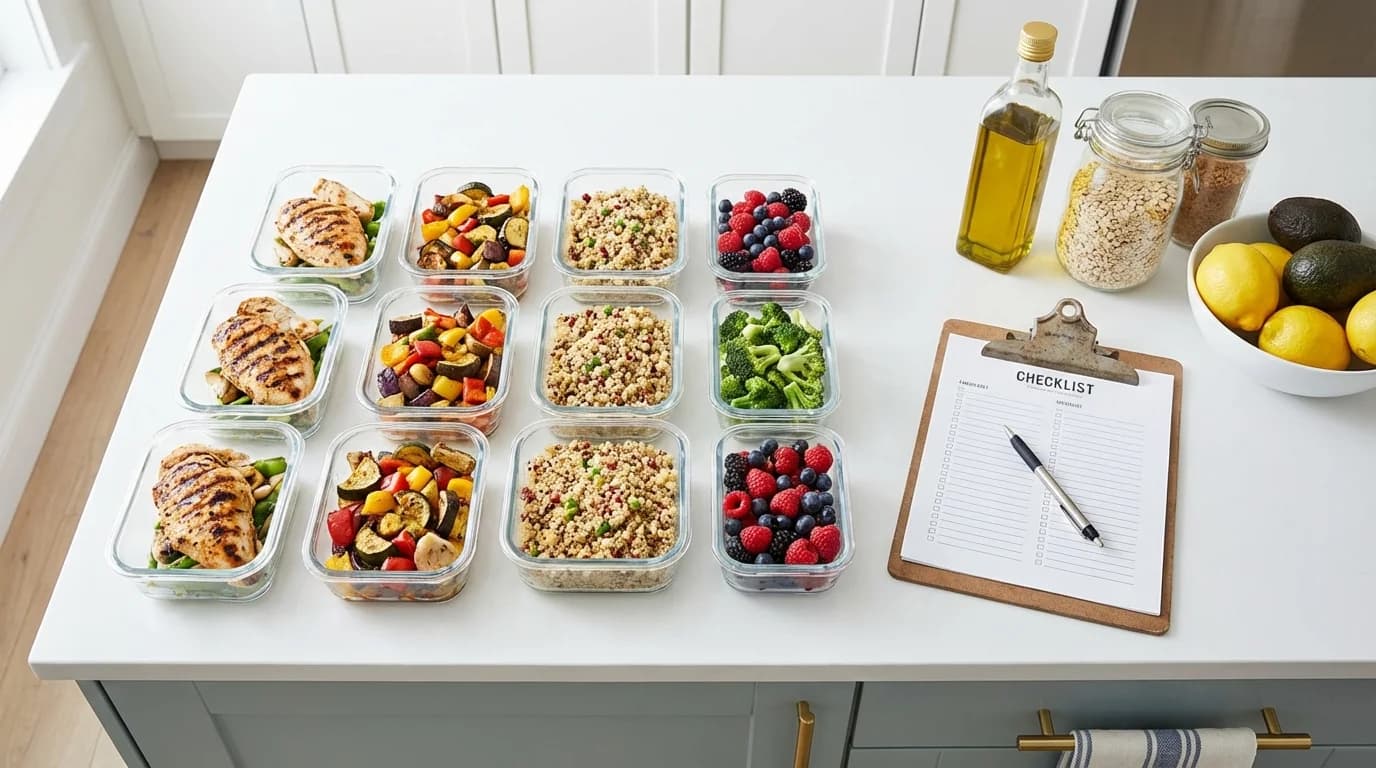
I used to wander grocery store aisles for an hour, throwing random ingredients into my cart and hoping they'd somehow turn into meals. By Wednesday, I'd have three random vegetables, half a bag of rice, and absolutely nothing that made sense together.
Key Takeaways
- Organize your list by store section to shop in 30 minutes or less
- Keep 15 pantry staples always stocked—they're the foundation of any meal
- Buy 3-4 proteins, 2 grains, and 5-6 vegetables weekly for maximum variety
- The grocery list matters more than recipes—missing ingredients derail meal prep
- Shop the perimeter first (produce, meat, dairy) then hit center aisles
The problem wasn't my cooking skills—it was my meal prep grocery list. Or rather, the fact that I didn't have one.
A proper meal prep grocery list isn't just a random collection of ingredients. It's a strategic shopping template organized by store section, built around staple items you always keep stocked, and designed to minimize waste while maximizing the number of meals you can make.
In this guide, you'll get a proven meal prep grocery list template, learn which staples to always have on hand, and discover how to organize your list by store section so you're in and out of the grocery store in 30 minutes flat.
Why Your Grocery List Matters More Than Your Recipes
Here's the truth most meal prep guides won't tell you: the grocery list is more important than the recipes themselves.
Think about it. You can have the world's best meal prep recipes, but if you're missing key ingredients, forget staple items, or buy things that go bad before you use them, those recipes don't help.
A solid meal prep grocery list solves three major problems:
- Eliminates decision fatigue: You know exactly what to buy each week
- Reduces food waste: Everything you buy has a purpose
- Saves money: No impulse purchases, less wasted food
Plus, when you shop from a consistent template, you get faster at grocery shopping. You know which aisles to hit, which brands work best, and exactly how much to buy. For more shopping strategies, check out our budget grocery shopping tips.
The Master Meal Prep Grocery List Template
Here's the framework I use every single week. This template covers 4-5 dinners for a family of four, plus breakfast basics.
Quick Reference Shopping List
| Category | Pick | Examples | Est. Cost |
|---|---|---|---|
| Proteins | 3-4 items | Chicken, ground beef, eggs, beans | $20-30 |
| Grains/Starches | 3 items | Rice, pasta, tortillas, potatoes | $8-12 |
| Vegetables | 6-8 types | Broccoli, peppers, carrots, lettuce | $12-18 |
| Fruits | 3-4 types | Apples, bananas, berries | $8-12 |
| Dairy | 4-5 items | Milk, cheese, yogurt, butter | $12-15 |
| Pantry Staples | Check stock | Oils, seasonings, sauces | $0-10 |
| TOTAL | $60-97 |
Proteins (Choose 3-4)
| Type | Fresh Options | Convenience Options |
|---|---|---|
| Poultry | 2 lbs chicken breast/thighs | Rotisserie chicken |
| Beef | 1.5 lbs ground beef/turkey | Pre-cooked sausage |
| Seafood | 1 lb salmon/white fish | 2 cans tuna or salmon |
| Pork | 1 lb tenderloin/chops | — |
| Eggs | — | 2 dozen eggs |
| Plant-based | — | 3-4 cans beans |
Grains & Starches (Choose 3)
| Item | Amount | Best For |
|---|---|---|
| Rice | 2 lbs | Bowls, sides, stir-fry |
| Pasta | 1 lb (2 shapes) | Quick dinners |
| Quinoa | 1 box | Salads, bowls |
| Tortillas | 8-10 | Wraps, tacos |
| Potatoes | 5 lbs | Roasting, mashing |
| Bread/rolls | 1 loaf | Sandwiches |
Vegetables (Get 6-8 types)
| Category | Options | Storage Life |
|---|---|---|
| For Roasting | Broccoli (2 lbs), Brussels sprouts (2 lbs), bell peppers (3), sweet potatoes (2 lbs), baby carrots (2 lbs) | 5-7 days |
| For Raw Eating | Lettuce (2 heads), cucumbers (2), cherry tomatoes | 4-5 days |
| Quick-Cooking | Green beans (1 lb), frozen stir-fry mix, frozen broccoli | 6+ months frozen |
Fruits (Choose 3-4)
| Fruit | Amount | Best For |
|---|---|---|
| Apples | 4-5 | Snacks, lunchboxes |
| Bananas | 3-4 | Breakfast, smoothies |
| Berries | 1 lb | Yogurt, oatmeal |
| Oranges | 2-3 | Snacks, vitamin C |
Dairy & Refrigerated
| Item | Amount | Uses |
|---|---|---|
| Milk | 1 gallon | Drinking, cooking |
| Cheese block | 8-16 oz | Shredding, meals |
| Greek yogurt | 32 oz | Breakfast, sauces |
| Butter | 1 stick | Cooking, flavor |
| Sour cream | 8 oz | Toppings |
Pantry Staples (Check before shopping)
| Category | Must-Haves |
|---|---|
| Oils & Fats | Olive oil, vegetable oil, cooking spray |
| Seasonings | Salt, pepper, garlic powder, onion powder, paprika, Italian seasoning, cumin, chili powder |
| Sauces | Soy sauce, hot sauce, salsa, marinara |
| Broths | Chicken broth, vegetable broth |
| Canned Goods | Diced tomatoes, tomato paste, beans |
- Onion powder
- Italian seasoning
- Chili powder
- Cumin
Basics:
- All-purpose flour
- Sugar
- Brown sugar
- Baking powder
- Vanilla extract
Sauces & Condiments:
- Soy sauce
- Hot sauce
- BBQ sauce
- Salsa
- Mayonnaise
- Ketchup
- Mustard
Canned Goods:
- Diced tomatoes (2-3 cans)
- Tomato sauce
- Chicken or vegetable broth
- Coconut milk
Essential Meal Prep Staples to Always Stock
These are the ingredients I never let myself run out of. They're the building blocks of quick, versatile meals.
Tier 1: The Absolute Essentials
Proteins:
- Eggs (always have 2 dozen)
- Canned beans (black, pinto, chickpeas)
- Frozen chicken breasts
- Canned tuna
Grains:
- White rice
- Pasta (spaghetti + penne)
- Tortillas (freeze extras)
Vegetables:
- Frozen broccoli
- Frozen mixed vegetables
- Onions (keep in pantry)
- Garlic (fresh or jarred minced)
Pantry:
- Olive oil
- Salt, pepper, garlic powder
- Pasta sauce
- Canned tomatoes
With just these items, you can make: pasta with marinara, fried rice, bean burritos, chicken stir-fry, tuna pasta salad, scrambled eggs with vegetables, and bean soup. That's seven different meals from staples alone.
Tier 2: Versatility Boosters
These ingredients dramatically expand what you can make:
- Soy sauce (turns rice into fried rice)
- Chicken broth (base for soups and grains)
- Parmesan cheese (elevates pasta and vegetables)
- Salsa (instant flavor for Mexican meals)
- BBQ sauce (transforms plain chicken)
Tier 3: Convenience Accelerators
These aren't essential but save massive amounts of time:
- Pre-cooked rice packets
- Rotisserie chicken
- Frozen pre-chopped onions and peppers
- Jarred minced garlic
- Pre-shredded cheese
Organizing Your List by Store Section
Walking back and forth across the grocery store wastes time and tests your willpower (hello, snack aisle). Organize your meal prep grocery list to match your store's layout.
Here's the order that works for most grocery stores:
Section 1: Produce (Start Here)
- All fresh fruits
- All fresh vegetables
- Fresh herbs
Pro tip: Shop produce first while you have energy to pick the best quality items. Your future self will appreciate not getting mushy tomatoes.
Section 2: Meat & Seafood
- All proteins
- Rotisserie chicken (often in deli section)
Pro tip: Look for family packs and divide them at home. Freeze what you won't use within 3 days.
Section 3: Dairy & Refrigerated
- Milk, yogurt, cheese
- Eggs, butter
- Refrigerated items like hummus or salsa
Pro tip: Grab these toward the end to minimize time out of refrigeration.
Section 4: Dry Goods & Pantry
- Rice, pasta, grains
- Canned goods
- Oils and vinegars
- Baking supplies
Pro tip: Buy larger sizes of staples you use weekly. It's cheaper per ounce and means fewer trips.
Section 5: Frozen
- Frozen vegetables
- Frozen fruits
- Ice cream (if needed)
Pro tip: Grab frozen items last so they stay frozen during checkout and the drive home.
Section 6: Bread & Bakery
- Bread, tortillas
- Rolls or bagels
Pro tip: Check dates carefully. Bread goes stale fast, so only buy what you'll eat in 5-7 days or plan to freeze extras.
Real-World Example: The Chen Family Shopping System
Situation: Family of three, budget of $120/week, both parents work, one child with peanut allergy
Previous Approach: Made a new list from scratch each week based on whatever recipes looked good on Pinterest. Shopping took 90 minutes and they'd still forget key ingredients. Food waste was around 20% of purchases.
New System: Created a master meal prep grocery list template with their top 12 recipes
Their Weekly Process:
- Sunday morning: Pick 4 recipes from their favorites (5 min)
- Check pantry and mark what's needed (5 min)
- Shop organized list by store section (25 min)
- Meal prep Sunday afternoon (60 min)
Template Staples They Always Buy:
- 2 lbs ground turkey
- Rotisserie chicken
- 18 eggs
- 2 lbs rice
- 6-8 vegetables (rotating based on sales)
- Pasta, canned tomatoes, beans
Results:
- Shopping time dropped from 90 minutes to 25 minutes
- Food waste reduced to less than 5%
- They know exactly what they're spending before checkout
- No more Wednesday evening "what's for dinner" panic
Key insight: "Having the same template every week feels repetitive at first, but it's actually freeing," says Lisa Chen. "We rotate the specific vegetables and seasonings, so meals still feel different, but shopping is on autopilot."
Weekly Shopping Strategies That Save Money
Strategy 1: The Build-Around Method
Pick one protein on sale, then build your whole week around it.
Example: Chicken thighs are $1.99/lb this week
- Monday: Baked chicken with roasted vegetables
- Tuesday: Shredded chicken tacos
- Wednesday: Chicken fried rice
- Thursday: Chicken soup with leftover vegetables
Strategy 2: The Two-Protein System
Buy one expensive protein and one budget protein each week.
Example:
- Premium: Salmon filets ($9/lb)
- Budget: Ground turkey ($3/lb)
Use the premium protein for 1-2 special dinners. Use the budget protein for 3-4 everyday meals. Your average cost per meal stays reasonable but you still get variety.
Strategy 3: The Seasonal Rotation
Buy whatever vegetables are in season. They're cheaper, tastier, and more nutritious.
Spring: Asparagus, peas, lettuce, radishes Summer: Tomatoes, zucchini, bell peppers, corn Fall: Squash, Brussels sprouts, sweet potatoes, apples Winter: Root vegetables, cabbage, citrus, broccoli
Budget-Friendly Meal Prep Grocery List
Need to cut costs? Here's a meal prep grocery list for about $60-70/week that covers 5 dinners for four people:
Proteins
- 3 lbs chicken leg quarters ($4)
- 2 lbs ground beef ($6)
- 2 dozen eggs ($4)
- 2 cans black beans ($2)
Grains
- 5 lbs rice ($5)
- 2 lbs pasta ($2)
- Tortillas ($3)
Vegetables
- 3 lb bag onions ($3)
- 5 lb bag potatoes ($4)
- 3 lb bag carrots ($3)
- 2 heads cabbage ($3)
- 2 bags frozen broccoli ($4)
Pantry
- Pasta sauce ($2)
- 2 cans diced tomatoes ($2)
- Cooking oil ($4)
- Taco seasoning ($1)
Dairy
- 1 lb cheese ($5)
- Milk ($4)
- Butter ($4)
Total: Approximately $65
Meals This Makes:
- Chicken and rice with roasted carrots
- Spaghetti with meat sauce
- Breakfast burritos
- Beef tacos
- Chicken stir-fry with cabbage
How myrecipe Helps
Once you've found meal prep recipes that work for your family, keeping track of the ingredients becomes crucial. You don't want to reinvent the wheel every week.
Tools like myrecipe let you save your favorite meal prep recipes and see all the ingredients you need at a glance. Build a collection of your weekly rotation recipes—say, "Sunday Meal Prep" or "Family Favorites"—and you've essentially got a master grocery list template built in. Share the collection with your partner so you can divide and conquer shopping, or send specific recipes to family members who are always asking "what should I make?"
Start organizing your recipes free with myrecipe and never forget an ingredient again.
Common Mistakes to Avoid
Mistake 1: Shopping Without Checking Your Pantry First
Why it happens: You're excited to start prepping and skip the boring inventory step.
The problem: You buy a third bottle of soy sauce while running out of rice. Or worse, you plan meals you can't actually make because you're missing a key pantry staple.
The fix: Spend 5 minutes before making your list checking what you have. Write down what's low or empty. Keep a running list on your fridge to track items as you use them up.
Mistake 2: Not Building Ingredient Overlap
Why it happens: You choose five recipes that each use completely different ingredients.
The problem: You need 30+ ingredients, half of which you'll use once and then they'll sit in your pantry for months.
The fix: Choose recipes that share ingredients. If one recipe uses bell peppers, find another that does too. Shopping for ingredient overlap means smaller lists and less waste.
Mistake 3: Buying Ingredients "Just in Case"
Why it happens: That specialty ingredient looks interesting, or you might make that recipe someday.
The problem: "Just in case" items rarely get used. They take up space and eventually expire, wasting money.
The fix: Only buy ingredients for recipes you're making THIS week. If you want to try something new, plan it for next week when you can shop properly for it.
Mistake 4: Forgetting Storage Capacity
Why it happens: Sale prices are tempting. You buy three weeks' worth of chicken because it's a great deal.
The problem: Your freezer is already full and you have nowhere to put it.
The fix: Before shopping, check your fridge and freezer space. Don't buy more than you can properly store, even if the price is amazing.
Mistake 5: Shopping While Hungry
Why it happens: You run to the store after work before dinner.
The problem: Everything looks delicious when you're hungry. Your cart fills with snacks, prepared foods, and impulse buys that weren't on your list.
The fix: Eat first, shop second. If you must shop hungry, bring your list and stick to it religiously. No exceptions.
Frequently Asked Questions
Use the same template but scale down quantities. Buy 1 lb of protein instead of 2-3 lbs, smaller bags of vegetables, and focus on ingredients that freeze well. Single-person shopping actually benefits from meal prep because you can batch cook and freeze portions for future weeks.
Once weekly shopping is more efficient and reduces impulse purchases. However, add a quick mid-week trip for fresh greens or bread if needed. The key: only buy what's on your list during that second trip.
Have backup options. If chicken breasts aren't available or are expensive, grab thighs instead. If fresh broccoli looks sad, buy frozen. Building flexibility into your list reduces stress when specific items aren't available.
Use notes apps with checkboxes, organize by store section. Some people like grocery-specific apps like AnyList or Out of Milk. The best system is the one you'll actually use consistently.
Sometimes, but factor in your time and gas. Shopping at 3 different stores to save $8 might not be worth an extra hour of your time. Pick one main store and one backup for specialty items or exceptional sales.
Put Your Template to Work
Creating your perfect meal prep grocery list template takes a few weeks of trial and error. You'll learn which quantities work for your household, which staples you actually use, and which store sections you can skip entirely.
Start with the template in this guide and customize it. Remove ingredients your family doesn't eat. Add staples you use weekly. Organize it to match your store's layout.
After three or four weeks of using the same template, grocery shopping becomes almost mindless. You'll know exactly how much you spend, exactly what you're making, and exactly where everything is in the store.
That's when meal prep stops feeling like a chore and starts feeling like a system that just works.
Ready to organize your meal prep recipes and build your perfect grocery list? Start free with myrecipe and create collections for your weekly rotation meals.
About myrecipe
myrecipe helps families save, organize, and share their favorite recipes in one place. Plan meals, create shopping lists, and preserve your culinary traditions.
Start Organizing Recipes