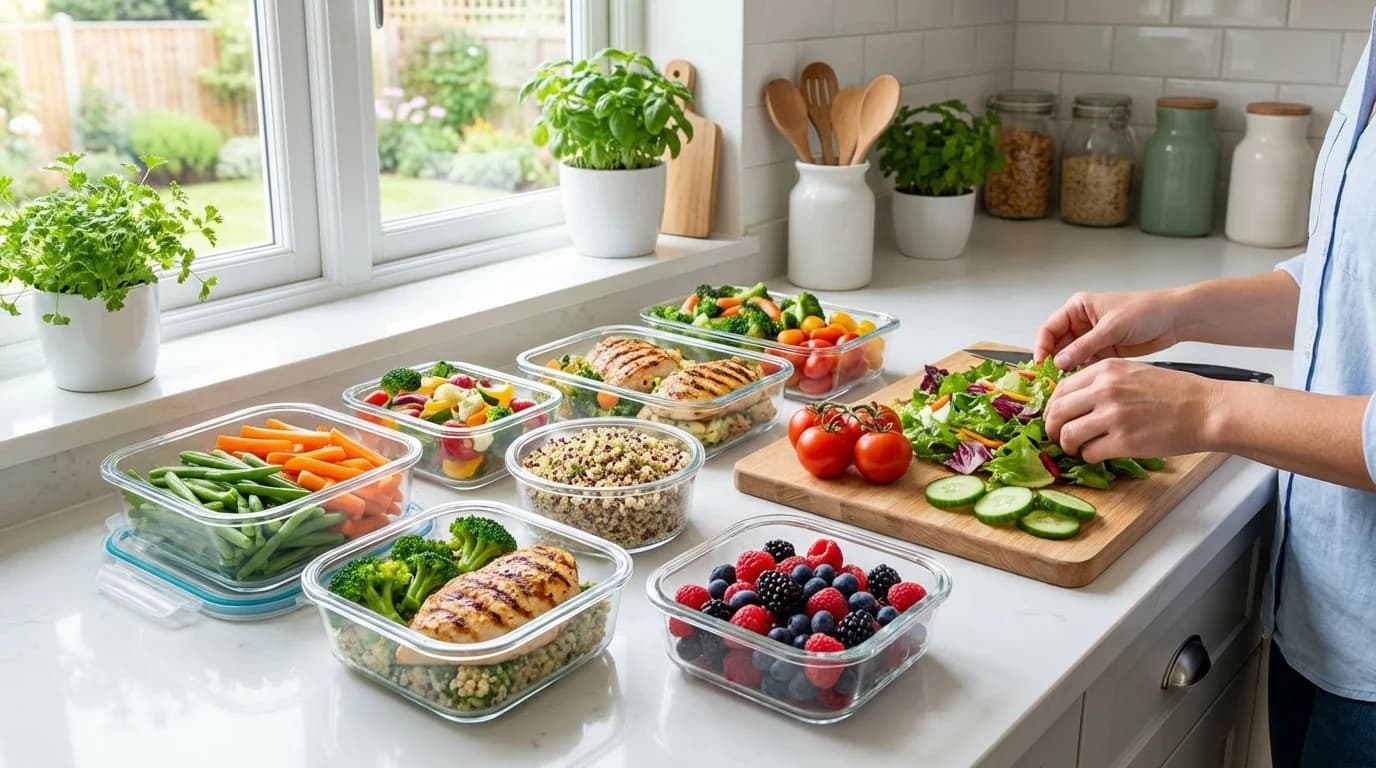
Meal Prep for Weight Loss: How to Prep Healthy Meals That Work
I've tried every diet. Keto, paleo, counting points, meal replacement shakes—all of them worked for about three weeks before I'd find myself elbow-deep in a pizza box wondering where it all went wrong. Then I discovered the secret wasn't a magic diet. It was meal prep.
Key Takeaways
- Portion control is automatic when meals are pre-portioned in containers
- Fill half your container with vegetables, quarter protein, quarter carbs
- Removing decision fatigue prevents the bad choices that derail diets
- Weigh and track portions when prepping—not when you're hungry
- Sustainable weight loss comes from consistency, not perfection
When you meal prep for weight loss, you're not just cooking food ahead of time. You're removing the decision fatigue that leads to bad choices. You're controlling portions before hunger makes you overestimate what a "serving" looks like. And you're setting yourself up to actually stick with healthy eating long enough to see results.
Let me show you how to meal prep in a way that leads to sustainable weight loss—no suffering required.
Why Meal Prep Works for Weight Loss
Here's what nobody tells you about dieting: You don't fail because you lack willpower. You fail because you're trying to make healthy choices while hungry, tired, and stressed. That's like trying to save money while standing in your favorite store holding your credit card.
Meal prep removes the moment of decision. At 6pm on Tuesday when you're exhausted, you're not deciding between cooking a healthy dinner or ordering Chinese food. You're opening your fridge to a ready-to-eat meal you already made. The choice is already done.
Plus, when you prep your own meals, you know exactly what's in them. Restaurant "healthy" meals often pack 800+ calories once you add the dressing, bread, and cooking oils. Your home-prepped chicken and vegetables? You know it's exactly 450 calories because you measured it.
The Foundation: How to Build a Weight Loss Meal
Forget complicated diet rules. Every weight loss meal needs just three components in the right portions:
Component 1: Lean Protein (30-40% of your plate)
Why it matters: Protein keeps you full longer and helps preserve muscle while losing fat.
Best choices:
- Chicken breast (4-6 oz cooked)
- Turkey breast
- White fish (cod, tilapia, halibut)
- Shrimp
- Egg whites or whole eggs (2-3 eggs)
- Lean ground turkey (93% lean or higher)
- Tofu or tempeh
Prep tip: Cook all your protein for the week on Sunday. Season simply with salt, pepper, and herbs so you can flavor it different ways throughout the week. See our chicken meal prep guide for 20 recipe variations.
Component 2: Non-Starchy Vegetables (40-50% of your plate)
Why it matters: Vegetables fill you up with minimal calories and provide the nutrients your body needs.
Best choices:
- Broccoli
- Cauliflower
- Bell peppers
- Zucchini
- Green beans
- Brussels sprouts
- Spinach and leafy greens
- Asparagus
- Mushrooms
Prep tip: Roast sheet pans of mixed vegetables. They're delicious cold, reheated, or tossed into salads.
Component 3: Smart Carbs (20-30% of your plate)
Why it matters: Carbs give you energy and help you stick to your plan long-term. Cutting them completely leads to cravings and binges.
Best choices:
- Sweet potato (1/2 to 1 medium)
- Brown rice (1/2 to 3/4 cup cooked)
- Quinoa (1/2 cup cooked)
- Oats (1/2 cup dry)
- Beans and lentils (1/2 cup)
Prep tip: Cook grains and potatoes in bulk. They reheat perfectly and last all week.
Sample Weekly Weight Loss Meal Prep Plan
This plan gives you five days of lunch and dinner at approximately 1,400-1,600 calories per day (add breakfast to hit your calorie target). Each meal is 400-450 calories.
Your Shopping List
Proteins:
- 2.5 lbs chicken breast
- 1 lb ground turkey (93% lean)
- 1 lb white fish fillets
- 1 dozen eggs
Vegetables:
- 2 heads broccoli
- 2 lb Brussels sprouts
- 3 bell peppers
- 2 zucchini
- 1 lb green beans
- 5 cups spinach
- 3 cups cherry tomatoes
Carbs:
- 4 medium sweet potatoes
- 2 cups dry brown rice
- 1 cup dry quinoa
Flavor & Extras:
- Fresh garlic
- Lemons
- Low-sodium soy sauce
- Hot sauce
- Olive oil spray
- Your favorite herbs and spices
The Meal Rotation
Meal 1: Grilled Chicken with Roasted Vegetables and Sweet Potato
- 5 oz grilled chicken breast
- 1 cup roasted Brussels sprouts and bell peppers
- 1/2 medium sweet potato
- Seasoned with garlic and herbs
- ~420 calories
Meal 2: Turkey Taco Bowl
- 5 oz seasoned ground turkey
- 1 cup bell peppers and zucchini
- 1/2 cup brown rice
- Salsa and hot sauce
- ~400 calories
Meal 3: Baked White Fish with Green Beans and Quinoa
- 6 oz baked fish (cod or tilapia)
- 1.5 cups green beans
- 1/2 cup quinoa
- Lemon and herbs
- ~380 calories
Meal 4: Chicken Stir-Fry
- 5 oz chicken breast strips
- 2 cups mixed vegetables (broccoli, peppers, zucchini)
- 1/2 cup brown rice
- Low-sodium soy sauce
- ~410 calories
Meal 5: Egg and Vegetable Breakfast Bowl
- 3 whole eggs scrambled
- 1 cup spinach and tomatoes
- 1/2 sweet potato, cubed
- ~350 calories (perfect for breakfast or light dinner)
Sunday Prep Timeline (2.5 hours)
Hour 1: Start everything
- Preheat oven to 425°F
- Season and bake chicken breasts (35 minutes)
- Cook rice and quinoa on stovetop
- Wash and chop all vegetables
Hour 2: Continue cooking
- Roast vegetables (Brussels sprouts, peppers, green beans) on sheet pans
- Brown ground turkey with taco seasoning
- Bake sweet potatoes
- Hard boil eggs
Final 30 minutes: Assembly and cleanup
- Portion all proteins into individual containers
- Divide vegetables and grains
- Label containers with meal names and calorie counts
- Store strategically (Monday/Tuesday meals in front)
Portion Control Made Easy
Here's the truth about portion control: Your eyeballs are terrible at estimating serving sizes. Studies show people underestimate their portions by 30-50%. That's why meal prep is so powerful—you measure once, then eat the right amount all week.
The Visual Guide
Don't want to weigh everything? Use these visual cues:
- Protein: Palm of your hand (4-6 oz)
- Vegetables: Both hands cupped together (1-2 cups)
- Grains/Starches: Cupped hand (1/2 to 3/4 cup cooked)
- Healthy fats: Thumb-size (1 tablespoon oil, 1/4 avocado)
The Container Method
Buy containers in specific sizes that match your portions. I use:
- 3-compartment containers (protein, vegetable, and carb sections built in)
- 16 oz containers for one-bowl meals
- 8 oz containers for snacks
When your container is full, your meal is done. No guessing, no measuring after the first time.
Pre-Portioned Snacks
Weight loss fails usually happen between meals. Prep these grab-and-go snacks:
- Hard-boiled eggs (70 calories each)
- Veggie sticks with 2 tbsp hummus (100 calories)
- Greek yogurt (100 calories for 5 oz plain)
- Apple slices with 1 tbsp almond butter (150 calories)
- Protein boxes: 2 oz turkey, 1 oz cheese, veggies (200 calories)
Put each snack in individual containers or bags. When hunger hits between meals, grab one container instead of mindlessly eating from a family-size bag.
Calorie-Conscious Recipe Ideas
All recipes serve 1 and are approximately 400-450 calories:
Asian-Inspired Bowls
Teriyaki Chicken Bowl
- 5 oz chicken breast with 2 tbsp teriyaki sauce
- 1 cup steamed broccoli
- 1/2 cup brown rice
- Sesame seeds for garnish
- 415 calories
Shrimp and Vegetable Stir-Fry
- 6 oz shrimp
- 2 cups mixed vegetables
- 1/2 cup quinoa
- 1 tbsp low-sodium soy sauce
- 380 calories
Mexican-Style Meals
Chicken Fajita Bowl
- 5 oz seasoned chicken strips
- 1 cup bell peppers and onions
- 1/2 cup black beans
- 2 tbsp salsa
- 405 calories
Turkey Taco Lettuce Wraps
- 5 oz ground turkey with taco seasoning
- Romaine lettuce leaves
- 1/2 cup brown rice
- Pico de gallo
- 390 calories
Mediterranean Options
Greek Chicken Bowl
- 5 oz grilled chicken
- 1 cup cucumber, tomato, red onion
- 1/2 cup quinoa
- 2 tbsp tzatziki (made with Greek yogurt)
- 425 calories
Lemon Herb Fish
- 6 oz white fish with lemon and dill
- 1.5 cups roasted zucchini and tomatoes
- 1/2 cup couscous
- 395 calories
Comfort Food Makeovers
Turkey Meatloaf Muffins
- 5 oz turkey meatloaf (made in muffin tin)
- 1 cup roasted green beans
- 1/2 medium sweet potato mashed
- 420 calories
Chicken and Vegetable "Fried Rice"
- 4 oz chicken breast diced
- 1 cup riced cauliflower
- 1/2 cup brown rice
- 1 egg, scrambled
- Mixed vegetables
- 410 calories
How to Flavor Food Without Adding Calories
Bland diet food is why most diets fail. Here's how to make your meals delicious without sabotaging your calorie budget:
Zero or Low-Calorie Flavor Boosters:
- Fresh herbs (cilantro, basil, parsley)
- Spices (cumin, paprika, garlic powder, chili powder)
- Lemon and lime juice
- Vinegars (balsamic, apple cider, rice wine)
- Hot sauce
- Salsa and pico de gallo
- Mustard (5 calories per tablespoon)
- Low-sodium soy sauce or tamari
Measured Flavor Additions:
- Olive oil spray (2 second spray = ~10 calories)
- Parmesan cheese (20 calories per tablespoon)
- Greek yogurt-based sauces (20-30 calories per 2 tablespoons)
- Avocado (80 calories per 1/4 fruit)
Recipe Tip: Prep your proteins plain, then store different sauces in small containers. Add sauce when you reheat your meal. This lets you eat the same base ingredients with different flavors throughout the week.
Tracking Made Simple
You don't need to count calories forever, but tracking your first 2-3 weeks of meal prep teaches you what portions actually look like.
How to track:
- Weigh and log ingredients when you prep Sunday
- Calculate total calories for each meal
- Write calories on container labels
- Track in a simple app or notebook
Once you've prepped the same meals a few times, you'll know by memory that your chicken and rice bowl is about 420 calories. The education becomes automatic.
Pro tip: Keep your winning meal prep recipes organized in myrecipe with calorie counts included. When you find meals you love that fit your goals, you can easily repeat them week after week without recalculating everything.
Common Mistakes That Sabotage Weight Loss
Mistake #1: Making Food You Don't Actually Like
Why it happens: You think "healthy" means grilled chicken and steamed broccoli with no seasoning.
The fix: Use herbs, spices, and calorie-free seasonings generously. If you don't enjoy eating it, you won't stick with it.
Mistake #2: Cutting Calories Too Aggressively
Why it happens: You want fast results and figure 1,000 calories a day will get you there.
The fix: Extreme restriction leads to extreme hunger, which leads to extreme binges. Aim for a moderate deficit (250-500 calories below your maintenance). Slow and sustainable beats fast and temporary.
Mistake #3: Prepping the Same Meal 10 Times
Why it happens: Efficiency! Just make one recipe in bulk!
The fix: Eating identical meals seven days straight gets old by Wednesday. Prep 3-4 different meals using similar base ingredients but different seasonings.
Mistake #4: Not Accounting for Cooking Oils
Why it happens: A little spray of oil seems harmless.
The fix: Oil has 120 calories per tablespoon. Use olive oil spray instead of pouring, or roast vegetables on parchment paper with just a light coating.
Mistake #5: Forgetting About Liquid Calories
Why it happens: You're focused on food and forget that your morning latte has 300 calories.
The fix: Track everything that goes in your mouth—drinks, coffee creamer, "just a bite" of your kid's snack. It all counts.
Frequently Asked Questions
Meal prep is a tool, not a magic solution. If you create a 500-calorie daily deficit through meal prep, you'll lose about 1 pound per week. That's sustainable and healthy. Expect 4-8 pounds per month depending on your starting weight and deficit.
Absolutely. Aim for 80/20—eat your prepped meals 80% of the time, allow flexibility 20% of the time. This might mean eating out on weekends or one weeknight. All-or-nothing thinking kills more diets than pizza does.
First, make sure your meals have enough protein and fiber. If you're still hungry, add planned snacks (see the pre-portioned snacks section above). Hunger isn't failure—it's information. Adjust your portions up slightly if you're consistently starving.
No. Some people prefer higher calories on workout days, lower on rest days. Or more on weekends, less on weekdays. What matters is your weekly average, not daily perfection.
The same principles apply—just swap animal proteins for plant proteins like tofu, tempeh, beans, lentils, and edamame. You might need slightly larger portions of plant protein since it's less protein-dense than chicken or fish.
Your Weight Loss Meal Prep Action Plan
Stop thinking of meal prep as one more diet to try. It's not a diet—it's a system that makes any healthy eating plan easier to stick with.
This week, pick three of the recipes above and prep them. Weigh your portions, calculate your calories, and see how you feel eating pre-portioned meals. If you're satisfied and losing weight, you've found something sustainable.
The goal isn't perfection. It's progress. Each week of meal prep is practice. You'll get faster, find new recipes you love, and figure out exactly what works for your body and lifestyle.
Ready to lose weight without losing your mind? Start meal prepping this Sunday.
About myrecipe
myrecipe helps families save, organize, and share their favorite recipes in one place. Plan meals, create shopping lists, and preserve your culinary traditions.
Start Organizing Recipes