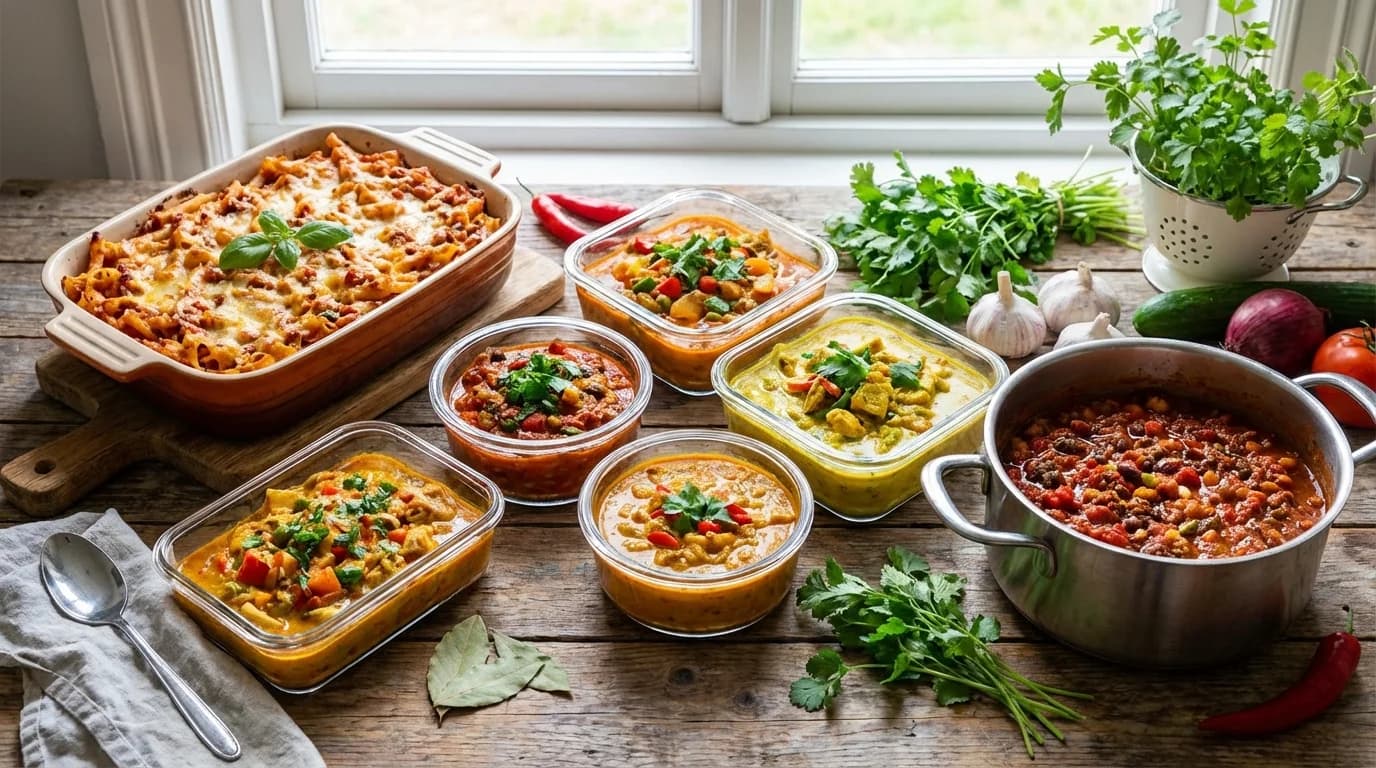
Last Tuesday, I pulled a container of chili from my fridge that I'd made three days earlier. My daughter took one bite and said, "Mom, this is way better than when you made it on Sunday."
Key Takeaways
- Soups, stews, and chili taste better on day 2-3 as flavors meld together
- Casseroles can be assembled 2 days ahead—just refrigerate unbaked
- Marinated dishes improve overnight as proteins absorb flavors
- Avoid make-ahead for crispy foods, fresh salads, and fried items
- Cool completely before refrigerating to prevent bacterial growth
She was absolutely right. That chili had transformed from good to incredible just by sitting in the fridge. The spices had melded together, the flavors had deepened, and every bite was perfectly seasoned.
That's the magic of make-ahead meals. Not only do they save you time on busy weeknights, but many dishes actually taste better after a day or two in the fridge. The flavors develop, ingredients marinate in their own juices, and you end up with restaurant-quality depth that's impossible to achieve when cooking day-of.
In this guide, you'll discover 40 make-ahead meals that improve with time, learn which types of dishes get better overnight, and get practical tips for preparing meals days in advance without sacrificing quality. For freezer-friendly options, check out our freezer meal prep guide.
Why Some Meals Taste Better the Next Day
There's actual science behind why certain make-ahead meals improve with time.
Flavor infusion: When foods sit together, flavors migrate and mingle. That's why marinated chicken tastes more seasoned than chicken with sauce just poured on top.
Starch retrogradation: Cooked starches (like pasta in casseroles) absorb liquid and flavors as they cool. This is why pasta salad tastes bland immediately but delicious the next day.
Fat solidification and redistribution: As dishes cool, fats solidify and redistribute throughout the dish, carrying fat-soluble flavors with them. This is why beef stew tastes richer on day two.
Spice mellowing: Fresh spices can taste harsh. Over time, their sharp edges soften while the depth of flavor increases. Curry, chili, and heavily spiced dishes all benefit from this.
Protein tenderization: Acidic ingredients (tomatoes, vinegar, wine) continue breaking down proteins even after cooking, making meats more tender over time.
The key is knowing which dishes benefit from this process and which ones don't.
The Ultimate Make-Ahead Meals List
Casseroles (The Make-Ahead Champions)
These dishes were practically invented to be made ahead.
- Chicken Enchilada Casserole: Assemble up to 2 days ahead, bake when ready
- Classic Lasagna: Even better on day 2-3 when flavors meld
- Baked Ziti: Make and refrigerate, or freeze for up to 3 months
- Tuna Noodle Casserole: Prep the night before, bake after work
- Breakfast Casserole: Assemble the night before, bake in the morning
- Shepherd's Pie: Make completely ahead, reheat covered to prevent drying
- Cheesy Chicken and Rice Bake: Prep ingredients, mix and bake later
- Green Bean Casserole: Classic for holidays, prep 1 day ahead
- Taco Casserole: Layer ingredients ahead, top with cheese before baking
- King Ranch Chicken: Texas classic that's perfect for making ahead
Make-Ahead Tip: Most casseroles can be assembled completely, covered tightly, and refrigerated for 1-2 days or frozen for up to 3 months. Add 15-20 minutes to bake time if going straight from fridge to oven.
Soups & Stews (Better with Age)
The gold standard of make-ahead meals. Most soups improve dramatically after 24-48 hours.
- Classic Beef Chili: Peak flavor on day 3
- White Chicken Chili: Verde version is equally good ahead
- Beef Stew: Makes enough for multiple meals
- Minestrone Soup: Add pasta when reheating to prevent mushiness
- Chicken Tortilla Soup: Keep toppings separate, add when serving
- Split Pea Soup: Gets thicker over time (thin with broth when reheating)
- Lentil Soup: Budget-friendly and freezes perfectly
- Potato Soup: Make base ahead, add cream when reheating
- Black Bean Soup: Flavors meld beautifully overnight
- French Onion Soup: Make broth ahead, add bread and cheese fresh
Make-Ahead Tip: Cool soup completely before refrigerating. Store in airtight containers for up to 5 days or freeze for up to 6 months. Reheat gently to prevent scorching.
Marinated & Braised Dishes
Marinades and braising liquids continue working their magic even after cooking.
- Pot Roast: Falls-apart tender on day 2
- Pulled Pork: Makes a huge batch, freezes beautifully
- Beef Barbacoa: Better after marinating overnight
- Korean Beef (Bulgogi): Marinade overnight for maximum flavor
- Chicken Adobo: Vinegar-based marinade keeps improving
- Carnitas: Crisp up leftovers in a hot skillet
- Mississippi Pot Roast: Tangy flavor develops over time
- Balsamic Chicken: Marinade penetrates deeper after 24 hours
- Teriyaki Chicken: Sweet glaze thickens and flavors intensify
- Greek Chicken: Lemon and herb marinade needs time
Make-Ahead Tip: For raw marinated meats, prepare marinade and meat together up to 2 days ahead. For cooked braised dishes, store in cooking liquid to prevent drying out.
Pasta Dishes (The Surprising Winners)
Not all pasta dishes work ahead, but these do.
- Baked Spaghetti: Sauce soaks into noodles perfectly
- Mac and Cheese: Baked versions hold well, stovetop less so
- Pasta Primavera Salad: Vegetables stay crisp in vinaigrette
- Chicken Alfredo Bake: Add extra sauce to prevent drying
- Pasta e Fagioli: Italian pasta and bean soup/stew
Make-Ahead Tip: Slightly undercook pasta if you're making it ahead. It will continue softening as it sits in sauce.
Breakfast Make-Aheads
Morning is rushed enough without cooking from scratch.
- Overnight Oats: Prep 5 jars on Sunday for the week
- Breakfast Burritos: Wrap individually, freeze, microwave from frozen
- Egg Muffins: Bake a dozen, grab and go all week
- French Toast Casserole: Assemble the night before, bake in the morning
- Quiche: Slice and reheat portions throughout the week
Make-Ahead Tip: Most breakfast items can be frozen. Breakfast burritos last 3 months frozen and reheat in minutes.
Make-Ahead Meal Categories That Work
Category 1: Dishes with Acidic Ingredients
Tomato-based sauces, vinegar marinades, wine-braised meats, and citrus-marinated proteins all improve with time. The acid continues tenderizing and flavoring.
Best bets: Spaghetti sauce, beef stew with red wine, chicken cacciatore, vinegar-based coleslaw
Category 2: Heavily Spiced Foods
Curries, chilis, jerk chicken, and barbecue all benefit from resting time. Initial spice heat mellows while flavor complexity increases.
Best bets: Indian curries, Mexican moles, Cajun gumbos, Thai curries
Category 3: Layered Dishes
When ingredients are layered (like lasagna or enchiladas), they need time to meld together. Freshly made layered dishes often have distinct separate layers. After a day, they become cohesive.
Best bets: Lasagna, moussaka, enchiladas, tiramisu (dessert bonus!)
Category 4: Braised and Slow-Cooked
Long, slow cooking followed by cooling and reheating results in incredibly tender meat and rich sauces.
Best bets: Pot roast, short ribs, pulled pork, osso buco
Real-World Example: The Martinez Family Meal System
Situation: Family of five, both parents work rotating shifts, three kids ages 6-14
Challenge: Never home at the same time for dinner. Previously relied on fast food 5-6 nights per week because coordinating cooking was impossible.
Make-Ahead Solution: Implemented a Sunday prep system focused on meals that reheat well
Their Weekly Prep:
- Sunday afternoon: Make two large recipes (usually one soup/stew and one casserole)
- Portion into individual containers with names
- Each family member reheats their portion when they're ready to eat
Favorite Make-Aheads:
- Chicken tortilla soup (makes 12 servings)
- Beef enchilada casserole (serves 8-10)
- Pulled pork (for tacos, rice bowls, sandwiches)
- Chili (always a winner)
Results:
- Fast food spending dropped from $200+/week to $40/week
- Everyone eats home-cooked meals even with conflicting schedules
- Leftovers from 2 big recipes cover dinner Monday-Thursday
- Friday is "clean out the fridge" night with whatever's left
Key Insight: "Make-ahead meals saved our family dinners when we couldn't actually sit down together," says Rosa Martinez. "Even if we're eating at different times, we're eating the same meal. That counts."
Make-Ahead Meal Prep Strategies
Strategy 1: The Double Batch Method
Whenever you make soup, stew, or sauce, double it. Eat one batch this week, freeze the second for next week.
Best for: Chili, spaghetti sauce, curry, soup
Time investment: Add 10-15 minutes to your normal cooking time
Payoff: A future meal that requires zero effort
Strategy 2: The Sunday Power Cook
Dedicate 2-3 hours on Sunday to making meals for the week.
Sample Sunday Schedule:
- Hour 1: Prep and start slow cooker meal (pulled pork or pot roast)
- Hour 2: Assemble casserole, start soup on stovetop
- Hour 3: Portion and store everything, clean up
Yields: 4-6 dinners for a family of four
Strategy 3: The Progressive Prep
Some dishes need time in stages. Use that to your advantage.
Example with Lasagna:
- Day 1: Make meat sauce (30 min)
- Day 2: Assemble lasagna with chilled sauce (20 min)
- Day 3: Bake and serve (90 min mostly hands-off)
This spreads the work over several days so it never feels overwhelming.
Strategy 4: The Freezer Meal Assembly
Once a month, spend 3-4 hours assembling multiple freezer meals.
Process:
- Choose 5 recipes that freeze well
- Shop for all ingredients at once
- Assembly-line style prep
- Freeze in disposable pans with labels
- Pull out 24 hours before needed
Yields: 5-10 meals ready to bake from frozen
What NOT to Make Ahead
Some foods just don't work as make-ahead meals:
Avoid making these ahead:
- Fried foods (get soggy)
- Delicate fish (overcooks when reheated)
- Crispy vegetables (will wilt)
- Cream-based sauces (can separate or curdle)
- Most rice dishes (rice gets hard and dry)
- Dishes with fresh herbs as the star (they lose vibrancy)
Workarounds:
- Add fresh herbs when reheating
- Cook rice fresh but prep proteins and vegetables ahead
- Make sauce ahead but add cream when reheating
- Keep crunchy toppings separate, add before serving
Storage and Reheating Tips
Storage Best Practices
Cooling: Cool food to room temperature within 2 hours of cooking. Speed this up by transferring to shallow containers or placing pot in ice bath.
Containers: Use airtight containers or cover dishes tightly with plastic wrap then foil. Label with contents and date.
Refrigerator Life:
- Most cooked dishes: 3-5 days
- Soups and stews: 5-7 days
- Casseroles: 3-4 days
- Marinated raw meat: 2 days max
Freezer Life:
- Soups and stews: 4-6 months
- Casseroles: 2-3 months
- Cooked proteins: 3-4 months
- Marinated meats: 2-3 months
Reheating Methods
Oven: Best for casseroles and baked dishes. Cover with foil to prevent drying, reheat at 350°F until warmed through (usually 30-45 minutes from fridge).
Stovetop: Best for soups, stews, and sauces. Reheat over medium-low heat, stirring occasionally. Add liquid if too thick.
Microwave: Quick but can create hot spots. Stir halfway through, use 50% power for more even heating.
Slow Cooker: Transfer frozen soup or stew to slow cooker in the morning, set to low, ready by dinner.
How myrecipe Helps
When you discover make-ahead meals your family actually loves, you'll want to keep them in regular rotation. The problem is remembering which casserole recipe was the keeper and which one everyone hated.
Tools like myrecipe let you save and organize your best make-ahead recipes into collections. Create a "Sunday Prep" collection for your big-batch recipes, or a "Freezer Meals" collection for dishes you assemble in advance. Add notes to recipes like "double the sauce" or "kids prefer without mushrooms" so you remember the tweaks that work.
Share your make-ahead collection with family members who might be doing the cooking when you're not available. Everyone can access the same recipes and know exactly how to reheat them properly.
Start organizing your recipes free with myrecipe and build your make-ahead meal rotation.
Common Mistakes to Avoid
Mistake 1: Not Cooling Food Before Refrigerating
Why it happens: You want to clean up and move on with your day.
The problem: Putting hot food directly in the fridge raises the temperature, potentially putting other foods in the danger zone for bacteria growth.
The fix: Let food cool to room temperature first (but don't leave out more than 2 hours). Speed cooling by transferring to shallow containers or using an ice bath.
Mistake 2: Overcooking Before Storage
Why it happens: You want it fully cooked for food safety.
The problem: It will cook more when reheated. Overcooked chicken becomes dry and tough.
The fix: Slightly undercook dishes you're making ahead, especially proteins. They'll finish cooking during reheating.
Mistake 3: Freezing in Containers That Are Too Large
Why it happens: You use whatever container fits the full batch.
The problem: You have to thaw the entire thing even if you only need two portions.
The fix: Freeze in portion sizes you'll actually use. Individual servings or meal-sized portions give you flexibility.
Mistake 4: Not Labeling Freezer Meals
Why it happens: You think you'll remember what it is.
The problem: Three months later, you're staring at a frozen mystery block.
The fix: Always label with the dish name, date, and reheating instructions. Use freezer tape or permanent markers.
Mistake 5: Ignoring Texture Changes
Why it happens: You assume all foods reheat the same.
The problem: Some ingredients change texture when frozen or reheated (pasta gets mushy, potatoes get grainy, cheese can separate).
The fix: Know which ingredients don't freeze well and either omit them or add them fresh when reheating. For example, freeze soup base without the pasta, add pasta when reheating.
Frequently Asked Questions
Most make-ahead meals are best within 3-5 days in the fridge. For longer storage, freeze them. Frozen meals maintain quality for 2-6 months depending on the dish. Soups and stews freeze the longest, casseroles are best used within 2-3 months.
Yes, but leave 1-2 inches of headspace for expansion and use freezer-safe glass. Let food cool completely before freezing. Thaw in the refrigerator, not at room temperature, to prevent cracking.
Minimal loss occurs. Vitamins like vitamin C may decrease slightly over time, but protein, fiber, and most minerals remain stable. Eating home-cooked make-ahead meals is nutritionally superior to takeout or heavily processed convenience foods.
Add moisture: a splash of broth for meats, a drizzle of olive oil for vegetables, extra sauce for pasta. Cover dishes with foil when reheating in the oven. Use lower microwave power settings and reheat in intervals, stirring between them.
Absolutely. Make-ahead doesn't mean processed. Use fresh vegetables, lean proteins, and whole grains. These ingredients maintain their nutritional value just fine when stored properly. In fact, batch cooking with fresh ingredients is healthier than relying on frozen dinners or takeout.
Start Building Your Make-Ahead Repertoire
You don't need to overhaul your entire meal routine overnight. Start with one make-ahead meal this week.
Pick a Sunday. Choose one recipe from this list—maybe a simple chili or a classic lasagna. Make it, store it properly, and see how it tastes on Tuesday or Wednesday.
I'm betting it tastes better than you expect. Maybe even better than the day you made it.
That's when you'll understand why make-ahead meals are a game-changer. Not just for the time they save, but for the quality they deliver.
Here's your action plan:
- Choose 2-3 make-ahead recipes that sound good to you
- Add them to your meal rotation this month
- Pay attention to which ones your family requests again
- Build your collection of proven winners
Ready to organize your make-ahead meal recipes? Start free with myrecipe and create your perfect meal prep collection.
About myrecipe
myrecipe helps families save, organize, and share their favorite recipes in one place. Plan meals, create shopping lists, and preserve your culinary traditions.
Start Organizing Recipes