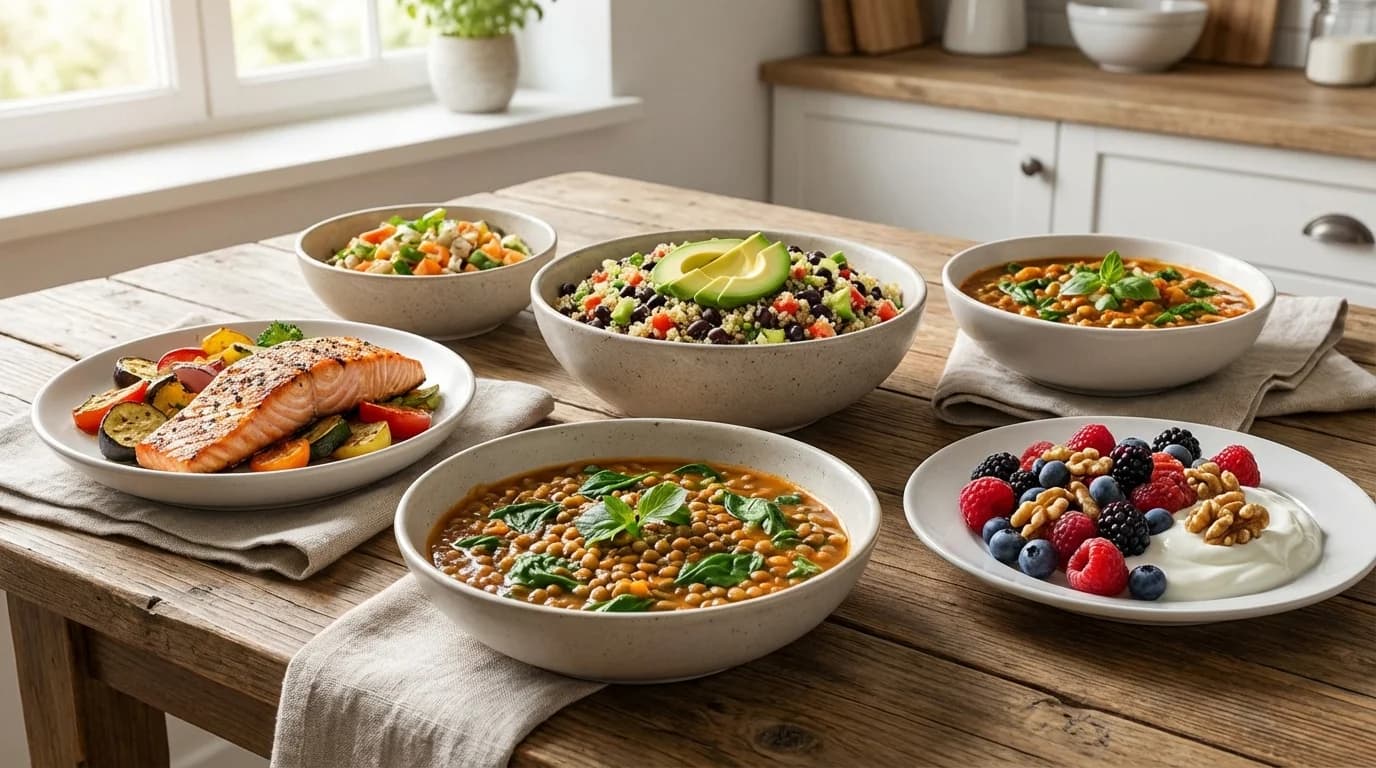
Managing diabetes doesn't mean giving up delicious food. These 30 diabetic-friendly dinners are designed to keep blood sugar stable while satisfying your taste buds. Each recipe balances protein, healthy fats, and smart carbohydrate choices to support better glucose control.
Understanding Diabetic-Friendly Eating
The Basics:
- Balance carbohydrates with protein and healthy fats
- Choose complex carbs over simple sugars
- Control portion sizes
- Focus on high-fiber foods
- Limit refined and processed foods
The Plate Method:
- 1/2 plate: Non-starchy vegetables
- 1/4 plate: Lean protein
- 1/4 plate: Complex carbohydrates
- Add small amount of healthy fat
Carbohydrate Counting: Most people with diabetes aim for 45-60g carbs per meal, but your target may differ based on medication, activity level, and individual needs. Always consult your healthcare provider.
Glycemic Index (GI):
- Low GI foods (55 or less): Slow blood sugar rise
- Medium GI (56-69): Moderate impact
- High GI (70+): Rapid blood sugar spike
Focus on low and medium GI foods when possible.
30 Diabetic-Friendly Dinner Recipes
Chicken Dinners
1. Grilled Lemon Herb Chicken with Roasted Vegetables Grill chicken breast with lemon and herbs. Serve with roasted broccoli, cauliflower, and Brussels sprouts.
- Carbs: 12g (from vegetables)
- Protein: 35g
- High fiber from vegetables slows sugar absorption
2. Chicken Stir-Fry with Cauliflower Rice Sauté chicken with broccoli, bell peppers, and snap peas. Serve over cauliflower rice.
- Carbs: 15g
- Protein: 32g
- Low-carb alternative to regular rice
3. Baked Chicken Thighs with Green Beans Season chicken thighs with rosemary and garlic. Bake with green beans and cherry tomatoes.
- Carbs: 10g
- Protein: 30g
- Healthy fats from chicken thighs improve satiety
4. Mediterranean Chicken Bowl Top quinoa (1/2 cup cooked) with grilled chicken, cucumber, tomatoes, olives, and feta. Drizzle with olive oil and lemon.
- Carbs: 28g (controlled portion of quinoa)
- Protein: 35g
- Fiber: 6g
5. Chicken Fajita Bowl Sauté chicken with peppers and onions. Serve with small portion brown rice, black beans, lettuce, salsa, and avocado.
- Carbs: 35g
- Protein: 33g
- Fiber: 9g
For more chicken ideas, adapt recipes from our easy stir-fry recipes using low-carb bases.
Seafood Options
6. Baked Salmon with Asparagus Season salmon with dill and lemon. Roast with asparagus spears.
- Carbs: 6g
- Protein: 34g
- Omega-3 fats improve insulin sensitivity
7. Shrimp and Zucchini Noodles Sauté shrimp in garlic and olive oil. Toss with spiralized zucchini and cherry tomatoes.
- Carbs: 12g
- Protein: 28g
- Very low carb, high in vegetables
8. Blackened Fish Tacos (Modified) Season white fish with Cajun spices. Serve in 2 small corn tortillas with cabbage slaw and avocado.
- Carbs: 30g
- Protein: 30g
- Corn tortillas have lower GI than flour
9. Garlic Butter Scallops with Cauliflower Mash Pan-sear scallops in garlic butter. Serve with mashed cauliflower made with a touch of cream.
- Carbs: 15g
- Protein: 25g
- Elegant and diabetic-friendly
10. Tuna Nicoise Salad Arrange mixed greens with grilled tuna, green beans, hard-boiled eggs, olives, and tomatoes. Dress with olive oil and vinegar.
- Carbs: 18g
- Protein: 36g
- Mediterranean diet reduces diabetes complications
Beef and Pork
11. Grilled Steak with Roasted Vegetables Grill sirloin steak (4-6 oz). Serve with roasted carrots, Brussels sprouts, and red onion.
- Carbs: 20g
- Protein: 38g
- Satisfying and blood sugar-stable
12. Beef and Broccoli Stir-fry sliced beef with broccoli. Serve over 1/2 cup brown rice or cauliflower rice.
- Carbs: 25g (with brown rice)
- Protein: 35g
- Classic comfort food made diabetes-friendly
13. Pork Chops with Apple Compote Pan-sear pork chops. Top with sautéed apples (small portion) cooked with cinnamon.
- Carbs: 18g
- Protein: 32g
- Fiber from apple peel slows sugar absorption
14. Lean Burger Bowl Top lettuce with 93% lean ground beef patty, tomatoes, pickles, onions, and mustard. Add sweet potato fries (baked, small portion).
- Carbs: 28g
- Protein: 30g
- Skip the bun but keep the flavor
15. Stuffed Bell Peppers Fill peppers with lean ground turkey, cauliflower rice, tomatoes, and cheese.
- Carbs: 20g
- Protein: 28g
- Vegetables provide bulk without carbs
Vegetarian Meals
16. Lentil and Vegetable Soup Combine lentils (1/2 cup cooked per serving), carrots, celery, spinach, and herbs in vegetable broth.
- Carbs: 28g
- Protein: 12g
- Fiber: 10g
- Lentils have low GI (32)
17. Egg Fried Cauliflower Rice Scramble eggs with cauliflower rice, frozen peas, carrots, and soy sauce.
- Carbs: 15g
- Protein: 18g
- Quick, budget-friendly, low-carb
18. Black Bean and Vegetable Bowl Combine black beans (1/2 cup), quinoa (1/3 cup cooked), roasted vegetables, and avocado.
- Carbs: 40g
- Protein: 15g
- Fiber: 12g
- High fiber offsets carbohydrate impact
19. Tofu and Vegetable Stir-Fry Sauté extra-firm tofu with bok choy, mushrooms, and bell peppers in ginger-garlic sauce.
- Carbs: 18g
- Protein: 22g
- Soy foods may improve insulin sensitivity
20. Chickpea and Spinach Curry Simmer chickpeas (3/4 cup per serving) in tomato-coconut sauce with spinach and spices. Serve with small portion brown rice.
- Carbs: 45g
- Protein: 14g
- Fiber: 11g
Sheet Pan Dinners
21. Sheet Pan Chicken and Vegetables Roast chicken thighs with broccoli, cauliflower, and red bell peppers seasoned with herbs.
- Carbs: 12g
- Protein: 32g
- One-pan cleanup
22. Sheet Pan Salmon and Asparagus Bake salmon with asparagus, cherry tomatoes, and lemon slices.
- Carbs: 10g
- Protein: 34g
- Anti-inflammatory omega-3s
Similar to our sheet pan dinners, these minimize effort.
23. Sausage and Vegetable Roast Roast turkey sausage (check labels for low-sugar options) with bell peppers, zucchini, and onions.
- Carbs: 18g
- Protein: 24g
- Add small portion of roasted sweet potato if desired
Soups and Stews
24. Chicken and White Bean Soup Simmer chicken, white beans (1/2 cup per serving), kale, carrots, and herbs in low-sodium chicken broth.
- Carbs: 30g
- Protein: 28g
- Fiber: 9g
25. Beef and Vegetable Stew Cook beef chuck with tomatoes, carrots, celery, mushrooms, and herbs. Skip potatoes or use small amount.
- Carbs: 20g
- Protein: 30g
- Hearty and satisfying
For more soup ideas, adapt our cheap soup recipes with diabetes considerations.
26. Tuscan White Bean Soup Combine white beans, kale, tomatoes, Italian sausage (optional), and herbs.
- Carbs: 35g
- Protein: 20g
- Fiber: 10g
Quick Dinners
27. Egg and Vegetable Scramble Scramble eggs with spinach, mushrooms, tomatoes, and feta. Serve with 1 slice whole grain toast.
- Carbs: 18g
- Protein: 22g
- Breakfast for dinner works!
28. Tuna Salad Lettuce Wraps Mix tuna with olive oil mayo, celery, and onion. Wrap in butter lettuce leaves. Serve with vegetable sticks.
- Carbs: 8g
- Protein: 30g
- Very low carb option
29. Turkey and Vegetable Meatballs Make meatballs with ground turkey, zucchini, and herbs. Simmer in marinara sauce (no sugar added). Serve over zucchini noodles.
- Carbs: 20g
- Protein: 32g
- Sneaking in extra vegetables
30. Grilled Chicken Salad Top mixed greens with grilled chicken, vegetables, nuts, and olive oil-vinegar dressing. Add small portion whole grain crackers.
- Carbs: 22g
- Protein: 35g
- Restaurant-quality at home
Smart Carbohydrate Choices
Best Options for People with Diabetes:
Whole Grains (portion controlled):
- Quinoa (GI: 53)
- Brown rice (GI: 50)
- Barley (GI: 28)
- Steel-cut oats (GI: 42)
- Whole wheat pasta (GI: 42)
Legumes:
- Lentils (GI: 32)
- Chickpeas (GI: 28)
- Black beans (GI: 30)
- Kidney beans (GI: 24)
Starchy Vegetables (smaller portions):
- Sweet potato (GI: 63)
- Corn (GI: 52)
- Peas (GI: 48)
Non-Starchy Vegetables (unlimited):
- Broccoli, cauliflower, Brussels sprouts
- Leafy greens
- Bell peppers, zucchini, mushrooms
- Green beans, asparagus
- Tomatoes, cucumbers
Portion Control Guide
Protein (4-6 oz cooked):
- Size of your palm
- 1-2 chicken breasts
- 1 fish fillet
- 2-3 eggs
Carbohydrates:
- 1/2 cup cooked grains
- 1 slice bread
- 1/2 medium potato
- 2/3 cup beans or lentils
Non-Starchy Vegetables:
- No limit! Fill half your plate
Healthy Fats (1-2 servings):
- 1/4 avocado
- 1 tbsp olive oil
- 1 oz nuts
- 2 tbsp seeds
Meal Timing Tips
Why It Matters: Spacing meals evenly helps maintain stable blood sugar throughout the day.
Optimal Strategy:
- Eat every 4-5 hours
- Don't skip meals (especially if on medication)
- Include protein and fat at every meal
- Avoid large carb loads at once
Sample Schedule:
- 7 AM: Breakfast (30-40g carbs)
- 12 PM: Lunch (40-50g carbs)
- 6 PM: Dinner (40-50g carbs)
- Snacks as needed (10-15g carbs)
Budget Tips for Diabetic-Friendly Eating
1. Buy Frozen Vegetables Just as nutritious as fresh, often cheaper, and perfect for blood sugar control since they're picked at peak ripeness.
2. Choose Affordable Proteins
- Eggs ($3 per dozen = 12 servings)
- Chicken thighs ($2-3 per lb)
- Canned fish ($1-2 per can)
- Dried beans ($1.50 per lb = many servings)
3. Cook from Scratch Pre-made "diabetic" meals cost $5-8 per serving. Homemade costs $2-3 and tastes better.
4. Use Seasonal Produce Seasonal non-starchy vegetables are cheaper and at peak flavor.
5. Buy Whole Grains in Bulk Brown rice, quinoa, and oats cost much less from bulk bins.
For more strategies, see our budget grocery shopping tips.
Foods to Limit or Avoid
High-Glycemic Foods:
- White bread, white rice, white pasta
- Sugary cereals
- Pastries and baked goods
- Candy and sweets
- Fruit juice and soda
- Fried foods
Processed Foods:
- Pre-packaged meals (often high in sodium and hidden sugars)
- Deli meats with added sugar
- Sweetened yogurts
- Flavored oatmeal packets
Trans Fats:
- Margarine and shortening
- Commercial baked goods
- Fried fast food
Meal Prep for Diabetes Management
Sunday Prep:
- Grill or bake 2-3 lbs chicken
- Cook 2 cups brown rice or quinoa (portion into 1/2 cup servings)
- Roast large batch of non-starchy vegetables
- Hard boil eggs
- Make large batch of soup or chili
- Wash and chop salad vegetables
Portion and Label:
- Use measuring cups for grains
- Weigh proteins (4-6 oz portions)
- Store in clear containers
- Label with carb counts if helpful
Similar to our meal prep for beginners with diabetes considerations.
Reading Labels
Look For:
- Total carbohydrates (not just sugar)
- Fiber content (subtract from total carbs for net carbs)
- Serving size (often unrealistically small)
- Added sugars (aim for less than 5g per serving)
Watch Out For:
- "Sugar-free" doesn't mean carb-free
- "Diabetic-friendly" isn't a regulated term
- Many names for sugar (high-fructose corn syrup, maltose, dextrose, etc.)
Working with Your Healthcare Team
Important:
- Individual carb needs vary based on medication, activity level, and health goals
- Some diabetes medications require consistent carb intake
- Monitor blood sugar to see how foods affect YOU
- Consult a registered dietitian for personalized guidance
- Never stop medications without medical advice
Tracking and Monitoring
Keep a Food Diary:
- Record meals and carb counts
- Note blood sugar readings
- Identify patterns (what raises/lowers your sugar)
- Share with your healthcare team
Apps to Help:
- MyFitnessPal (tracks carbs and nutrients)
- Carb Manager (designed for low-carb eating)
- Glucose Buddy (tracks blood sugar and food)
Conclusion
Living with diabetes doesn't mean bland, restrictive eating. By balancing carbohydrates with protein and healthy fats, choosing low-glycemic foods, and controlling portions, you can enjoy delicious, satisfying dinners while managing blood sugar effectively.
Start with recipes that appeal to you and fit your lifestyle. As you discover what works for your body, you'll build a repertoire of go-to meals that keep you healthy and happy.
Remember, consistency matters more than perfection. Every blood sugar-friendly meal is a step toward better health and diabetes management.
What diabetic-friendly dinner will you try first? Your taste buds and your blood sugar will both be happy!
About myrecipe
myrecipe helps families save, organize, and share their favorite recipes in one place. Plan meals, create shopping lists, and preserve your culinary traditions.
Start Organizing Recipes